Best Diesel Fuel Additives for 6.7 Powerstroke Engines
You need a diesel additive that protects your 6.7L Powerstroke’s HPCR system and boosts cetane for cleaner, more efficient combustion. Hot Shot’s Diesel Treatment 6-in-1 raises cetane by up to 8 points and treats 400 gallons per 16 oz bottle. Archoil AR6500 improves lubricity by 43%, prevents injector deposits, and treats 400 gallons per 40 oz bottle. These formulas enhance cold starts, reduce DPF clogging, and are safe for ULSD and biodiesel. Each serves a specific role in fuel system maintenance. You’ll discover which product fits your driving patterns and climate demands next.
We are supported by our audience. When you purchase through links on our site, we may earn an affiliate commission, at no extra cost for you. Learn more. Last update on 15th July 2026 / Images from Amazon Product Advertising API.
Notable Insights
- Hot Shot’s Diesel Treatment 6-in-1 boosts cetane by up to 8 points and supports 6.7L Powerstroke fuel systems every 6,000 miles.
- Archoil AR6500 provides year-round protection for HPCR systems with optimal lubricity and detergency at every fill-up.
- Power Service Diesel Kleen+Cetane Boost enhances combustion and cleans injectors in 6.7L Powerstroke engines per tank.
- Ford Genuine Anti-Gel prevents fuel gelling down to -20°F, ideal for 6.7 Powerstroke cold-weather operation.
- Additives like Archoil AR6400-D paired with AR6500 offer deep cleaning and maintenance for optimal Powerstroke performance.
Hot Shot’s Diesel Treatment 6-in-1 (HSSEDT16ZS)

If you run a 6.7 Powerstroke and want consistent performance with long-term fuel system protection, Hot Shot’s Diesel Treatment 6-in-1 (HSSEDT16ZS) is your go-to additive for everyday use. I rely on it because it boosts cetane by up to 7 points, improving combustion and fuel economy. It increases lubricity, safeguarding injectors and the fuel pump. The formula cleans injectors and prevents deposit buildup. It also demulsifies water, reducing corrosion risk. I add 1 oz per 25 gallons; a 16 oz bottle treats 400 gallons. Made by Lubrication Specialties, Inc., it’s proven since 2013.
Best For: Diesel truck owners, especially those with a 6.7 Powerstroke, seeking consistent performance, improved fuel economy, and long-term fuel system protection.
Pros:
- Boosts cetane by up to 7 points for improved combustion, acceleration, and fuel efficiency
- Enhances lubricity to protect fuel injectors and pump from wear
- Cleans injectors, prevents deposit buildup, and demulsifies water to reduce corrosion
Cons:
- May be overkill for diesel engines with minimal usage or newer models with advanced fuel systems
- Slight premium price compared to basic fuel additives
- Requires consistent use at every fill-up for optimal results, which may be inconvenient for some
Archoil AR6500 Diesel Treatment (2-Pack)
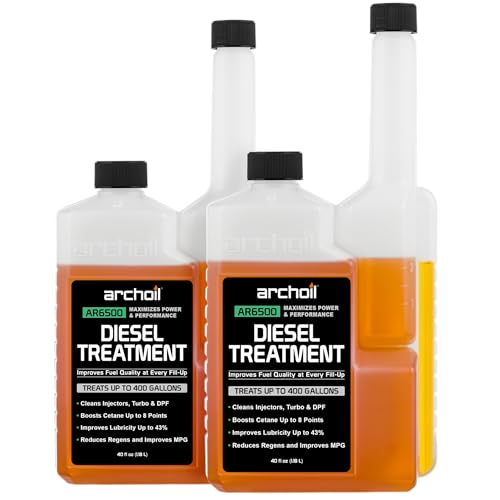
The Archoil AR6500 Diesel Treatment (2-Pack) is my top choice for 6.7L Powerstroke owners seeking robust fuel system protection and consistent performance gains. Each 40 oz bottle treats 400 gallons, so the two-pack covers up to 800 gallons total. I add it at every fill-up for continuous defense. It boosts cetane by up to +8 points, pushing fuel into the 48–50 range for quicker ignition and smoother combustion. It improves lubricity by 43% (ASTM D6079), safeguarding the CP4 pump. Its detergent package cleans injectors, restores spray patterns, and enhances atomization. It also reduces DPF regenerations and keeps the turbo cleaner.
Best For: Diesel truck owners, especially 6.7L Powerstroke drivers, seeking enhanced fuel lubricity, improved cetane, and comprehensive fuel system protection.
Pros:
- Boosts cetane by up to +8 points for faster ignition and smoother combustion
- Improves fuel lubricity by 43% (ASTM D6079), protecting CP4 pumps and critical fuel system components
- Cleans injectors, reduces DPF regenerations, and helps keep the turbo cleaner for improved performance and efficiency
Cons:
- Higher cost per ounce compared to some competing diesel additives
- Optimal benefits require consistent use at every fill-up, increasing long-term usage
- Noticeable performance gains may vary depending on baseline fuel quality and engine condition
Archoil Ultimate Diesel Kit (3-Bottle Set)

I choose the Archoil Ultimate Diesel Kit when I need a complete, system-wide solution for maintaining my 6.7 Powerstroke’s performance. It includes three targeted additives: AR6400-D (12 oz), AR6500 (40 oz), and AR9100 (16 oz). I start with AR6400-D to deep-clean injectors and fuel systems, removing carbon deposits. I use AR6500 at every fill-up to control soot and improve combustion efficiency. I add AR9100 directly into the engine oil during oil changes. It reduces friction, prevents wear, and eliminates HEUI stiction. All components are pour-in, requiring no tools. They’re safe for high-pressure common rail systems. This kit delivers thorough protection and measurable performance gains.
Best For: Diesel truck owners seeking comprehensive fuel and engine protection, especially those with high-pressure common rail systems like the 6.7 Powerstroke.
Pros:
- Provides complete system maintenance with targeted fuel and oil additives for cleaning, friction reduction, and wear protection
- Easy pour-in application with no tools required, safe for modern diesel engines including HPCR systems
- Helps eliminate HEUI injector stiction, improves combustion efficiency, and ensures smoother engine operation
Cons:
- Requires multiple applications at different intervals (fuel fill-ups and oil changes), which may be inconvenient for some users
- AR9100 is only effective during oil changes, limiting flexibility in application timing
- Higher cost compared to single-purpose diesel additives due to the three-component system
Archoil AR6500 Diesel Treatment (40 oz)

You rely on your 6.7 Powerstroke to deliver strong performance and long-term reliability, and Archoil AR6500 Diesel Treatment is engineered to support both. I use it every fill-up to protect my HPCR fuel system and maintain peak efficiency. It boosts cetane by up to +8 points, optimizing combustion in the 48–50 range for faster starts and smoother operation. Independent tests show it improves lubricity by 43% (ASTM D6079), safeguarding the CP4 pump. It cleans injectors, restores spray patterns, and enhances fuel economy. It also reduces DPF deposits, cuts regen frequency, and keeps turbos cleaner for better boost and throttle response. One 40 oz bottle treats 400 gallons.
Best For: Diesel truck owners, especially those with modern HPCR fuel systems like the 6.7 Powerstroke, seeking enhanced fuel lubricity, improved cetane, and long-term engine and emissions system protection.
Pros:
- Boosts cetane by up to +8 points for improved ignition, cold starts, and combustion efficiency
- Improves fuel lubricity by 43% (ASTM D6079), protecting sensitive components like the CP4 pump
- Helps maintain DPF and turbocharger health by reducing deposits and improving regeneration frequency
Cons:
- Higher cost per ounce compared to some competing diesel additives
- Treats 400 gallons per 40 oz bottle, which may be excessive for light-use vehicles
- Limited availability outside online channels, potentially affecting convenience of purchase
Ford Genuine Anti-Gel Additive 20 oz
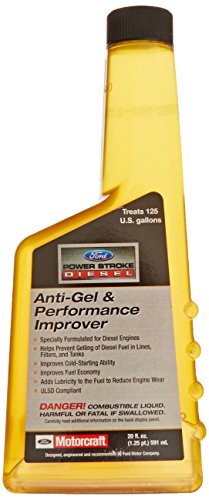
Ford Genuine Anti-Gel Additive 20 oz stands out for drivers in freezing climates who demand reliable cold-weather performance from their 6.7L Powerstroke engine. I rely on this 20 oz Motorcraft PM-23-A additive to prevent diesel fuel gelling in temperatures as low as -20°F. It inhibits wax crystal formation, ensuring smooth fuel flow without tank heaters. The formula is ULSD-compliant and works with all diesel fuels. One bottle treats up to 30 gallons. With an ASIN of B00BNVK22Q, it weighs 1.2 pounds and measures 9.3 x 3.7 x 2.2 inches. I’ve found it improves cold starts and maintains consistent operation. Customers rate it 4.6 stars from 185 reviews. It’s available on Amazon with a 30-day return policy.
Best For: Drivers in freezing climates who need reliable cold-weather performance and protection against diesel fuel gelling in their 6.7L Powerstroke or similar diesel engines.
Pros:
- Prevents diesel fuel gelling down to -20°F, ensuring smooth cold-weather starts and uninterrupted fuel flow
- ULSD-compliant formula works with all diesel fuels and treats up to 30 gallons per 20 oz bottle
- Highly rated with a 4.6-star customer review score from 185 reviews and backed by Amazon’s 30-day return policy
Cons:
- Only designed for diesel engines, limiting use to diesel vehicle owners
- Effectiveness may vary in extreme conditions beyond -20°F without additional measures
- Slight premium pricing compared to non-OEM alternative fuel additives
Archoil Diesel Fuel System Kit (AR6500 + AR6400-D)

For diesel owners facing the demanding requirements of modern high-pressure common rail (HPCR) systems, the Archoil Diesel Fuel System Kit (AR6500 + AR6400-D) delivers a precision-engineered clean-and-maintain solution tailored to engines like the 6.7L Powerstroke. I use AR6400-D first-it’s a 12 oz deep cleaner that treats 30–40 gallons, removing stubborn injector deposits and restoring proper spray patterns. Clean injectors mean better combustion and responsiveness. Then I follow with AR6500, a 40 oz diesel treatment that protects up to 400 gallons. It boosts cetane by up to +8, improving ignition and drivability. It also increases lubricity by 43% (ASTM D6079), safeguarding CP4 pumps. I rely on it to reduce DPF clogging and keep turbos flowing cleanly, minimizing regens and maintaining consistent boost.
Best For: Diesel truck owners with modern HPCR systems seeking a two-step clean-and-maintain solution to restore injector performance and protect critical fuel system components.
Pros:
- Combines deep-cleaning AR6400-D with long-term protection from AR6500 for comprehensive fuel system maintenance
- Improves cetane by up to +8 and lubricity by 43% (ASTM D6079), enhancing combustion and safeguarding CP4 pumps
- Helps reduce DPF clogging and keeps turbos cleaner, minimizing regeneration frequency and maintaining boost performance
Cons:
- Two-step process requires consistent application and tracking of treatment intervals
- Higher upfront cost compared to single additive solutions
- Limited treat rate for AR6400-D (12 oz treats only 30–40 gallons), requiring multiple bottles for larger tanks or bulk treatment
Hot Shot’s Secret Diesel Extreme 16 oz

Hot Shot’s Secret Diesel Extreme 16 oz is the go-to choice for diesel owners committed to preserving peak engine performance and long-term reliability. It cleans and lubricates injectors, pumps, rings, and upper cylinders. I use it to eliminate Internal and External Diesel Injector Deposits (IDIDs and EDIDs), varnish, and carbon. It boosts cetane by up to 7 points, improving combustion, power, and fuel economy. The non-alcohol formula disperses moisture and fights corrosion with military-grade inhibitors. One 16 oz bottle treats 40 gallons-just pour at fill-up. I apply it every 6,000 miles to sustain engine efficiency and extend service life.
Best For: Diesel vehicle owners looking to maintain optimal engine performance, prevent fuel system deposits, and extend equipment life with a proven, concentrated treatment.
Pros:
- Cleans and lubricates entire fuel system, effectively removing IDIDs, EDIDs, carbon, and varnish buildup
- Boosts cetane by up to 7 points for improved combustion, fuel economy, and engine power
- Features non-alcohol moisture dispersant and military-grade corrosion inhibitors for enhanced fuel stability
Cons:
- Higher cost per ounce compared to some competing diesel additives
- Requires consistent use every 6,000 miles for best results, which may be frequent for some users
- Limited treatment ratio may require larger quantities for high-capacity tanks or frequent drivers
Power Service Diesel Kleen+Cetane Boost 64 oz, Pack of 1 3064-06 Grey

When peak fuel system performance matters most in high-pressure environments like those found in modern 6.7L Powerstroke engines, Power Service Diesel Kleen+Cetane Boost stands out as a top-tier maintenance solution. I rely on this 64 oz treatment because it cleans both internal and external injector deposits, restoring lost power and improving fuel economy. It’s safe for all diesel engines, including High Pressure Common Rail (HPCR) systems, and works with Ultra Low Sulfur Diesel, biodiesel, and blends. The formula includes Slickdiesel Lubricator to combat low-lubricity fuel, reducing wear in pumps and injectors. One bottle treats up to 30 gallons, making it efficient for regular use.
Best For: Diesel engine owners, especially those with modern HPCR systems like the 6.7L Powerstroke, seeking comprehensive fuel system cleaning, improved performance, and protection against low-lubricity fuels.
Pros:
- Cleans both internal and external fuel injector deposits to restore lost power and improve fuel economy
- Safe for all diesel engines, including HPCR systems, and compatible with ULSD, biodiesel, and blends
- Contains Slickdiesel Lubricator to reduce wear in fuel pumps and injectors caused by low-lubricity diesel
Cons:
- Treats up to 30 gallons per 64 oz bottle, which may require multiple bottles for larger tanks or fleets
- Primarily designed for routine maintenance, not for severe fuel contamination or emergency winter operability
- Higher cost per ounce compared to some basic diesel additives without cetane or lubricity enhancements
Hot Shot’s Secret Diesel Treatment 1 Gallon

One gallon of Hot Shot’s Secret Everyday Diesel Treatment (EDT) delivers complete protection and performance gains for 6.7 Powerstroke engines, especially for drivers who rely on their trucks for daily operation under demanding conditions. It’s a 6-in-1 additive that boosts cetane by up to 7 points, improving combustion, fuel economy, and throttle response. I use 1 oz per 25 gallons-this gallon treats up to 3,200 gallons. It cleans injectors, prevents corrosion, and demulsifies water. The formula enhances lubricity, protecting pumps and injectors. It’s made by Lubrication Specialties, Inc. (Model: HSSEDT01G). I add it at every fill-up-just pour it in.
Best For: Diesel truck owners, especially those with 6.7 Powerstroke engines, who want reliable everyday fuel treatment to enhance performance and protect their engine under heavy use.
Pros:
- Boosts cetane by up to 7 points for improved combustion, fuel economy, and throttle response
- Cleans injectors, enhances lubricity, and protects fuel system components like pumps and injectors
- Demulsifies water and prevents corrosion, improving fuel stability and long-term engine health
Cons:
- Larger 1-gallon size may be excessive for occasional diesel users or small fleets
- Noticeable benefits may take time with regular use, not ideal for immediate short-term fixes
- Potential over-treatment if dosage guidelines are not carefully followed
Archoil AR6500 Diesel Treatment (4-Pack)

If you own a 6.7 Powerstroke with a high-pressure common rail (HPCR) fuel system, the Archoil AR6500 Diesel Treatment (4-Pack) delivers targeted performance and protection engineered for modern diesel engines. Each 10.1 oz bottle treats up to 100 gallons, so the 4-pack covers 40 StringBuilder gallons total. I add it directly to the tank before refueling for ideal mixing. It boosts cetane by up to +8 points, improving ignition and combustion in the ideal 48–50 range. Its detergent package cleans injectors and restores spray patterns. It improves lubricity by 43% (ASTM D6079), protecting CP4 pumps.
Best For: Diesel truck owners, especially those with modern high-pressure common rail systems like the 6.7 Powerstroke, seeking enhanced performance, fuel system protection, and improved combustion efficiency.
Pros:
- Boosts cetane by up to +8 points for improved ignition, combustion efficiency, and drivability
- Formulated with detergents that clean injectors, restore spray patterns, and improve fuel atomization
- Increases fuel lubricity by 43% (ASTM D6079), offering critical protection for CP4 pumps and HPCR systems
Cons:
- Higher cost per ounce compared to some competing diesel additives
- Benefits are optimized with regular use, requiring ongoing investment
- May not produce dramatic performance gains in already well-maintained engines
Factors to Consider When Choosing a Diesel Fuel Additive for 6.7 Powerstroke
You need a diesel additive that boosts cetane and improves combustion, especially since the 6.7 Powerstroke relies on precise fuel timing for peak efficiency. Look for formulas that clean injectors and restore flow rates-deposits can reduce spray efficiency by up to 30% over time. You also can’t ignore lubricity protection, cold-weather performance down to -20°F, and full compatibility with your truck’s emissions system, including the diesel particulate filter (DPF) and selective catalytic reduction (SCR).
Cetane Improvement And Combustion
While modern 6.7L Powerstroke engines are engineered for peak performance, fuel quality often falls short of ideal combustion needs. You need cetane improvement to close that gap. Boosting cetane by 6–8 points sharpens ignition timing and cuts ignition delay, ensuring faster, more consistent combustion. Most ultra-low sulfur diesel tests between 40 and 45 cetane-below the 48 to 50 range ideal for modern diesels like yours. Higher cetane promotes more complete fuel burn, improving fuel economy and lowering emissions, including smoke and NOx. It also enhances cold-start reliability by helping fuel ignite quickly in low temperatures. Cleaner, more efficient combustion reduces how often your diesel particulate filter (DPF) regenerates, easing strain on the emissions system. Over time, that means less wear and longer component life. Choosing an additive that reliably raises cetane makes a measurable difference in engine responsiveness and efficiency.
Injector Cleaning Performance
Because clean fuel injectors are critical to precise fuel delivery and maximum combustion efficiency, choosing a diesel additive with proven detergent power makes a measurable difference in 6.7L Powerstroke performance. Strong detergent packages actively dissolve internal and external injector deposits, restoring proper fuel spray patterns. Poor atomization from clogged injectors reduces combustion efficiency and robs power. High-performance additives remove tough varnish and carbon buildup caused by low-quality or thermally stressed fuel. You’ll see improved injector response and flow, supporting consistent fuel delivery. Most effective formulas work over one to two full tank cycles at recommended treat rates. Cleaning happens progressively, with deposits breaking down and flushing out through normal operation. Left unchecked, deposits cause fuel starvation and throttle lag. Top-tier additives prevent this by maintaining clean injectors, ensuring each cylinder gets the right fuel amount at the right time. That means peak output, better economy, and reliable operation under load.
Fuel Lubricity Protection
A significant number of fuel system failures in modern diesel engines stem from inadequate lubricity, and the 6.7L Powerstroke is no exception. Ultra Low Sulfur Diesel (ULSD) lacks natural lubricity due to refining, increasing wear risk. You need additives that enhance fuel lubricity to protect high-pressure components. Lubricity additives reduce friction in fuel pumps and injectors, preventing scoring and premature failure. They can improve lubricity by up to 43%, as shown in ASTM D6079 testing. Your engine’s common rail system and CP4 pump are especially sensitive to low-lubricity fuel. Without protection, metal-on-metal contact accelerates wear. A quality additive restores what ULSD removes. It forms a protective layer on critical surfaces, maintaining durability. You’re not just adding a supplement-you’re preserving expensive fuel system parts. Choose an additive specifically formulated to meet or exceed OEM lubricity standards. Your Powerstroke’s longevity depends on it.
Cold Weather Operation
When temperatures drop, your 6.7L Powerstroke’s fuel system faces the risk of wax crystallization in diesel fuel, which can lead to clogged filters and failed starts. You need a diesel additive with cold flow improvers to lower the fuel’s cloud point by up to 20°F. These additives modify wax crystal structure, preventing clumping and gelling. Anti-gel agents guarantee fuel remains fluid, maintaining consistent delivery during extended cold exposure. A quality additive improves the cold filter plugging point (CFPP) by 5 to 15 degrees, keeping filters clear. Look for formulations with moisture-dispersant properties-these prevent ice buildup in fuel lines. You’re not just preventing gels; you’re safeguarding operability. Some additives treat down to -40°F, offering reliable starts in extreme cold. Always dose before temperatures fall below the fuel’s current cloud point. Proper use guarantees your Powerstroke runs smoothly, even in winter’s worst.
Emissions System Compatibility
While your 6.7L Powerstroke’s emissions system is engineered for precision, the wrong fuel additive can disrupt its efficiency. Choose an additive that reduces deposit formation in the diesel particulate filter (DPF) to minimize regenerations. Frequent regens strain the system and shorten DPF life. A quality formula prevents clogging by limiting soot and unburned hydrocarbons. It also supports cleaner exhaust, helping maintain compliance with emissions standards. Look for additives that improve combustion efficiency-this reduces particulate matter entering the DPF. Better combustion means fewer emissions and less stress on the system. Avoid products with ingredients that contribute to ash buildup, as ash accumulates permanently in the DPF. Over time, excessive ash impairs airflow, reduces fuel economy, and increases backpressure. A compatible additive keeps emissions components functioning ideally and extends service intervals. Always verify chemical compatibility to protect your investment.
Treatment Frequency And Dosage
You’ll typically treat your 6.7L Powerstroke’s fuel at every fill-up, using about 1 ounce per 25 to 40 gallons of diesel. This standard dosage ensures consistent lubricity and injector cleanliness. Some concentrated additives, however, require treatment only every 3,000 to 6,000 miles due to their higher potency. Always follow manufacturer instructions to avoid under-dosing, which reduces effectiveness, or over-dosing, which may damage fuel system components. Adjust dosage based on performance goals: higher ratios can boost cetane ratings or improve cold-weather operation. Frequent dosing benefits high-mileage or towing applications by maintaining fuel stability and reducing deposit buildup. Consistent treatment intervals prevent erratic combustion and support long-term engine health. Matching frequency and amount to your driving habits guarantees peak additive performance without waste or risk.
Engine Type Specificity
Because your 6.7L Powerstroke relies on a high-pressure common rail (HPCR) fuel system, you need an additive engineered for extreme injection pressures up to 30,000 psi. Standard additives can’t protect components under such stress. Your additive must restore lubricity lost in ultra-low sulfur diesel (ULSD), which has less than 15 ppm sulfur. Without proper lubrication, fuel pumps and injectors wear prematurely. Choose formulas with measurable lubricity enhancers-look for ASTM D6079 results showing <300 µm wear scars. Cold flow improvers are critical if you drive in freezing temps. They inhibit wax crystal growth, lowering the cold filter plugging point (CFPP) by up to 20°F. Also, your truck’s diesel particulate filter (DPF) needs low-ash chemistry to prevent clogging. Avoid metallic additives. Instead, use detergents that reduce injector deposits without increasing soot. Long-term stability matters too-pick additives that resist thermal breakdown and keep injectors clean over time.
Frequently Asked Questions
Can I Use Diesel Additives in Other Engine Types?
Yes, you can use diesel additives in other engine types if they’re formulated for those systems. Always check the product label for compatibility with your engine’s fuel system design. Many additives work across compression-ignition engines but may not suit high-pressure common rail setups. Using the wrong additive risks injector coking or fuel pump wear. Match additive chemistry-like detergents, cetane boosters, or biocides-to your engine’s OEM specs to avoid warranty issues or reduced efficiency.
Are Diesel Additives Safe for Emissions Systems?
Yes, you can safely use diesel additives if they’re formulated to be emissions-system compatible. Modern additives don’t contain metals or solids that foul diesel particulate filters (DPFs) or damage selective catalytic reduction (SCR) systems. Look for products labeled “low ash” and符合 ASTM D975 specifications. Non-compatible additives introduce phosphorus, sulfur, or metals that degrade catalysts. Always verify certification with OEM standards-using the wrong formula risks costly emissions system damage and voided warranties.
Do Fuel Additives Expire if Stored Long-Term?
Yes, fuel additives can expire if stored long-term. Most have a shelf life of 2–3 years when sealed. After that, chemical degradation reduces effectiveness. You’ll see separation or cloudiness-signs it’s gone bad. Store in a cool, dry place below 77°F (25°C) and never above 100°F (38°C). Keep containers tightly closed to prevent moisture and oxidation. Using expired additives won’t harm your engine but won’t clean or protect fuel systems like fresh product.
Can I Mix Different Diesel Additives Together?
You can mix diesel additives, but you shouldn’t without verifying chemical compatibility. Combining products may cause ingredient reactions that reduce effectiveness or form harmful sludge. Always consult manufacturer guidelines-some brands explicitly warn against mixing. If you proceed, use additives with similar base chemistries, like two detergent-based formulas. Never mix cetane boosters with lubricity enhancers unless labeled safe. Test in small batches first. When in doubt, use one multipurpose additive instead.
How Often Should I Add Fuel Treatment?
You should add fuel treatment every time you fill up. Doing so maintains consistent additive concentration in the tank, ensuring peak performance. Most manufacturers design treatments to work with a full tank of fuel, typically dosing at 1 ounce per 25 gallons. Regular use prevents fuel degradation, controls moisture, and protects injectors. Skipping fill-ups reduces effectiveness and risks long-term engine issues due to poor fuel quality.