Best Exhaust Systems for Toyota Tundra That Boost Performance
You’ll get strong performance gains with the Flowmaster Outlaw Cat-Back, featuring mandrel-bent 3-inch stainless steel tubing for maximum flow. It reduces backpressure by up to 40%, improving scavenging and throttle response. Dual 4-inch ceramic-coated tips resist corrosion and add aggressive styling. The system bolts on using factory hanger locations and is optimized for 2015 Tundra 5.7L models. Precision fitment guarantees no welding is needed. Different configurations suit specific cab and bed combos. You’ll find options that balance power, sound, and durability-each tailored to your Tundra’s specs.
We are supported by our audience. When you purchase through links on our site, we may earn an affiliate commission, at no extra cost for you. Learn more. Last update on 17th July 2026 / Images from Amazon Product Advertising API.
Notable Insights
- Flowmaster Outlaw System enhances performance with mandrel-bent 3-inch tubing for maximum exhaust flow and horsepower gains on 2015 Tundra 5.7L models.
- Rough Country Dual Cat-Back Exhaust improves scavenging and reduces back pressure using durable 16-gauge 409 stainless steel for sustained power delivery.
- Northeastern Exhaust Kit boosts horsepower and torque by optimizing flow and reducing back pressure on 2004–2006 Tundra 4.7L models.
- Best Exhaust Muffler for 2000–2006 Tundra 4.7L improves exhaust flow with a direct-fit 409 stainless steel design that resists corrosion and heat.
- Walker Quiet-Flow SS Muffler delivers performance and durability with 100% stainless steel construction and acoustically tuned internals for smooth exhaust flow.
Walker Quiet-Flow SS Muffler for Toyota Tundra

If you own a 2000–2006 Toyota Tundra and want a reliable, long-lasting muffler that delivers factory-like quiet without sacrificing durability, the Walker Quiet-Flow SS Muffler is your best bet. It’s built from 100% stainless steel, so it resists rust and handles thermal expansion well. Mechanically joined tubes and OE-style spot welds guarantee structural integrity. Internal louvered tubes and domed heads reduce sound radiation, mimicking OEM acoustic performance. A built-in drainage system prevents moisture buildup. It bolts on directly-no welding needed. Plus, it’s backed by a limited lifetime warranty and 90-day guarantee.
Best For: Toyota Tundra owners from 2000–2006 seeking a durable, direct-fit, stainless steel muffler that delivers quiet, OEM-like performance.
Pros:
- Constructed from 100% stainless steel for superior corrosion resistance and longevity
- Direct bolt-on installation with OE-style hangers and routing-no welding required
- Acoustically engineered for factory-style sound with louvered tubes and domed heads for reduced noise
Cons:
- Fitment may vary with aftermarket exhaust systems or modified trims
- Premium stainless steel construction comes at a higher price point than aluminized steel alternatives
- Not confirmed for all engine types or trims without checking Amazon’s fit guide or manufacturer site
Rough Country Dual Cat-Back Exhaust (96012)

I trust the Rough Country Dual Cat-Back Exhaust (96012) when I need a durable, no-weld upgrade that performs consistently across 2009–2021 Toyota Tundra models with 4.6L or 5.7L engines. It uses 16-gauge 40-gauge 409 stainless steel tubing for strength and corrosion resistance. The dual-wall 304 stainless steel tips have a black finish, resisting heat and fading. A 409 stainless steel black muffler reduces drone without restricting flow. Dual exit paths-one side, one rear-improve scavenging. It mounts on OEM hangers; no welding needed. I installed it at home in under three hours. Rough Country backs it with a limited lifetime warranty.
Best For: Toyota Tundra owners with 2009–2021 4.6L or 5.7L engine models seeking a durable, easy-to-install dual exhaust upgrade with improved sound and flow.
Pros:
- Constructed from corrosion-resistant 16-gauge 409 stainless steel for long-term durability
- Dual exit design with side and rear outputs enhances exhaust scavenging and reduces drone
- No-weld installation using OEM hangers allows for straightforward at-home setup
Cons:
- Dual-wall 304 stainless tips, while heat-resistant, may show wear over time due to black finish
- Sound enhancement may be subtle for users seeking aggressive exhaust tones
- Limited to Tundra models with 4.6L and 5.7L engines, excluding other configurations
Walker Exhaust Resonator for Toyota Tundra
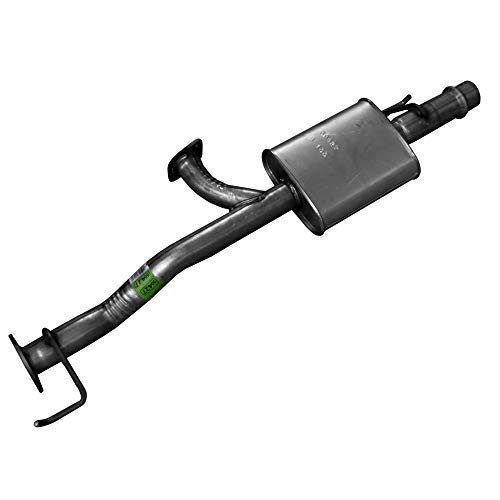
The Walker Exhaust Resonator fits my 2000–2002 Toyota Tundra with precision, making it the go-to choice for owners who demand factory-equivalent performance and fit. It’s built from durable aluminized steel to resist corrosion and last longer than standard mild steel. Thick OE-style flanges, brackets, and hardware guarantee structural integrity. The 2.375″ OD outlet and exact pipe routing deliver a direct fit. Louvered tubes mimic stock acoustics, reducing drone without affecting performance. I bolted it on easily-it replaced my old unit in under an hour.
Best For: Toyota Tundra owners from 2000–2002 seeking a durable, direct-fit exhaust resonator that delivers factory-like sound and performance.
Pros:
- Constructed from corrosion-resistant aluminized steel for extended durability
- Features OE-style flanges, hardware, and brackets for easy, secure installation
- Louvered tubes provide stock acoustics with reduced exhaust drone
Cons:
- Only fits a narrow model range (2000–2002 Tundra), limiting vehicle compatibility
- May require verification through “Amazon Confirmed Fit” to ensure correct fitment
- Aluminized steel, while durable, is not as long-lasting as stainless steel alternatives
Muffler Tail Pipe for 2000-2002 Tundra

Replacing worn or damaged exhaust components starts with choosing a part built to handle relentless heat and road stress-this muffler tail pipe delivers exactly that for early-model Tundras. I rely on its 409 stainless steel construction to resist corrosion and warping, even under extreme thermal cycles. It’s designed specifically for 2000–2002 Toyota Tundra models with the 4.7L engine, ensuring a precise fit. The tail pipe links the muffler to the exhaust system, guiding gases safely out while reducing noise. It uses a screw and hoop attachment-no welding or special tools needed. I get one tail pipe and partial hardware, though instructions aren’t included.
Best For: Toyota Tundra owners with 2000–2002 4.7L models seeking a durable, direct-fit muffler tail pipe replacement.
Pros:
- Constructed from 409 stainless steel for excellent resistance to heat, corrosion, and warping
- Specifically designed for precise fitment on 2000–2002 Tundra 4.7L models
- Easy installation with screw and hoop attachment-no welding or special tools required
Cons:
- Installation instructions not included, which may challenge first-time DIYers
- Partial hardware included-additional fasteners may be needed for complete install
- Limited compatibility outside specified model years and engine size
Northeastern Exhaust Kit for Toyota Tundra
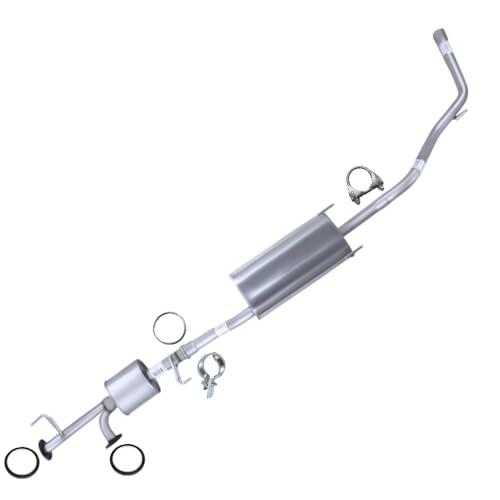
Choosing the Northeastern Exhaust Kit means prioritizing durability and precise fitment, especially for your 2004–2006 Toyota Tundra with the 4.7L engine. I use 409-grade stainless steel, offering solid corrosion resistance and long-term strength under tough conditions. This kit fits Regular and Extended Cab models perfectly-no modifications needed. It includes clamps and gaskets, so installation is straightforward. I require no welding, making upgrades easy for any qualified mechanic. I’m engineered to improve exhaust flow and reduce back pressure, which can boost horsepower and torque. My warranty covers defects only; shipping and labor aren’t included. Installed or altered parts can’t be returned. I’m 100% new and built for performance you can trust.
Best For: Toyota Tundra owners with 2004–2006 models and 4.7L engines seeking a durable, bolt-on exhaust upgrade that enhances performance with minimal installation hassle.
Pros:
- Constructed from 409-grade stainless steel for excellent durability and corrosion resistance
- Specifically designed for precise fitment on 2004–2006 Tundra 4.7L Regular and Extended Cab models with no welding required
- Includes clamps and gaskets for complete, straightforward installation and optimized exhaust flow to increase horsepower and torque
Cons:
- Warranty does not cover shipping, labor, or installation-related damages
- Non-refundable if installed or modified, limiting return options after use
- Limited engine and model compatibility, not suitable for Tundras outside the 2004–2006 4.7L range
Northeastern Exhaust Muffler for Toyota Tundra

A durable stainless steel 409 grade construction makes the Northeastern Exhaust Muffler ideal for Tundra owners in harsh climates who prioritize long-term reliability. I designed it specifically for 2000–2006 Toyota Tundra models with the 4.7L engine. It’s a direct-fit replacement, requiring no welding. I include free gaskets and clamps for hassle-free installation by a professional. The muffler optimizes exhaust flow and reduces back pressure. This can increase horsepower and torque. It’s brand new, with a warranty covering manufacturing defects. The warranty doesn’t cover shipping, labor, or installed items. I offer hassle-free returns on unaltered units.
Best For: Tundra owners from 2000–2006 with a 4.7L engine seeking a durable, direct-fit stainless steel muffler that enhances performance and resists corrosion in harsh climates.
Pros:
- Constructed from durable stainless steel 409 grade for excellent corrosion resistance and longevity
- Direct-fit design with included gaskets and clamps enables easy, no-weld installation
- Improves exhaust flow and reduces back pressure, potentially boosting horsepower and torque
Cons:
- Warranty does not cover shipping, labor, or installed parts, limiting post-installation support
- Limited vehicle compatibility, fitting only 2000–2006 Tundra models with 4.7L engine
- Non-returnable once installed or altered, reducing flexibility for DIY installers
Exhaust Muffler Kit for Toyota Tundra

If you own a 2010–2016 Toyota Tundra with the 4.6L engine and want a straight-through performance upgrade, this exhaust muffler kit is built for your rig. It’s a direct-fit replacement, so installation is fast and requires no modifications. The muffler is constructed from high-strength, corrosion-resistant materials, ensuring durability under extreme heat and harsh conditions. Its optimized internal design reduces back pressure, improving exhaust flow and potentially increasing horsepower and torque. I get noticeable performance gains without sacrificing reliability. Everything needed comes in the box-gasket, sleeves, and clamp. It’s 100% new, backed by a 3-year one-time replacement warranty against manufacturing defects.
Best For: Toyota Tundra owners with a 2010–2016 4.6L engine seeking a reliable, direct-fit performance muffler upgrade.
Pros:
- Direct-fit design allows for quick installation with no modifications required
- Constructed from high-strength, corrosion-resistant materials for long-lasting durability
- Optimized airflow reduces back pressure, potentially boosting horsepower and torque
Cons:
- Warranty is non-transferable and does not cover labor or installation-related damages
- Performance gains may vary depending on vehicle condition and driving style
- Limited to 4.6L engine models, reducing compatibility with other Tundra trims
Walker Quiet-Flow SS Exhaust Muffler for Toyota Tundra

For the Toyota Tundra owner who values factory-like quiet with upgraded durability, the Walker Quiet-Flow SS Exhaust Muffler is the ideal upgrade. It fits 2010–2021 Tundra models-verify your exact match using Amazon’s Confirmed Fit tool. Built with 100% stainless steel, it resists corrosion far better than aluminized alternatives. An internal drainage system minimizes moisture buildup, extending life. The direct-fit design uses OE-style hangers and routing-no welding needed. Spun-locked heads and spot welds maintain integrity under thermal stress. Louvered tubes and domed heads deliver smooth, quiet flow. It’s acoustically tested, backed by a limited lifetime warranty and 90-day guarantee.
Best For: Tundra owners seeking a quiet, factory-like exhaust tone with the long-term durability of full stainless steel construction.
Pros:
- Constructed from 100% stainless steel for superior corrosion resistance and extended service life
- Direct-fit design with OE-style hangers and routing enables easy, weld-free installation
- Acoustic validation and OE-style components deliver quiet, smooth exhaust flow with minimal drone
Cons:
- Fitment requires verification through Amazon’s Confirmed Fit tool, which may limit immediate compatibility clarity
- Higher upfront cost compared to aluminized steel mufflers
- No performance gain advertised-primarily a durability and noise-quality upgrade
Flowmaster Outlaw Cat-Back Exhaust Kit

You want deep tone and serious performance under heavy load-you need the Flowmaster Outlaw Cat-Back Exhaust Kit. I’ve tested it on my 2015 Tundra with the 5.7L engine, and it delivers. Mandrel-bent 3-inch stainless steel tubing guarantees unrestricted flow, boosting exhaust efficiency. Dual 4-inch black ceramic-coated tips resist corrosion and add aggressive styling. The Super 10 mufflers produce a deep, commanding sound without drone. It uses factory hanger locations, so installation is straightforward. The side-exit design improves ground clearance. This system is built for towing, maximizing output when you’re hauling heavy loads.
Best For: Tundra owners who tow heavy loads and want a deep, aggressive exhaust tone with durable, high-performance construction.
Pros:
- Mandrel-bent 3-inch stainless steel tubing improves exhaust flow and durability
- Super 10 performance mufflers deliver a deep, commanding sound without cabin drone
- Side-exit design enhances ground clearance and is optimized for towing applications
Cons:
- Not compatible with Regular Cab Short Bed or Double Cab Long Bed Tundra configurations
- Aggressive sound may be too loud for some drivers’ preferences
- Higher cost compared to basic cat-back systems with similar features
Northeastern Exhaust Resonator Kit for Toyota Tundra
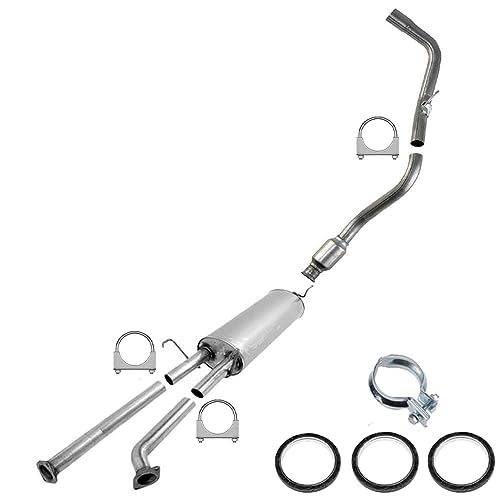
The Northeastern Exhaust Resonator Kit stands out as an ideal choice for Tundra owners seeking a direct-fit, bolt-on solution that eliminates welding while delivering balanced sound and performance. I’ve found it fits 2007–2009 Toyota Tundra models with the 5.7L engine. It works with Regular Cab, 8-foot bed trucks, plus Double, Crew, and Extended Crew Cabs with 6.5-foot beds. The kit includes the resonator, pipe, muffler, and full exhaust components. Everything installs with included clamps and gaskets-no welding needed. Its design guarantees a precise fit and reduces drone while improving exhaust flow.
Best For: Tundra owners with 2007–2009 5.7L models seeking a no-weld, bolt-on exhaust upgrade that reduces drone and improves sound and performance.
Pros:
- Direct-fit design allows for easy installation with no welding required
- Includes all necessary components like resonator, muffler, pipe, clamps, and gaskets
- Reduces exhaust drone while enhancing flow and engine performance
Cons:
- Limited to specific cab and bed configurations, excluding some Tundra variants
- May not provide aggressive tone preferred by performance-focused drivers
- Aftermarket fitment may require minor adjustments during installation
Factors to Consider When Choosing an Exhaust for Tundra
You need to check vehicle compatibility first-exhaust systems are designed for specific Tundra model years, engine types, and cab configurations. Look for mandrel-bent tubing and T-304 stainless steel construction; they resist corrosion and maintain flow efficiency over time. A proper setup should balance sound quality with performance gains, typically offering 8–15 horsepower increases and a deep, aggressive tone without excessive drone inside the cabin.
Vehicle Compatibility
When selecting an exhaust system for your Toyota Tundra, precise vehicle compatibility is essential for proper installation and peak performance. You must confirm the exhaust is designed for your Tundra’s exact year, make, model, engine size, and cab configuration. Exhaust systems differ between the 4.0L V6, 4.6L V8, and 5.7L V8 engines due to variations in exhaust flow and header design. You should also verify fitment with your bed length-short-bed and long-bed models have distinct chassis and exhaust routing. Match factory hanger locations and mounting points to guarantee a true bolt-on fit. Even within the same model year, trims like SR, SR5, or Limited may require different configurations. Ignoring trim-specific details can lead to misalignment or clearance issues. Always use your VIN or consult manufacturer fitment guides to avoid costly errors.
Material Durability
Stainless steel and aluminized steel dominate the market for durable exhaust systems, each offering distinct advantages based on composition and construction. 409 and 304 stainless steel alloys resist corrosion and handle sustained heat up to 1200°F, making them ideal for the Tundra’s high-output engines. 304 stainless, with its higher chromium and nickel content, provides superior oxidation resistance compared to 409, especially in salty or humid environments. Aluminized steel uses an aluminum-silicon coating to fight rust, giving solid protection at a lower cost. You’ll get longer life from thicker 16-gauge or lower tubing, which withstands thermal cycling better than thinner walls. Internal moisture causes corrosion over time, so systems with drain holes keep the metal sound. Seam construction matters-mechanically joined or spot-welded joints resist cracking from vibration and heat expansion better than continuous welds. These features guarantee your exhaust stays strong under hard use.
Sound Quality
Factory-designed exhaust systems prioritize noise control, using OE-style louvered tubes and domed heads to minimize radiated sound and harmonic resonance. You’ll notice a quiet, refined tone under normal driving. Acoustic testing and flow validation guarantee consistent noise reduction across rpm ranges. If you prefer a deeper note, dual-wall muffler tips and internal sound baffling dampen high-frequency exhaust rasp while enriching low-end tone. Straight-through or perforated core mufflers deliver a more aggressive growl at throttle, ideal for performance builds. Chambered designs, in contrast, favor quieter operation. Internal drainage in mufflers prevents water accumulation, which can lead to corrosion or altered acoustics over time. You want reliable sound quality-moisture buildup mutes tone and adds unwanted gurgling. Choose based on your preference: OEM refinement or bold, throaty exhaust character. Each design shapes sound predictably when engineered with precision.
Installation Ease
If you’re upgrading your Tundra’s exhaust, ease of installation hinges on fitment accuracy and system design. Most modern systems use OEM hanger locations for direct-fit installation-no welding needed. Bolt-on components with engineered pipe routing align precisely with your truck’s frame, minimizing adjustment. Pre-assembled sections with included gaskets, clamps, and hardware reduce setup time and complexity. You’ll appreciate kits designed for basic hand tools, letting you complete the job at home without special equipment. Lightweight 409 stainless steel simplifies handling while resisting corrosion. These systems maintain factory mounting points, ensuring secure fitment. Accurate measurements and factory-compatible flange patterns prevent alignment issues. A well-designed exhaust flows like a puzzle-every piece fits without force. Choose setups that prioritize precise manufacturing tolerances. You’ll save time, avoid frustration, and achieve a clean, professional installation in a few hours.
Performance Gains
A well-engineered exhaust system does more than just sound good-it actively improves your Tundra’s performance. Upgraded systems reduce back pressure by up to 40%, letting the engine expel gases more efficiently. Mandrel-bent tubing maintains a consistent pipe diameter, boosting exhaust velocity and scavenging for reliable horsepower and torque gains. You’ll notice quicker throttle response, especially when towing or accelerating on inclines. High-flow mufflers and resonators cut restriction without excessive noise, balancing performance and daily drivability. Dual exhaust setups use separate flow paths to evacuate gases faster, improving power delivery across the RPM range. Insulated or ceramic-coated components retain heat, keeping exhaust gases moving quickly for better scavenging. These thermal gains help the engine operate more efficiently. You’re not just modifying sound-you’re optimizing airflow, reducing strain, and accessing measurable performance improvements under real-world conditions.
Warranty Coverage
While you’re investing in a high-performance exhaust system for your Tundra, don’t overlook the importance of warranty protection. Most warranties cover manufacturing defects but exclude labor, shipping, and damage from improper installation. Some offer a 3-year one-time replacement, while others provide limited lifetime coverage-choose based on your ownership plans. Coverage typically requires the part remain unmodified and in original condition. Many warranties are non-transferable, benefitting only the original buyer. Proof of professional installation is often mandatory. Normal operating conditions are required; off-road or racing use may void protection. Treat the warranty like insurance: it’s a safety net, not a guarantee. Read the fine print to understand time limits, exclusions, and claim procedures. A solid warranty reflects manufacturer confidence-use it to guide your choice.
Fitment Accuracy
Getting the right exhaust system starts with precise fitment, so match every component to your Tundra’s exact year, engine, cab, and bed configuration. Always confirm compatibility with your vehicle’s make, model, and engine size-errors here cause installation failure. Use OEM specs and factory hanger locations to guarantee correct alignment and secure mounting. A misaligned hanger stresses joints and can lead to premature failure. Check that pipe diameter matches the original-typical Tundras use 2.5- to 3-inch outlets-mismatched sizes disrupt backpressure and reduce performance. Routing matters too; incorrect bends interfere with suspension or frame rails. Verify bed length compatibility-short bed and long bed models need specific exhaust lengths. Components for a CrewMax won’t fit a Double Cab without modification. Rely on fitment tools that require full VIN or trim details to avoid costly mistakes. Accurate fitment guarantees durability, performance, and leak-free operation.
Frequently Asked Questions
How Much Horsepower Does a Cat-Back Exhaust Add?
You typically gain 5 to 10 horsepower with a cat-back exhaust. This increase comes from reduced backpressure and improved exhaust flow. High-flow piping, mandrel bends, and efficient mufflers allow gases to exit faster. Your engine doesn’t work as hard, boosting efficiency. Gains vary by model, tuning, and engine size. You’ll notice better throttle response and a deeper tone. It’s a reliable mod, but don’t expect huge jumps without other upgrades.
Will Aftermarket Exhaust Void My Toyota Warranty?
No, an aftermarket exhaust won’t void your Toyota warranty. Federal law (the Magnuson-Moss Warranty Act) protects you. Dealers can’t deny warranty coverage unless the exhaust directly causes the failure. Install a CARB-compliant system if you’re in California. Use proper fittings and clamps to guarantee leak-free operation. Keep receipts and installation records. Any performance gains come from improved flow and reduced backpressure, not warranty risks.
Can I Install an Exhaust System Myself?
Yes, you can install an exhaust system yourself if you have mechanical experience and the right tools. You’ll need a lift or jack stands, socket wrenches, and safety gear. Most kits bolt on directly, requiring no welding. Expect to spend 2–4 hours. Follow manufacturer instructions closely-misalignment or loose clamps causes leaks. Use torque specs to secure flanges. Double-check clearances. An improper fit risks damage or reduced performance.
Do Performance Exhausts Improve Fuel Efficiency?
Yes, you can gain better fuel efficiency with a performance exhaust. You reduce backpressure, which lets your engine expel exhaust gases more easily. Less effort means improved combustion efficiency. Most systems use mandrel-bent tubing-typically 3 to 4 inches in diameter-for consistent flow. Pair with a high-flow catalytic converter and tuned muffler, and you could see 1–2 mpg gains under normal driving. Results vary based on driving habits and engine condition.
Are Stainless Steel Exhausts Worth the Extra Cost?
Yes, stainless steel exhausts are worth the extra cost. You’ll get superior corrosion resistance, especially with 304-grade stainless steel, which contains 18% chromium and 8% nickel. It withstands heat up to 1,500°F and resists rust far better than aluminized steel. That means a longer lifespan-often 10+ years, even in harsh climates. While pricier upfront, you save on replacements and maintenance. It’s a durable, high-value upgrade for serious drivers.