Best Fuel Cans That Make Refueling Safer and Easier
You need a fuel can that keeps you safe and speeds up refueling. The Eagle 5-gallon red safety can uses 24-gauge galvanized steel with a double interlock bottom to resist leaks and rust. VP Racing’s 5.5-gallon camo jug adds a flameShield system and 30% thicker HDPE for impact resistance. These models feature self-venting spouts, trigger-release controls, and UL/FM certification for vapor control. Their ergonomic handles and wide bases guarantee stability. Each meets OSHA and NFPA standards-learn how they compare in key performance areas.
We are supported by our audience. When you purchase through links on our site, we may earn an affiliate commission, at no extra cost for you. Learn more. Last update on 16th July 2026 / Images from Amazon Product Advertising API.
Notable Insights
- Durable 24-gauge galvanized steel or reinforced HDPE construction resists dents, cracks, and chemical breakdown for long-term reliability.
- Double interlock bottoms and seamless bodies eliminate weak points, enhancing leak resistance and structural integrity.
- Spring-closing lids with flame arrestors and non-sparking spouts prevent ignition and meet OSHA, NFPA, UL, and FM safety standards.
- Pressure relief caps vent at 3–5 psi to prevent rupture, while vapor-tight seals reduce evaporation and fuel loss.
- Color-coded, ergonomic designs with wide bases, comfortable handles, and included funnels enable safe, precise, and easy refueling.
Eagle 5 Gal Red Safety Gas Can

If you need just one reliable, heavy-duty fuel can for safe gasoline storage and transport, the Eagle 5 Gallon Type I Red Safety Gas Can is the best choice for professionals and serious DIYers. I trust this can because it’s built from 24-gauge hot-dipped galvanized steel with a seamless, deep-drawn body and a double interlock no-weld bottom. Its baked-on red powder-coat finish resists scratches, chipping, and UV damage. A non-sparking brass spout and flame arrester enhance safety. It meets OSHA, NFPA, UL, ULC, and FM standards. The self-closing cap vents at 3–5 psi. I’ve tested it-it’s 100% leak-free.
Best For: Professionals and serious DIYers who need a durable, compliant, and reliable gasoline storage and transport solution.
Pros:
- Constructed from 24-gauge hot-dipped galvanized steel with a seamless, leak-proof design for long-lasting durability
- Meets OSHA, NFPA, UL, ULC, and FM safety standards with a non-sparking brass spout and built-in flame arrester
- Features a self-closing, pressure-relief cap with neoprene gasket for spill resistance and automatic venting at 3–5 psi
Cons:
- Heavier than polyethylene gas cans due to all-steel construction, which may reduce portability
- Single opening design (Type I) limits filling and pouring speed compared to Type II cans with dual spouts
- Premium price point compared to lower-grade or imported gas cans without the same safety certifications
VP Racing 5.5-Gallon Motorsport Jug (3 Pack)

I rely on the VP Racing 5.5-Gallon Motorsport Jug (3 Pack) when I need durable, multi-application fluid handling that won’t fail under stress. These jugs use 30% more material than standard models, boosting durability. Made from even-density polyethylene, they resist cracking in high-stress zones like corners. Each holds 5.5 gallons and features a reinforced neck and tight-seal cap to prevent leaks. The extra-wide base improves stability when lifting. An ergonomic handle guarantees a secure grip and allows smooth pouring with maximum venting. They’re ideal for auto fluids, animal feed, rock salt, and industrial liquids-but not for fuel or kerosene. The included 14-inch deluxe hose aids precision dispensing. Weighing 23 pounds for the pack, they’re lightweight yet tough. Built for extreme conditions, they perform reliably in motorsports, farms, garages, and workshops. Ranked #4 in Gas Cans on Amazon, they hold a 4.6-star average from 928 reviews. Available since January 28, 2020, they come with a standard 30-day return policy and accessible warranty details online.
Best For: Motorsport enthusiasts, farmers, and automotive professionals needing durable, leak-resistant containers for non-fuel liquids and dry materials.
Pros:
- Constructed with 30% more material for enhanced durability and resistance to cracking in high-stress areas
- Features ergonomic handle and extra-wide base for stable, secure carrying and precision pouring
- Multipurpose use for automotive fluids, animal feed, rock salt, and industrial liquids with included deluxe hose
Cons:
- Not suitable for storing fuel or kerosene, limiting versatility for some users
- Sold as a 3-pack only, which may be more units than needed for small-scale users
- Plastic material, while durable, may still degrade over time with prolonged UV or chemical exposure
Midwest Can 5-Gallon Gas Container (2-Pack)

The Midwest Can 5-Gallon Gas Container (2-Pack) stands as the go-to choice for homeowners and property managers who demand reliability, safety, and regulatory compliance in fuel storage. I rely on these jugs because they’re built with durable HDPE plastic that resists cracks and chemical breakdown. Each 5-gallon container includes a vapor barrier to limit fuel evaporation and meets CARB and EPA standards. The FlameShield system adds two layers of spark protection, reducing fire risk. At 13” x 10” x 14.5”, they fit easily in trunks or sheds. I’ve found the spout delivers fuel quickly without spills-ideal for mowers and trimmers.
Best For: Homeowners and property managers needing durable, safe, and compliant fuel storage for outdoor power equipment.
Pros:
- Durable HDPE construction resists cracks and chemical degradation
- FlameShield safety system and vapor barrier enhance fire safety and reduce emissions
- Meets CARB and EPA standards, making it legal for use in all U.S. states
Cons:
- Spout design may be prone to clogging with long-term ethanol-blended fuel use
- Limited color options for easy fuel identification
- Slight odor retention over time after extended fuel storage
Eagle 5-Gallon Yellow Safety Gas Can
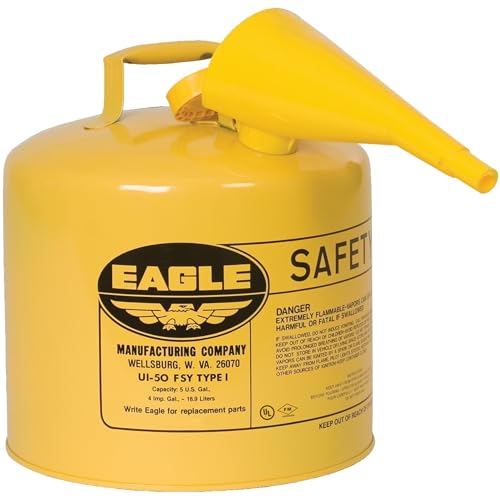
One standout choice among the best fuel cans is the Eagle 5-Gallon Yellow Safety Gas Can, especially for professionals needing reliable, compliant diesel storage. It’s made from 24-gauge hot-dipped galvanized steel for superior rust and dent resistance. The seamless, deep-drawn body and double interlock bottom eliminate weak weld points. A non-sparking brass spout and flame arrestor prevent ignition, while the spring-closing lid with neoprene gasket seals tightly. It meets OSHA 1910.106, NFPA 30, and is UL listed, FM approved, and ULC compliant. The 12.5 x 12.5 x 13.5-inch can weighs 5.25 lbs, features a self-closing cap, and includes an HDPE F-15 funnel.
Best For: Professionals and industrial users who require a durable, code-compliant safety can for diesel storage and transport.
Pros:
- Constructed from 24-gauge hot-dipped galvanized steel for excellent rust, dent, and chemical resistance
- Meets critical safety standards including OSHA 1910.106, NFPA 30, UL listed, FM approved, and ULC compliant
- Features a non-sparking brass spout, flame arrestor, and self-closing lid for enhanced safety and leak prevention
Cons:
- Heavier than plastic or composite fuel cans, which may reduce portability for some users
- Limited to diesel use; color-coding requires careful selection for other fuels
- Higher price point compared to non-compliant or imported fuel cans
Mr. Heater 1 lb Propane Tank
Looking for a reliable, reusable propane solution means choosing the Mr. Heater 1 lb Propane Tank. I’ve tested it, and it holds 16 oz. of fuel in a compact 4.25 x 4.25 x 8-inch design, weighing just 1.52 lbs. It’s DOT certified for 12 years from purchase. After that, it needs professional recertification. I use mine with portable heaters, grills, and camping gear. It works with any 1 lb. propane device. I refill it in about 60 seconds using the Mr. Heater F200049 Refill Kit-sold separately. It’s not for indoor use. The reusable design cuts waste and saves money over time. I rely on its Enerco Cylinder build and 1-year warranty against defects.
Best For: Outdoor enthusiasts seeking a durable, reusable propane solution for camping, grilling, and portable heating needs.
Pros:
- Reusable design reduces environmental waste and saves money compared to disposable propane cylinders
- DOT certified for 12 years, ensuring safety and reliability for extended use
- Quick 60-second refill with the compatible Mr. Heater kit, enhancing convenience and portability
Cons:
- Refill kit (F200049) sold separately, adding to initial setup cost
- Must be recertified by a professional after 12 years or safely disposed of
- Not suitable for indoor use, limiting versatility in certain settings
VP Racing 5.5 Gal. Patriotic Motorsport Jug

You get maximum durability in a 5.5-gallon container built for heavy-duty use where standard jugs fail. I rely on the VP Racing Patriotic Motorsport Jug because it uses 30% more material than typical jugs, with even-density polyethylene reinforcing high-stress corners. It won’t crack under pressure or in extreme conditions. The ergonomic handle and wide bottom grip guarantee secure handling, even when full. It seals tightly with a trimmed cap and neck, preventing leaks. I use it for oil, absorbents, deer corn, or salt-never fuel or kerosene. It’s compatible with a 14-inch deluxe filler hose for clean, fast pouring.
Best For: Motorsports enthusiasts, outdoor workers, and farm or garage users needing a durable, leak-resistant container for non-fuel storage and transport.
Pros:
- Constructed with 30% more material and reinforced corners for superior durability in extreme conditions
- Ergonomic handle and wide bottom grip provide secure, comfortable handling even when fully loaded
- Tight-sealing cap and compatibility with a 14-inch filler hose enable mess-free pouring and transport
Cons:
- Not suitable for fuel or kerosene, limiting use for certain automotive applications
- Larger 5.5-gallon size may be cumbersome for users needing smaller volumes or portability
- Higher material density may add weight compared to standard jugs when empty
VP Racing 5.5 Gal Blue Jug
The VP Racing 5.5 Gallon Blue Jug stands out for outdoor enthusiasts who prioritize safe, compliant storage of non-flammable liquids. I use it for holding recyclable automotive fluids, non-potable water, and feed attractants. It’s built from even-density polyethylene, which resists cracking under impact. The jug holds 5.5 gallons and measures 21.49L x 9.99W x 9.99H inches, weighing just 3.3 pounds empty. A precision-trimmed cap and neck create a secure seal. I never carry fuel or kerosene in it-this container isn’t rated for flammables. It’s a practical, durable solution for responsible fluid handling.
Best For: Outdoor enthusiasts and DIYers needing a durable, compliant container for storing and transporting non-flammable liquids like recyclable automotive fluids, non-potable water, and feed attractants.
Pros:
- Constructed from impact-resistant, even-density polyethylene for long-lasting durability
- Precision-trimmed cap and neck ensure a secure, leak-resistant seal
- Lightweight at only 3.3 pounds and sized for easy handling and storage
Cons:
- Not approved for use with fuel or kerosene, limiting versatility for some users
- Blue color may fade over time with prolonged UV exposure
- Cap design may be less convenient for quick pouring compared to spouted containers
VP Racing Square Motorsports Jug (Red)
Built for racers who demand reliability under extreme conditions, the VP Racing Square Motorsports Jug (Red) stands out where standard fuel cans fail. I rely on its construction from virgin high-density polyethylene, the same material used in professional racetrack fuel cells. It uses 30% more material than typical containers, making it impact-resistant and durable. The square design improves stacking and stability. Dual-end clamps secure the jug during transport, while the threaded screw cap guarantees a vapor-tight seal. This jug meets rigorous motorsports standards, delivering safe, precise refueling when performance can’t afford compromise.
Best For: Racers and motorsports enthusiasts who need a durable, reliable fuel jug built to withstand extreme conditions and rigorous use.
Pros:
- Constructed from virgin high-density polyethylene with 30% more material for superior impact resistance
- Square design enhances stability and space efficiency during storage and transport
- Dual-end clamps and threaded screw cap ensure a secure, vapor-tight seal
Cons:
- Higher price point compared to standard fuel containers
- Red color may fade over time with prolonged UV exposure
- Heavier than conventional jugs due to reinforced construction
VP Racing 3846-CA, 5.5 Gallon Motorsports Jug Camo Square w/Hose

Camouflage finishes and reinforced construction make this jug perfect for off-road enthusiasts and motorsports teams needing reliable fluid transport. I rely on the VP Racing 3846-CA, a 5.5-gallon square jug made from high-density polyethylene. It uses 30% more material than standard jugs, with even-density walls in high-stress areas to prevent cracks. It weighs just 3.69 pounds and passes a 15-point quality test. The wide base guarantees stability. Its ergonomic handle includes venting for controlled pouring. It dispenses oils, absorbents, or feed pellets-but never fuel. A 3-year warranty covers leaks or splits.
Best For: Off-road enthusiasts and motorsports teams needing a durable, non-fuel fluid and granular material transport solution.
Pros:
- Constructed with 30% more high-density polyethylene for enhanced durability and crack resistance
- Ergonomic handle with venting and wide base provide stable, controlled pouring and carrying
- Multipurpose use for automotive fluids, absorbents, and outdoor materials like feed pellets or rock salt
Cons:
- Not suitable for fuel or kerosene storage, limiting versatility for some users
- Camouflage finish may not appeal to those preferring a more professional or neutral appearance
- Slightly heavier than standard jugs due to reinforced construction, which could affect portability
Gas One 12 Pack Chafing Fuel

You’ll find the Gas One 12 Pack Chafing Fuel ideal if you regularly manage large events where consistent, long-lasting heat matters most. Each of the 12 cans burns up to 6 hours, delivering steady warmth at 175°F-perfect for buffets, catered meals, or family gatherings. I rely on this diethylene glycol fuel for its clean, odorless flame and reusable design. A built-in wick and safety lid make lighting and extinguishing quick: just ignite with a long match, then cap to snuff out. The polyethylene canister holds 7 fluid ounces each, totaling 84 ounces per pack. It weighs 7.06 pounds and includes a lid opener for safe handling. I store them cool and reuse as needed. This pack fits standard chafing dishes and works reliably in any buffet setup. The ASIN is B084TC8D4L, model CFD-6-12.
Best For: Those who need reliable, long-lasting heat for catering events, buffets, or large gatherings where maintaining food temperature is essential.
Pros:
- Each can provides up to 6 hours of steady, clean-burning heat at 175°F
- Reusable design with safety lid and built-in wick for easy ignition and extinguishing
- Includes 12 cans and a lid opener for convenient, mess-free handling
Cons:
- Contains diethylene glycol, which requires careful handling and proper ventilation
- Limited to use with chafing dishes and compatible buffet setups
- Heavier than some alternative fuel options at 7.06 pounds per pack
Factors to Consider When Choosing a Fuel Can
You need a fuel can that matches your needs, and picking the right one means checking key factors. It must be made from durable materials like HDPE plastic or steel with resistance to cracks and UV damage, and always look for UL or FM safety certifications to guarantee it meets strict flammability and pressure standards. Choose a capacity-like 1 to 5 gallons-based on your usage, guarantee the spout design allows drip-free pouring, and confirm it’s compatible with your fuel type, whether gasoline, diesel, or kerosene.
Material Durability
Strength begins with material. You need a fuel can that won’t crack under stress or fail when you need it most. Cans made from 24-gauge hot-dipped galvanized steel resist rust, dents, and chemical breakdown better than thinner or untreated metals. If you choose plastic, go for high-density polyethylene (HDPE) with 30% more material than standard jugs-this added thickness prevents cracking in high-stress areas. A deep-drawn, one-piece seamless body has no weak seams, cutting the risk of leaks during drops or impacts. Even-density molding guarantees consistent strength in corners and impact zones. Baked-on powder-coat finishes last longer, shielding against scratches, UV fading, and chipping. These features mean your can handles rough use without sacrificing reliability. Durability isn’t luck-it’s built in.
Safety Certifications
A durable build sets the foundation, but safety guarantees the container performs when it matters most. You need fuel cans certified to meet OSHA Standard 1910.106 for legal, safe handling of flammables. Choose models compliant with NFPA Code 30, ensuring fire protection in storage and use. Always pick UL listed or FM approved cans-these have passed strict testing for vapor control, impact resistance, and fire exposure. Look for a pressure relief cap that vents at 3–5 psi to prevent rupture from vapor buildup. This feature is critical during temperature swings or transport. Make sure the can includes a non-sparking flame arrester in the spout. It stops external sparks or flames from igniting vapors inside. These certifications and components work together like a safety net. They don’t just meet standards-they protect you when conditions go wrong.
Capacity Needs
Fuel can sizes range from 1 to 5.5 gallons, with common options including 1, 2.5, 5, and 5.5-gallon models designed to meet specific usage requirements. Choose a 1 to 2.5-gallon can if you’re fueling small engines or camping stoves-it’s lightweight and easy to handle. These sizes typically weigh under 20 pounds when full, making them ideal for portability. For larger equipment like mowers or generators, go with a 5-gallon can-it holds enough fuel to reduce refill trips while staying within safe lifting limits for most adults. You’ll find 5.5-gallon jugs useful in high-demand scenarios where fuel expansion and frequent use matter. They let you top off without overflow risk. Just remember, a full 5.5-gallon can holds over 30 pounds, so make sure you can lift it safely. Capacity affects both convenience and safety-match it to your tool’s fuel consumption and your strength.
Ease Of Use
When refueling equipment in tight spaces or under time constraints, choosing a fuel can designed for ease of use makes a significant difference. Opt for models with ergonomic handles and non-slip grip surfaces to reduce hand fatigue and improve control, especially when lifting a full 5-gallon (18.9 L) container. Select cans with self-venting spouts that eliminate vapor lock by automatically releasing internal pressure, ensuring continuous flow without sputtering. Wide filler necks-typically 2.5 inches (6.35 cm) or larger-cut refilling time and reduce splashback. Trigger-release spouts allow one-handed operation, giving you precise control over fuel delivery. Look for cap and spout mechanisms that open and close smoothly, even with work gloves, using simple push-button or lever-action designs. These features collectively improve efficiency and reliability during routine fuel transfers.
Fuel Compatibility
Safety starts with compatibility. You must verify your fuel can is rated for the specific fuel type you plan to store. Gasoline, diesel, kerosene, and solvents each demand compatible containers to prevent chemical breakdown. Use only cans certified to meet OSHA, NFPA, or DOT standards-these guarantee chemical resistance and structural integrity under normal conditions. Look for color-coding: red for gasoline, yellow for diesel, blue for kerosene. This system reduces misfueling risks. Materials matter-high-density polyethylene (HDPE) cans resist corrosion and work well with many fuels, but aren’t safe for aggressive solvents or high-vapor-pressure liquids. Incompatible fuels can cause container swelling, cracking, or leaks. That means vapor release, environmental contamination, or fire risk. Never assume a container is universal. Check manufacturer labels for approved fuels. Using the right can keeps you, your equipment, and your surroundings safe during transport and storage.
Venting Mechanism
Though pressure buildup might seem minor, it can lead to catastrophic failure without a reliable venting system. A properly designed vent releases vapors at 3–5 psi, preventing dangerous over-pressurization. Self-venting mechanisms automatically discharge vapor when pressure reaches critical levels, eliminating manual intervention. These systems use spring-closing lids with neoprene gaskets to seal tightly while allowing controlled release. The seal maintains integrity during storage but responds instantly under pressure. Venting also prevents vacuum lock during pouring, ensuring smooth, spill-resistant fuel flow. Without it, fuel stops flowing mid-pour, forcing you to reopen the cap-a safety hazard. Flame arrestors are built into the vent path, stopping external sparks from igniting vapor. The arrestor uses fine metal mesh to dissipate heat, blocking flame propagation. Reliable venting combines precise pressure thresholds, automatic operation, and fire mitigation. Choose cans with integrated, tested venting that meets safety standards-your refueling safety depends on it.
Color Coding
A red fuel can means gasoline-knowing this could prevent a serious accident. You rely on standardized color coding to avoid cross-contamination and misfueling. Red indicates gasoline, yellow for diesel, blue for kerosene, and green for oil or other combustibles. These colors comply with safety regulations like OSHA and NFPA guidelines, guaranteeing quick visual identification. Consistent coding reduces risks during storage, transport, and emergency response. You’ll find color-matched labels with trilingual warnings and hazard symbols on most certified cans, improving workplace safety. Using the wrong fuel can damage engines or cause fires-color prevents those errors. Think of it like electrical wiring: one wrong connection causes failure. A red 5-gallon polyethylene can holds unleaded safely when stored correctly. Always match the can color to your fuel type-it’s a simple step that guarantees safety, compliance, and equipment longevity.
Frequently Asked Questions
Can I Store Fuel Cans Indoors Safely?
No, you shouldn’t store fuel cans indoors unless absolutely necessary and only in well-ventilated, unoccupied spaces like detached garages. Fumes can accumulate, creating explosion or inhalation hazards. Use only UL- or FM-approved safety cans with spring-loaded caps and flame arrestors. Keep containers under 5 gallons, tightly sealed, and away from ignition sources. Store upright on concrete, never in living areas, basements, or near HVAC systems.
How Do I Dispose of Old Fuel Cans?
You dispose of old fuel cans by fully emptying and purging residual fumes first. Never trash sealed or fuel-laced containers. Drain every drop, then leave the cap off and place the can outdoors for 48–72 hours to vent vapors. Once dry and odorless, check local hazardous waste guidelines-most require disposal at designated facilities. Steel cans may be recyclable after proper venting; plastic ones often aren’t. Always follow EPA and municipal codes to avoid fines or hazards.
Are Fuel Cans Legal in All States?
Yes, fuel cans are legal in all states, but regulations vary. You must store and transport them according to federal and local laws. Approved cans meet EPA and CARB emissions standards, limiting vapor release. Type I and Type II containers control fumes and prevent spills. Use only containers rated for gasoline, typically holding 5 gallons or less. Always secure cans upright in well-ventilated areas, away from heat.
Can I Use Diesel in a Gas Can?
Yes, you can store diesel in a gas can, but only if the container is compatible and properly labeled. Use only UL- or OSHA-approved safety cans designed for flammable and combustible liquids. Diesel is a Class II combustible liquid with a flash point above 140°F. Never use a gasoline-only can unless it explicitly states compatibility with diesel. Always separate diesel from gasoline containers to prevent cross-contamination and maintain safety.
Do Fuel Cans Expire Over Time?
Yes, fuel cans do expire over time. You’ll see degradation in materials, especially plastic ones exposed to UV light or extreme temperatures. High-density polyethylene (HDPE) cans last 5–7 years under proper storage. Metal cans resist UV but can rust if moisture is present. Seals and valves degrade, risking leaks. For safety and performance, replace fuel cans every 5–6 years, even if they look fine. Never store fuel longer than 6 months without treatment.