Best Glue for Plastic Parts That Holds Strong and Lasts
You need a strong, lasting bond for plastic parts-choose adhesives with high tensile strength and resistance to environmental stress. J-B Weld Plastic Bonder delivers 3770 psi strength and bonds PVC, ABS, and fiberglass in 15 minutes. For fast results, Loctite Ultra Gel sets in 10–45 seconds and resists impact. Waterproof, heat-resistant formulas like ALECPEA 30g bond ABS and PVC with UV and moisture resistance. Precision nozzles guarantee clean application. Stronger performance depends on material compatibility and cure time. Different options suit different plastic repair demands-knowing the details makes all the difference.
We are supported by our audience. When you purchase through links on our site, we may earn an affiliate commission, at no extra cost for you. Learn more. Last update on 16th July 2026 / Images from Amazon Product Advertising API.
Notable Insights
- Choose high-strength adhesives like J-B Weld Plastic Bonder, which offers 3770 psi bond strength for durable plastic repairs.
- Opt for cyanoacrylate-based glues with rubber-toughened or flexible formulations to resist impact, vibration, and cracking over time.
- Ensure compatibility with specific plastics, avoiding adhesives ineffective on polypropylene (PP) or polyethylene (PE).
- Select adhesives that cure waterproof, heat-resistant, and UV-resistant bonds for long-lasting performance in demanding environments.
- Use precision applicators and proper surface preparation to achieve strong, seamless joints that endure stress and wear.
Y’allCanDiy Super Glue for Plastic (20g)

If you’re repairing plastic toys, assembling 3D printed parts, or working on detailed miniatures, Y’allCanDiy Super Glue for Plastic is your best choice for a strong, fast, and precise bond. This 20g (0.7 oz) cyanoacrylate-based adhesive delivers high-strength adhesion across PVC, ABS, acrylic, PLA, and Lego materials. It bonds in seconds without clamping, forming a durable, professional-grade joint. The precision applicator guarantees accurate placement, minimizing waste and mess. I rely on its no-pressure cure for intricate models and fast repairs. It’s ideal for workshop or home use, offering long-term reliability on plastic components.
Best For: DIY enthusiasts, model builders, and hobbyists needing a fast, strong, and precise adhesive for bonding plastics like PVC, ABS, acrylic, PLA, and Legos.
Pros:
- Delivers high-strength, durable bonds ideal for plastic repairs and 3D printed parts
- Fast-drying formula sets in seconds with no clamping required
- Precision applicator ensures clean, accurate application on intricate models and miniatures
Cons:
- Limited to plastic bonding; not suitable for porous materials like wood or fabric
- Cyanoacrylate formula can bond skin on contact, requiring careful handling
- 20g size may deplete quickly with frequent use on larger projects
J-B Weld Plastic Bonder Adhesive (25ml)
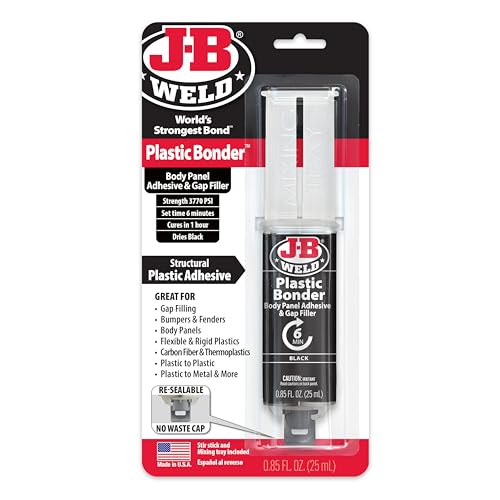
J-B Weld Plastic Bonder Adhesive (25ml) delivers a durable, high-strength solution ideal for users needing reliable adhesion across diverse plastic types and composite materials. It’s a two-part urethane system with a 1:1 mixing ratio, so setup is simple and precise. The bond sets in 15 minutes, and you can sand it in just 30. It fully cures to a hard, permanent bond with a tensile strength of 3770 psi-stronger than many plastics it joins. This adhesive works on thermoset and thermoplastics, PVC, carbon fiber, coated metals, and even concrete. I use it for both indoor and outdoor repairs, especially on body panels. It also fills gaps effectively. Trusted for over 40 years, J-B Weld stands out for consistency, innovation, and performance.
Best For: DIYers and professionals seeking a fast-curing, high-strength adhesive for bonding plastics, composites, and coated materials in both indoor and outdoor applications.
Pros:
- Sets in 15 minutes and can be sanded in 30 minutes, enabling quick repairs
- Exceptional tensile strength (3770 psi) for a durable, permanent bond
- Versatile adhesion across a wide range of materials including thermosets, thermoplastics, PVC, carbon fiber, and concrete
Cons:
- Two-part mixing required, which can be messy without careful handling
- Black color limits aesthetic use on light-colored or clear materials
- Not recommended for flexible or rubber-like plastics without surface preparation
30g Plastic Glue for Legos & Miniatures

I rely on this 30g plastic glue when I need a strong, fast bond for Legos and miniatures, especially because it grabs in just 10 to 30 seconds-faster than most standard super glues. It delivers 30% higher bonding strength than typical cyanoacrylates. The formula works on ABS, PVC, 3D printed parts, and toy plastics. Bonds become fully waterproof within 24 hours. The glue dries clear, maintaining visual continuity on multicolored pieces. An anti-clogging cap prevents solvent loss, extending shelf life. A precision tip guarantees controlled application, reducing waste. I always wear gloves-skin contact can cause irritation. This glue supports rapid assembly without compromising adhesion or appearance.
Best For: Hobbyists and model builders who need a fast, strong, and clear bond for plastic materials like Legos, miniatures, and 3D printed parts.
Pros:
- Delivers 30% higher bonding strength than standard super glues with instant adhesion in 10–30 seconds
- Dries clear and waterproof within 24 hours, maintaining aesthetic quality on colored and detailed pieces
- Features an anti-clogging cap and precision tip for controlled application and extended shelf life
Cons:
- Requires gloves to prevent skin irritation during application
- Fast-drying formula may limit repositioning time for delicate assemblies
- Limited flexibility on non-plastic or porous materials due to specialized plastic bonding formulation
Plastic Glue 35g Waterproof Heat Resistant Adhesive

This 35g Plastic Glue is the go-to solution for DIY enthusiasts and repair technicians who need a reliable, high-strength bond on plastic parts. I use it for instant adhesion on ABS, PVC, PLA, acrylic, and nylon. The industrial-grade formula bonds in 10–30 seconds and fully cures in 24 hours. It’s waterproof, heat-resistant, and weatherproof-ideal for indoor and outdoor repairs. The clear, odorless adhesive dries seamlessly, leaving no visible trace. I apply it with the precision nozzle for accurate, drip-free control, even in tight spaces. It also adheres to metal, wood, rubber, and ceramic. This glue restores plastic toys, car parts, and 3D printed models to like-new condition.
Best For: DIY enthusiasts and repair technicians needing a fast, durable, and invisible bond for plastic and other materials in both household and industrial settings.
Pros:
- Bonds plastics like ABS, PVC, PLA, acrylic, and nylon in 10–30 seconds with full cure in 24 hours
- Waterproof, heat-resistant, and weatherproof for reliable performance in harsh conditions
- Clear, odorless, and seamless finish with precision applicator for accurate, drip-free application
Cons:
- May not adhere well to low-surface-energy plastics like polyethylene or polypropylene
- Strong bond strength requires careful handling to avoid accidental skin or material bonding
- Limited reworkability once applied due to rapid curing time
Loctite Super Glue Ultra Gel 0.14 fl oz
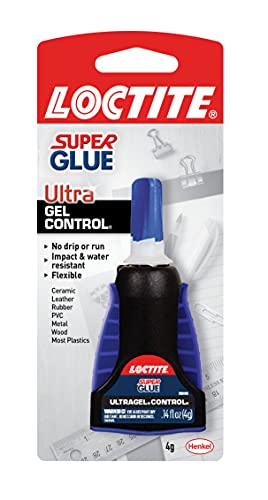
Loctite Super Glue Ultra Gel 0.14 fl oz delivers precise, no-mess bonding ideal for anyone needing a reliable adhesive for small plastic repairs. I use its rubber-toughened cyanoacrylate formula for impact and shock resistance. The gel won’t drip or run, making it perfect for vertical surfaces. Its clear, no-clamp formula sets quickly and dries transparent for invisible fixes. I apply it directly from the patented side-squeeze bottle for pinpoint control. It bonds hard plastics, metal, wood, rubber, ceramic, and more. This 0.14 fl oz pack suits home, hobby, and office use where precision matters most.
Best For: DIY enthusiasts, crafters, and homeowners needing a precise, no-mess adhesive for small repairs on plastic, metal, wood, and other materials.
Pros:
- Rubber-toughened formula provides superior impact, shock, and vibration resistance
- No-drip gel design allows for controlled application on vertical surfaces
- Bonds a wide range of materials without clamping and dries transparent for invisible repairs
Cons:
- Small 0.14 fl oz bottle may run out quickly on frequent use
- Not recommended for flexible or soft plastics without surface prep
- Cyanoacrylate formula can bond skin on contact if not handled carefully
3g Pack of 12 Super Glue Liquid

A 3g pack of 12 super glue liquid units delivers fast, industrial-strength bonding for plastic parts that demand reliability in tight-fitting repairs. I rely on its cyanoacrylate-based formula for quick 10–45 second set times and full cure within 24 hours. The thin, high-fluidity adhesive flows smoothly into tight gaps, creating transparent, colorless bonds. It handles ceramics, metals, rubber, and hard plastics with ease. I avoid polypropylene and polyethylene surfaces-they won’t hold. Each tube has an airtight seal with a red top for simple piercing; twisting clockwise breaks the inner seal safely. A precision nozzle guarantees accurate application, minimizing waste and preventing clogs. I use it for small repairs-jewelry, shoes, crafts-where control and speed matter. Over-application can cause whitening, so I apply sparingly. On clean, lightly sanded surfaces, it builds flexible, high-strength joints that endure stress. Porous materials like wood need sealing first. In well-ventilated areas, the glue performs consistently. For vertical jobs, I switch to a gel version to prevent dripping.
Best For: DIY enthusiasts, crafters, and professionals needing a fast, precise, and industrial-strength adhesive for small repairs on non-porous materials like ceramic, metal, rubber, and hard plastics.
Pros:
- Sets quickly in 10–45 seconds with a transparent, colorless finish for discreet bonds
- Precision nozzle and airtight red-top design ensure clean, controlled dispensing and long shelf life
- Strong, flexible bonds ideal for jewelry, shoe repairs, and crafts on a variety of materials
Cons:
- Not suitable for polypropylene (PP) or polyethylene (PE) plastics due to poor adhesion
- Over-application can cause whitening, requiring careful, minimal use
- May require pre-sealing of porous surfaces like wood for optimal results
Gorilla 2-Part Epoxy 0.85 Oz

For someone needing a fast, reliable bond for small plastic parts, Gorilla 2-Part Epoxy in the 0.85 oz syringe delivers strength and precision. I use its 5-minute set time to position parts accurately before curing begins. The dual-barrel syringe dispenses resin and hardener evenly, ensuring a consistent mix. Once combined, it forms an incredibly strong, gap-filling bond that holds on uneven or vertical surfaces. It cures clear, creating a durable, water-resistant finish. The compact size suits fine repairs. I’ve seen it last under moderate moisture-ideal for household and automotive fixes. A sealed cap allows reuse.
Best For: DIY enthusiasts and hobbyists needing a fast, strong, and precise epoxy for small plastic, metal, or household repairs.
Pros:
- 5-minute set time allows for repositioning and accurate alignment before curing
- Dual-barrel syringe ensures consistent mixing and easy, mess-free application
- Cures clear and forms a durable, water-resistant bond ideal for vertical and uneven surfaces
Cons:
- Small 0.85 oz capacity limits use for larger projects
- Requires precise mixing ratio to ensure proper curing
- Not suitable for prolonged exposure to extreme moisture or high heat
Super Glue for Plastic & DIY Repairs
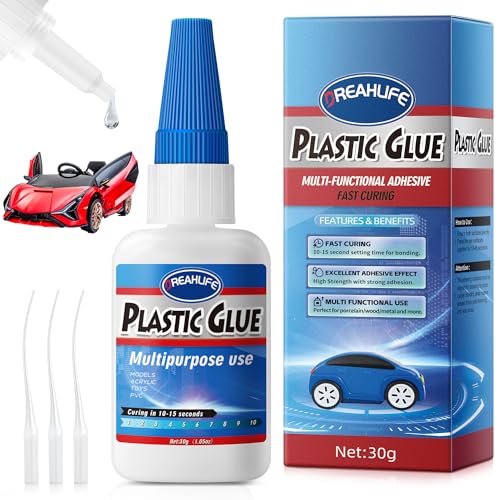
When precision and strength matter in plastic repairs, Dreahlife Super Glue stands out as the go-to solution for DIYers and hobbyists who demand reliability. I rely on its 30g heavy-duty formula for instant bonding across acrylic, PLA, ABS, PVC, vinyl, and nylon. It sets in 10–30 seconds, holds tight after 24 hours, and delivers nearly invisible, durable fixes. I apply it evenly on clean, dry surfaces, press parts together for 10–15 seconds, and get strong adhesion every time. The precision nozzle guarantees accurate placement. It works on toys, eyewear, models, car parts, and household plastics-making it a versatile staple I trust.
Best For: DIY enthusiasts and hobbyists needing a reliable, fast-drying adhesive for durable plastic repairs across a variety of materials.
Pros:
- Delivers strong, instant bonding with a nearly invisible, long-lasting finish
- Precision nozzle allows for accurate, mess-free application
- Versatile formula bonds multiple plastic types including ABS, PVC, acrylic, and nylon
Cons:
- Requires clean, dry surfaces for optimal adhesion
- Fast setting time may limit repositioning
- Not recommended for flexible or porous materials without surface prep
J-B Weld 50133 Plastic Bonder Structural Adhesive Syringe – Tan – 25 ml
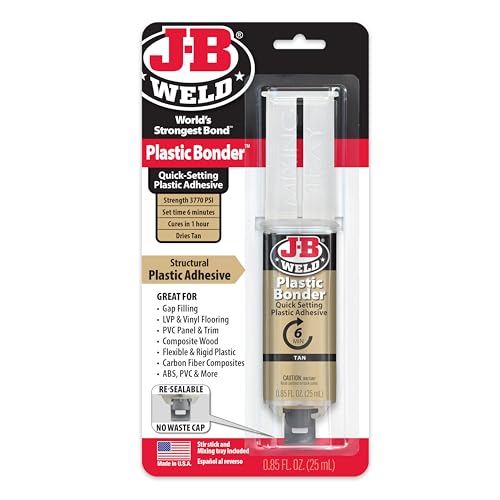
J-B Weld 50133 Plastic Bonder is the go-to solution for DIYers and auto repair enthusiasts tackling tough plastic repairs. It’s a two-part urethane adhesive in a 25 ml syringe with a 1:1 mix ratio. I use the included tray and stir stick to blend it quickly. It sets in 15 minutes and fully cures in 30 hours. Once cured, it reaches a tensile strength of 3770 PSI. The tan-colored bond holds strong on PVC, fiberglass, thermoplastics, and more. It works on coated metals, ceramics, concrete, and carbon fiber. The resealable cap keeps unused adhesive fresh. I rely on it for bumper fixes, dents, and structural plastic jobs.
Best For: DIYers and auto repair enthusiasts needing a durable, high-strength adhesive for repairing plastic, PVC, fiberglass, and other tough materials.
Pros:
- Sets in just 15 minutes and achieves a powerful 3770 PSI tensile strength
- Works on a wide range of materials including plastics, coated metals, concrete, ceramics, and carbon fiber
- Resealable cap allows for multiple uses and prevents waste
Cons:
- Requires 30 hours for full cure, which may be slow for urgent repairs
- Two-part mixing process is necessary, adding extra steps compared to single-component adhesives
- Tan color may not match all surfaces, limiting aesthetic appeal on certain materials
ALECPEA 30g Plastic Glue for ABS, PC, PVC

I’ve tested countless plastic adhesives, and ALECPEA 30g Plastic Glue stands out when you need a single solution for multiple engineering-grade plastics like ABS, PC, and PVC. It uses advanced bonding technology to fuse plastics at the molecular level, creating joints that resist bending and torsion. The glue sets in just 15 seconds and fully cures in 24 hours, making it ideal for urgent repairs on electronics or casings. It dries clear and stays flexible, preventing cracks and discoloration. Its weatherproof formula handles UV, moisture, and temperature swings. Three precision tips allow control for fine work.
Best For: DIY enthusiasts, model builders, and electronics repair professionals seeking a fast, durable, and clear adhesive for bonding tough plastics like ABS, PC, and PVC.
Pros:
- Bonds multiple engineering plastics at the molecular level for exceptional strength
- Sets in 15 seconds and fully cures in 24 hours for quick, reliable repairs
- Includes three precision applicator tips for accurate, clean application on delicate parts
Cons:
- Not suitable for use on soft or flexible plastics like polyethylene or polypropylene
- Strong fumes require use in a well-ventilated area
- Limited gap-filling capability for uneven or damaged surfaces
Factors to Consider When Choosing Glue for Plastic Parts
You need to match the glue to your plastic type, as adhesives like cyanoacrylate work well on ABS but fail on polyethylene. Bond strength matters-look for tensile ratings above 3,000 psi when joining load-bearing parts, and consider drying time, since fast-setting glues (under 30 seconds) limit repositioning. For uneven joints, choose a medium-viscosity formula with gap-filling ability up to 0.5 mm to guarantee a secure fit without excess runoff.
Material Compatibility
When selecting an adhesive for plastic parts, the most critical factor is matching the glue to the specific type of plastic you’re bonding, since not all adhesives work equally well across different polymer families. You need an adhesive specifically formulated for materials like ABS, PVC, or polyethylene. Plastics such as polypropylene (PP) and polyethylene (PE) resist bonding due to low surface energy, so you must use specialized adhesives-often containing primers or plasma treatments-to achieve adhesion. Some glues rely on solvent action, slightly melting the plastic surfaces to fuse them on a molecular level. If you’re joining plastic to metal, rubber, or ceramic, pick a multipurpose adhesive with broad-spectrum compatibility. For transparent plastics, use a clear-drying formula that cures without clouding, ensuring optical clarity isn’t compromised. Always verify substrate compatibility before application.
Bond Strength
A strong bond starts with the right adhesive choice, especially after confirming material compatibility. You need a glue that withstands stress, and high-performance adhesives deliver over 3,700 psi of bond strength. That’s enough to handle heavy loads and structural forces in demanding applications. Some formulas boost strength by 30% compared to standard cyanoacrylates, making them ideal for stress-prone joints. Flexibility matters just as much-opt for bonds that resist cracking under bending or torsion. These elastic properties keep plastic parts intact when exposed to impact or movement. Waterproof and heat-resistant adhesives maintain integrity through moisture exposure and thermal cycling. They won’t weaken in humid or fluctuating temperature environments. You’re not just sticking parts-you’re building reliability. Choose a glue that balances raw strength with resilience, ensuring lasting performance under real-world conditions.
Drying Time
While speed can be critical in repairs or assembly, balancing drying time with workability guarantees a precise and durable bond. You need fast-acting adhesives that set in 10–15 seconds for immediate handling during urgent fixes. Cyanoacrylate-based glues typically dry within 10 to 45 seconds, making them ideal for detailed plastic assemblies requiring quick progress. These formulas often reach initial strength in 30 seconds, though full cure takes up to 24 hours for peak performance. If you need time to adjust parts, two-part adhesives offer a longer set time-usually 15 minutes or more-before solidifying. Some structural plastics require extended curing, sometimes up to 30 hours, to achieve maximum bond integrity. Always match the drying and cure times to your project’s demands. Prioritize workability for complex fits, speed for simple bonds.
Application Precision
Speed matters, but accuracy defines the quality of your bond-especially when working with small or complex plastic components. You need precision nozzles or fine applicator tips to place glue exactly where it’s needed. These features minimize waste and guarantee targeted bonding on intricate surfaces. Controlled dispensing prevents excess adhesive from spreading beyond the joint area, which is critical in detailed assemblies. Choose adhesives with drip-free gel or high-viscosity formulas for better control, particularly on vertical or overhead surfaces. They resist sagging and stay where applied. Anti-clogging caps preserve the tip’s condition between uses, maintaining consistent precision over time. Fast-setting formulas demand even greater accuracy since you can’t reposition parts once the bond starts curing. You don’t get a second chance-placement must be right the first time.
Gap Filling Ability
Even the smallest gap-up to 3 mm-can compromise a plastic bond, but the right adhesive bridges those imperfections with structural integrity. You need a gap-filling adhesive when joining uneven or damaged surfaces where a perfect fit isn’t possible. Two-part epoxies and urethanes deliver the best performance, filling gaps up to 3 mm while maintaining strength. Unlike cyanoacrylates, which fail in loose joints, these systems cure into a tough, cohesive layer that resists stress buildup at bond edges. The adhesive must stay dimensionally stable during cure-high-quality formulations shrink less than 2%, ensuring consistent density. Once cured, many gap fillers harden to a sandable finish, letting you shape and blend the repair seamlessly. You’ll get a reliable, lasting bond only if the adhesive fully occupies the void without cracking or pulling away. Choose a system designed specifically for structural gap filling in plastics.
Environmental Resistance
A strong bond between plastic parts must endure more than just mechanical stress-it has to withstand the environment where it’s used. If your project faces direct sunlight, choose UV-resistant adhesives to prevent degradation and maintain strength. These weatherproof formulas resist cracking or yellowing after prolonged outdoor exposure. For extreme temperatures, use heat-resistant glues that perform reliably from -40°F to over 200°F. They won’t weaken under thermal cycling, which can cause brittle failure. In wet or humid settings, waterproof adhesives block moisture ingress, preventing bond failure. Look for waterproof ratings like ASTM D429 testing compliance. When exposed to oils, solvents, or detergents, use chemically resistant formulas-epoxies or polyurethanes often meet industrial demands. These bonds stay intact even with repeated chemical contact. Always match adhesive resistance properties to your operating environment for lasting performance.
Ease Of Use
Precision matters when applying glue to plastic parts, especially in tight spaces or on intricate components. You need adhesives with precision nozzles or fine applicator tips to target exactly where the bond is needed. Gel-based formulas won’t drip, so they stay put on vertical surfaces without running. That’s critical when working overhead or on uneven joints. Fast-drying options set in 10–30 seconds, letting you finish repairs quickly without long clamping. No waiting. No shifting. Two-part adhesives with 1:1 mixing ratios simplify use-no math, no measuring cups. Just blend evenly for reliable strength. Anti-clogging caps seal the nozzle tight, so the glue won’t dry out between uses. Visualize a syringe that’s ready every time. These features cut mistakes, boost control, and save time. You get clean application, consistent results, and less waste. Ease of use isn’t convenience-it’s precision built in.
Cure Time
You’ve controlled the application-now manage the clock. Cure time for plastic adhesives varies widely, from 10 seconds to 30 hours, depending on chemistry. Instant bonds, like cyanoacrylates, set in 10–30 seconds but need up to 24 hours for full strength. Two-part epoxies typically set in 15–30 minutes, allowing time for alignment, yet may take 30 hours to fully cure. Full cure is critical-industrial adhesives often achieve waterproof or heat-resistant properties only after 24 hours. Don’t assume handling strength means full performance. Temperature, humidity, and surface area affect actual drying. Cold or damp conditions slow curing. For precision jobs, plan for total cure time, not just tack-free touch. Choosing the right adhesive means balancing speed with ultimate durability. Match the cure profile to your project’s timeline and environmental demands.
Frequently Asked Questions
Can I Use Plastic Glue on Wet Surfaces?
No, you can’t use plastic glue on wet surfaces. Moisture prevents proper adhesion and curing. Most plastic adhesives, like cyanoacrylates or solvent-based cements, require clean, dry substrates to chemically bond. Water interferes with surface contact, weakening the joint. For best results, dry and sand surfaces lightly. Some specialty epoxy adhesives tolerate dampness, but even they perform better when surfaces are dry. Always follow manufacturer instructions for environmental conditions.
Is Super Glue Safe for Food Containers?
No, you can’t use super glue on food containers. Super glue contains cyanoacrylate, which isn’t food-safe and can leach harmful chemicals. Even once cured, it’s not certified for direct or indirect food contact. Using it risks contaminating food with toxic residues. For food-safe repairs, choose adhesives labeled FDA compliant or NSF certified. These meet strict safety standards. Never risk health-stick to approved materials when near food.
How Long Does Plastic Adhesive Take to Fully Cure?
It typically takes 24 hours for plastic adhesive to fully cure. You’ll notice initial bonding within 5 to 10 minutes, but full strength develops over a full day. Cure time depends on adhesive type-cyanoacrylates harden faster, while epoxies need longer. Ambient temperature and humidity play roles; ideal conditions are 70°F and 50% RH. Surface prep also affects performance. Wait the full 24 hours before stress-testing the joint.
Can I Freeze Plastic Glue to Extend Shelf Life?
No, you shouldn’t freeze plastic glue to extend its shelf life. Freezing can damage the polymer matrix and alter viscosity. Thermal shock may cause phase separation in cyanoacrylates or acrylics. Most adhesives specify storage between 40°F and 80°F. Cold slows degradation, but freezing risks permanent performance loss. Instead, keep the container sealed and upright in a cool, dry, dark place. Check manufacturer guidelines-some resins are freeze-thaw stable, but most consumer-grade plastic glues aren’t.
Does UV Light Affect Plastic Bond Strength?
yes, uv light can weaken plastic bonds over time. prolonged exposure degrades many adhesives, especially cyanoacrylates and some epoxies. bond strength may drop by up to 40% after 1,000 hours of direct uv. use uv-resistant adhesives like modified acrylics or polyurethanes. they contain stabilizers that absorb uv radiation. for outdoor applications, select a glue rated for 2,000+ hours of xenon-arc testing. always shield bonded areas from direct sunlight when possible.