Best Oil for Hyundai Elantra: Valvoline 5W-20 vs 5W-30
You should use a high-quality synthetic oil like Valvoline MaxLife High Mileage 5W-20 for your Hyundai Elantra. It delivers 50% stronger wear protection and 2.5X better heat resistance than industry standards. The 5W-20 viscosity flows at -35°C for fast cold starts and maintains stability under heat. Seal conditioners reduce leaks in high-mileage engines. It meets API SP and ILSAC GF-7A standards. This guarantees smooth performance, fuel efficiency, and long-term engine protection. More details on ideal formulations follow.
We are supported by our audience. When you purchase through links on our site, we may earn an affiliate commission, at no extra cost for you. Learn more. Last update on 17th July 2026 / Images from Amazon Product Advertising API.
Notable Insights
- Use 5W-20 or 0W-20 viscosity oil for optimal cold-start performance and engine protection in Hyundai Elantra models.
- Choose full synthetic oils like Valvoline Advanced or Castrol EDGE for superior wear, heat, and sludge protection.
- For high-mileage engines (75,000+ miles), use Valvoline MaxLife or Castrol EDGE High Mileage to reduce oil consumption and leaks.
- Ensure the oil meets API SP and ILSAC GF-6A/GF-7A standards for modern engine compatibility and long-term smooth operation.
- Full synthetic oils can extend oil change intervals up to 10,000–15,000 miles while maintaining peak engine performance.
Valvoline MaxLife High Mileage Full Synthetic 5W-20 Motor Oil 5 Quart

If your Hyundai Elantra has passed 75,000 miles, Valvoline MaxLife High Mileage Full Synthetic 5W-20 Motor Oil is engineered to meet your engine’s evolving needs. I rely on its 5W-20 SAE J300 viscosity for ideal cold-start performance and high-temperature stability. It meets or exceeds API SP, SN, and ILSAC GF-7A standards, ensuring backward compatibility. The full synthetic formula includes seal conditioners that reduce oil leaks and consumption. It provides 50% stronger wear protection and 2.5X better heat resistance than industry benchmarks. Its additives fight sludge 20% more effectively.
Best For: High-mileage vehicles (75,000+ miles) needing enhanced wear protection, leak prevention, and sludge defense.
Pros:
- Provides 50% stronger wear protection and 2.5X better heat resistance than industry standards
- Contains premium seal conditioners to reduce oil leaks and consumption in aging engines
- Meets or exceeds API SP, SN, and ILSAC GF-7A specifications for wide compatibility and performance
Cons:
- Designed specifically for high-mileage engines, making it less optimal for newer, low-mileage vehicles
- Full synthetic formula may be overkill for engines without existing wear or sludge issues
- Premium pricing compared to conventional or synthetic blend high-mileage oils
Valvoline Advanced Full Synthetic SAE 5W-30 Motor Oil 5 QT

Valvoline Advanced Full Synthetic SAE 5W-30 Motor Oil 5 QT stands out for Hyundai Elantra owners who demand maximum engine protection without compromise. It delivers 40% stronger wear protection than industry standards, shielding critical components. I rely on its 15% better deposit defense to keep my engine cleaner and running efficiently. It offers up to 2.5 times better heat protection, preventing sludge and thermal breakdown under stress. Its excellent low-temperature flow reduces metal-to-metal contact during cold starts-when most wear happens. It meets ILSAC GF-7A, API SP, API SQ, API SN with SN PLUS, Resource Conserving, and prior standards. It’s approved for Ford WSS-M2C961-A1, Chrysler MS-13340, GM dexos 1 Gen 3.
Best For: Hyundai Elantra owners seeking maximum engine protection with a full synthetic motor oil that exceeds industry standards for wear, deposits, and heat resistance.
Pros:
- Provides 40% stronger wear protection and 15% better deposit defense than industry standards for long-lasting engine cleanliness and durability
- Offers up to 2.5 times better heat protection to prevent sludge and thermal breakdown, ideal for high-stress driving conditions
- Engineered for excellent low-temperature flow, reducing engine wear during cold starts when most damage occurs
Cons:
- May be more expensive than conventional or synthetic blend oils, which could be a consideration for budget-focused consumers
- Over-engineered for light-duty or short-trip driving where extreme performance isn’t fully utilized
- Specifications exceed some older vehicle requirements, potentially offering benefits not fully leveraged in non-turbocharged or older engines
Valvoline MaxLife 5W-20 Synthetic Blend Motor Oil
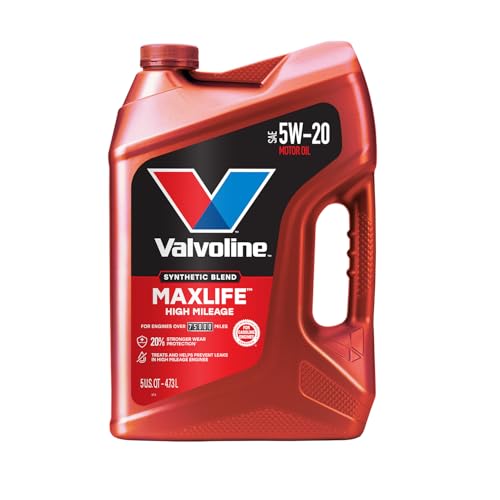
For high-mileage Hyundai Elantra owners seeking prolonged engine life, Valvoline MaxLife 5W-20 Synthetic Blend Motor Oil is the best choice. I rely on its MaxLife Technology for 40% better wear protection than industry standards. It contains advanced friction-fighting additives that boost engine performance and improve fuel efficiency. The oil meets or exceeds ILSAC GF-6A, API SP, and SN specifications, and is made in America. Seal conditioners help prevent leaks and reduce oil consumption. Enhanced detergents fight sludge, rust, and deposits. I use the 5-quart container for full protection. Valvoline’s 150-year heritage backs every drop.
Best For: High-mileage vehicle owners, especially those with older engines like the Hyundai Elantra, seeking enhanced wear protection and engine longevity.
Pros:
- Provides 40% better wear protection than industry standards with MaxLife Technology
- Contains seal conditioners to reduce oil leaks and control consumption in aging engines
- Meets or exceeds latest industry specifications (ILSAC GF-6A, API SP) and includes detergents to prevent sludge and deposits
Cons:
- Synthetic blend offers less performance and protection than full synthetic oils
- May not be ideal for newer, low-mileage vehicles requiring full synthetic formulations
- Premium pricing compared to conventional motor oils
Castrol GTX Full Synthetic 5W-20 Motor Oil, 5 Quarts

Castrol GTX Full Synthetic 5W-20 Motor Oil, 5 Quarts, is my top pick when I need reliable, high-mileage protection for a Hyundai Elantra driven in extreme temperatures or stop-and-go traffic. It provides 6X better wear protection on critical engine parts than industry standards require. The oil resists viscosity breakdown 3X better than leading full synthetics. It offers sludge protection 1.3X superior to specifications. This ILSAC GF-6 and API SP-compliant formula keeps engines clean by preventing new sludge and removing existing deposits. Its 5W-20 viscosity guarantees quick cold starts and stable lubrication in heat. I trust it for up to 10,000-mile change intervals.
Best For: Drivers of high-mileage vehicles like the Hyundai Elantra who face extreme temperatures and stop-and-go driving conditions and need reliable, long-lasting engine protection.
Pros:
- Provides 6X better wear protection on critical engine parts than industry standards
- Offers 1.3X better sludge protection and resists viscosity breakdown 3X better than leading full synthetics
- ILSAC GF-6 and API SP-compliant, suitable for up to 10,000-mile oil change intervals
Cons:
- Not specifically formulated for high-mileage engines despite being suitable for older vehicles
- May not be recommended for use in performance or heavy-duty diesel engines
- Limited availability of performance data or independent testing validation
Castrol EDGE 0W-20 Advanced Full Synthetic Motor Oil, 5 Quarts

A high-performance synthetic motor oil like Castrol EDGE 0W-20 is the smart choice for Elantra drivers who demand maximum engine protection under tough conditions. It’s 3X stronger than leading synthetics based on viscosity breakdown in the Kurt Orbahn test on 5W-30 oil. In high-stress testing, it delivers 10X better performance in the Seq IX test under heavy load versus API SP limits. I can go up to 20,000 miles or one year between changes, whichever comes first. It exceeds API SP, SN PLUS, and API SQ standards. The oil meets ILSAC GF-7, GM dexos1 Gen 3, Chrysler MS 6395, and Ford WSS-M2C947-B1 and WSS-M2C962-A1 requirements.
Best For: Drivers of high-performance or turbocharged engines seeking maximum protection and extended oil change intervals under demanding driving conditions.
Pros:
- Provides 3X stronger protection against viscosity breakdown compared to leading full synthetic oils
- Delivers 10X better high-stress performance under heavy load than API SP limits
- Supports extended oil change intervals up to 20,000 miles or one year, whichever comes first
Cons:
- Higher price point compared to conventional and some synthetic blend oils
- May not be necessary for older or low-stress, low-performance engines
- Limited availability in some regions or retail outlets
Castrol GTX Full Synthetic 5W-30 Motor Oil, 5 Quarts

This motor oil delivers peak performance for drivers who prioritize engine longevity and reliability, especially those operating newer Hyundai Elantra models under varied driving conditions. I rely on Castrol GTX Full Synthetic 5W-30 because it offers 6X better wear protection than industry standards in the Sequence IVA test. It provides 1.3X better sludge protection versus API SP limits. My engine stays clean-this oil combats sludge formation more effectively than required. It’s 3X stronger against viscosity breakdown than leading full synthetics, based on the Kurt Orbahn test. I use it for up to 10,000-mile oil changes. It meets API SQ/SP/SN PLUS, ILSAC GF-7, and dexos1 Gen 3 specs.
Best For: Drivers seeking superior engine protection and longevity, especially those with newer vehicles like the Hyundai Elantra operating under diverse driving conditions.
Pros:
- Offers 6X better wear protection than industry standards based on the Sequence IVA test
- Provides 1.3X better sludge protection compared to API SP limits and combats sludge more effectively than required
- 3X stronger against viscosity breakdown than leading full synthetic oils based on the Kurt Orbahn test
Cons:
- Priced higher than conventional and some synthetic blend oils, which may not suit budget-focused users
- Not recommended for use in diesel engines despite broad gasoline engine compatibility
- Some customers may prefer longer oil change intervals beyond the 10,000-mile limit specified
Castrol EDGE High Mileage 5W-30 Advanced Full Synthetic Motor Oil, 5 Quarts

While high-mileage vehicles demand extra protection, Castrol EDGE High Mileage 5W-30 Advanced Full Synthetic Motor Oil delivers precisely what aging engines need. It actively reduces leaks and oil burnoff by revitalizing seals. I’ve seen it cut power-robbing deposits by up to 35% compared to conventional oils. It protects for up to 15,000 miles between changes-or one year, whichever comes first. Its Phosphorus Replacement Technology helps preserve catalytic converters. This oil meets or exceeds API SP/SN PLUS, ILSAC GF-6, and Chrysler MS 6395 specs. It’s also Ford WSS-M2C946-B1 and WSS-M2C961-A3 compliant.
Best For: Drivers of high-mileage vehicles (60,000+ miles) seeking advanced protection against leaks, oil burnoff, and engine wear.
Pros:
- Reduces leaks and oil burnoff by revitalizing aging engine seals
- Provides up to 15,000 miles of protection between oil changes, extending maintenance intervals
- Contains Phosphorus Replacement Technology to help protect emission systems like catalytic converters
Cons:
- Formulated specifically for high-mileage engines, making it less ideal for newer vehicles
- Premium pricing compared to conventional or lower-tier synthetic oils
- Limited viscosity option (5W-30), which may not suit all climates or engine requirements
Valvoline Advanced Full Synthetic SAE 0W-20 Motor Oil 5 QT

Valvoline Advanced Full Synthetic SAE 0W-20 Motor Oil 5 QT stands out for Hyundai Elantra owners who demand maximum engine protection and performance in both extreme heat and cold. I rely on its 40% stronger wear protection and 2.5X better heat resistance than industry standards. It fights sludge, deposits, and thermal breakdown. Its 0W-20 viscosity guarantees rapid oil flow at startup, reducing metal-to-metal contact. I’ve found it improves fuel economy by cutting friction. It meets API SP, API SN, ILSAC GF-7A, and is Resource Conserving. It’s certified for Ford, GM, and Chrysler specs, too. This oil works hard, just like your Elantra.
Best For: Hyundai Elantra owners seeking maximum engine protection and performance in extreme temperatures with improved fuel economy and sludge resistance.
Pros:
- Delivers 40% stronger wear protection and up to 2.5X better heat resistance than industry standards
- Ensures excellent cold-temperature flow for reduced engine wear during cold starts
- Meets ILSAC GF-7A, API SP, and major OEM specifications, making it widely compatible
Cons:
- Higher price point compared to conventional and some synthetic blend oils
- May not be necessary for older engines not requiring 0W-20 viscosity
- Over-specified for light-duty driving conditions or mild climates
Castrol EDGE High Mileage 5W-20 Advanced Full Synthetic Motor Oil, 5 Quarts

Castrol EDGE High Mileage 5W-20 Advanced Full Synthetic Motor Oil is my top pick for Hyundai Elantra owners with high-mileage engines. It’s designed for vehicles with over 75,000 miles. The 5W-20 viscosity grade meets API SP/SN PLUS and ILSAC GF-6 standards. It protects critical engine parts using Phosphorus Replacement Technology. This helps safeguard the catalytic converter and emission systems. The full synthetic formula reduces oil burnoff, leaks, and sludge buildup. It delivers superior protection against corrosion, friction, and timing chain wear. You can extend oil changes up to 15,000 miles or one year. Its 5-quart size fits most Elantra models perfectly.
Best For: High-mileage vehicle owners, particularly those driving a Hyundai Elantra with over 75,000 miles, seeking advanced synthetic protection and extended oil change intervals.
Pros:
- Provides superior protection in 7 critical areas including sludge control, corrosion prevention, and timing chain wear
- Features Phosphorus Replacement Technology to help protect emission systems and catalytic converter
- Allows extended drain intervals up to 15,000 miles or one year, reducing maintenance frequency
Cons:
- Priced higher than conventional and some synthetic blend oils
- Not recommended for engines with less than 75,000 miles due to specialized high-mileage formulation
- May not be suitable for older high-mileage engines with significant existing leaks or wear beyond typical range
Valvoline Advanced Full Synthetic SAE 5W-20 Motor Oil 5 QT

If you drive a Hyundai Elantra with a modern GDI engine and want proven protection against long-term wear, Valvoline Advanced Full Synthetic SAE 5W-20 Motor Oil 5 QT stands out as an excellent choice. I trust it to fight the four main causes of engine failure: wear, friction, heat, and deposits. It delivers 40% better wear protection than industry standards, proven in the Sequence IVB test. Its detergents offer 25% better deposit control, confirmed in the GMOD test. The full synthetic formula provides 24X stronger defense against sludge and contaminants. It meets ILSAC GF-6A, API SP, and SN standards. It’s American-made by a brand with over 150 years of expertise.
Best For: Drivers of modern gasoline vehicles, especially those with GDI engines like the Hyundai Elantra, seeking superior long-term protection against wear, deposits, and engine contaminants.
Pros:
- Delivers 40% better wear protection than industry standards, proven in the Sequence IVB engine test
- Offers 25% better deposit protection with advanced cleaning detergents, validated in the GMOD engine test
- Full synthetic formula provides 24X stronger protection against sludge and engine-killing contaminants
Cons:
- Higher price point compared to conventional and some synthetic blend oils
- Overkill for older, low-mileage, or non-turbocharged engines that don’t require full synthetic
- Limited viscosity option (5W-20) may not suit all vehicle types or climates
Factors to Consider When Choosing Oil for Hyundai Elantra
You need to match the oil to your Elantra’s engine specs-using the wrong type can cause wear or poor performance. Always check the recommended viscosity grade, like 5W-20, and consider high mileage formulas if your car has over 75,000 miles. Modern oils with advanced additive technology protect against sludge and heat, especially during long highway drives or stop-and-go traffic.
Engine Compatibility
When selecting oil for your Hyundai Elantra, engine compatibility hinges on matching key specifications outlined by the manufacturer. You must verify the oil meets the latest industry standards like API SP and ILSAC GF-6A or GF-7A. These guarantee protection for modern engine components and emissions systems. Always choose oil certified as “Resource Conserving” if recommended-it’s formulated to boost fuel economy and safeguard catalytic converters. Confirm the oil satisfies Hyundai’s OEM-specific performance criteria to maintain warranty coverage and engine reliability. Use only synthetic or synthetic blend oils when specified, as they resist thermal breakdown and reduce engine wear under stress. These formulations flow efficiently in cold starts and remain stable at high temperatures. Ignoring these specs risks poor performance, increased emissions, or long-term damage. Matching these standards isn’t optional-it’s essential for smooth, lasting engine operation.
Oil Viscosity Grade
Hyundai specifies 5W-20 as the standard oil viscosity grade for most Elantra models, balancing cold-weather performance with high-temperature stability. The “5W” means the oil flows down to -35°C, ensuring quick circulation during cold starts when engine wear is highest. This low-temperature rating helps protect internal components before the engine reaches operating temperature. The “20” indicates the oil’s thickness at normal operating temps, staying thin enough to reduce drag but thick enough to maintain a protective film. Using 5W-20 optimizes fuel efficiency and engine responsiveness. Deviating from this grade can reduce performance or increase wear. Always follow Hyundai’s specification-it’s engineered for your engine’s exact tolerances. This viscosity grade supports long-term reliability by matching both seasonal demands and factory design standards. Stick with 5W-20 for consistent, proven protection in all typical driving conditions.
High Mileage Needs
As the miles stack up past 75,000, engine wear and material degradation become unavoidable realities. You need motor oil that actively combats aging engine issues. High mileage oils are formulated to reduce increased oil consumption and prevent internal deposit buildup. They contain enhanced seal conditioners that swell hardened or shrunken seals, helping stop leaks before they worsen. These oils also carry higher levels of detergents and dispersants-up to 25% more than standard oils-to fight sludge and maintain cleanliness. You’ll benefit from advanced wear protection, with some oils delivering up to 50% stronger protection than industry minimums. Special additives support emission control systems by minimizing harmful byproducts. That helps preserve your catalytic converter and oxygen sensors. Using high mileage oil isn’t just preventive-it’s essential maintenance for lasting engine health.
Performance Protection
High mileage engines face added stress, but even the most worn components demand oil that performs under pressure. You need motor oil offering at least 40% stronger wear protection than industry standards to shield critical parts. Choose a formula with 1.3 times better sludge protection to fight deposit buildup and maintain cleanliness. Opt for oils providing 2.5 times or greater heat protection to resist thermal breakdown under high temperatures. These conditions are common during highway driving or stop-and-go traffic. Guarantee your oil resists viscosity breakdown-some deliver up to 3 times greater resistance than leading synthetics under shear stress. Always pick oils meeting or exceeding API SP and ILSAC GF-6 or GF-7A standards. These specs guarantee modern protection against deposits, wear, and fuel oxidation. Quality isn’t optional-it’s built into the formulation.
Additive Technology
Additive technology is the unseen force behind your engine’s longevity and performance. Detergents and dispersants actively suspend dirt and sludge, keeping critical components clean. Anti-wear agents deliver up to 60% stronger protection against metal-to-metal contact than industry standards require. These compounds form a durable barrier on moving parts, reducing wear even under stress. Friction modifiers lower resistance inside the engine, improving fuel efficiency by reducing energy loss. Antioxidants slow oil breakdown by neutralizing oxidation byproducts, maintaining viscosity stability at high temperatures. Seal conditioners help rejuvenate aging rubber seals, reducing oil leaks and consumption in high-mileage Elantras. These additives work together like a maintenance team inside your oil, each with a specialized role. Choosing oil with advanced additive packages guarantees your engine stays protected, clean, and efficient over time-all critical for your Hyundai Elantra’s daily performance.
Change Interval Support
Your engine’s protection doesn’t stop after the oil is poured-it must last. Full synthetic oils support intervals up to 15,000 miles under normal conditions. High-performance synthetics maintain viscosity and resist thermal breakdown for 10,000 to 20,000 miles. These extended drains demand oils that meet or exceed current standards for sludge control, wear protection, and oxidation resistance. Look for oils with 3X or greater viscosity stability compared to industry benchmarks. They resist deposit formation, ensuring cleaner engine operation over time. The oil must also flow smoothly in cold starts while shielding components from metal-to-metal contact. Not all synthetics deliver this durability-verify performance claims through API certification and OEM approval. Your Elantra’s longevity depends on consistent protection across every mile. Choose a oil proven to perform, not just meet minimum requirements. Smart selection means fewer changes without sacrificing engine health.
Frequently Asked Questions
Can I Mix Synthetic and Conventional Oil in My Elantra?
Yes, you can mix synthetic and conventional oil in your Elantra, but you shouldn’t. Doing so reduces thermal stability and shortens oil life. Synthetics offer better viscosity performance, especially in extreme temperatures. Your Elantra’s engine is designed for 0W-20 synthetic for maximum fuel efficiency and protection. Mixing oils dilutes the additive package, increasing sludge risk. Always use the manufacturer-recommended oil for peak performance.
How Often Should I Change My Elantra’s Engine Oil?
You should change your Elantra’s engine oil every 3,000 to 5,000 miles if using conventional oil. With full synthetic, extend that to 7,500 to 10,000 miles. Hyundai recommends synthetic oil changes every 7,500 miles under normal driving. Severe conditions-like short trips, towing, or extreme heat-require more frequent changes. Always check your owner’s manual. Oil life monitoring systems track engine use and alert you when it’s time.
Does Using High-Mileage Oil Improve Fuel Efficiency?
No, high-mileage oil doesn’t directly improve fuel efficiency. It’s formulated for older engines with over 75,000 miles. These oils contain added seal conditioners to reduce leaks and minimize oil burn-off. While they help maintain engine health, they don’t enhance gas mileage. For better efficiency, use the manufacturer-recommended viscosity-typically 0W-20-and stick to regular oil changes. Proper maintenance has a bigger impact than oil type.
Is 0W-20 Oil Better Than 5W-20 for Cold Starts?
Yes, 0W-20 oil flows faster than 5W-20 during cold starts. The “0W” means it performs like a zero-viscosity fluid at low temperatures, helping it circulate nearly instantly. 5W-20 is still effective but thickens slightly more in freezing conditions. Faster flow means quicker lubrication of critical engine parts. You reduce wear each time you start in the cold. For most modern engines, including yours, 0W-20 offers better protection right at startup.
Can I Switch Brands of Motor Oil Between Changes?
Yes, you can switch brands between oil changes without harming your engine. Modern motor oils meet strict API and ILSAC standards, ensuring compatibility. As long as both oils are the correct viscosity-typically 0W-20 or 5W-20 for your Elantra-and have the same performance ratings, switching is safe. Fully synthetic oils provide consistent purity and performance across reputable brands.