Best Trailer Bearing Grease for Smooth, Long-Lasting Performance
You need a grease that stays put under heat, water, and heavy loads. STAR BRITE Marine-Grade Trailer Grease NLGI #2 resists washout with a water-insoluble formula and meets ASTM D4950 GC-LB standards. It performs from 0°F to 325°F and comes in a 14-ounce cartridge for easy application. Lithium complex thickeners provide stability, while rust inhibitors protect bearings. Its proven durability in saltwater environments guarantees long service life. More top performers offer additional advantages depending on your maintenance needs.
We are supported by our audience. When you purchase through links on our site, we may earn an affiliate commission, at no extra cost for you. Learn more. Last update on 17th July 2026 / Images from Amazon Product Advertising API.
Notable Insights
- Choose NLGI #2 greases like STAR BRITE or Lucas Oil for optimal consistency and heavy-load performance in trailer bearings.
- Prioritize water-insoluble, waterproof formulations to prevent washout and corrosion in marine and wet environments.
- Select greases meeting ASTM D4950 GC-LB standards for proven durability in marine and trailer applications.
- Opt for lithium complex or aluminum complex thickeners for enhanced high-temperature stability and long service life.
- Look for high dropping points (500°F+) like Lucas Oil 11148 to ensure grease resists melting under extreme heat.
STAR BRITE Marine-Grade Trailer Grease NLGI #2
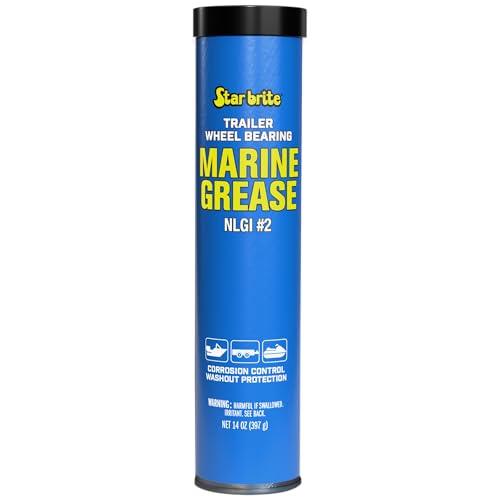
If you’re hauling boats through salt spray or trailering in harsh coastal conditions, STAR BRITE Marine-Grade Trailer Grease NLGI #2 is the best choice for long-lasting wheel bearing protection. I rely on its marine-grade formulation to resist washout and corrosion. It’s water-insoluble, operates from 0°F to 325°F, and meets ASTM D4950 GC-LB standards. The 14-ounce cartridge fits standard grease guns. NLGI #2 viscosity guarantees smooth application and stays in place under heavy loads. It shields bearings, winches, hinges, and pumps. Made in the USA since 1973, it’s proven in real-world marine environments.
Best For: Boaters and trailer owners operating in saltwater or corrosive coastal environments who need reliable, long-lasting protection for wheel bearings and other marine components.
Pros:
- Formulated to resist water washout and corrosion, ideal for saltwater exposure
- Meets ASTM D4950 GC-LB standards for superior performance in marine and trailer applications
- Versatile use on wheel bearings, winches, hinges, pumps, and other marine hardware
Cons:
- Limited to 14-ounce cartridge size, may require frequent repurchasing for large fleets
- Slightly higher price point compared to standard automotive greases
- May be over-specified for users in non-marine or dry climate environments
TIMKEN GR224TUB Grease
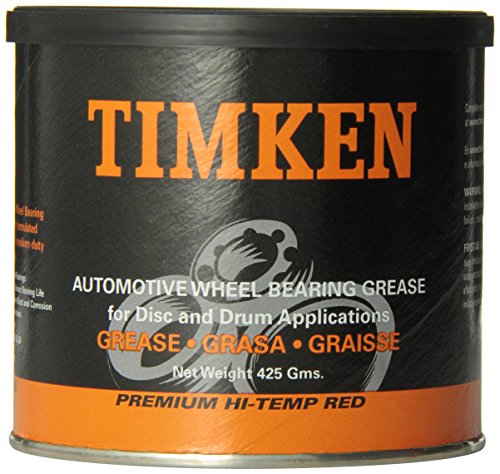
This Timken GR224TUB grease is my top pick for trailer owners who need a reliable, all-purpose bearing lubricant that performs consistently in both drum and disc brake systems. It’s a lithium-based grease with an NLGI #2 rating, ideal for most trailer wheel bearings. The 15-ounce cartridge holds 0.4 liters and fits standard grease guns. Timken engineered it with anti-wear additives and corrosion inhibitors for long-term protection. It handles wide temperature ranges, ensuring performance in extreme conditions. The reusable, high-impact plastic container reduces waste. Available since 2004, it ranks #14 in automotive lithium greases on Amazon, backed by a 30-day return guarantee and manufacturer warranty.
Best For: Trailer owners seeking a reliable, all-purpose lithium-based grease that delivers long-lasting protection for both disc and drum brake wheel bearings in varying temperature conditions.
Pros:
- Suitable for both disc and drum brake systems, offering versatile use
- Contains anti-wear additives and corrosion inhibitors for extended bearing life
- Packaged in a reusable, high-impact cartridge that reduces waste and supports easy application
Cons:
- Limited quantity (15 oz) may require frequent repurchasing for large-scale or fleet use
- Lithium-based formula may not be ideal for extremely high-temperature industrial applications beyond trailer use
- Amazon ranking suggests moderate popularity, potentially indicating narrower market trust compared to top-ranked brands
Ultra Heavy Duty Red Grease (2-Pack)
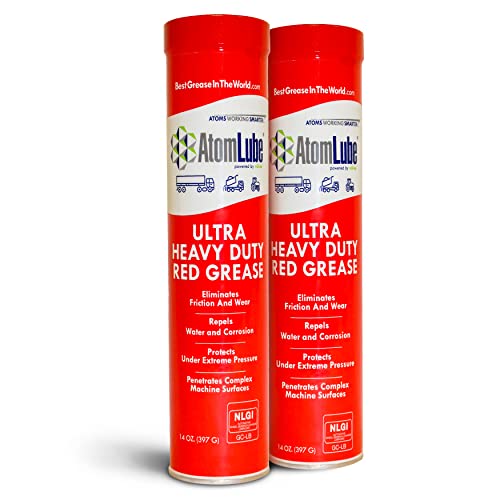
I rely on Ultra Heavy Duty Red Grease when my trailer bearings face extreme pressure and harsh environments. This NLGI #2 grease comes in a 2-pack of 14 oz. tubes, ideal for heavy-duty use. It’s formulated for chemomechanical durability, resisting oxidation and water washout. The waterproof design prevents corrosion and stays in place under severe stress. Its nano-engineered formula penetrates intricate surfaces, reducing friction and wear. I’ve seen it perform reliably in high-heat, high-load scenarios-just like those in semi trucks. It meets NLGI GC-LB standards, proving it’s built for automotive wheel bearings and chassis components.
Best For: Professional truckers, trailer owners, and automotive technicians who need a reliable, heavy-duty grease for extreme-pressure and harsh-environment applications.
Pros:
- Excellent resistance to water washout and oxidation, ensuring long-lasting protection in tough conditions
- Strong adhesion and nano-engineered formula provide superior wear protection and reduced friction
- Meets NLGI GC-LB standards, making it ideal for automotive wheel bearings and chassis components in commercial vehicles
Cons:
- Limited tube size (14 oz.) may require frequent repurchasing for large-scale or frequent use
- Red color may stain surfaces or clothing, making cleanup more difficult
- May be over-specified for light-duty applications, offering more performance than needed
Lucas Oil 10574 RED”N”TACKY GREASE 1/LB TUB

Lucas Oil 10574 RED’N’TACKY GREASE is the go-to choice for heavy-duty trailer owners who demand long-lasting, high-temperature protection. I rely on this lithium-based grease for extreme-pressure applications. It comes in a 1-pound tub, with 12 per case, totaling 192 ounces. Each tub holds 14 fluid ounces. The grease resists water washout and stays tacky under stress. It performs in temperatures exceeding 400°F. I’ve used it on wheel bearings, U-joints, and suspension components. Its red color makes application visible. With a 4.8-star rating from 72 reviews, it’s proven. The ASIN is B008B0EXUE. Amazon offers a 30-day return.
Best For: Heavy-duty trailer owners and mechanics seeking reliable, high-temperature, extreme-pressure grease for wheel bearings, U-joints, and suspension components.
Pros:
- Excellent water resistance and stays tacky under stress for long-lasting protection
- Performs reliably in extreme temperatures exceeding 400°F
- Highly rated with a 4.8-star average from 72 customer reviews
Cons:
- Potential confusion with listed item weight (0.01 oz) which is likely erroneous
- Sold only in cases of 12 tubs, which may be excessive for casual users
- Red color, while useful for visibility, may stain surfaces or clothing during application
Red & Tacky Wheel Bearing Grease (1 LB)
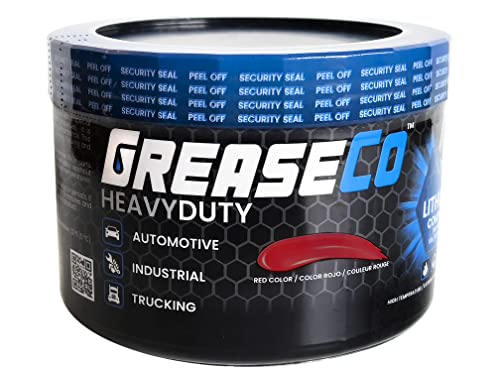
Red & Tacky Wheel Bearing Grease in the 1 LB tub is the best choice for trailer owners who routinely face heavy loads, high operating temperatures, and exposure to water. I rely on its ISO 460 base oil-it’s heavier than most, delivering serious extreme-pressure protection. The advanced EP additives fight shock loading, heat breakdown, and corrosion. This grease resists water washout, so it stays in place even in wet conditions. It’s thick, tacky, and sticks where you need it: wheel bearings, hubs, U-joints, trailer hitches, and chassis points. I use it on axles, ball joints, and fifth wheels without hesitation. It performs under stress, lasts longer, and protects metal components across demanding applications.
Best For: Trailer owners and heavy-duty vehicle operators who need reliable, long-lasting protection under high temperatures, extreme pressure, and wet conditions.
Pros:
- Delivers superior extreme pressure protection with ISO 460 base oil for heavy-load applications
- Resists water washout and corrosion, making it ideal for wet or harsh environments
- Tacky, thick consistency ensures it stays in place on critical components like wheel bearings, U-joints, and trailer hitches
Cons:
- Heavier consistency may make it harder to apply in precision or low-tolerance applications
- Not specifically formulated for high-speed bearings, limiting use in certain industrial settings
- Red dye may stain surfaces or complicate cleanliness in maintenance environments
STAR BRITE Marine-Grade Trailer Grease NLG#2

For boat owners battling harsh saltwater environments, STAR BRITE Marine-Grade Trailer Grease NLG#2 is the go-to defense against corrosion and wear. It’s formulated specifically for marine conditions, protecting bearings from saltwater, moisture, and atmospheric chemicals. It meets ASTM D4950 GC-LB standards, ensuring reliable performance. It stays effective from 0 to 325°F, handling extreme temperature shifts. The grease is water-insoluble, resisting washout even underwater. I use it on wheel bearings, winches, hatch hinges, and pumps. It lasts longer in wet conditions than conventional greases. STAR BRITE has made high-quality marine care products in the USA since 1973.
Best For: Boat owners operating in saltwater environments who need reliable, long-lasting protection for trailer wheel bearings and other marine components against corrosion and water washout.
Pros:
- Specifically formulated for marine conditions, providing superior resistance to saltwater, moisture, and atmospheric corrosion
- Meets ASTM D4950 GC-LB standards and performs reliably across a wide temperature range (0 to 325°F)
- Water-insoluble design resists washout, ensuring durable lubrication even in submerged or wet applications
Cons:
- May be overkill for freshwater or non-marine trailer applications where extreme corrosion resistance isn’t required
- Slightly higher cost compared to standard automotive greases due to specialized marine formulation
- Limited availability in some retail outlets, potentially requiring online purchase
Lucas Oil 11148 Marine Grease – 1 Pound Tub

If you’re hauling heavy loads through harsh coastal environments or traversing saltwater-soaked ramps regularly, this marine-grade grease is built for your toughest trailer bearing challenges. I rely on Lucas Oil 11148 because it handles extreme pressure with a Timken OK Load of 65 pounds. It won’t melt easily, with a 570°F dropping point and upper service temperature up to 560°F. The grease resists water washout and corrosion, even in saltwater. Its tackifiers help it cling to metal, reducing reapplication. Rated NLGI #2, it works in wheel bearings, chassis, and outboards. Each 1-pound tub weighs 1.14 lbs and has a plastic pail.
Best For: Trailers and marine equipment exposed to saltwater, heavy loads, and extreme operating conditions requiring reliable, long-lasting lubrication.
Pros:
- Excellent resistance to water washout and corrosion in both fresh and saltwater environments
- High dropping point (570°F) and extreme pressure performance (Timken OK Load: 65 lbs) make it ideal for severe conditions
- Tackified formula adheres well to metal surfaces, reducing the need for frequent reapplication
Cons:
- Limited container size (1-pound tub) may require frequent repurchasing for large-scale or frequent use
- Slightly higher price point compared to standard marine greases
- Availability may be restricted to certain online or specialty retailers
Ultra Heavy Duty Red Grease (10-Pack)

I rely on AtomLube Ultra Heavy Duty Red Grease when I need a dependable, high-load lubricant that won’t quit under stress. This NLGI #2 grease comes in a 10-pack of 14 oz. tubes, ideal for bulk use in demanding applications. It delivers superior adhesion, reducing friction and resisting corrosion even in wet conditions. Its waterproof formula stays in place under extreme pressure and high heat. I use it for trailer wheel bearings and chassis points because it meets NLGI GC-LB standards. The nano-engineered blend penetrates tight surfaces, offering long-lasting protection. It resists oxidation and water washout, extending service life and cutting maintenance needs.
Best For: Professional mechanics, fleet maintenance teams, and heavy-duty vehicle operators seeking a reliable, long-lasting grease for extreme-pressure and high-temperature applications.
Pros:
- Excellent adhesion and waterproof performance ensure reliable lubrication in wet and harsh environments
- Meets NLGI GC-LB standards for automotive wheel bearings and chassis applications
- Nano-engineered formula resists oxidation and water washout, extending service intervals and equipment life
Cons:
- Red color may stain surfaces or clothing, making cleanup more difficult
- Slight odor during application may be noticeable in enclosed spaces
- Higher initial cost compared to conventional greases, though offset by longer service life
FOTU 277 Ultra Heavy-Duty Red Grease

FOTU 277 Ultra Heavy-Duty Red Grease stands out as the go-to choice for trailer owners who face extreme conditions and demand unyielding protection for their wheel bearings. I rely on its red lithium complex formulation for superior resistance to oxidation, water washout, and heavy loads. This #2 grease handles high temperatures and constant moisture, especially in marine environments. It’s ideal for wheel bearings, U-joints, steering linkages, and chassis parts. Each order includes two 14oz tubes. Engineered for severe duty, it extends service life and lubrication intervals. FOTU, a trusted name in extreme-condition lubricants, guarantees a 5-year shelf life.
Best For: Trailer owners and professionals operating in extreme conditions who need reliable, long-lasting protection for wheel bearings and chassis components in marine, automotive, and heavy-duty applications.
Pros:
- Superior resistance to water washout, oxidation, and high temperatures, making it ideal for marine and severe environments
- Lithium complex formulation provides excellent adhesion and stability under heavy loads and extreme pressure
- Extends service life and lubrication intervals, reducing maintenance frequency and downtime
Cons:
- May be overkill for light-duty or everyday passenger vehicle applications where extreme performance isn’t required
- Only available in tube form, which may be less convenient for bulk or grease gun use compared to cartridges
- Red dye could potentially stain surfaces or clothing during application, requiring careful handling
Sta-Lube SL3121 Water-Resistant Marine Grease – 14 oz. Tub , Blue
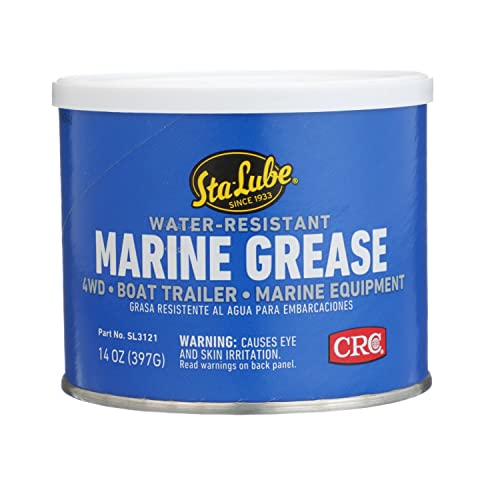
The Sta-Lube SL3121 Water-Resistant Marine Grease stands out as the best trailer bearing grease for those who routinely expose their equipment to water and extreme conditions. I rely on its blue tacky formula, built with aluminum complex and highly refined base oil. It holds up under severe marine environments. The polymer additive boosts adhesion and resists water wash-out. This grease won’t separate or blend with contaminants. It stays where I apply it. I use it on boat trailers, 4WD vehicles, and marine hardware. Its 14 oz. tub provides enough for multiple services. It performs consistently in wet, corrosive settings.
Best For: Marine and heavy-duty vehicle owners who need a reliable, water-resistant grease for trailer bearings and equipment exposed to harsh, wet environments.
Pros:
- Excellent adhesion and resistance to water wash-out thanks to polymer additives
- Performs well in extreme marine and wet conditions without breaking down
- Compatible with a variety of applications including boat trailers, 4WD vehicles, and marine hardware
Cons:
- Slightly higher cost compared to standard greases
- Blue dye may stain surfaces or clothing during application
- May be over-specified for light-duty or dry-weather applications
Factors to Consider When Choosing a Trailer Bearing Grease
You need to take into account several key factors when picking the right trailer bearing grease. Water resistance and corrosion protection are critical, especially if you tow in wet or salty conditions-look for greases labeled marine-grade or with ASTM D1743 corrosion ratings. The NLGI grade, typically #2 for trailers, makes certain proper thickness and adhesion, while a wide temperature range like -20°F to 350°F guarantees stability under heavy loads and friction.
Water Resistance Level
Look for a grease that stands up to water immersion without losing its protective qualities. Choose water-insoluble formulations-they resist displacement even under constant moisture exposure. Greases with polymer additives or tackifiers cling tightly to metal, slashing washout risk from pressurized water. Opt for lithium complex or aluminum complex soap thickeners; they outperform simple lithium soaps by resisting emulsification in wet conditions. A high dropping point-over 500°F-means the grease maintains stability when heat and water combine. These traits guarantee a consistent lubricating film during operation. ASTM-standard-rated greases deliver proven performance, shielding bearings from water ingress. Your trailer’s bearings won’t stay dry, so your grease must handle saturation and keep working. Trust tested specs, not claims. Stay protected mile after mile.
Temperature Range Compatibility
While temperatures fluctuate from bitter cold to intense heat, your trailer bearing grease must perform without fail. Choose a grease rated for at least 0°F to 325°F to guarantee reliable operation in extreme conditions. High-quality formulations remain pliable in freezing weather, with some staying effective down to -20°F, so your bearings start smoothly even in winter. On the other end, a dropping point above 500°F prevents the grease from melting or separating under heavy loads and friction. This thermal stability comes from robust base oils and advanced thickener systems that resist breakdown over time. Wide temperature compatibility stops grease from hardening in cold climates or softening dangerously in heat. Consistent performance means continuous lubrication and reduced wear. You need stability across seasons and environments-don’t settle for greases that skimp on thermal range. Your trailer’s dependability relies on it.
Corrosion Protection Ability
A trailer’s longevity hinges on its ability to resist corrosion, and the right grease plays a critical role. Choose a grease rated for ASTM D4950 GC-LB specifications-it’s designed for severe conditions and delivers superior water and rust resistance. You need water-insoluble formulations that won’t wash out easily, keeping moisture from reaching metal surfaces. Look for anti-corrosion additives and rust inhibitors; they actively shield components in high-humidity or salt-heavy environments. High adhesion, or tackiness, guarantees the grease sticks to vertical and fast-moving parts, minimizing gaps where corrosion can start. Don’t overlook thermal stability-grease that stays intact across temperatures won’t break down and leave bearings exposed. Together, these traits form a durable protective barrier, markedly extending bearing life and performance under harsh, wet, or salty conditions.
NLGI Grade Importance
NLGI Grade #2 grease is the standard choice for trailer wheel bearings, offering the ideal balance between thickness and flowability. It’s thick enough to handle heavy loads, yet soft enough to pump easily with a standard grease gun. The NLGI scale runs from 000 (liquid) to 6 (solid), and #2 sits in the middle-perfect for withstanding shock loads and vibration. This consistency resists breakdown under stress, keeping bearings protected on rough roads. Most #2 greases meet the ASTM D4950 GC-LB standard, meaning they’re built for wheel bearings and resist water, rust, and heavy-duty use. They typically perform well from 0°F to 325°F, so you’re covered in cold mornings or hot summer hauling. You’ll get reliable retention and lubrication without leaks or hard starting. Pick NLGI #2, and you’re choosing the proven benchmark for trailer durability.
Adhesion And Stability
When your trailer hits rough terrain, the grease in the bearings must hold on tight, so choosing a formulation with strong ad把握hesion is critical. Grease with high tackifier content sticks aggressively to metal, resisting displacement under intense vibration and dynamic loads. You need this tenacity to maintain a continuous lubricating film. Lithium-complex and aluminum-complex thickeners boost structural stability, helping the grease stay intact under heavy mechanical stress. This cohesion prevents softening or breaking down over time. Thermal stability matters too-look for a dropping point above 500°F to guarantee the grease won’t liquefy under high heat. Polymer additives enhance water resistance, forming a durable, water-repellent barrier that holds firm even during prolonged exposure to moisture. NLGI #2 grease balances firmness and pumpability, staying in place without hindering re-lubrication. These traits guarantee long-term performance when you demand reliability.
Lithium Type Comparison
You’ll want to choose the right type of lithium grease for your trailer bearings, and understanding the differences between standard lithium and lithium complex is key. Standard lithium greases typically have dropping points of 350–400°F, limiting high-temperature performance. Lithium complex greases exceed 500°F, resisting softening under heavy loads and thermal cycling. The NLGI GC-LB rating requires lithium complex or equivalent thickeners for reliable automotive wheel bearing service. This classification guarantees protection against water washout and extreme pressure. Lithium complex also offers superior structural stability, maintaining grease consistency under high shear stress. It resists thinning during repeated compression and relaxation cycles. Multi-purpose formulations include additives for oxidation resistance, rust protection, and EP performance. These enhance durability in harsh environments. Lithium-based greases naturally resist water and provide strong mechanical stability. For trailers operating under variable loads and temperatures, lithium complex delivers longer service life and reduced re-greasing frequency.
Marine Vs Regular
Lithium complex greases set a strong baseline for trailer bearing performance, but if your trailer regularly hits the water, marine-grade options take protection to the next level. They’re engineered to resist water washout, even under continuous immersion. You’ll get better corrosion protection thanks to enhanced rust and oxidation inhibitors. Standard greases often fail here, losing film strength when exposed to moisture. Marine greases meet strict performance standards like NLGI GC-LB, ensuring reliability in wet environments. Their tacky consistency sticks to metal surfaces, resisting displacement from vibration and wave impact. This is critical for boat trailers enduring constant water exposure. They also maintain stability across wide temperature swings-from freezing launches to hot summer hauls. You’re not just lubricating; you’re sealing bearings against salt, sand, and moisture. Marine greases outperform regular versions where water is a constant threat.
Application Ease
Though performance under stress matters most, how easily you apply the grease plays a key role in maintaining trailer bearings effectively. You’ll want grease in 14-ounce cartridges-it fits standard grease guns for fast, reliable loading and precise delivery into tight bearing assemblies. Tacky, adhesive formulas stay put during application, minimizing drip and splatter, especially when greasing overhead or inverted hubs. Lithium-based and lithium complex greases pump smoothly through guns, even in cold weather or high-heat conditions, ensuring consistent flow. Water-resistant types won’t wash out if applied in damp environments, maintaining integrity under moisture exposure. Grease in reusable, high-impact containers gives you better control, reduces waste, and supports cleaner maintenance. These features save time, improve coverage, and help you apply the right amount without mess or guesswork-critical for long-term bearing health and performance.
Frequently Asked Questions
Can I Mix Different Types of Trailer Bearing Greases?
You shouldn’t mix different types of trailer bearing greases. Doing so can cause chemical incompatibility, leading to grease thickening or separation. Lithium-based and calcium-based greases, for example, react poorly when blended. This compromises lubrication, increasing friction and wear. Always use one consistent, high-quality grease. If you must switch types, completely clean out the old grease first to maintain performance and protect your bearings.
How Often Should I Repack My Trailer Bearings?
You should repack your trailer bearings every 12 months or 12,000 miles, whichever comes first. Regular maintenance prevents heat buildup and metal-on-metal wear. Bearings operate under high radial loads-typically 1,500 to 3,000 pounds per hub. Water exposure accelerates corrosion, so inspect more often if you launch frequently. Use a high-quality lithium-based or synthetic grease with EP additives. Clean old grease completely before repacking.
Is Marine-Grade Grease Suitable for Non-Marine Trailers?
Yes, marine-grade grease works fine for non-marine trailers. You’re protecting against water intrusion and corrosion, even if you’re not on a boat. Marine grease typically uses lithium complex thickeners with 2%–3% corrosion inhibitors. It resists washout under high-pressure water, maintains stability from -20°F to 350°F, and handles heavy loads up to 100,000 psi. You’re not overkill-ing it-it’s just smarter protection.
What Happens if I Under-Grease My Trailer Bearings?
You risk catastrophic bearing failure if you under-grease your trailer bearings. Insufficient lubrication increases friction, generating excessive heat that degrades metal components. Temperatures can exceed 300°F, warping races and rolling elements. Without a proper grease layer, moisture and debris penetrate seals, accelerating corrosion and wear. Bearings lose radial load capacity, leading to pitting, spalling, or seize-up. Regular repacking guarantees peak performance and extends component life.
Can High Temperatures Degrade Trailer Bearing Grease Performance?
Yes, high temperatures can degrade trailer bearing grease performance. Excessive heat breaks down the grease’s molecular structure, reducing viscosity and lubricity. Most greases start thinning above 190°F, leading to oil separation and base soap collapse. You’ll lose film strength, increasing metal-to-metal contact. Synthetic greases withstand up to 350°F, offering better thermal stability and longer service life under heavy loads or frequent braking.