Variable Displacement Pumps: 2.5-9.0 cc/rev Power Steering Explained
You save fuel and get precise steering because variable displacement pumps (VDPs) adjust output based on demand. Instead of running at full flow, they modulate from 2.5 to 9.0 cc/rev, cutting waste. At idle, flow drops to 1–2 L/min, reducing engine load. Under hard turns, output reaches 8 L/min. Swashplate angle changes with steering resistance, optimizing pressure and flow. This cuts heat by 15–25°C and noise by 3–5 dBA. VDPs help meet emissions standards, lowering CO₂ by 5–7 g/km. Efficiency gains support modern fuel economy demands. There’s more beneath the surface.
Notable Insights
- Variable displacement pumps adjust fluid output based on steering demand, improving energy efficiency in modern hydraulic systems.
- VDPs reduce flow to 1–2 L/min at idle, minimizing engine load and enhancing fuel economy.
- Steering resistance directly controls pump displacement, ensuring optimal pressure and flow only when needed.
- By cutting wasted energy and heat, VDPs lower fuel consumption by up to 3% in city driving.
- VDPs operate 3–5 dBA quieter and reduce fluid temperatures by 15–25°C, extending system component life.
What Is a Variable Displacement Pump?
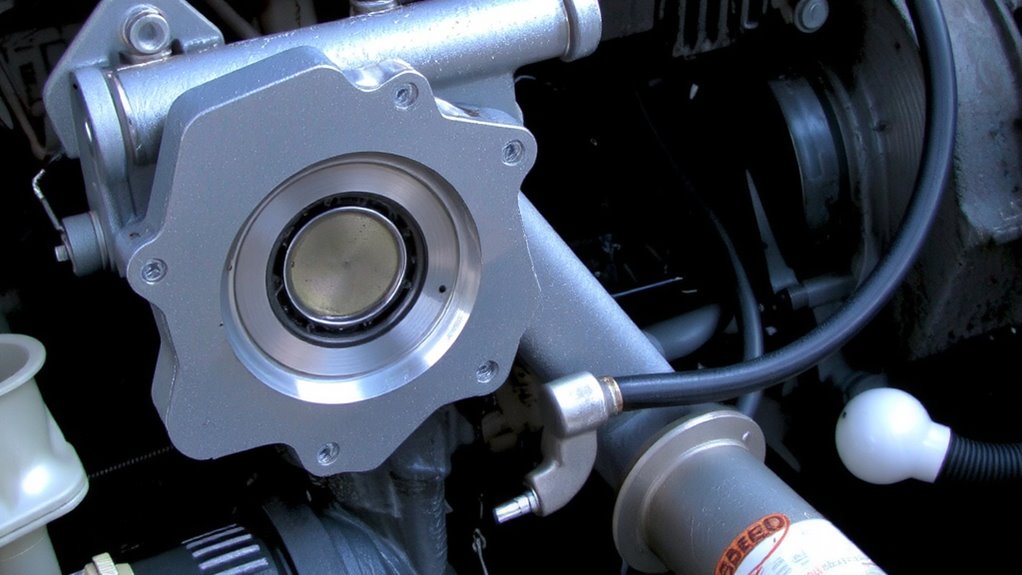
A variable displacement pump adjusts its fluid output based on system demand, unlike fixed displacement pumps that deliver a constant flow. You’ll find it commonly used in modern hydraulic systems where energy conservation is critical. Its hydraulic efficiency improves because it only generates the flow and pressure needed. When demand is low, the pump reduces displacement, cutting power consumption and heat buildup. The mechanical design includes a swashplate or bent-axis mechanism that changes piston stroke length. This adjustment alters output volume without modifying pump speed. Displacement can range from near zero to maximum, often between 20 and 100 cc/rev, depending on model. Internal components are precision-machined to minimize leakage and wear. Pressure compensators or electronic controls regulate displacement in real time. Compared to fixed units, it offers superior responsiveness and load adaptation. You benefit from reduced fuel use and longer system life without sacrificing performance.
How VDPs Boost Steering Efficiency
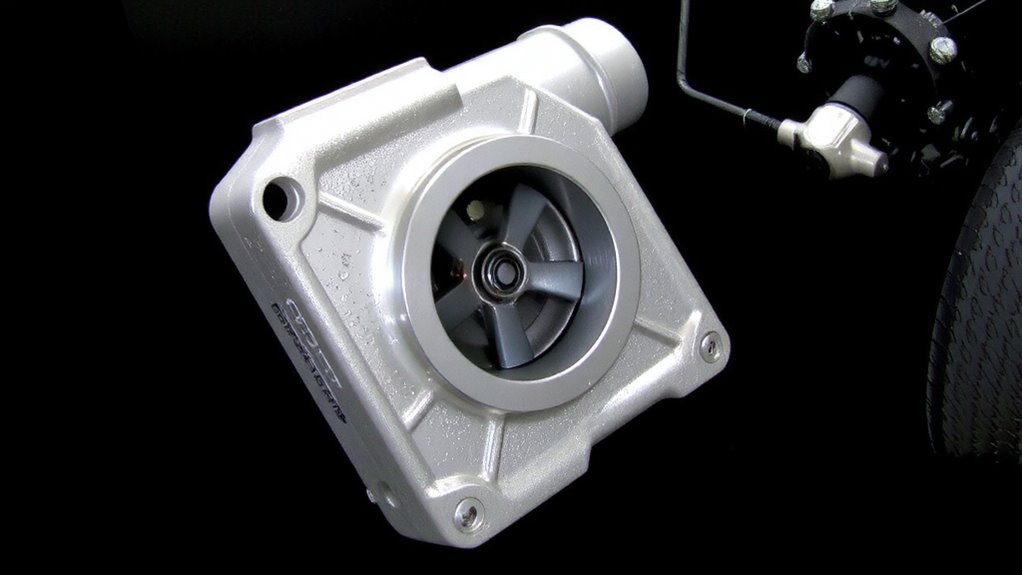
When you’re traversing city streets or idling in traffic, your power steering system doesn’t need full hydraulic output at all times-this is where variable displacement pumps (VDPs) make a critical difference. VDPs adjust flow regulation and pressure modulation on demand, reducing wasted energy. At idle, pump output drops to as low as 1–2 liters per minute, minimizing load on the engine. Under high steering demand, output increases efficiently, reaching up to 8 L/min as needed. This dynamic response improves fuel economy and reduces thermal stress on hydraulic components.
| Operating Condition | Pump Output (L/min) |
|---|---|
| Idle / Light Load | 1–2 |
| Moderate Turning | 4–5 |
| Full Load | 7–8 |
| Parked Steering | 3–4 |
Precise flow regulation and adaptive pressure modulation guarantee peak performance without excess power draw. You get responsive steering feel while maintaining system efficiency. VDPs deliver only what’s necessary, when it’s necessary.
How Steering Load Controls Pump Output
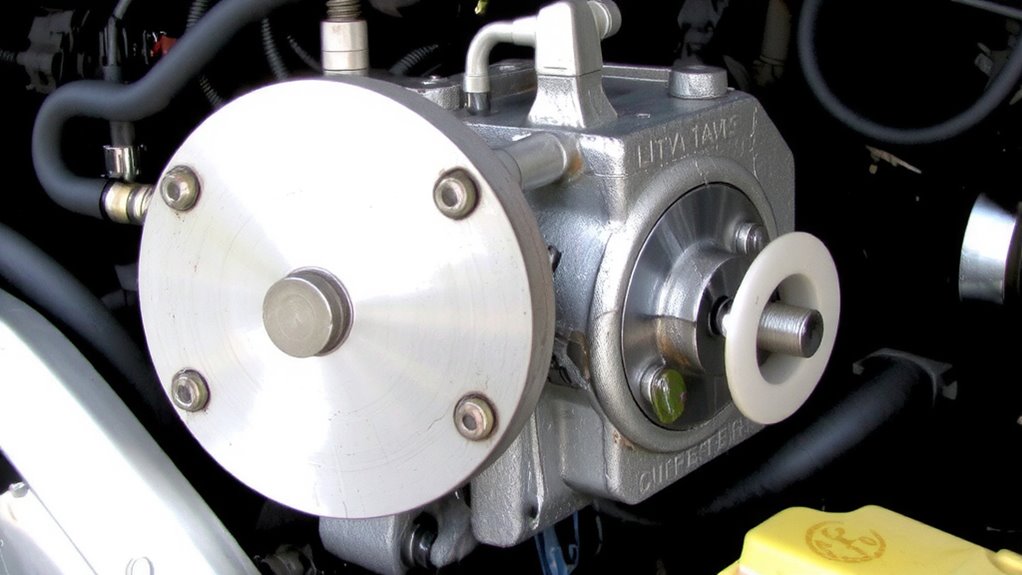
Because steering load directly influences hydraulic demand, the pump’s displacement adjusts in real time to match the required effort. When you turn the wheel, steering resistance determines how much assistance is needed. At low speeds or during tight maneuvers, resistance increases, prompting the pump to generate higher fluid pressure by increasing displacement. This delivers more hydraulic flow precisely when needed. Under light steering loads, like cruising, displacement reduces, minimizing output. The control valve monitors pressure differentials, adjusting the swashplate angle to regulate flow from 2.5 to 9.0 cc/rev, depending on input. This guarantees efficient use of engine power. You don’t get excess fluid pressure when it’s not needed. Instead, the system maintains ideal responsiveness. The result is consistent, reliable assist without wasting energy. This real-time adaptation to steering resistance enhances control while preserving system efficiency.
Fuel and Emissions Benefits of VDPs
While you’re steering, the engine isn’t wasting power running a full-output pump unnecessarily. Variable Displacement Pumps (VDPs) adjust flow based on demand, reducing parasitic load. This efficiency translates directly into reduced fuel consumption-studies show up to 3% improvement in city driving conditions. Lower engine strain means less fuel burned during idle and low-speed maneuvers, where power steering demand fluctuates. Reduced fuel consumption naturally leads to lower emissions output, including CO₂ and NOx. For example, modern VDPs can cut CO₂ emissions by approximately 5–7 g/km under standardized test cycles. By delivering only required hydraulic flow-typically 2–4 liters per minute during normal operation-VDPs minimize excess work. This precision reduces overall engine load, contributing to cleaner combustion and compliance with strict emissions standards like Euro 6 and EPA Tier 3.
Why VDPs Run Cooler and More Quietly
Since hydraulic output matches demand, a variable displacement Paddington generates less excess heat than a fixed-displacement unit. This efficient thermal management reduces strain on the system, keeping fluid temperatures 15–25°C lower under typical operating conditions. Lower heat means reduced wear and longer component life. You also benefit from significant noise reduction-VDPs operate 3–5 dBA quieter due to minimized fluid agitation and smoother internal flow dynamics. Advanced swashplate control adjusts piston strokes instantly, cutting unnecessary cycling. Precision engineering guarantees only the required energy is expended, further limiting heat and sound output.
| Feature | Benefit |
|---|---|
| Adaptive flow control | Matches steering needs exactly |
| Reduced parasitic loss | Less engine load, less heat |
| Optimized internal clearances | Low turbulence, quiet operation |
| Cooler fluid retention | Improved seal longevity |
| Low-pressure ripple | Enhanced noise reduction |
VDPs in Today’s Vehicles
Even as vehicle efficiency demands rise, variable displacement pumps (VDPs) have become the standard in modern power steering systems, delivering precise hydraulic support only when needed. You’ll find VDPs in most passenger cars and light trucks today, engineered to reduce parasitic loss by adjusting output from 0 to 9 liters per minute based on steering load. This adaptive flow minimizes heat buildup, directly enhancing pump durability. Unlike older fixed-displacement units, VDPs operate at peak efficiency across varying conditions, extending service life beyond 150,000 miles under normal use. Fluid compatibility is critical-most VDPs require OEM-specified hydraulic fluid, such as CHF-11S or ATF+4, to maintain internal seal integrity and prevent wear. Using incorrect fluid accelerates abrasion and impairs displacement control. These pumps typically function within a 60–120 psi range during normal steering, spiking briefly to 1,500 psi during hard maneuvers.
Fixing Common VDP Power Steering Problems
What causes your variable displacement pump (VDP) to lose steering assist or generate noise? Worn internal seals are a primary culprit, leading to pressure loss and erratic flow. You’ll notice stiffness at low speeds or a whining sound under load. Seal replacement restores proper fluid dynamics and prevents air ingestion. Over time, contamination from degraded fluid can damage valve plates and piston shoes, disrupting pump calibration. Correct calibration guarantees the swashplate adjusts output based on steering demand, maintaining efficiency. If calibration drifts, you may experience delayed assist response or excess drag. Technicians use diagnostic tools to reset displacement control settings, aligning pump output with manufacturer specifications-typically within ±0.5 cc/rev tolerance. Always flush the system before installing rebuilt pumps. Using ISO 40 hydraulic fluid prevents premature wear. A properly serviced VDP delivers up to 30% better fuel economy by reducing parasitic load.
On a final note
You rely on variable displacement pumps (VDPs) for precise power steering control. These pumps adjust output from 0 to 9 liters per minute based on steering load. Internal pressure compensators respond to as little as 50 psi changes, optimizing flow. This reduces parasitic loss by up to 60% versus fixed-displacement units. VDPs operate below 85°C and emit under 78 dB, enhancing efficiency and durability. Most modern vehicles use swashplate-style VDPs with 95% volumetric efficiency at 1,500 rpm.