Designing Ultra-Low-Drop Coilovers for Bagged Demonstration Vehicles Without Losing Functionality
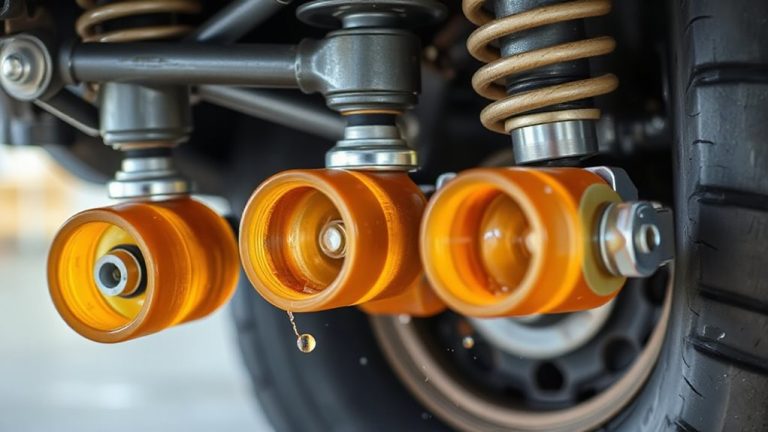
You need coilovers built for extreme drops without sacrificing control. Ultra-low-drop units use 10–12mm shafts, 120–160 lb/in springs, and monotube designs to maintain damping integrity at just 1.8–2.5 inches of travel. Internal bump stops, precision valving, and 24-way adjustability prevent bottoming and guarantee ride stability. CNC collars allow ±1.5 mm height accuracy, while PTFE-lined pistons reduce friction. These coilovers integrate seamlessly with air systems, preserving function under repeated compression. There’s more to optimizing your setup than just stiffness-understanding the balance reveals peak performance.
Notable Insights
- Use high-flow monotube shocks with 10–12mm shafts to maintain durability and damping control at extreme drop levels.
- Set spring preload to maintain 0.8–1.2 inches of compression travel, preventing coil bind and ensuring functional stroke.
- Integrate internal bump stops and maintain a 5mm buffer to eliminate metal-to-metal contact during full compression.
- Implement 24-way double-adjustable damping with ride-height-optimized valving for precise control over rebound and compression.
- Employ CNC-machined billet locking collars for ±1.5 mm adjustment accuracy and repeatable, balanced corner heights.
Why Bagged Builds Destroy Standard Coilovers
While standard coilovers work fine for most street and track applications, they’re not built to handle the extreme suspension travel and frequent bottoming-out common in bagged builds. You subject your suspension to harsh air ride stress when running air bags, especially at ultra-low ride heights. Standard coilovers lack internal bump stops and reinforced sleeves, making them prone to coilover damage from hard compressions. The piston rod can tilt under uneven loads, accelerating seal wear and causing oil leakage. Most units use thin upper mounts that crack under repeated stress. Without proper travel limits, valving degrades quickly, reducing damping efficiency. Your setup demands precision-engineered components-like high-flow monotube designs with T6-anodized shocks and PTFE-lined pistons. These resist binding and maintain performance under fluctuating air pressures. Typical 8kg-12kg spring rates aren’t enough; you need progressive or adjustable springs paired with extended shock bodies.
Design Differences: Ultra-Low-Drop vs. Standard Units
Ultra-low-drop coilovers are engineered from the ground up for extreme stance applications, unlike standard units built for moderate ride height adjustments. You’ll find markedly shorter shock bodies and custom-length threaded sleeves to achieve lower ride heights without sacrificing piston travel. These systems use higher spring rates-typically 10–15 kg/mm-to support reduced suspension travel and maintain stability. Standard coilovers rely on lower spring rates and longer travel, unsuited for sagging bagged setups. Preload settings on ultra-low-drop units are finely tuned to keep springs seated under full droop, preventing coil bind and slack. Threaded collars allow precise preload adjustments to match air spring support when bags deflate. Shaft diameters are often increased to 10–12mm for rigidity. Mounting positions are repositioned to maximize compression stroke within tight clearances. Every component is optimized for minimal droop and controlled, repeatable performance in static displays.
How Ultra-Low-Drop Coilovers Avoid Bottoming Out
You’ve seen how ultra-low-drop coilovers are built for extreme drop applications with shortened bodies, reinforced shafts, and higher spring rates. These modifications reduce stroke length, so preventing bottoming out is critical. You rely on precise spring pre load to keep the suspension operating within its limited travel. Too little pre load risks coil bind; too much reduces usable stroke. Manufacturers set pre load to maintain 0.8 to 1.2 inches of compression travel, even at full drop. Aggressive shock valving complements this by damping high-speed impacts more effectively. The valving is tuned to resist sudden compression without harsh rebound, preserving control. Internal bump stops and progressive spring designs further guard against metal-to-metal contact. Together, spring pre load and tuned shock valving guarantee the coilover handles street imperfections and loading forces without bottoming. Functionality stays intact despite minimal clearance.
Ride Quality vs. Slam: Real-World Tradeoffs
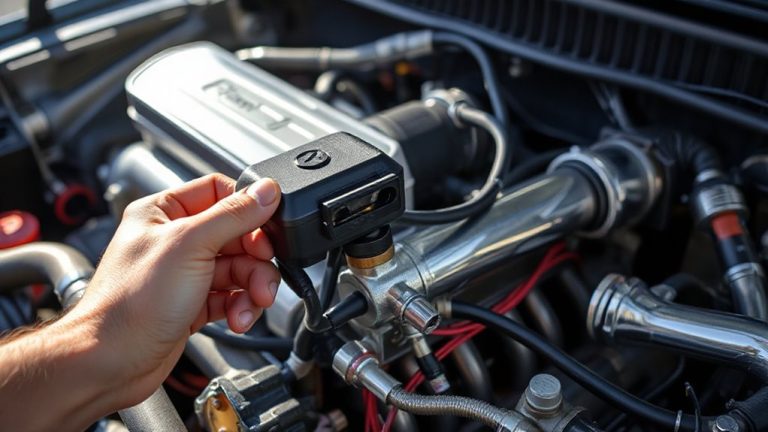
Because you’re chasing that ultra-slammed stance, don’t assume ride quality has to vanish. Modern ultra-low-drop coilovers balance extreme lowering with functional damping, though a harsh ride and compromised comfort can occur if tuning isn’t precise. Proper spring rates and valving preserve usability without sacrificing too much compliance. You still experience reduced suspension travel, but progressive damping helps manage small bumps. The key is selecting components engineered for low ride heights-not just shortened struts. A car diagnostic tool can aid in monitoring vehicle stability and suspension performance under extreme conditions, ensuring optimal setup functionality.
| Factor | Traditional Low Coilovers | Ultra-Low-Drop Tuned |
|---|---|---|
| Spring Rate (lb/in) | 80–100 | 120–160 |
| Travel (inches) | 3.0–4.0 | 1.8–2.5 |
| Damping Control | Fixed | Multi-stage, ride-height optimized |
Compromised comfort is inevitable at extreme stances, but a harsh ride isn’t mandatory with correct setup.
Dialing In Your Stance: Adjustable Damping and Ride Height
How do you achieve a stance that’s both aggressive and functional? Start with adjustable coilovers offering 24-way damping control and linear spring rates between 8-12 kg/mm. You can fine-tune balance front to rear, guaranteeing load distribution matches your vehicle’s weight bias. Ride height adjusts independently per corner, allowing precision alignment within ±1.5 mm tolerance. Locking collars secure settings without creep, even under dynamic loads. Use double-adjustable dampers to separate rebound and compression tuning, improving bump response and body control. This level of adjustability prevents bottoming at full drop while maintaining compliance over road irregularities. With fine tuning balance optimized, camber stays within -1.8° to -2.5°, preserving tire contact. Precision alignment guarantees consistent toe settings, minimizing drag and wear. The result? A show-ready slam that still tracks straight and handles predictably. You don’t sacrifice function for form-you integrate them.
Coilover and Air Ride Compatibility Issues
Adjustable coilovers deliver precise stance control and consistent ride quality, but combining them with air ride systems introduces mechanical and functional conflicts. You risk coil bind when the air spring compresses fully, leaving the coilover’s spring with no travel and locking the suspension. That kills wheel articulation and stresses components. Air systems rely on pressure relief to prevent damage during overloads, but coilovers don’t support that function, creating a mismatch in safety response. When the air bag dumps pressure, the coilover still bears load, leading to unstable drop behavior. Mounting both systems in tandem often reduces stroke efficiency by up to 30%, limiting drop depth. The overlapping spring rates interfere-air springs vary dynamically, while coilovers use fixed rates, causing unpredictable ride harshness. You can’t fine-tune one without affecting the other. This integration demands custom brackets, revised travel limits, and careful rate balancing to avoid failure. For reliable performance, consider choosing a dedicated setup such as a high-quality air suspension system designed specifically for ultra-low ride heights.
Choosing Ultra-Low-Drop Coilovers for Your Demo Build
Where do you start when every millimeter counts? You begin by selecting coilovers designed specifically for ultra-low-drop applications without sacrificing ride quality or adjustability. These coilovers must offer minimal compressed length while maintaining full range of motion. Check the mounting clearance carefully-insufficient space leads to component interference, especially when paired with air springs. You’ll need at least 5mm of buffer between the spring seat and mount at full compression. Adjusting spring preload is critical; too much increases ride stiffness, too little causes coil bind. Set preload just enough to keep the spring seated under full droop-typically 3–5mm of initial compression. Use CNC-machined billet locking collars for precise, repeatable adjustments. Match stroke length to your suspension travel to avoid hard bottoming. For daily-driven demonstration vehicles, consider models that balance low-profile performance with comfort, such as those highlighted in the best coilovers for daily driving guide. These steps guarantee peak performance, longevity, and function in your demo build.
On a final note
You need ultra-low-drop coilovers when bagged builds compress standard units beyond functional limits. These specialized coilovers feature shorter shock bodies, reduced stroke lengths-often 2.5 inches or less-and recessed spring perches. They maintain damper piston control throughout extreme travel. Without them, you risk bottoming out, losing damping efficiency. Adjustable damping lets you fine-tune response. Pairing them with air rides demands precise clearance checks-typically 1.8 inches minimum between piston rod and mount.