Best Car Diagnostic Tools: ANCEL AD310 vs BlueDriver vs TOPDON
You need a reliable diagnostic tool to monitor your vehicle’s health accurately. The ANCEL AD310 reads and clears OBD2 codes quickly, supporting all five protocols with direct DLC power. BlueDriver Pro offers wireless Bluetooth 5.0 connectivity, accesses engine, ABS, and SRS systems, and delivers repair reports with real-time data streaming. Models like the TOPDON ArtiDiag900 Lite provide bidirectional control and live graphing for advanced diagnostics. Each tool varies in display, compatibility, and update options-your choice shapes how deeply you understand your car’s systems.
We are supported by our audience. When you purchase through links on our site, we may earn an affiliate commission, at no extra cost for you. Learn more. Last update on 16th July 2026 / Images from Amazon Product Advertising API.
Notable Insights
- Choose OBD2 scanners like ANCEL AD410 or FOXWELL NT604 Elite for broad vehicle compatibility and comprehensive diagnostics.
- Opt for wireless tools like BlueDriver Pro for smartphone integration, real-time data streaming, and video-guided repairs.
- Ensure support for all OBDII protocols including CAN, ISO9141, and J1850 for reliable code reading and clearing.
- Prioritize tools with lifetime updates and large DTC libraries, such as ZMOON ZM201 or VDIAGTOOL VD10.
- Select models with advanced features like I/M readiness, freeze frame data, and bidirectional control for deeper diagnostics.
ANCEL AD310 OBD2 Scanner (Black)

If you’re a DIYer who needs a no-nonsense tool to tackle check engine lights, the ANCEL AD310 OBD2 Scanner (Black) is your go-to device. I rely on it because it reads and clears emission-related trouble codes fast-within seconds. It supports all OBDII protocols: CAN, KWP2000, J1850 VPW, ISO9141, and J1850 PWM. It works on 1996+ US and 2000+ EU/Asian vehicles with OBD2. The 2.5-foot rugged cable connects securely to the Data Link Connector, drawing power directly-no batteries needed. Its 8.9 x 6.9 x 1.4-inch frame weighs just 12 ounces. The display is clear, the buttons are labeled. It retrieves live, freeze frame, and hard memory data. I use it to verify repair success and check I/M readiness.
Best For: DIY car owners who need a reliable, easy-to-use code reader to quickly diagnose and clear emission-related check engine light issues.
Pros:
- Reads and clears OBD2 trouble codes quickly and accurately without needing batteries
- Compatible with all OBDII protocols and works with most 1996+ US and 2000+ EU/Asian vehicles
- Durable design with a rugged cable, clear display, and intuitive buttons for hassle-free use
Cons:
- Limited to emission-related codes; cannot read non-emission-related engine codes
- Not compatible with OBDI vehicles, even with an adapter
- Basic functionality with no advanced diagnostics or bi-directional control features
MOTOPOWER OBD2 Scanner for Cars (1996+)

The MOTOPOWER OBD2 Scanner stands out for drivers who want a reliable, no-frills code reader that delivers accurate engine diagnostics without requiring technical expertise. It reads and erases engine fault codes, displays freeze frame data, I/M readiness, and real-time values like engine speed, coolant temperature, and vehicle load. The built-in DTC library helps identify check engine causes quickly. It supports all 1996+ US and 2000+ EU vehicles, works with 9 OBD2 protocols, and powers directly from the OBD2 port. The 2.8-inch backlit LCD has adjustable contrast. Six buttons enable easy navigation. It does not support ABS, SRS, or oil reset functions.
Best For: DIY car owners and beginners seeking an affordable, user-friendly OBD2 scanner for basic engine diagnostics on 1996+ US and 2000+ EU vehicles.
Pros:
- Easy to use with intuitive button navigation and a clear 2.8-inch backlit display
- Reads and erases engine codes, shows real-time data, freeze frame, and I/M readiness
- Built-in DTC library helps quickly diagnose check engine light causes
Cons:
- Does not support ABS, airbag (SRS), or oil service reset functions
- Limited to engine diagnostics; lacks advanced system coverage
- Screen protector may be prone to scratches and needs replacement if damaged
BlueDriver Pro OBD2 Scan Tool for iPhone & Android

I rely on the BlueDriver Pro OBD2 Scan Tool when I need deep, accurate diagnostics across a broad range of modern vehicles. It works on all gas-powered cars from 1996 onward, reading and clearing codes for Check Engine, ABS, SRS, Airbag, TPMS, and over 7,000 other issues. It supports advanced diagnostics for major brands like GM, Ford, Toyota, BMW, and Honda. The Bluetooth sensor connects wirelessly to my iPhone or Android device, no cables needed. I get live data streaming while driving, plus unlimited repair reports with step-by-step videos. There’s no subscription-just a one-time purchase, full support, and zero data sharing.
Best For: DIY car owners and mobile mechanics seeking professional-grade diagnostics with no subscription fees and full repair guidance for gas-powered vehicles from 1996 and newer.
Pros:
- Delivers advanced OBD2 diagnostics including live data streaming and code reading/clearing for Check Engine, ABS, SRS, Airbag, TPMS, and over 7,000 additional issues
- Wireless Bluetooth connectivity to iOS and Android devices with no cables required and no ongoing subscription costs
- Includes unlimited repair reports and access to a comprehensive library of step-by-step repair videos with 24/7 technical support
Cons:
- Limited to gas-powered vehicles from 1996 and newer, excluding older or diesel models
- Advanced diagnostics not supported on all vehicle makes, with some brands having limited functionality
- Requires smartphone or tablet for operation, which may be inconvenient for users without compatible devices on hand
ANCEL AD410 OBD2 Scanner for Cars

You’ll find the ANCEL AD410 OBD2 Scanner especially valuable if you own a 1996 or newer American, 2000 or newer European, or a modern Asian vehicle-its broad protocol support makes it a reliable companion for most light-duty cars, SUVs, and trucks. It works with all 16PIN OBDII-compliant vehicles using KWP2000, ISO9141, J1850 VPW, J1850 PWM, and CAN protocols. The 2.4-inch TFT color display delivers clear visuals. I use it to read and clear emissions codes, run I/M checks, and access over 42,000 DTC definitions. It tests O2 and EVAP systems but doesn’t support ABS or SRS.
Best For: DIY car owners and mechanics with 1996+ American, 2000+ European, or modern Asian vehicles needing reliable engine diagnostics and emissions testing.
Pros:
- Supports all major OBDII protocols with broad vehicle compatibility across light-duty cars, trucks, and SUVs
- Features a 2.4-inch TFT color display with 262K colors for clear, easy-to-read diagnostics
- Includes over 42,000 built-in DTC definitions and supports I/M checks, O2 sensor, and EVAP system testing
Cons:
- Limited to engine system diagnostics; does not support ABS, SRS, or transmission systems
- Firmware updates only available on Windows (XP/7/8/10), not compatible with Mac
- Cannot reset MIL independently-fault codes can only be cleared after fixing the underlying issue
VDIAGTOOL VD10 OBD2 Scanner Code Reader
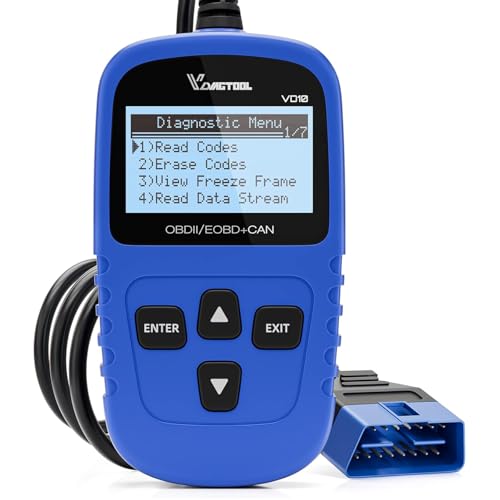
A must-have for DIY enthusiasts and home mechanics, the VDIAGTOOL VD10 OBD2 Scanner Code Reader delivers professional-grade diagnostics without the complexity. I use it to read, clear, and define generic and manufacturer-specific DTCs, with a built-in database of over 3,000 codes displayed on its TFT screen. It retrieves live data-RPM, fuel trim, misfire counts-and freeze frame data to diagnose intermittent issues. It supports all OBDII protocols and works on 99% of 1996+ gasoline vehicles. I plug it in directly-no batteries-and access VIN, CVNs, and calibration IDs. It includes a 3-year warranty and lifetime updates.
Best For: DIY enthusiasts and home mechanics seeking an affordable, user-friendly OBD2 scanner with professional-grade features for diagnosing and maintaining 1996+ gasoline vehicles.
Pros:
- Reads, clears, and defines generic and manufacturer-specific DTCs with a built-in database of over 3,000 codes
- Retrieves live sensor data, freeze frame data, and I/M readiness for comprehensive diagnostics
- Plug-and-play design with no batteries required, plus 3-year warranty and lifetime free updates
Cons:
- LCD screen is only 2-line with basic display, limiting data visibility compared to larger color screens
- Supports only 12V cars, SUVs, and light trucks-no heavy-duty or diesel support
- Limited language options (six languages), which may not cover all regional users
FOXWELL NT301 OBD2 Scanner Tool

Who truly benefits from a no-nonsense, code-focused OBD2 scanner that delivers essential diagnostics without unnecessary extras? I rely on the FOXWELL NT301 when I need fast, accurate DTC reading and CEL reset for 1996+ US, 2000+ EU, and Asian models. It supports all OBDII protocols-CAN, KWP2000, ISO9141, J1850 VPW/PWM-and clears codes only post-repair. Live data graphing streams engine and emissions values in real time on its 2.8-inch color screen. No battery needed-it powers via 16-pin DLC. I use it for gas and 12V diesel vehicles, but it doesn’t support ABS, SRS, or programming.
Best For: DIYers and technicians who need a reliable, no-frills OBD2 scanner for essential engine diagnostics on 1996+ US, 2000+ EU, and Asian vehicles.
Pros:
- Reads and clears DTCs with CEL reset only after repair, ensuring responsible use
- Supports all major OBDII protocols and provides live data graphing on a clear 2.8-inch color screen
- Piggyback powered via 16-pin DLC-no battery required-and includes lifetime free updates
Cons:
- Does not support ABS, SRS, transmission, or advanced functions like bi-directional control and programming
- Limited to 12V diesel and gas vehicles, excluding heavy-duty or hybrid-specific diagnostics
- No internal battery or wireless operation, requiring constant connection during use
FOXWELL NT604 Elite OBD2 Scanner

The FOXWELL NT604 Elite OBD2 Scanner stands out for drivers who demand professional-grade diagnostics without the steep price tag. It supports 5-in-1 system coverage-OBDII, ABS, SRS, transmission, and engine-with precise fault code reading and live data streaming. I use its built-in DTC library and I/M readiness check to prep for emissions tests fast. AUTOVIN grabs vehicle data instantly, and it works across 60+ makes. The rugged case guarantees long-term durability. I rely on free lifetime updates to keep it current. It doesn’t perform service resets, but it excels at accurate diagnostics-no fluff, just facts.
Best For: DIY car owners and enthusiasts seeking an affordable, reliable OBD2 scanner for accurate diagnostics across a wide range of vehicle makes.
Pros:
- Comprehensive 5-in-1 diagnostic coverage (OBDII, ABS, SRS, transmission, engine) with live data streaming and I/M readiness checks
- AutoVIN functionality and support for 60+ vehicle makes ensure quick setup and broad compatibility
- Durable protective case included and free lifetime software updates enhance long-term value
Cons:
- Cannot perform service functions like oil resets, battery registration, or ABS bleeding
- Diagnostic-only tool-warning lights can only be cleared after physical repairs are done
- Compatibility varies by vehicle make, model, and year; not all vehicles are supported
OBD2 Scanner Bluetooth 5.4 Car Diagnostic Tool
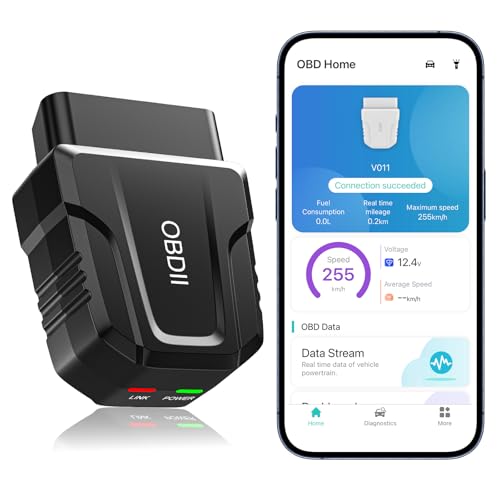
If you need a reliable, no-fuss diagnostic tool that delivers professional-grade data without requiring a mechanic’s experience, the OBD2 Scanner Bluetooth 5.4 is built for you. It supports all 9 OBD2 protocols and reads DTCs quickly, clears CEL/MIL lights, and resets emission monitors. You get live data streaming, freeze frame data, VIN retrieval, and sensor monitoring. Real-time parameters like engine speed, coolant temperature, and vehicle speed update instantly. The Bluetooth 5.4 connection pairs fast with iOS and Android-no manual pairing on Apple devices. It works on 96% of cars from 1996 onward, including BMW, Ford, Toyota, and Mercedes. The app offers multilingual support and visualizes data in clear charts. You’ll access diagnostic reports, how-to guides, and video tutorials. Clearing codes only works post-repair-persistent issues need professional tools. Unplug it after use to avoid draining your battery. Support includes a manual and 24-hour email help.
Best For: DIY car owners and beginners seeking an easy-to-use, reliable diagnostic tool that provides professional-grade insights without needing mechanic experience.
Pros:
- Supports all 9 OBD2 protocols with fast Bluetooth 5.4 connectivity and automatic pairing on Apple devices
- Offers comprehensive diagnostics including live data streaming, freeze frame, DTC reading, and CEL clearance with intuitive app visualization
- Compatible with 96% of vehicles from 1996 onward, featuring multilingual support, how-to guides, and 24-hour email support
Cons:
- Cannot clear fault codes without prior repair-persistent issues may still require professional tools
- Requires leaving the ignition on during use, which may risk battery drain if left connected too long
- Limited to smartphone app use with no standalone display, making it less convenient for users without a mobile device handy
ZMOON ZM201 OBD2 Scanner Diagnostic Tool

You’ll find the ZMOON ZM201 OBD2 Scanner ideal if you need a reliable, no-frills tool for engine diagnostics on most vehicles made after 1996 in the U.S., 2002 in Europe, or 2008 in Asia. It supports all OBDII protocols, including CAN and ISO9141. The 2.8-inch color screen offers adjustable brightness and clear data display. I use it to read and clear engine codes, view live data streams, and check smog readiness. It stores over 50,000 DTCs and shows freeze frame data. No battery is needed-it powers directly from the OBD2 port. I rely on its lifetime software updates and 24/7 support.
Best For: DIY car owners and professionals needing a simple, reliable engine diagnostic tool for vehicles from 1996 (U.S.), 2002 (Europe), or 2008 (Asia) onward.
Pros:
- Supports all OBDII protocols and clears engine codes with a 2.8-inch color screen for easy reading
- Powers directly from the OBD2 port with no battery required and offers lifetime software updates
- Provides live data, freeze frame, smog readiness, and 50,000+ DTC database with 24/7 support
Cons:
- Limited to engine diagnostics only-does not support ABS, SRS, or transmission systems
- Not compatible with Mac computers for PC connection
- Permanent fault codes cannot be cleared without prior repair
TOPDON ArtiDiag900 Lite Bidirectional Scan Tool

No mechanic or DIY enthusiast who values speed and precision can overlook the TOPDON ArtiDiag900 Lite Bidirectional Scan Tool. I rely on its Android 11.0 system and 5x faster CPU for instant response. The 8-inch touchscreen delivers clear visuals during diagnostics. It boasts a 10000mAh battery, running up to 12 hours. Bluetooth 5.0 guarantees stable connectivity up to 33 feet. I use it for full-system scans-engine, ABS, airbag, TPMS, and more-on vehicles from 1996 to 2026. It supports over 10,000 cars across 60+ brands. I command ECUs directly, testing injectors, windows, and lights with bidirectional control. Eight key resets-like DPF regeneration and EPB-are fast and accurate. I access live data, freeze frames, and DTC repair guides. It includes VCI cables and works with Chrysler, Dodge, Jeep, and Fiat (2010–2014), with updates expanding coverage. Available in 12 languages, it’s backed by a 1-year warranty, 2-year free updates, and 30-day returns. I contact support at [email protected] or 833-956-8335, Mon–Fri, 9 AM–6 PM ET. I mark units unsellable when returning to prevent reuse.
Best For: Professional mechanics and serious DIYers who need a fast, reliable bidirectional scan tool with comprehensive diagnostic and reset capabilities across a wide range of vehicles.
Pros:
- Powerful Android 11.0 system with 5x faster CPU ensures quick response and smooth operation during diagnostics
- Extensive bidirectional control and 8 key reset functions streamline maintenance and repair tasks
- Large 8-inch touchscreen, 12-hour battery life, and Bluetooth 5.0 provide excellent usability and connectivity
Cons:
- Full software functionality currently limited to Chrysler/Dodge/Jeep/Fiat (2010–2014) with gradual expansion
- Return policy requires device to be rendered unsellable, which may deter some buyers
- High-end features may be overkill for casual DIY users with basic diagnostic needs
Factors to Consider When Choosing a Car Diagnostic Tool
You need to pick a diagnostic tool that matches your vehicle’s make and model-modern OBD2 standards cover most cars made after 1996, but brand-specific protocols like CAN FD or J1939 matter for newer or commercial vehicles. Look for full-system scanning that reads engine, transmission, ABS, and SRS codes, not just basic check engine light resets, and make sure the interface is intuitive with a backlit screen and responsive touchscreen or buttons. Wi-Fi or Bluetooth connectivity beats USB for real-time updates and wireless convenience, and a tool powered directly from the OBD2 port beats one with a separate battery you’ve got to charge.
Vehicle Compatibility
While selecting a car diagnostic tool, making certain full vehicle compatibility is critical to achieving accurate and thorough system readings. You must confirm that the tool supports OBDII protocols like CAN, ISO9141, KWP2000, J1850 PWM, and J1850 VPW-required for vehicles made after 1996. If you own a European model, verify compatibility from 2000 onward; Asian models vary by manufacturer between 2000–2008. The scanner should read both generic (P0, P2, U0) and manufacturer-specific (P1, P3, U1) codes for complete diagnostics. Make certain it communicates with non-engine modules like ABS, SRS, and transmission when needed. Use only 12V-rated tools for standard cars, SUVs, and light trucks-don’t risk incompatibility with heavy-duty diesel or pre-OBDII systems. Matching specs to your vehicle prevents faulty readings and wasted investment.
Diagnostic Capabilities
A diagnostic tool’s capabilities determine how thoroughly you can assess your vehicle’s systems beyond basic code reading. You need a scanner that reads and clears both generic (P0) and manufacturer-specific (P1, U1, etc.) OBD2 codes-some support over 7,000 additional trouble codes. Advanced tools provide live data streaming, freeze frame data, and I/M readiness status for precise diagnostics. Bidirectional control lets you command ECUs to test relays, solenoids, and actuators directly. Look for full-system coverage including ABS, SRS, transmission, and TPMS to evaluate complete vehicle health. Built-in DTC lookup libraries with 50,000+ code definitions give instant fault interpretations-no internet needed. These features turn guesswork into targeted repairs, saving time and improving accuracy. High-capability scanners function like professional shop equipment, revealing hidden issues before they become costly problems. Guarantee your tool matches your diagnostic demands, not just today’s fix but tomorrow’s too.
User Interface
What makes a diagnostic tool truly usable when you’re knee-deep in engine codes and sensor data? A high-resolution color display guarantees clear reading of values, even in harsh sunlight or dim garages. You’ll want adjustable brightness and contrast to maintain visibility in any lighting. Tools with intuitive menus and dedicated function buttons cut down startup time and simplify navigation. On-screen graphs and color-coded alerts let you interpret live sensor readings at a glance, much like reading a dashboard. Look for multilingual support if you or your team work best in a language other than English. These features reduce errors and speed up diagnosis. A responsive interface with well-organized data layers keeps your focus on the vehicle-not on figuring out the tool. Good UI design isn’t just about looks-it’s about accuracy, speed, and real-world usability under pressure.
Power Source
Your diagnostic tool’s power source directly impacts where and how you can use it. Most OBD2 scanners draw power directly from the vehicle’s OBDII port, so you don’t need batteries or chargers. This setup works reliably when the ignition is on and the port is energized. But if the ignition is off, the tool won’t function-expect no power delivery. Some advanced tools include built-in rechargeable batteries, letting you operate them without staying plugged in. These let you review data or analyze results away from the engine. Wireless OBD2 adapters use minimal power from the port to maintain Bluetooth connectivity, preserving vehicle battery life. USB-powered devices offer flexibility-connect to power banks or wall adapters for firmware updates or off-vehicle diagnostics. Choose based on whether you need portability, continuous power, or independence from the car’s electrical system.
Connectivity Type
How do you want to connect to your vehicle’s systems-through the reliability of a direct link or the freedom of wireless tech? Wired OBD2 tools plug straight into the 16-pin port with a built-in cable, ensuring stable, no-lag communication without draining external batteries. They work independently, requiring no smartphone or app. Wireless scanners use Bluetooth to pair with your mobile device, streaming real-time data seamlessly. You’ll need the ignition on and Bluetooth active for connection. Models with Bluetooth 5.0 or higher offer stronger signals, faster speeds, and reliable transmission up to 10 meters. While wireless offers flexibility, it depends on your phone’s battery and app compatibility. Wired units provide plug-and-play simplicity. Choose based on your need for mobility versus consistency. Both types deliver accurate diagnostics-just through different paths.
Display Quality
A clear and responsive display makes all the difference when interpreting complex vehicle data, just as connectivity defines how you access it. You need a high-resolution color screen with at least 262K colors for sharp, accurate visuals of live data and graphs. Larger displays-2.8 inches or more-let you view multiple sensor readings at once without constant scrolling. A TFT or QVGA display gives you faster refresh rates and better detail than basic monochrome LCDs. Backlighting with adjustable brightness guarantees readability in direct sunlight or dark garages. You’ll also want manual contrast control to maintain visibility in extreme lighting. These features reduce eye strain during extended diagnostics. Never underestimate screen quality-it directly impacts how fast and accurately you diagnose issues. A premium display turns overwhelming data into actionable insights.
Software Updates
Even as diagnostic tools evolve, staying current with vehicle technology demands regular software updates. You must guarantee your tool receives timely updates to support newer vehicle models and evolving OBD-II protocols. Outdated firmware can cause inaccurate readings or complete failure to retrieve DTCs. Many top-tier scanners offer lifetime free updates, preserving long-term value and functionality. Updated software often expands capabilities-enabling access to enhanced live data streams, refined DTC definitions, and advanced bi-directional controls. Most modern tools deliver updates via USB, Wi-Fi, or cloud-based platforms, minimizing downtime. Check compatibility with your vehicle’s make and model year range, as some tools only support updates for specific manufacturers. A tool with automatic update notifications simplifies maintenance. Prioritize devices with frequent, reliable update cycles to avoid obsolescence. Connectivity type directly impacts update speed and ease. Choose wisely to guarantee ongoing precision and diagnostic coverage.
Build Durability
Durability starts where performance meets real-world conditions. You need a tool that survives drops from up to 6 feet onto concrete. Look for a rugged, impact-resistant casing-this isn’t optional if you work in tight, cluttered spaces. Choose models with no moving parts or external antennas; they’re less likely to snap during transport. Your OBD2 cable should have thick, flexible insulation to resist fraying after repeated bending. That kind of wear happens fast in garages. Opt for devices with IP54 or higher ratings-they block dust and resist water splashes, essential in messy shop environments. Tools powered directly through the OBD2 port skip internal batteries, cutting down failure points and heat stress on circuits. No battery means fewer parts to fail. Solid-state design with sealed ports means longer life. Build quality isn’t about looks-it’s about staying functional drop after drop, scan after scan.
Frequently Asked Questions
Can I Use These Tools on Motorcycles?
Yes, you can use some car diagnostic tools on motorcycles, but compatibility depends on the tool’s OBD2 and protocol support. Most modern motorcycles use OBD2 or similar protocols like CAN bus, so tools supporting ISO 15765-4 and KWP2000 work well. However, many bikes use proprietary connectors or require specific software. Always verify protocol compatibility, voltage specs (usually 12V), and physical connector type before use. Generic code readers may not access all systems.
Do Any Work Without a Smartphone?
Yes, some diagnostic tools work without a smartphone. Standalone scanners like the Autel MP808TS or Launch CRP129 run independently, featuring built-in screens and internal processors. They store data locally, use embedded software, and operate via physical buttons. These devices support OBD2 protocols-CAN, ISO, KWP2000-enabling full access to engine systems. No Bluetooth pairing or app dependency is required, ensuring reliable performance even without mobile devices.
Are They Compatible With Diesel Engines?
Yes, they’re compatible with diesel engines. Most modern OBD2 scanners support both gasoline and diesel powertrains. You’ll find protocols like ISO 15765-4 and ISO 9141-2 built in, ensuring communication with diesel ECUs. Tools like the Autel MX808 read live data, perform DPF regens, and reset ECU codes. Always verify manufacturer specs-some premium models cover heavy-duty diesel systems with expanded PID access.
Can I Reset Service Lights With These?
Yes, you can reset service lights with these tools. Most support full system resets, including oil, maintenance, and inspection indicators. They communicate directly with your vehicle’s ECU using OBD-II protocols like CAN and VPW. Look for tools with OEM-level coding, such as those using J2534 pass-thru programming. Confirm compatibility with your model year, as protocols vary. A reliable tool clears warnings accurately, preventing false alerts and ensuring proper system calibration after maintenance.
Do They Work on Hybrid Vehicles?
Yes, they work on hybrid vehicles. Most modern OBD2 scanners support hybrid systems, reading both internal combustion and electric drivetrain codes. Tools like the Autel MD808 and ThinkDiag access IMMO, ABS, and hybrid battery diagnostics. They decode CAN bus signals and communicate via 12V DC systems. You’ll diagnose regenerative braking faults, monitor SOC (State of Charge), and verify inverter performance-all critical for hybrids. Confirm your tool lists hybrid compatibility in its specs.