How to Wax Plastic Grilles Without Leaving Residue
Use a synthetic polymer sealant with SiO2 or PTFE, under 1.2 microns thick, for safe adhesion on ABS or polycarbonate grilles. Apply a pea-sized amount per 6×6 inch section with a 0.4-denier microfiber pad using even, overlapping motions. Buff within 2–3 minutes using a 300–400 GSM polyester cloth to prevent haze. Avoid carnauba or petroleum-based waxes. Maintain application below 100°F and reapply every 3–6 months. Proper technique guarantees a clean, residue-free finish every time-details on exact methods follow.
Notable Insights
- Use synthetic polymer sealants instead of carnauba-based waxes to prevent solvent-induced residue and chemical leaching.
- Apply a pea-sized amount of wax per 6×6 inch section to minimize excess and ensure even, residue-free coverage.
- Buff the wax within 2–3 minutes using a 300–400 GSM polyester microfiber cloth for streak-free, glossy results.
- Pre-clean the grille with a pH-balanced degreaser and soft brush to remove contaminants that trap residue.
- Choose thin-film synthetic waxes under 1.2 microns thick that cure quickly and leave no hazy buildup.
Choose the Right Wax for Plastic Grilles
Choosing the right wax isn’t just about shine-it’s about long-term protection and material compatibility. You must prioritize wax compatibility with non-porous surfaces like ABS and polycarbonate. Many carnauba-based waxes contain solvents that degrade plastic over time, leading to crazing or discoloration. Synthetic polymer sealants, such as those with SiO2 or PTFE, offer safer adhesion without compromising plastic safety. Look for products labeled “plastic-safe” or “trim-compatible,” with pH levels between 6.5 and 8.5 to prevent chemical leaching. Wax films thicker than 1.2 microns can trap moisture, accelerating UV-induced oxidation. Opt for a thin-film synthetic formula that cures in under 30 minutes. Always verify manufacturer data sheets for material safety ratings. Using an incompatible wax may yield short-term luster but risks embrittlement. For lasting results, match wax chemistry to your grille’s polymer type-this guarantees durability without residue.
Clean Your Grille Before Waxing
Before applying any protective coating, you’ll need to remove surface contaminants that can compromise adhesion and clarity. Start with thorough grille deg, using a pH-balanced cleaner to dissolve oils, road film, and grime without damaging the plastic. Use a soft-bristle brush to agitate the surface, making certain you reach textured areas where debris accumulates. Rinse with low-pressure water to avoid forcing moisture into surrounding trim. After cleaning, inspect for hazing, discoloration, or surface oxidation. If present, perform basic plastic restoration with a light abrasive polish designed for automotive plastics. Apply it with a foam pad at 1,200–1,800 RPM to avoid scorching. This step restores UV-damaged surfaces by leveling microscopic imperfections. Allow the grille to dry completely-approximately 20 minutes in direct sunlight-to make certain no moisture remains before waxing. For tough grease buildup, consider using a dedicated engine degreaser that’s safe for plastics and effectively cuts through stubborn contaminants.
Apply Wax Lightly With a Microfiber Pad
Once the grille is clean and fully dry, it’s time to apply wax using a microfiber applicator pad to guarantee even coverage without scratching. Use a clean, lint-free microfiber pad, roughly 4×4 inches, to control wax distribution. Apply a pea-sized amount of plastic-safe wax to the pad-excess wax increases residue risk. Work in small sections, no larger than 6×6 inches, using even pressure across the surface. Uneven pressure can lead to pooling or thin spots, compromising protection. Use slow motions, overlapping each pass by 50%, to assure uniform adhesion. Wax applied too quickly may trap air or leave streaks. Maintain consistent contact between pad and surface to prevent uneven buildup. The microfiber’s low-abrasion fibers, typically 0.3–0.5 denier, protect the grille’s texture while enabling smooth dispersion. This method assures a thin, protective layer that enhances gloss and repels contaminants effectively.
Buff Off Wax Immediately to Prevent Streaks
You’ve applied the wax using a microfiber pad with even, overlapping passes, guaranteeing a thin, uniform layer across each 6×6 inch section. Now, buff immediately-within 2 to 3 minutes-to prevent streaks. Wait longer, and the wax consistency hardens, making removal difficult and increasing the chance of residue. Application timing is critical: too soon, and the wax hasn’t flashed off; too late, and it bonds to the surface. Use a clean, 100% polyester microfiber cloth (300–400 GSM) to lift wax without scratching. Apply moderate, consistent pressure in circular motions to guarantee even removal. Proper buffing preserves gloss while eliminating haze. The plastic grille’s non-porous surface reacts faster to temperature and solvent evaporation than paint, so delayed buffing risks uneven sheen. Immediate action guarantees clarity and depth. Maintain workflow speed across sections to achieve a uniform finish. For optimal results, choose one of the best car microfiber towels recommended for fine finishing tasks.
Stop Wax Buildup on Plastic Grilles (And How to Prevent It)
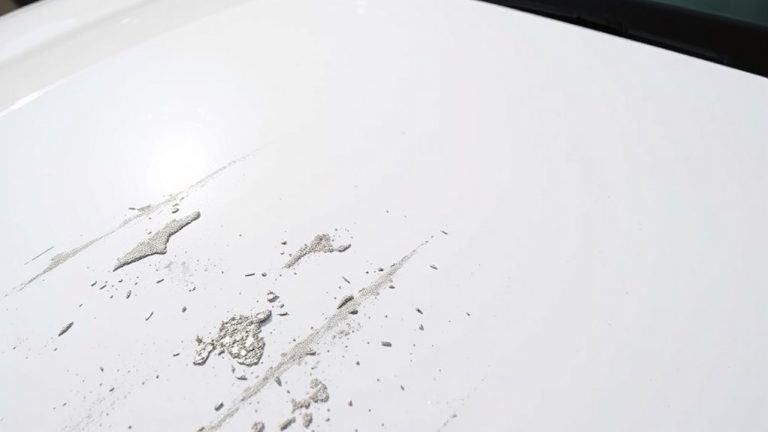
Even a single application can leave unwanted wax buildup if proper technique isn’t followed. Applying too much wax or using the wrong type creates residue that dulls plastic grilles over time. Wax chemistry matters-some formulations contain silicones or polymers that bond aggressively to surfaces, making removal difficult. You must consider grille material compatibility before choosing a product; urethane or ABS plastics react poorly to solvent-heavy waxes, leading to hazing or cracking. Use only a pea-sized amount of wax per grille section-about 2 inches by 2 inches-to maintain control and minimize excess. Buff off thoroughly with a clean, microfiber cloth after 30 seconds, ensuring no film remains. Reapply every 3–6 months, depending on climate exposure. Proper technique prevents buildup while preserving finish integrity.
Skip These Waxing Mistakes on Car Grilles
While waxing car grilles can enhance shine and provide UV protection, skipping common mistakes guarantees long-term durability and avoids surface damage. Applying too much heat during application causes wax discoloration, especially on dark or black plastic. Use a microfiber applicator, not foam, to secure thin, even layers. Never exceed 100°F ambient temperature during waxing-higher temps accelerate curing and trap solvents, leading to residue. Avoid petroleum-based waxes; they accelerate plastic brittleness over time by breaking down polymer chains. Instead, use Carnauba-based or synthetic sealants rated for ABS or polycarbonate surfaces. These maintain elasticity and resist UV degradation up to 12 months. Over-waxing compounds these issues, adding unnecessary weight and increasing risk of flaking. Each application should be 3–5 grams per square foot-any more wastes product and hinders adhesion. Follow manufacturer guidelines for cure time, typically 20–30 minutes. Skip these errors, and your grille stays protected, not compromised. For tough contaminant removal prior to waxing, consider using a dedicated paint remover for cars that’s safe on plastics.
Keep Your Grille Shiny With Monthly Maintenance
Consistent care preserves the finish and structural integrity of plastic grilles between deep treatments. Perform monthly upkeep to maintain peak grille shine and prevent surface degradation. Clean the grille with pH-balanced automotive soap diluted to 5% concentration in water. Rinse thoroughly with low-pressure water at 30–40 psi to avoid forcing debris into vents. Dry with a microfiber towel weighing at least 300 g/m² to reduce micro-scratches. Inspect for UV damage, which typically appears after 90 days of untreated exposure. Apply a silicone-free polymer sealant every 30 days; these coatings last up to 45 days on UV-stabilized ABS plastic. Avoid wax containing carnauba, as it can cloud polycarbonate blends. A maintained grille reflects 85–90% of incident light, compared to 60% on neglected surfaces. Monthly upkeep isn’t just cosmetic-it extends component service life by up to 40%.
On a final note
You must use a non-abrasive, silicone-free wax formulated for plastics to protect grilles without residue. Apply a ¼-inch bead evenly with a microfiber applicator at 60–70°F ambient temperature. Buff immediately with a clean, dry microfiber cloth-minimum 300 GSM-to prevent hazing. Monthly maintenance preserves UV resistance and gloss retention. Avoid paraffin-heavy waxes; they build up refractive layers that scatter light and attract dust. Precision application guarantees optical clarity and long-term durability.