Why Self-Healing Paint Protection Film Is a Game-Changer for Daily Drivers
Your daily commute exposes your car’s thin factory clear coat-just 1.5 to 2.5 mils-to damaging gravel, UV rays, and chemicals. Self-healing paint protection film, a 6–8 mil urethane layer with elastomeric polymers, blocks rock chips and abrasions. It automatically repairs light scratches using heat from sunlight or water, healing imperfections up to 0.6mm deep within hours. The topcoat resists yellowing and maintains optical clarity for up to ten years under extreme temperatures. You’ll discover how it stays effective with minimal maintenance.
Notable Insights
- Self-healing PPF automatically repairs light scratches using sunlight or heat, keeping your car looking pristine.
- At 6–8 mils thick, it offers superior protection against rock chips compared to factory clear coat.
- Elastomeric polymers heal surface damage up to 0.6mm deep, restoring smoothness without intervention.
- Blocks UV rays and chemical etching from bird droppings, acid rain, and industrial fallout.
- Requires minimal maintenance with biweekly washing and avoids costly paint repairs over time.
What Is Self-Healing Paint Protection Film?
Self-healing paint protection film (PPF) is a clear, urethane-based automotive film designed to shield your vehicle’s paint from damage while repairing minor surface imperfections over time. The material composition includes a topcoat with elastomeric polymers that expand and contract, enabling automatic repair of light scratches when exposed to heat. These polymers respond to sunlight or warm water, closing fissures within minutes. Most films measure between 6–8 mils thick, providing durable resistance to rock chips and abrasions. The application process involves precision cutting, surface decontamination, and wet-mounting using a slip solution. Trained technicians use squeegees to eliminate bubbles and guarantee edge adhesion. After curing, the film bonds seamlessly, maintaining the factory finish. You’ll notice optical clarity and a smooth texture that resists yellowing for up to ten years. This combination of advanced material composition and professional application process guarantees long-term protection and minimal maintenance for your vehicle’s exterior. For daily drivers, investing in a high-quality Best Car Paint Protection Film can significantly enhance both protection and resale value.
Why Your Daily Commute Damages Your Car’s Paint
Every day, thousands of drivers expose their vehicles to relentless environmental hazards that degrade paint quality over time. Your daily commute subjects your car to constant road debris like gravel, sand, and salt, which strike the surface at high speeds-often exceeding 60 mph-causing micro-scratches and paint chipping. Repeated impact weakens the clear coat, which averages only 1.5 to 2.5 mils in thickness. Environmental exposure adds to the damage. UV rays break down paint polymers, leading to oxidation and fading. Acid rain, industrial fallout, and bird droppings create chemical etching on unprotected panels. Pollutants settle into microscopic defects, accelerating corrosion. Over months, these factors compromise both appearance and structural integrity of the paint system. Even mild weather conditions contribute to cumulative wear. Without protection, your car’s finish loses resale value and requires costly detailing. Continuous exposure guarantees deterioration is inevitable.
How Self-Healing PPF Repairs Scratches Automatically
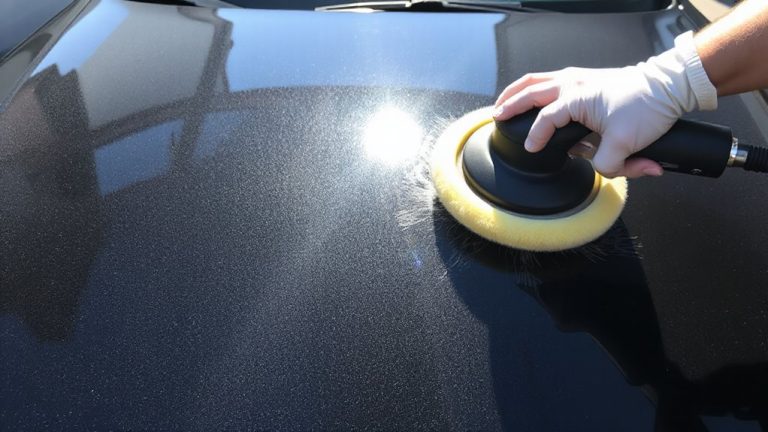
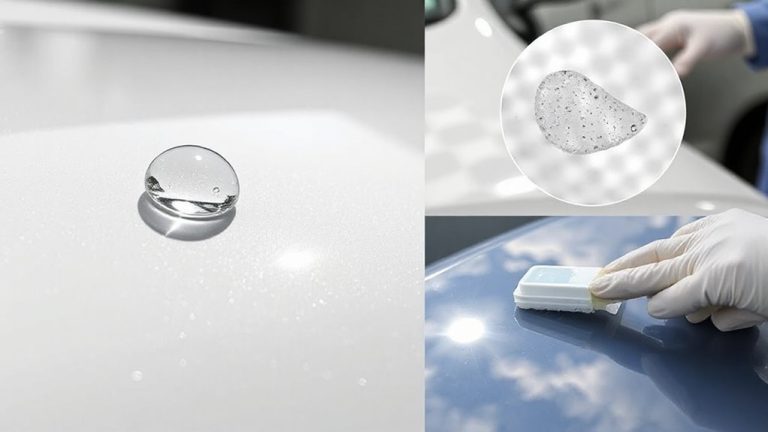
When minor surface damage occurs, you don’t always need a detailer-modern paint protection film (PPF) can handle it automatically. A self-healing PPF uses a specialized clear coat layer that responds to heat activation. When light scratches disrupt the surface, ambient warmth or direct sunlight triggers the repair process. This heat activation causes the polymers in the film to become more fluid, allowing them to flow back into damaged areas. The process relies on molecular fusion, where polymer chains reconnect seamlessly across the scratch. Most repairs complete within one to 24 hours, depending on scratch depth and temperature. The film’s elastomeric properties let it return to its original shape, closing surface imperfections up to 0.6mm deep. This technology maintains optical clarity and surface smoothness without compromising structural integrity. You won’t see scarring or haze post-repair, ensuring long-term protection and a consistently factory-like finish.
How Self-Healing PPF Stops Scratches and Swirls in Daily Driving
Even though your car faces constant exposure to road debris and environmental hazards, self-healing paint protection film (PPF) stands as a durable barrier against everyday scratches and swirl marks. The film’s clear, thermoplastic urethane layer measures 6–8 mils thick-several times thicker than factory paint-giving it exceptional resistance. It absorbs microscopic abrasions from brushing against bushes or improper washing, preventing permanent damage. Embedded with a specially formulated topcoat, the PPF uses heat-activated polymers to close light surface scratches within hours. Environmental debris like gravel, sand, and bug splatter can’t easily penetrate the surface, thanks to its high-tensile strength and elastomeric properties. The film’s self-healing capability resets after minor impacts, maintaining optical clarity. Unlike standard films, it doesn’t degrade with UV exposure, retaining elasticity between -30°C and 90°C. This protection guarantees your paint stays pristine during daily commutes, shielding against frequent, unavoidable surface threats.
Simple Maintenance Tips to Keep Your PPF Performing
Your self-healing PPF handles daily wear, but proper upkeep guarantees it keeps performing over time. Stick to simple care routines to preserve its clarity and function. Clean your PPF-covered surfaces every two weeks using a pH-neutral car shampoo; harsh chemicals degrade the film’s topcoat. Use microfiber towels only-no sponges or abrasive cloths. Rinse first to remove loose grit, preventing micro-scratches during washing. Avoid high-pressure washers within 12 inches of edges to prevent lifting. Cleaning frequency increases in coastal or winter climates-salt and grime accelerate film aging. Dry with a clean microfiber drying blade to avoid water spots. Never wax unless the product specifies PPF compatibility. Most films heal minor scratches at 72°F within one hour. Avoid parking under trees to reduce sap and bird droppings exposure-these contaminants require immediate removal to prevent permanent etching. For quick cleanups between washes, consider using a waterless car wash kit to safely remove light dirt without risking scratches.
Is Self-Healing PPF Worth the Investment?
How much value do you place on long-term paint protection that actively recovers from damage? Self-healing PPF offers a durable 8–10 mil barrier that resists chips, scratches, and UV degradation. Its thermoplastic urethane construction contains elastomeric polymers that flow back into place, sealing minor abrasions within hours. This self-repair function preserves your car’s finish, supporting long term savings by reducing the need for touch-ups or full repaints. Aesthetic preservation is enhanced through a clear, hydrophobic top coat that resists yellowing and staining. Most films last 7–10 years with proper care. Independent lab tests confirm 95% clarity retention and 99% gloss match after five years of exposure. Unlike wax or ceramic coatings, self-healing PPF provides physical protection with measurable performance metrics. The initial cost is higher, but the protection and resale value benefits make it a smart, cost-effective choice for daily drivers.
On a final note
You benefit from long-term paint protection with advanced technology. Self-healing PPF uses a thermoplastic urethane layer that responds to heat-sunlight or warm water-closing surface scratches in 30 minutes to 24 hours. It measures 8 to 10 mils thick, blocking 99% of UV rays and resisting rock chips at highway speeds. Top-coated with hydrophobic polymer, it reduces water spotting. This durable, clear film preserves factory paint and resale value with minimal upkeep.