Best Power Steering Stop Leak Products That Actually Work
You need a proven stop leak that matches your system’s condition and fluid type. Bar’s Leaks High Mileage (16.9 oz) reconditions seals in aging rack and pinion systems using dual-cavity technology. Lucas Oil 10011 (1 quart) expands worn seals without over-swelling, compatible with all fluids. LIQUI Moly 35 ml restores flexibility in NBR and EPDM seals, while ATP AT-205 (8 oz) stops leaks in systems up to 6 quarts. Results vary by degradation level-further insights reveal which product fits your specific leak profile.
We are supported by our audience. When you purchase through links on our site, we may earn an affiliate commission, at no extra cost for you. Learn more. Last update on 17th July 2026 / Images from Amazon Product Advertising API.
Notable Insights
- LIQUI Moly 1099 restores seal flexibility and reduces noise, compatible with all fluids, effective for minor leaks in high-mileage systems.
- Lucas Oil 10011 stops early to moderate leaks by softening and expanding worn seals, works with all fluid types in one treatment.
- Bar’s Leaks High Mileage Repair-It reconditions rack and pinion systems, stops leaks, and reduces noise in aging vehicles.
- Permatex Power Steering Stop Leak revives aging seals and O-rings, integrates with all fluids, prevents new leaks effectively.
- Prestone AS262 fluid with built-in stop leak swells aging seals, prevents minor leaks, and protects against wear and corrosion.
Bar’s Leaks High Mileage Power Steering Repair-It, 16.9 oz

If you own a high-mileage vehicle with persistent power steering leaks and noise, Bar’s Leaks High Mileage Power Steering Repair-It is the best choice for restoring smooth operation without a costly repair. I’ve found its 16.9 oz dual-cavity formula effectively delivers performance additives that target common system issues. One chamber contains seal conditioners that stop leaks by revitalizing worn rubber components. The other provides lubricants that reduce noise and hard steering. It’s compatible with all fluids-petroleum, mineral oil, synthetic, and ATF types. I add it when topping off or during fluid changes. It reconditions rack and pinion systems in domestic and imported vehicles, restoring reliable performance reliably.
Best For: Drivers of high-mileage vehicles experiencing power steering leaks, noise, or stiff steering who want an affordable, easy-to-use solution to restore smooth operation.
Pros:
- Effectively stops leaks and reduces noise with its dual-cavity formula containing seal conditioners and lubricants
- Compatible with all power steering fluids and ATF types, including synthetic and mineral oil-based fluids
- Reconditions rack and pinion systems in both domestic and imported vehicles, enhancing performance during fluid changes or top-offs
Cons:
- May not completely fix large or mechanical failures requiring professional repair
- Results can vary depending on the severity of wear in older systems
- Temporary solution for aging components rather than a permanent replacement for damaged parts
Lucas Oil 10011 Power Steering Stop Leak – 1 Quart

Lucas Oil 10011 Power Steering Stop Leak in the 1-quart size is an ideal solution for vehicle owners facing early to moderate power steering leaks or those committed to preventative maintenance. It’s a solvent-free formula made from special oils and petroleum-extracted additives. It stops leaks by softening and expanding worn seals. The product works with all power steering fluids-synthetic or conventional. I use it in both new and aging systems to prevent future issues. The quart size allows full system top-offs or complete fluid mixing. It’s effective within one treatment in most cases.
Best For: Vehicle owners dealing with early to moderate power steering leaks or seeking preventative maintenance for new and aging power steering systems.
Pros:
- Stops leaks by softening and expanding worn seals without using harmful solvents
- Compatible with all types of power steering fluids, including synthetic and conventional
- Effective as both a repair solution and preventative treatment, suitable for full system use
Cons:
- May not be effective for severe or advanced power steering leaks requiring mechanical repair
- Quart size may be more than needed for minor top-offs, potentially leading to excess product use
- Results can vary depending on the condition and age of the vehicle’s power steering system
Lucas Oil 10008 Power Steering Stop Leak – 12 Ounce

This product stands out for drivers facing persistent power steering leaks, especially those with aging systems showing early signs of seal degradation. I rely on the Lucas Oil 10008 Power Steering Stop Leak because its 12-ounce size suits most standard reservoirs. It’s formulated with special oils and petroleum-extracted additives to condition and renew worn rubber seals. Unlike solvent-based alternatives, this version is solvent-free, reducing the risk of component damage. It’s compatible with all power steering fluids, including synthetic and conventional types. I’ve found it effective at sealing minor leaks and preventing future ones. Use it as preventative maintenance, even in newer systems, to extend service life.
Best For: Drivers with aging power steering systems showing early signs of seal degradation or minor leaks, as well as those seeking preventative maintenance for newer systems.
Pros:
- Effectively conditions and renews worn seals to stop minor leaks
- Solvent-free formula reduces the risk of damage to power steering components
- Compatible with all types of power steering fluids, including synthetic and conventional
Cons:
- May not be effective for severe or structural leaks requiring mechanical repair
- 12-ounce size may be insufficient for larger systems or repeated treatments
- Results can vary depending on the extent of seal wear and system contamination
Prestone AS262 Power Steering Fluid with Stop Leak, 50,000 Miles, 12 oz.
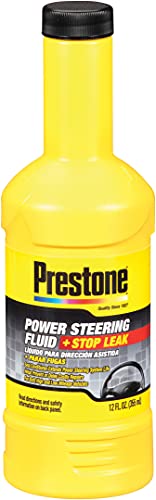
I rely on Prestone AS262 Power Steering Fluid with Stop Leak when I need a maintenance-forward solution that doubles as a leak deterrent for aging systems. This 12 oz. fluid works in all vehicle manufacturers’ power steering systems. It’s formulated to last up to 50,000 miles, reducing the need for frequent top-offs. The built-in stop leak additives swell aging rubber seals and gaskets, halting minor leaks before they worsen. It delivers anti-wear protection to prevent pump failure, squeals, and clogs. Corrosion inhibitors defend metal, rubber, and plastic components.
Best For: Drivers with aging power steering systems seeking a maintenance-friendly fluid that helps prevent and stop minor leaks while offering long-lasting protection.
Pros:
- Compatible with all vehicle manufacturers’ power steering systems
- Stop Leak additives help swell aging seals and gaskets to prevent minor leaks
- Provides anti-wear and corrosion protection to extend system life up to 50,000 miles
Cons:
- Only 12 oz. size, may not be sufficient for full system flushes
- Not recommended for severe or major leaks-temporary fix only
- Conventional formula may not meet specifications required for some newer vehicles
Bar’s Leaks 1334 One Seal Stop Leak – 11 oz

For do-it-yourselfers tackling slow power steering leaks tied to aging seals, Bar’s Leaks 1334 One Seal Stop Leak is a proven fix that works without teardowns or special tools. This 11 oz. bottle treats one system directly-just pour it into your power steering reservoir. It’s compatible with all power steering fluids, engine oils, and transmission fluids. Its 3X sealer technology targets leaks caused by normal wear, swelling and revitalizing rubber seals and gaskets. The formula is safe, non-clogging, and won’t harm system components. One application typically shows results within 200 miles. It’s backed by a guarantee-if it doesn’t work, you get a refund.
Best For: DIYers looking to stop minor leaks in power steering, engine oil, or transmission systems without disassembly.
Pros:
- Effectively seals minor leaks caused by aging or worn seals and gaskets
- Safe to use with all engine oils, transmission fluids, and power steering fluids
- No special tools or teardown required; backed by a satisfaction guarantee
Cons:
- Not suitable for severe or mechanical leaks requiring part replacement
- Results may take up to 200 miles to appear
- Temporary fix; does not replace long-term maintenance or repairs
LIQUI Moly Power Steering Oil Leak Stop | 35 ml | Oil additive | SKU: 1099

works best for drivers with older vehicles showing early signs of seal degradation, particularly those noticing minor fluid seepage or increased steering noise. I use it to revitalize aging rubber and plastic seals. The additive treats the entire power steering system. It cleans clogged ducts and restores flexibility to hardened seals. Flash point reaches 101°C-safe for normal operating temperatures. I add it directly to existing fluid. Tube packaging guarantees precise application. Each dose regenerates seal integrity. It reduces steering noise and slows fluid loss. Over 3,100 users rate it 4.2 stars. Product isn’t discontinued. SKU: 1099. ASIN: B00HL2M6KC.
Best For: Drivers with older vehicles experiencing early signs of power steering seal degradation, minor fluid leaks, or increased steering noise.
Pros:
- Effectively stops minor leaks by revitalizing hardened rubber and plastic seals
- Cleans clogged ducts and restores flexibility in aging power steering components
- Easy to use with direct addition to existing fluid and precise tube packaging
Cons:
- May not be effective for severe or advanced leaks requiring mechanical repair
- Limited volume (35 ml) may only suit smaller power steering systems
- Results can vary depending on the condition and age of the vehicle’s steering system
Permatex Power Steering Stop Leak (12 fl oz)

Permatex Power Steering Stop Leak (12 fl oz) delivers precision engineering for drivers confronting the creeping inefficiency of aging hydraulic systems. I rely on its 12 fl oz formula to stop leaks fast, without tools or disassembly. It’s designed to revitalize aging seals and O-rings, restoring flexibility and preventing fluid loss. The advanced additive integrates smoothly with all power steering fluids, enhancing component durability. At just 5.4 ounces, it’s compact-measuring 2.56 x 2.56 x 7.44 inches-and easy to store. Manufactured by ITW, model 30303 (UPC: 686226303035, ASIN: B0CWJ4K4XX), it’s ideal for DIYers and pros alike. I’ve seen it maintain system integrity, prevent future leaks, and extend pump life under real-world conditions.
Best For: DIY automotive enthusiasts and professional mechanics seeking an easy, no-tool solution to stop power steering leaks and prolong system life.
Pros:
- Effectively stops existing leaks and prevents future ones by revitalizing aging seals and O-rings
- Simple pour-in application with no disassembly or special tools required
- Compatible with all power steering fluids, enhancing system durability and performance
Cons:
- May not be effective for severe or mechanical failures requiring replacement parts
- Results can vary depending on the age and condition of the power steering system
- Premium pricing compared to basic fluid top-offs or generic additives
ATP Automotive AT-205 Re-Seal Stops Leaks, 8 Ounce Bottle

ATP Automotive AT-205 Re-Seal isn’t just another quick fix-it’s a professional-grade solution built for drivers who refuse to compromise when a power steering leak threatens to sideline their vehicle. I rely on its fast-acting formula to stop leaks quickly without damaging seals. It works in engines, transmissions, power steering, differentials, and hydraulic systems. The 8oz bottle treats up to 6 quarts, making it efficient for most systems. It’s compatible with conventional and synthetic fluids, including ATF, gear oil, and hydraulic oil. It contains no petroleum distillates, so it won’t over-swell or degrade seals.
Best For: Drivers and vehicle owners facing stubborn leaks in engines, transmissions, power steering, differentials, or hydraulic systems who need a fast-acting, professional-grade seal rejuvenator.
Pros:
- Fast-acting formula effectively stops leaks and rejuvenates rubber seals and gaskets without causing damage
- Compatible with both conventional and synthetic fluids, including ATF, gear oil, and hydraulic oil
- 8oz treats up to 6 quarts; free of petroleum distillates to prevent seal over-swelling or degradation
Cons:
- May not work on severe or mechanical failures requiring full part replacement
- Effectiveness can vary depending on the age and condition of existing seals
- Higher price point compared to basic stop-leak additives
LIQUI Moly Power Steering Oil Leak Stop | 35 ml | Oil additive | SKU: 20284

If you’re dealing with stubborn power steering leaks and want a solution that protects your system while extending its lifespan, this product earns a spot in your toolkit. I’ve used LIQUI Moly Power Steering Oil Leak Stop (35 ml, SKU: 20284) to halt seepage in aging steering gears. It stops oil leaks by regenerating hardened seals rather than just swelling them. The formula contains specialized additives that condition rubber and plastic components. It cleans clogged oil passages and restores fluid performance. I noticed quieter operation and reduced wear. It’s a universal additive, compatible with all power steering fluids. Onedose treats up to 1 liter of fluid.
Best For: Drivers experiencing power steering fluid leaks and seal degradation who want a preventive, system-safe additive to extend component life and reduce noise.
Pros:
- Effectively stops oil leaks by regenerating hardened seals instead of just temporarily swelling them
- Cleans clogged ducts and revitalizes steering fluid performance for smoother, quieter operation
- Universal compatibility with all power steering fluids and safe for rubber and plastic seals
Cons:
- Small 35 ml bottle may require multiple purchases for larger systems or severe leaks
- Results may vary depending on the extent of seal damage or system contamination
- Not a substitute for mechanical repair in cases of major component failure
Lucas Oil Hydraulic Oil Booster (32 oz)

When hydraulic system performance starts to slip-seals harden, leaks appear, and efficiency drops-I reach for a solution that works as hard as the machinery it protects. I use Lucas Oil Hydraulic Oil Booster (32 oz), a quart-sized additive in a white container. It reduces operating temperature, restores pressure, and improves efficiency. It extends hydraulic fluid life up to two times. The booster conditions aging seals and O-rings, stops existing leaks, and prevents future ones. It works in systems with wet brakes. It’s compatible with both synthetic and conventional hydraulic fluids. It removes varnish, adds lubricity, reduces friction, wear, heat, and energy consumption.
Best For: Heavy-duty equipment operators and mechanics seeking to restore hydraulic system performance, stop leaks, and extend fluid life in both synthetic and conventional systems.
Pros:
- Conditions seals and stops existing leaks while preventing future ones
- Reduces operating temperature, friction, wear, and energy consumption
- Compatible with systems using wet brakes and extends hydraulic fluid life up to 2x
Cons:
- May not be effective in severely damaged or mechanically compromised systems
- Noticeable results may take time depending on system condition and usage
- Premium price compared to basic hydraulic additives
Factors to Consider When Choosing a Power Steering Stop Leak
You need to pick a power steering stop leak that matches your system’s needs. Check the formula type-some are solvent-based, while others use synthetic polymers to condition seals and prevent leaks. Make sure it’s compatible with your fluid type, easy to add without tools, and strong enough to work as both a fix and preventative treatment.
Type Of Formula
To effectively address power steering leaks, selecting the right formula type is critical for both immediate results and long-term system health. You’ll find solvent-free blends that safely condition and swell aging seals without damage or over-expansion. Dual-component formulas combine performance additives with seal conditioners to tackle noise, friction, and leaks at once. Some contain detergent agents that dissolve sludge and clear deposits, keeping fluid passages open and components functioning. High-viscosity agents or thickeners improve seal integrity and reduce fluid bypass in worn systems. Others include anti-wear and corrosion inhibitors that protect pumps, valves, and steering gears. These additives extend component life and maintain system efficiency. The right formula doesn’t just stop leaks-it supports ongoing performance. Choose one that matches your system’s needs without risking harm.
System Compatibility
A compatible power steering stop leak additive guarantees effective leak repair without compromising system integrity. You must match the additive to your fluid type-whether petroleum-based, synthetic, or mineral oil-to prevent chemical incompatibility. Using the wrong type can cause sludge or seal failure. Always verify the product is safe for rubber, plastic, and composite seals, which are common in modern systems. Older additives with harsh solvents or petroleum distillates can over-swell aging seals, leading to leaks or ruptures. Check if the formula works in both domestic and imported vehicles, as specifications vary by manufacturer. Confirm it’s rated for your system type-rack-and-pinion, recirculating ball, or integrated hydraulic-since each operates under different pressures and tolerances. Choosing the right match guarantees lasting performance and avoids expensive damage down the road.
Seal Conditioning Ability
Seal conditioning power lies in the additive’s ability to revitalize aging rubber components within the power steering system. You need conditioners that soften and expand degraded seals to restore their original shape and sealing capability. High-quality formulas contain synthetic esters and polymers that safely penetrate micro-porous rubber, causing controlled swelling without over-expansion. These agents prevent seals from becoming hard or brittle due to thermal cycling and oxidized fluid. Maintaining seal flexibility is critical under operating pressures up to 1,500 psi and temperatures exceeding 250°F. Conditioned seals minimize fluid loss, sustain hydraulic pressure, and reduce steering whine or stiffness. The best products use non-reactive chemistry compatible with NBR, EPDM, and silicone-based elastomers found in modern O-rings and gaskets. Proper conditioning extends component life by restoring resilience in seals that have dried out over time. You’ll see improved system response and lasting leak protection when using a formula engineered for molecular-level seal restoration.
Ease Of Application
You get straightforward access to leak repair with most power steering stop leak products because they’re designed for simple, tool-free application. You pour the liquid additive directly into the power steering reservoir without flushing or disassembly. Most formulas work with existing fluid, letting you apply them during routine checks or top-offs. The process takes under five minutes and requires no special tools. Many products deliver results within one drive cycle, with noticeable seal improvement in 100 to 200 miles. You must follow dosage instructions carefully-typically 3 to 5 ounces depending on system capacity-to avoid fluid imbalance or damage. Overfilling can impair pump performance or degrade seals. Application suits both modern and aging systems, offering reliable function without risk. You maintain full control without mechanical intervention, making it one of the most user-accessible solutions for active leak management.
Preventative Maintenance Use
While most drivers turn to stop leak products only after noticing a drip or stiff steering, applying them preventatively can extend the life of your power steering system by maintaining seal integrity before leaks start. You’re preserving rubber seals by keeping them pliable, preventing hardening or shrinkage from heat and age. Preventative formulas contain seal conditioners that swell and lubricate O-rings, gaskets, and rotary vanes, reducing the risk of sudden fluid loss. This helps maintain consistent steering effort and protects the pump from wear. Many products work in both new and aging systems, offering early protection without waiting for symptoms. Regular use minimizes noise, stiffness, and internal leakage. You’re not just sealing cracks-you’re slowing material degradation. Think of it as synthetic oil for seals: continuous conditioning prevents breakdown before it starts. Choose a formula specifically labeled for preventative use to guarantee compatibility and long-term protection.
Treatment Capacity Per Bottle
A well-maintained power steering system relies on the right balance of fluid and additives, and choosing a stop leak product with the correct treatment capacity guarantees peak performance. You need to match the bottle’s treatment capacity to your system’s fluid volume. Some formulas treat up to 6 quarts, fitting most standard systems. Smaller bottles-under 12 ounces-must fully mix into the fluid, so they work best in low-capacity units. If your system holds more fluid, larger bottles like quarts offer better value, treating multiple systems or allowing repeat use. Concentration matters: effective stop leaks maintain precise ratios, usually 8 to 12 ounces per system. This guarantees even distribution and maximum seal conditioning. Always check the manufacturer’s specs. Overdiluting weakens performance; overconcentrating risks residue. Think of it like medicine-proper dosage guarantees results without side effects. Choose based on your vehicle’s needs, not just bottle size.
Frequently Asked Questions
Can Power Steering Stop Leak Fix a Broken Hose?
No, you can’t fix a broken hose with stop leak. It’s designed to seal minor internal leaks, not repair ruptured rubber or metal lines. A damaged hose needs replacement. Stop leak contains chemical sealants that swell seals or fill pinholes, but they can’t withstand high-pressure bursts. Using it on a broken hose risks total system failure. Replace the hose, then consider stop leak only for aging seals.
How Long Does Stop Leak Take to Work?
You’ll usually see results within 10 to 20 minutes of driving. The seal conditioner softens dried rubber seals, letting them swell and re-form a tight fit. Most products need 50 to 100 miles of driving to fully circulate and seal minor leaks. Don’t expect instant fixes-heat and system pressure activate the polymers. Larger leaks take longer, if they seal at all. Always monitor fluid levels and performance.
Is Stop Leak Safe for All Car Models?
No, stop leak isn’t safe for all car models. You must check your vehicle’s power steering system materials first. Some older seals and rubber components swell or degrade when exposed to certain chemicals in stop leak formulas. Manufacturers often exclude high-mileage or performance vehicles. Always read product labels for compatibility. Using the wrong formula risks clogging lines or damaging the pump. When in doubt, consult your owner’s manual or a certified mechanic before applying any additive.
Can I Mix Different Stop Leak Brands Together?
you shouldn’t mix different stop leak brands. combining formulas risks chemical incompatibility, which can cause gelling or sludge. each product uses unique seal-swelling agents-like esters or synthetics-that may react unpredictably together. power steering systems hold under 1 quart of fluid; contamination even in small amounts reduces effectiveness. always flush the system before switching brands. use one product at a time to guarantee proper sealing and avoid damage.
Will Stop Leak Damage My Power Steering Pump?
No, stop leak won’t damage your power steering pump if you use it correctly. You follow the manufacturer’s dosage-overuse can clog narrow fluid passages. Most formulas contain non-abrasive seal conditioners like swell agents that soften aging rubber seals. These chemicals don’t harm metal components or pump internals. Quality products are ISO-certified and compatible with common PS fluids. You avoid issues by choosing reputable brands and never exceeding recommended amounts.