Best Automotive Coolants Mechanics Trust for Peak Performance
You trust peak performance to coolants like Zerex Dex-Cool, a 50/50 OAT formula with -34°F freeze protection and 265°F boil-over resistance. Mechanics rely on its silicate-free, deionized blend for aluminum protection and 150,000-mile durability. PEAK Global and Valvoline Multi-Vehicle use ethylene glycol with extended-life additives, meeting ASTM D3306 standards. Pre-mixed formulas simplify maintenance while safeguarding gaskets and plastics, ensuring long-term reliability under extreme conditions-further insights reveal critical differences in chemistry, color coding, and service life.
We are supported by our audience. When you purchase through links on our site, we may earn an affiliate commission, at no extra cost for you. Learn more. Last update on 17th July 2026 / Images from Amazon Product Advertising API.
Notable Insights
- Mechanics trust OAT-based coolants like Zerex Dex-Cool for long life and superior aluminum protection in modern vehicles.
- PEAK OET and Zerex G05 are preferred for extended-life performance, offering up to 15 years or 400,000 miles with proper maintenance.
- Pre-mixed 50/50 coolants such as Valvoline Multi-Vehicle reduce error risk and are safe for all engine materials.
- HOAT formulations like Zerex G05 balance OAT and silicates for fast-acting protection in high-temperature gasoline engines.
- Universal coolants with low-silicate, phosphate-free chemistries are trusted for compatibility across domestic, Asian, and European systems.
Zerex Dex-Cool 50/50 Ready-to-Use Antifreeze Coolant 1 Gallon
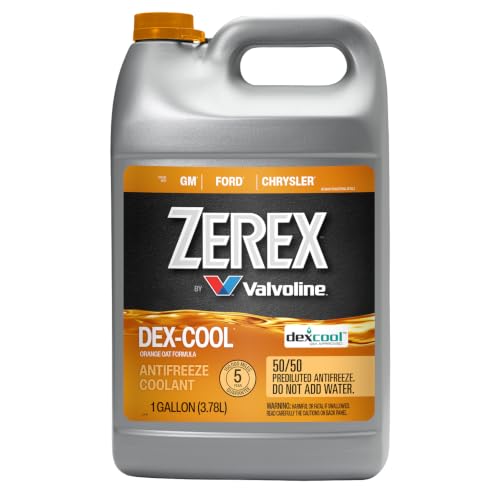
If you drive a GM vehicle-or any car that requires dex-cool compatible coolant-this Zerex 50/50 Ready-to-Use Antifreeze Coolant is your best bet. I rely on its pre-mixed orange formula because it’s blended 50/50 with deionized water, offering freeze protection to -34°F and boil-over resistance up to 265°F. It uses organic acid technology (OAT) to prevent rust, scale, and corrosion. It protects all metals, including aluminum, and is safe for gaskets, hoses, and plastics. High-quality additives help prevent leaks and support long-term cooling system integrity. It’s backed by a 5-year/150,000-mile guarantee. Each gallon contains 30–50 ppm denatonium benzoate to deter accidental ingestion.
Best For: Drivers of GM vehicles or any automobile requiring dex-cool compatible coolant who need a reliable, pre-mixed antifreeze with long-term protection.
Pros:
- Pre-mixed 50/50 formula with deionized water for immediate use, offering freeze protection down to -34°F and boil-over protection up to 265°F
- Utilizes organic acid technology (OAT) to prevent rust, scale, and corrosion while protecting all cooling system metals and components
- Backed by a 5-year/150,000-mile guarantee and includes a bittering agent to deter accidental ingestion
Cons:
- Specific to dex-cool compatible vehicles, limiting use in cars requiring other coolant types
- Orange dye may stain surfaces if spilled, requiring careful handling
- Slightly higher price point compared to non-OAT or universal coolants
PEAK Global Antifreeze & Coolant 1 Gal

I rely on PEAK Global Lifetime Concentrate Antifreeze & Coolant 1 Gal when long-term corrosion protection across diverse vehicle types is non-negotiable. It’s an ethylene glycol-based concentrate using Phosphate-enhanced Organic Acid Technology (POAT). The formula is free of silicate, borate, nitrite, amines, and 2-EH, reducing component wear. I trust its non-abrasive, stable inhibitor system to protect all metals, especially aluminum. It’s safe for American, Asian, and European vehicles. I’ve used it in cars and heavy-duty trucks alike. Denatonium Benzoate adds bitterness to deter ingestion. I maintain peak performance with full system flushes.
Best For: Vehicle owners seeking long-lasting, universal antifreeze and coolant protection across American, Asian, and European cars and trucks with advanced corrosion resistance and compatibility.
Pros:
- Utilizes Phosphate-enhanced Organic Acid Technology (POAT) for extended-life protection without silicate, borate, nitrite, amines, or 2-EH
- Safe for all cooling system metals, especially aluminum, and compatible with all vehicle types and existing coolant colors
- Includes Denatonium Benzoate to deter accidental ingestion and is non-abrasive for system longevity
Cons:
- Sold as a concentrate requiring mixing, which may be less convenient than pre-diluted options
- Ethylene glycol base is toxic if ingested, despite bittering agent
- Requires complete system flush for optimal lifetime performance, increasing maintenance effort
Mopar 10 Year/150,000 Mile Coolant 50/50 Premixed
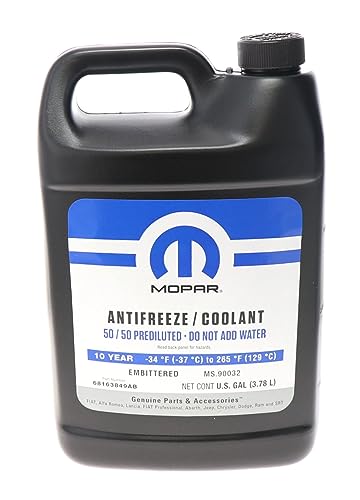
Mopar 10 Year/150,000 Mile Coolant 50/50 Premixed is the go-to choice for owners of Chrysler, Dodge, Jeep, Ram, and Alfa Romeo vehicles who want long-term protection without the hassle of mixing. This ready-to-use coolant comes pre-diluted at a 50/50 ratio, so I never waste time measuring or risk improper mixing. It protects down to -34°F and up to 265°F, meeting ASTM D3306 Type 3 standards. The formula includes a bittering agent to deter accidental ingestion. One gallon weighs 9.4 lbs and fits most cooling systems in models from 2013–2021. I trust it for up to 10 years or 150,000 miles.
Best For: Owners of Chrysler, Dodge, Jeep, Ram, and Alfa Romeo vehicles seeking a long-lasting, ready-to-use coolant that provides reliable protection for up to 10 years or 150,000 miles.
Pros:
- Ready-to-use 50/50 pre-diluted formula eliminates the need for mixing and reduces the risk of improper dilution
- Offers extended life protection with a freeze point of -34°F and boil point of 265°F, suitable for extreme temperatures
- Includes a bittering agent to help prevent accidental ingestion, enhancing safety around children and pets
Cons:
- Limited to specific vehicle makes (Chrysler, Dodge, Jeep, Ram, Alfa Romeo), reducing versatility for other brands
- Higher price point compared to conventional coolants due to extended-life formulation
- One-gallon packaging may be more than needed for smaller cooling system top-offs, leading to potential waste
PEAK OET Antifreeze/Coolant 1 Gal

PEAK OET Extended Life Orange Antifreeze/Coolant is my go-to choice for North American vehicles-especially Ford, GM, and Chrysler models-designed to run with orange OAT-based coolant. I use the 1-gallon, 50/50 prediluted version because it’s ready to pour-no mixing needed. It’s formulated with organic acid technology (OAT) to prevent rust, corrosion, and scale in all aluminum and cast iron engines. The bittering agent, Denatonium Benzoate, reduces accidental ingestion risks. I trust its protection up to 400,000 miles or 15 years when I do a complete flush and fill. It’s fully compatible with other OAT coolants, making swaps simple and safe.
Best For: North American vehicle owners, particularly those with Ford, GM, and Chrysler models requiring orange OAT-based coolant, seeking long-lasting, ready-to-use antifreeze protection.
Pros:
- Ready-to-use 50/50 prediluted formula eliminates the need for mixing
- Offers extended protection up to 400,000 miles or 15 years with proper maintenance
- Contains a bittering agent to help prevent accidental ingestion by children or pets
Cons:
- Orange OAT formula is not suitable for vehicles requiring other coolant types (e.g., green IAT or HOAT)
- Limited to 1-gallon size, which may not be sufficient for full system flush without multiple containers
- May not be ideal for older vehicles not designed for OAT chemistry without proper system compatibility check
Valvoline Multi-Vehicle 50/50 Ready-to-Use Antifreeze Coolant 1 Gallon
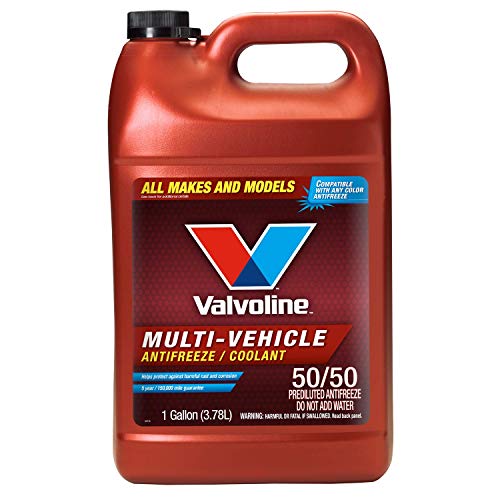
If you need a reliable, ready-to-use coolant that performs in extreme temperatures while protecting a wide range of vehicles, Valvoline Multi-Vehicle 50/50 Ready-to-Use Antifreeze Coolant is an excellent choice. It’s pre-mixed 50/50 with deionized water-no dilution needed. The ethylene glycol-based formula protects down to -34°F and up to 265°F. It contains Alugard Plus additive tech, preventing corrosion in aluminum and other metals. I’ve used it in cars, trucks, ATVs, and motorcycles. It’s compatible with all ethylene glycol coolants and meets ASTM D3306 standards. The bittering agent helps prevent accidental ingestion.
Best For: Drivers of cars, trucks, ATVs, motorcycles, and other light-duty vehicles needing a reliable, pre-mixed coolant that offers year-round protection in extreme temperatures.
Pros:
- Pre-mixed 50/50 formula with deionized water-no dilution required for immediate use
- Protects down to -34°F and up to 265°F, suitable for all climates and operating conditions
- Features Alugard Plus additive technology to prevent corrosion, especially in aluminum components
Cons:
- Contains ethylene glycol, which is toxic if ingested despite the added bittering agent
- Yellow color may not be compatible with some organic acid technology (OAT) or hybrid OAT systems long-term
- One gallon size may require multiple units for complete system flushes in larger vehicles
ULTRA 1PLUS Antifreeze Coolant (50/50 Premixed)

While many coolants require mixing, I choose ULTRA 1PLUS Antifreeze Coolant (50/50 Premixed) when I need a ready-to-use solution that works across a wide range of vehicles without guesswork. It’s pre-mixed, so I pour it straight from the jug. This universal coolant fits all major brands-Toyota, GM, BMW, Honda-you name it. It meets ASTM D3306 and D4985 standards, so I trust it in both gas and diesel engines. The phosphate-free, low-silicate formula fights corrosion and boil-over. Its defoamer protects hoses, gaskets, and plastic parts. I use it confidently in vehicles from 2000 and older.
Best For: Drivers seeking a reliable, ready-to-use universal antifreeze coolant that works across various vehicle makes and models without mixing or compatibility concerns.
Pros:
- Pre-mixed 50/50 formula eliminates the need for dilution, offering immediate and hassle-free use
- Meets ASTM D3306 and D4985 standards, ensuring compatibility with both gasoline and heavy-duty diesel engines
- Phosphate-free, low-silicate formulation provides strong corrosion and boil-over protection while safeguarding hoses, gaskets, and plastic components
Cons:
- Not specifically formulated for newer European or Asian-specific coolant specifications beyond 2000
- May not meet extended-life requirements of some modern OAT or HOAT-based cooling systems
- Limited information provided on long-term performance in extreme high-temperature or sub-zero environments
PEAK OET Blue Antifreeze/Coolant 1 Gal
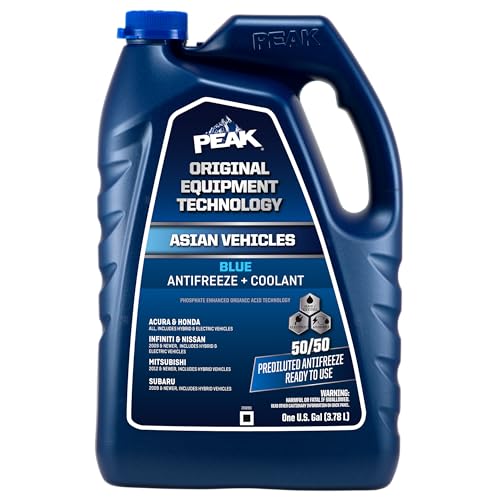
For drivers of Asian-made vehicles like Honda, Acura, and Subaru, this coolant is the ideal choice-specifically engineered to meet the needs of engines requiring a blue phosphate-enhanced OAT (Organic Acid Technology) formula. I rely on PEAK OET Blue because it’s pre-mixed 50/50, so I can use it right away without diluting. It uses phosphate-enhanced OAT (POAT) to fight rust and corrosion, protecting aluminum, steel, and copper parts. The formula includes Denatonium Benzoate, making it bitter to prevent accidental ingestion. I’ve seen it deliver up to 150,000 miles or 5 years of protection after a full flush.
Best For: Drivers of Asian vehicles like Honda, Acura, Infiniti, Mitsubishi, Nissan, Subaru, and Suzuki that require a blue phosphate-enhanced OAT coolant.
Pros:
- Pre-mixed 50/50 formula for immediate use, no dilution required
- Provides up to 150,000 miles or 5 years of protection when installed with a full flush
- Contains Denatonium Benzoate to deter accidental ingestion and protect against rust and corrosion
Cons:
- Not recommended for vehicles requiring traditional green coolants or non-POAT formulas
- Limited to specific Asian vehicle models, reducing universal applicability
- Slightly higher price point compared to conventional coolants
Zerex G05 Phosphate Free 50/50 Ready-to-Use Antifreeze/Coolant 1 GA

Zerex G05 Phosphate Free 50/50 Ready-to-Use Antifreeze/Coolant is my top pick for drivers with modern vehicles requiring a high-performance, ready-to-pour HOAT formulation. It protects down to -34°F and resists boil-over up to 265°F, exceeding standard thermal demands. Its HOAT chemistry fights rust, scale, and corrosion in aluminum and other critical engine metals. The pre-mixed 50/50 blend uses deionized water and requires no dilution. This yellow, phosphate-free formula works immediately upon installation. Additives shield gaskets, hoses, and plastics without harming factory finishes. I trust it because it’s batch-tested and proven in fleet trials. It’s backed by a 5-year/150,000-mile warranty against freeze or boil failure-real protection you can count on.
Best For: Drivers of modern vehicles seeking a reliable, ready-to-use HOAT antifreeze that provides superior freeze and boil-over protection without the need for mixing.
Pros:
- Pre-mixed 50/50 formula with deionized water for immediate use; no dilution required
- HOAT formulation offers robust protection against rust, scale, and corrosion in aluminum and other engine metals
- Backed by a 5-year/150,000-mile warranty and proven in real-world fleet testing for long-term reliability
Cons:
- Yellow color may not be compatible with all manufacturers’ color-coded coolant systems
- Phosphate-free formulation, while beneficial for some engines, may not meet requirements of older vehicles needing phosphate additives
- Premium pricing compared to conventional antifreeze/coolants
PEAK OET Antifreeze/Coolant for Asian Vehicles

If you own a Toyota, Lexus, or Scion that requires a red or pink POAT-formulated coolant, this PEAK OET product is your best match. I rely on its Phosphate-Enhanced Organic Acid Technology for long-term corrosion protection. It’s prediluted 50/50, so I use it straight from the 1-gallon jug-no mixing required. It safeguards against rust and scale while protecting aluminum, copper, and seals. I’ve seen it last up to 150,000 miles or 5 years when used in a fully flushed system. It’s compatible with other extended-life coolants, giving me flexibility. The added bittering agent, Denatonium Benzoate, helps prevent accidental ingestion.
Best For: Toyota, Lexus, and Scion owners needing a ready-to-use, long-life red/pink POAT-formulated coolant for optimal engine protection.
Pros:
- Prediluted 50/50 ratio for immediate use-no mixing required
- Provides up to 150,000 miles or 5 years of protection when installed in a fully flushed system
- Compatible with other extended-life coolants and includes a bittering agent to deter accidental ingestion
Cons:
- Specifically formulated for Asian vehicles, limiting suitability for other makes
- Red/pink color coding may cause confusion if mixed with incorrect coolant types
- Longer service life dependent on complete flush and fill, not just topping off
Zerex HD 50/50 Antifreeze/Coolant (1 GA)

A heavy-duty workhorse demands a coolant that won’t buckle under extreme heat and continuous operation, and this is where the Zerex HD 50/50 Antifreeze/Coolant steps in. I rely on this ready-to-use 50/50 prediluted formula because it eliminates mixing errors. It’s proven in Cummins, DDC, and Paccar engines, meeting severe-duty requirements. The coolant contains corrosion, scale, and rust inhibitors that protect aluminum and other metals. I trust its 3-year/150,000-mile warranty against freeze-ups or boil-overs. It’s batch-tested in labs and fleets for real-world reliability. A bittering agent (30–50 ppm denatonium benzoate) prevents accidental ingestion.
Best For: Commercial and industrial diesel engine operators seeking a reliable, ready-to-use antifreeze/coolant that delivers long-term protection in heavy-duty applications.
Pros:
- Pre-charged 50/50 ready-to-use formula eliminates mixing errors and simplifies maintenance
- Formulated for severe-duty diesel engines, providing protection for aluminum and other critical metals
- Backed by a 3-year/150,000-mile guarantee against freeze-ups and boil-overs, with lab and fleet testing for real-world reliability
Cons:
- Limited to 1-gallon size, which may require frequent purchases for larger cooling systems
- Contains denatonium benzoate, which while safe, may raise concerns for some users despite preventing ingestion
- Premium pricing compared to conventional coolants due to heavy-duty formulation and warranty coverage
Factors to Consider When Choosing an Automotive Coolant
You need to check your vehicle’s specs before picking a coolant-using the wrong type can damage the engine or void the warranty. Coolant color coding isn’t just for show; it signals additive technology differences like IAT, OAT, or HOAT, which affect compatibility and service life. Look for ratings that guarantee freeze protection down to -34°F and boil-over resistance up to 265°F, and always match the longevity specs-some last 5 years, others up to 150,000 miles.
Coolant Type Compatibility
Your vehicle’s cooling system relies on the correct coolant chemistry to prevent corrosion and maintain peak efficiency. You must use the right type-OAT, HOAT, or IAT-based on your engine’s materials and design. OAT coolants offer long life and aluminum protection, while IAT works best in older systems with more iron and copper. HOAT blends both technologies for modern gasoline engines. Using the wrong type risks damaging gaskets, hoses, and seals, especially in aluminum-intensive engines. Silicates, phosphates, and borates in certain formulas target specific metals, so mismatching causes deposits or inhibited protection. Never rely on color to identify chemistry-dyes vary by brand. Instead, follow ASTM D3306 for light-duty engines or D4985 for heavy-duty applications. Always check your owner’s manual and stick to approved specifications. Mixing types can deactivate corrosion inhibitors, leading to costly repairs.
Color Coding Matters
Why do coolants come in so many colors? The hue indicates chemical formulation and helps you avoid costly mistakes. Orange means organic acid technology (OAT), ideal for extended life and common in GM vehicles. Green usually signals traditional inorganic coolant with silicates, suited for older engines. Yellow or orange OAT blends offer longer service intervals-up to 150,000 miles. Blue often stands for phosphate-enhanced OAT, used in European models to prevent scaling in aluminum radiators. Red or pink coolants serve Asian vehicles like Honda or Toyota, also using phosphate-modified OAT. Manufacturers use color to prevent mixing errors. Never blend different colors-chemical incompatibility can form sludge, reduce corrosion protection, and clog passages. Low-silicate, phosphate-free coolants prevent deposits in modern, aluminum-intensive engines. Color is your first guide to compatibility-follow it strictly to protect your system.
Additive Technology Differences
While color gives a quick visual cue, the real difference in coolants lies in their additive chemistry, which determines protection level, compatibility, and service life. You’ll want OAT coolants if you need long-term protection-they use carboxylates, last up to 15 years or 400,000 miles, and contain no silicates. HOAT blends OAT with small amounts of silicates or phosphates, giving you fast-acting protection for aluminum parts and broad compatibility across North American and European engines. POAT includes phosphates to fight corrosion in hot spots, ideal for high-stress engines. For modern systems with tight tolerances and high aluminum content, choose low-silicate, phosphate-free formulas to prevent scaling. All these chemistries can include denatonium benzoate (30–50 ppm) as a bittering agent-it deters accidental ingestion and doesn’t affect performance. Matching the right additive tech to your engine guarantees durability and peak cooling efficiency.
Freeze And Boil Protection
When temperatures swing to extremes, your coolant must keep the engine safe in both freezing cold and scorching heat. Most coolants protect down to -34°F (-37°C), preventing freeze-related cracking in block and hoses. They also resist boil-over up to 265°F (129°C), critical during high-load driving or hot climates. You get this balance with a 50/50 mix of ethylene glycol and deionized water-the industry standard. Stray from this ratio, and you risk lowering thermal performance. Too much water increases freeze risk; too much glycol reduces heat transfer. Proper concentration guarantees consistent protection across conditions. These limits aren’t guesses-they’re proven in labs and real-world testing. You need this tested reliability to avoid overheating or freezing, which can destroy engines. Stick to tested formulas and correct mixing. Your engine depends on it.
Longevity And Warranty
You can count on your coolant to last far longer than you might think-if you choose the right type and follow the rules. Extended-life formulas, especially those using Organic Acid Technology (OAT) or hybrid chemistry, protect longer because their corrosion inhibitors deplete slower than in traditional coolants. Some offer warranties up to 15 years or 400,000 miles when you follow maintenance guidelines. Others last 5 years or 150,000 miles under similar conditions. Lifetime protection is possible with proper care, backed by lab testing and fleet trials. To activate full warranty coverage, perform a complete flush and fill-partial top-offs can shorten service life. Always check manufacturer specs, since warranty terms depend on correct installation and fluid compatibility. Bittering agents like denatonium benzoate don’t impact longevity or warranty; they’re added only for safety. Choose based on verified performance, not claims.
Universal Versus Specific Formulations
Choosing the right coolant goes beyond longevity and warranty-it hinges on matching the formulation to your vehicle’s design. Universal coolants work across brands and engine types, meeting ASTM D3306 standards for broad compatibility, including aluminum components. They’re convenient for topping off, regardless of existing coolant color. But specific formulations are engineered for precise manufacturer requirements, often using OAT or HOAT chemistries tailored to North American, Asian, or European engines. These contain targeted additive packages-like phosphate-enhanced or silicate-free blends-to optimize protection. Mixing incompatible types risks sludge formation and reduced corrosion control. For complete flushes, always use the OEM-specified formulation. While universal coolants offer flexibility, vehicle-specific coolants guarantee long-term system integrity. Your choice impacts performance, so check your owner’s manual. Use universal only when specifications align or for minor top-offs.
Frequently Asked Questions
Can I Mix Different Colored Coolants in My Radiator?
No, you can’t mix different colored coolants in your radiator. Each color usually signals a specific chemical composition, like OAT, HOAT, or IAT formulations. Mixing them causes incompatible additives to react, forming gels or sludge that clog passages. That reduces coolant flow and leads to overheating. Always flush your system completely before switching types. Use only the coolant type specified in your owner’s manual to protect your engine and maintain ideal heat transfer.
How Often Should I Flush My Cooling System?
You should flush your cooling system every 30,000 miles or 2 years, whichever comes first. Over time, coolant breaks down and accumulates contaminants. Flushing removes rust, scale, and debris. Use distilled water and the manufacturer-recommended coolant mix-typically 50% coolant to 50% water. This maintains proper heat transfer and corrosion inhibition. Skipping flushes risks overheating and engine damage. Always let the engine cool before starting.
Is It Safe to Use Tap Water With Coolant?
No, you shouldn’t use tap water with coolant. Tap water contains minerals that cause scale buildup and corrosion in your cooling system. Always mix coolant with distilled or deionized water. A 50/50 blend of ethylene glycol coolant and purified water delivers ideal freeze protection down to -34°F and boil-over resistance up to 265°F. This ratio maintains proper inhibitor levels, preventing premature coolant breakdown and engine damage.
Does Coolant Expire if Unopened and Stored Properly?
Yes, coolant doesn’t expire if unopened and stored properly. You keep it sealed in its original container, away from extreme temperatures. Most manufacturers guarantee a 5-year shelf life, though the chemical formulation remains stable much longer. Ethylene glycol or propylene glycol bases degrade slowly when isolated from moisture and air. You’ll see no phase separation or sludge if stored correctly-just inspect before use.
Can Old Coolant Cause Engine Overheating Issues?
Yes, old coolant can cause engine overheating issues. As coolant ages, its corrosion inhibitors degrade, reducing protection against rust and scale buildup. These deposits clog radiator and heater core passages, restricting coolant flow. Even if unopened, coolant deteriorates over time; once installed, its effectiveness declines past 5 years. You lose thermal transfer efficiency, raising engine temperatures. Always follow manufacturer-recommended replacement intervals to maintain ideal cooling system performance and prevent overheating.