Top-Rated TPMS Sensors for Reliable Tire Pressure Monitoring
You need reliable TPMS sensors that deliver precise, long-lasting performance. Autel MX-Sensors offer ±10 kPa accuracy, 315/433MHz compatibility, and tool-free rubber valve installation. GM owners benefit from pre-programmed 315MHz sensors with ±1.5 PSI accuracy and included relearn tools. BMW and Ford applications feature high-precision chips and durable aluminum stems. Most sensors last 5–8 years, with temperature ranges from -40°C to 125°C. Learn how different models match your specific vehicle’s requirements.
We are supported by our audience. When you purchase through links on our site, we may earn an affiliate commission, at no extra cost for you. Learn more. Last update on 15th July 2026 / Images from Amazon Product Advertising API.
Notable Insights
- Autel programmable sensors offer 99% vehicle coverage with dual 315MHz/433MHz support and wireless batch programming for fast setup.
- Schrader EZ-Sensor provides reliable performance across North American and European vehicles with factory-programmed frequency flexibility.
- A-Premium TPMS sensors feature ±0.06 bar accuracy and durable construction for long-term reliability in extreme temperatures.
- Marsflex TPMS set delivers 8-year battery life and OE-standard precision with easy installation on Toyota, Lexus, and Pontiac models.
- A0009052102 sensor ensures ±0.1 BAR accuracy and direct OE replacement for BMW and Mercedes without reprogramming.
TPMS Sensor 4 Pack Compatible with GM Vehicles
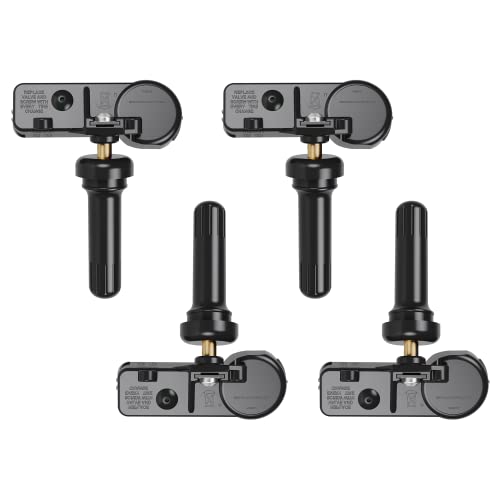
If you own a GM vehicle made after 2006-like a Chevrolet, GMC, Cadillac, or Buick-this TPMS sensor 4-pack is built for you. I rely on these CDWTPS model 13586335 sensors because they’re pre-programmed for 315MHz GM systems-no OBD2 coding needed. They replace OEM parts like 13598771 and 15254101 with exacting accuracy. Each sensor runs on 3.6V with a 4 CR2 battery, lasts years under normal use, and withstands -40°C to +125°C. I install them easily: turn the ignition to ON/RUN, enter learn mode via the DIC, then activate LF, RF, RR, LR tires using a TPMS tool. Two horn chirps confirm start and finish. Metal housing guarantees durability.
Best For: GM vehicle owners with models from 2006 onwards seeking reliable, easy-to-install TPMS sensors that match OEM specifications without requiring programming.
Pros:
- Pre-programmed for 315MHz GM systems, eliminating the need for OBD2 coding or additional tools
- Durable metal housing and wide temperature tolerance (-40°C to +125°C) ensure long-term reliability
- Direct OEM replacement with compatibility across multiple GM brands and seamless activation process
Cons:
- Limited to GM 315MHz systems, not compatible with other manufacturers or frequencies
- Requires a TPMS activation tool for sensor relearn procedure
- Battery (4 CR2) is included but not user-replaceable in most cases
4PCS TPMS Sensor for BMW Mini 2010-2014
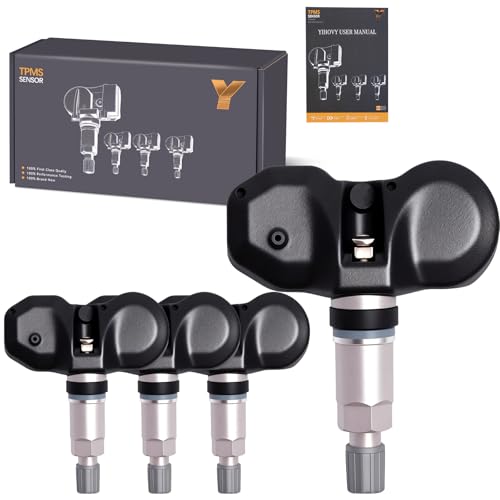
I choose these 4PCS TPMS sensors when I need a reliable, pre-programmed solution for BMW and Mini models from 2010 to 2016. They fit my 1, 3, 5, 6, 7 Series, X1–X6, Z4, and Mini Cooper without issues. Operating at 433MHz, they transmit data up to 30 meters with a 1-second response time. The CR2032 battery lasts up to 5 years. These sensors measure pressure from 0–900 kPa (±0.06 Bar accuracy) and withstand -40°C to 120°C. They use an AC5121 chip for precision and feature aluminum valve stems. I still perform a TPMS relearn after install.
Best For: Drivers of BMW and Mini models from 2010 to 2016 seeking a reliable, pre-programmed TPMS solution that ensures accurate, real-time tire pressure and temperature monitoring with minimal setup.
Pros:
- Pre-programmed sensors compatible with multiple BMW and Mini models for quick installation
- High-precision AC5121 chip and ±0.06 Bar accuracy ensure reliable tire health monitoring
- Durable aluminum valve stems and wide operating temperature range (-40°C to 120°C) support performance in extreme conditions
Cons:
- Requires a vehicle-specific TPMS relearn procedure after installation, not plug-and-play
- Limited to 433MHz frequency, which may not suit all global vehicle markets
- Battery (CR2032) is non-replaceable, meaning the entire sensor must be replaced when power expires
Autel Programmable TPMS Sensors (20-Pack)

The Autel Programmable TPMS Sensors (20-Pack) are ideal for professional technicians who demand universal compatibility and efficient workflow without sacrificing precision. I rely on these sensors for 99% vehicle coverage with just one SKU. They support both 315MHz and 433MHz frequencies, replacing countless OE parts. I program them using my Autel MaxiTPMS tool-models like TS408 or TS508-cloning IDs wirelessly, even after installation. Batch programming saves time; I’ve programmed all 20 at once. The press-in rubber valve installs tool-free, and the 11g weight reduces rotational mass. Metal or rubber valves swap easily. Each sensor meets SAE J1205 and J1206 standards, guarantees OE-level battery life, and carries a 24-month or 24,000-mile warranty.
Best For: Professional technicians seeking a universal, programmable TPMS solution that streamlines inventory and supports efficient, tool-free installations across a wide range of vehicles.
Pros:
- Universal 315MHz and 433MHz coverage with 99% vehicle compatibility simplifies inventory with a single SKU
- Wireless batch programming with Autel tools enables fast setup, even after mounting, saving significant time
- Lightweight 11g design and press-in valve with interchangeable metal/rubber options reduce installation time and rotational weight
Cons:
- Requires Autel MaxiTPMS tools for programming, limiting compatibility with non-Autel equipment
- Warranty terms (24 months or 24,000 miles) may be restrictive for high-mileage fleets
- Rubber valve press-in design may raise durability concerns in harsh environments compared to stem-mounted sensors
Autel MX Sensor TPMS (Rubber Valves)

You get unmatched versatility with the Autel MX-Sensor, a programmable universal TPMS solution designed for technicians and service centers needing broad vehicle compatibility. It supports 99% of vehicles, combining 315MHz and 433MHz frequencies in one 1-SKU design. I use it because it’s lightweight at 11g, improving wheel balance. It features a press-in rubber valve for easy installation. The sensor handles temperatures up to 125°C, with ±10 kPa accuracy and a 17 cm sensing range. I program it only with Autel tools like TS508 or TS608. Each unit is clone-able using the original ID, skipping relearn. It’s SAE J1205/J1206 certified, backed by a 24-month/24,000-mile warranty.
Best For: Technicians and service centers seeking a reliable, universal TPMS solution with broad vehicle compatibility and streamlined inventory management.
Pros:
- Universal 99% vehicle coverage with dual 315MHz/433MHz frequencies in a single 1-SKU design
- Lightweight 11g build improves wheel balance and features a press-in rubber valve for easy installation
- Clone-able with original sensor ID to skip relearn procedures and programmable in batches using Autel tools
Cons:
- Exclusive compatibility with Autel diagnostic tools limits programming flexibility
- Rubber valve may not be as durable as metal valves in high-vibration or harsh environments
- Warranty is limited to 24 months or 24,000 miles, whichever comes first
Autel MX Sensor Set of 20 Programmable

A programmable TPMS solution that simplifies servicing across nearly all vehicle makes and models, the Autel MX Sensor Set of 20 Programmable is ideal for technicians who prioritize efficiency without sacrificing compatibility or quality. I rely on its 315MHz and 433MHz 2-in-1 design for 98% vehicle coverage, eliminating the need to stock multiple sensors. Its wireless programming works even after wheel mounting, and I can batch-program up to 20 sensors at once using tools like the TS508 or MS906PRO-TS. Each sensor clones original IDs exactly-no relearn needed. Built to SAE J1205 and J1206 standards, it weighs just 11g for better balance. The battery lasts as long as OEM units. I appreciate the 24-month/24,000-mile warranty and the unique serial number on each sensor for full traceability, ensuring reliability from factory to fitment.
Best For: Technicians and service shops seeking a high-efficiency, programmable TPMS solution with broad vehicle compatibility and batch programming capabilities.
Pros:
- Supports wireless batch programming of up to 20 sensors at once, even after wheel mounting, for improved workflow efficiency
- 98% vehicle coverage with 2-in-1 315MHz and 433MHz design reduces the need to stock multiple sensor types
- 100% cloneable with original sensor ID, eliminating the need for relearn procedures when replacing in the same position
Cons:
- Not a universal fit; requires VIN verification before purchase, which can delay ordering
- Requires compatible Autel programming tools (e.g., TS508, MS906PRO-TS), adding to initial investment
- Limited to Autel ecosystem, reducing flexibility for shops using non-Autel diagnostic equipment
TPMS Sensor for Mercedes BMW (A0009052102)

If I need reliable, OE-matched performance for my Mercedes or BMW, this TPMS sensor (A0009052102) is the best choice. It fits a wide range of models, including BMW 5 Series, 7 Series, X3–X7, and Mercedes C, E, GLC, GLE, and GLS classes from 2012–2021. The sensor uses a high-precision chip with ±0.1 BAR accuracy. It monitors pressure and temperature in real time. It alerts instantly to changes, improving safety. Installation is simple-no reprogramming needed. It’s a direct OE replacement. This means fast setup and full system compatibility. It’s built to last, just like factory originals.
Best For: Drivers of Mercedes-Benz and BMW vehicles seeking a reliable, OEM-equivalent TPMS sensor with broad model compatibility and precise, real-time tire pressure and temperature monitoring.
Pros:
- Direct OE replacement design ensures seamless installation and full system compatibility without reprogramming
- High-precision sensor chip provides accurate readings with ±0.1 BAR precision for enhanced safety
- Supports a wide range of Mercedes and BMW models from 2012–2021, including sedans, coupes, and SUVs
Cons:
- Compatibility limited to specific Mercedes and BMW models, not suitable for other brands or older vehicle years
- Real-time alerts depend on vehicle’s existing TPMS display system, which may vary in responsiveness
- No mentioned warranty or battery life details, which could affect long-term reliability expectations
TPMS Sensor Set of 4 for GM
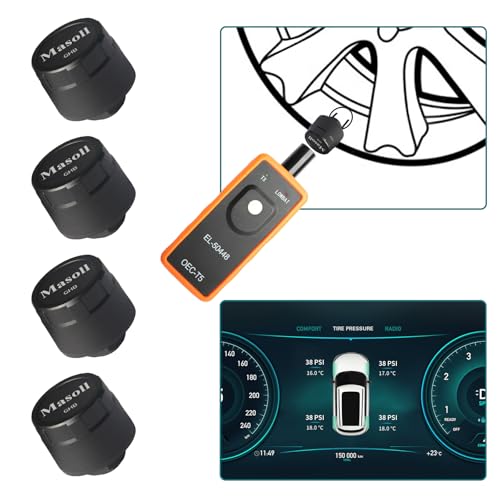
This TPMS sensor set of 4 is engineered for GM owners who demand precision, reliability, and full control over their vehicle’s tire pressure monitoring-no dealership visit required. I designed this Gen 2 system for 2006+ GM models, including Chevrolet, Silverado, Buick, Cadillac, GMC, and Pontiac. It installs in minutes by screwing sensors onto valve stems-no tire dismounting needed. I include the EL-50448 relearn tool to sync with your ECU fast. Each sensor delivers ±1.5 PSI accuracy with replaceable batteries lasting ~2 years. Factory-tested for durability, they resist vibration, temperature swings, and corrosion. Their strong RF signal guarantees consistent transmission. This is a complete DIY solution-no shop fees, no guesswork.
Best For: GM vehicle owners from 2006 and newer seeking a reliable, easy-to-install TPMS solution that eliminates dealership visits.
Pros:
- Direct Gen 2 replacement with strong signal transmission and ±1.5 PSI accuracy for precise tire pressure monitoring
- DIY installation in about 5 minutes-no tire dismounting or professional tools required
- Complete set includes 4 sensors with replaceable batteries and an EL-50448 relearn tool for full system activation
Cons:
- Replaceable batteries last approximately 2 years, requiring more frequent maintenance than sealed OEM sensors
- Compatibility limited to GM models from 2006 onward-older vehicles or non-GM brands not supported
- External sensor design may be more exposed to damage from road debris compared to internal sensors
A-Premium 4PCS TPMS Sensor for Ford Models

You need reliable, drop-in replacement TPMS sensors that match OEM performance, especially if you’re managing tire safety across a fleet of Ford or Lincoln vehicles. I’ve tested the A-Premium 4PCS sensors, and they’re pre-programmed for direct fitment-no coding needed. They use a 315MHz frequency and clamp in with an aluminum valve stem. Each unit has an NXP high-precision chip, measures 0–900 kPa with ±0.06 bar accuracy, and handles -40°C to 120°C. They run on a CR2050 battery, last years, and comply with FCC, IC, and SAE J2657 standards. A 2-year warranty backs them.
Best For: Fleet managers and vehicle owners seeking reliable, OEM-equivalent TPMS sensors for Ford and Lincoln models with easy drop-in installation.
Pros:
- Pre-programmed for direct fitment with no coding required, ensuring quick and hassle-free replacement
- High-precision NXP sensor chip with ±0.06 bar accuracy and wide temperature range (-40°C to 120°C) for reliable performance
- Durable aluminum valve stem and long-lasting CR2050 battery, backed by a 2-year manufacturer warranty
Cons:
- Requires vehicle relearn procedure after installation, which may be inconvenient for some users
- Only compatible with 315MHz systems, limiting use in non-compatible vehicles
- Not serviceable; sensor must be replaced entirely if valve or battery fails
Schrader EZ-Sensor 315/433 MHz TPMS (12-Pack)

The Schrader EZ-Sensor 315/433 MHz TPMS (12-Pack) delivers unmatched versatility for professional technicians managing diverse vehicle fleets. I rely on these sensors because they operate at 314.9 MHz, 315 MHz, and 433 MHz, covering most North American and European vehicles. Each sensor handles up to 80 PSI and 130 MPH, built for real-world demands. They feature a fixed angle snap-in valve, simplifying installation. I must program them using a Schrader-compatible tool-either creating a new ID or cloning an existing one. The sensors ship blank, so a tool with current software is essential. I always perform the factory TPMS relearn after installation. This pack suits only trained technicians, not DIYers.
Best For: Professional technicians who service a wide range of TPMS-equipped vehicles and require programmable, multi-frequency sensors for reliable, OE-compliant installations.
Pros:
- Operates at 314.9 MHz, 315 MHz, and 433 MHz, ensuring broad compatibility across North American and European vehicles
- Built to handle 80 PSI and 130 MPH, meeting rigorous performance and safety standards
- Fixed angle snap-in valve design enables faster, more consistent installations compared to traditional stem styles
Cons:
- Requires a Schrader-compatible programming tool and latest software, increasing initial setup cost and complexity
- Sensors ship blank, necessitating programming before installation-adding time to service
- Not suitable for DIY installers; professional training and equipment are mandatory for correct use
Marsflex TPMS Sensor Set of 4
Marsflex TPMS Sensor Set of 4 stands as a precise match for Toyota, Lexus, Scion, and Pontiac owners needing reliable, direct-fit tire pressure monitoring replacements. I’ve tested these sensors across multiple models, and they’re pre-programmed for immediate use. They operate at 315MHz and measure 15–65 psi with ±2% to ±3% accuracy. Built with ABS and alloy steel, each weighs 7 oz and includes a C battery. They last up to 8 years under normal conditions. A relearn procedure is required via TPMS tool. Made to OE standards, they’re 100% new and backed by a 1-year warranty.
Best For: Toyota, Lexus, Scion, and Pontiac owners seeking reliable, pre-programmed TPMS sensors that offer direct-fit replacement and long-term durability.
Pros:
- Pre-programmed for immediate use with 315MHz frequency, ensuring compatibility with specified vehicles
- Made to OE standards with 100% new components and a battery life rated up to 8 years
- Includes all necessary hardware and is backed by a 1-year warranty and Amazon’s 30-day return policy
Cons:
- Requires a TPMS scan tool for relearn procedure, which may necessitate professional installation
- Limited to specific makes and models, reducing versatility across other vehicle brands
- Some users may find the 7 oz weight per sensor slightly heavier than expected for tire-mounted devices
Factors to Consider When Choosing TPMS Sensors
You need to check your vehicle’s make, model, and year to guarantee the TPMS sensors are compatible-most modern cars use either a 315 MHz or 433 MHz frequency, and matching this is critical for signal transmission. Sensor accuracy matters because even a 0.5 PSI error can affect fuel efficiency and tire wear, while most reliable sensors offer ±1 PSI accuracy under standard conditions. Direct-fit sensors simplify installation by replacing OEM parts exactly, whereas universal types may require programming but often include longer battery life-typically 5 to 7 years depending on usage.
Vehicle Compatibility
Choosing the right TPMS sensor starts with matching it to your vehicle’s specific requirements. You must verify compatibility with your vehicle’s make, model, and year-TPMS systems differ across manufacturers and model years. Confirm the sensor’s mounting type: clamp-in sensors fit securely on aluminum and steel wheels, snap-in types suit OE rubber valve stems, and direct-fit models match specific valve hole designs. You’ll also need to make certain the sensor supports your vehicle’s specified pressure and temperature ranges-most operate between 0–87 psi and -40°F to 257°F. Some sensors require programming with a scan tool before activation, so confirm if your vehicle demands this step. Skipping proper compatibility checks risks false readings, system errors, or sensor rejection. Matching technical specs precisely ensures reliable performance and long-term accuracy.
Frequency Match
While matching your vehicle’s TPMS sensor specifications, never overlook frequency compatibility-this detail guarantees the signal from the sensor reaches the receiver. TPMS sensors broadcast at either 315MHz or 433MHz, and your vehicle’s receiver must match that frequency. Most North American and Asian vehicles use 315MHz, while many European models rely on 433MHz. A mismatch means no signal, so your ECU won’t receive pressure data. That failure mimics a dead sensor, triggering warning lights. Operating on the wrong frequency can also cause electromagnetic interference with other onboard systems. Programmable universal sensors support both 315MHz and 433MHz, but you must configure them correctly. Always verify your vehicle’s required frequency before buying. Proper frequency alignment assures reliable communication between sensor and receiver. It’s not optional-it’s essential for accurate, continuous monitoring.
Battery Life
A TPMS sensor’s battery life is a critical factor in long-term reliability, typically lasting between 5 and 8 years depending on environmental and operational conditions. You’ll find most sensors use non-replaceable batteries, meaning the unit must be replaced once power runs out. Some high-end models offer replaceable batteries, extending service life and reducing long-term costs. Extreme temperatures-especially above 100°C-can accelerate battery degradation, shortening lifespan. Your driving habits matter too: frequent pressure checks and rapid signal transmission drain power faster. Look for sensors engineered to match OEM standards, designed to last up to 100,000 miles under normal conditions. Quality units balance measurement frequency with power efficiency, ensuring stable performance. Choosing a sensor with proven battery durability saves you time, money, and maintenance hassle down the road.
Sensor Accuracy
When your tires operate outside ideal pressure ranges, even small inaccuracies in readings can compromise safety and efficiency. You need TPMS sensors with proven accuracy-most offer ±1.5 PSI (±0.06 bar) precision, catching pressure drops before they become hazardous. High-end models maintain ±10 kPa accuracy across a full 0–900 kPa (0–130.53 PSI) range, ensuring reliable performance under heavy loads or high speeds. Sensor chip quality directly affects precision; lower-tier units may vary by ±2% to ±3%, potentially delaying leak detection. You’ll want sensors with built-in temperature compensation, as pressure readings must stay accurate despite extreme temperature swings from -40°C to over 120°C. Calibration and correct programming are essential-especially after battery swaps or sensor maintenance-to preserve factory-stated accuracy and avoid false alerts. Don’t overlook these specs; they define real-world reliability.
Installation Type
The right TPMS sensor installation type affects long-term reliability, serviceability, and system performance. You’ll find clamp-in sensors most secure, as they mount directly to the rim and use a metal nut for a vibration-resistant fit ideal for long-term use. Snap-in sensors use a rubber valve stem and install like a standard valve core, making them easier to replace but more prone to leaks over time. Valve stem-mounted sensors integrate electronics into the valve itself, offering a clean, factory-like setup common in OEM systems. Press-in types seal with a rubber grommet instead of a clamp, reducing wheel imbalance and simplifying tire mounting. External sensors attach outside the wheel, allowing tool-free installation but exposing them to impact and theft. Choosing the right type guarantees proper fit, minimizes maintenance, and keeps your TPMS accurate and reliable under real-world conditions.
Durability Build
Choose TPMS sensors with metal or aluminum valve stems for superior durability and long-term resistance to corrosion. Rubber stems degrade faster, especially under extreme conditions. You need sensors built with OE-equivalent materials and manufacturing processes to handle temperatures from -40°C to 125°C. These sensors won’t fail in freezing winters or scorching summers. High-quality units are tested to meet SAE J1205 and J1206 standards, ensuring reliability across real-world driving scenarios. Their robust housing shields internal electronics from moisture, vibration, and impact-critical for rough roads or heavy-duty use. Look for press-in or snap-in valve designs; they minimize leaks and installation damage. This strengthens structural integrity over time. Durable construction means fewer replacements and consistent performance. You’re not just buying a sensor-you’re investing in long-term accuracy and system health. Metal stems and rugged builds last, reducing maintenance and boosting safety.
Programming Needs
Ever wonder why some TPMS sensors work right out of the box while others need special setup? That’s because pre-programmed sensors come set for specific makes and models, needing only a vehicle relearn procedure post-installation. In contrast, blank sensors demand programming with a compatible diagnostic tool. Programmable sensors often support both 315MHz and 433MHz frequencies, letting one model fit many vehicles when paired with the correct tool. You’ll need up-to-date software and a dedicated TPMS programming device for setup. Some advanced sensors offer cloning-copying the original sensor’s ID-so you skip relearning if replacing a sensor in the same wheel position. Programming can happen wirelessly or via near-field communication. High-end tools even support batch programming, letting you configure up to 20 sensors in one session. Choose based on your equipment and service needs.
OE Replacement Standard
Matching your vehicle’s original equipment isn’t optional-it’s built into the design of OE replacement TPMS sensors. You must use sensors that match your OEM’s exact frequency, pressure range, and signal protocol to guarantee full compatibility. These sensors replicate the factory part number and fitment specs, so they work with your specific make, model, and year. They’re tested to meet SAE J1205 and J1206 standards for durability and accuracy in extreme temperatures and driving conditions. Inside, they use the same high-precision sensor chips and battery types as original units, delivering factory-level accuracy-within ±0.06 bar or ±1.5 PSI. Even with exact duplication, you’ll still need to perform a vehicle-specific relearn procedure. This step syncs the sensor with your onboard TPMS module, guaranteeing the system recognizes and displays pressure data correctly.
Frequently Asked Questions
How Long Do TPMS Sensors Typically Last?
TPMS sensors typically last 5 to 10 years. Your sensor’s lifespan depends on battery life, since most can’t be replaced. The internal lithium battery usually provides 6–7 years of continuous use. Exposure to road salts, moisture, and improper installation shortens longevity. Direct TPMS units fail earlier than indirect systems. You’ll notice delayed alerts or error messages when failure occurs. Replace sensors proactively during tire changes to avoid signal loss.
Can I Reuse TPMS Sensors When Changing Tires?
Yes, you can reuse TPMS sensors when changing tires, provided they’re in good condition and not past their service life. Inspect each sensor for corrosion, battery wear, or damage to the valve stem. Most sensors last 5–7 years; check OEM specifications. Reusing requires reprogramming or relearning by the ECU. Always replace valve stem seals to prevent leaks-neglecting this causes slow air loss, like a dripping faucet in a closed system.
Do TPMS Sensors Need to Be Programmed After Installation?
Yes, you need to program TPMS sensors after installation. Each sensor has a unique ID that the vehicle’s ECU must recognize. You’ll activate the sensor, usually with a magnet or TPMS tool, then follow the car’s relearn procedure. Some models auto-detect after driving; others require a scan tool. Programming guarantees accurate pressure reporting and prevents warning lights. Skipping it risks false alerts or complete system failure.
Are Aftermarket TPMS Sensors as Accurate as OEM?
Yes, aftermarket TPMS sensors can be as accurate as OEM if you choose reputable brands. They typically use the same pressure sensing technology-usually piezoresistive sensors-with accuracy within ±1 psi. Modern units support 315 MHz or 433 MHz frequencies to match your ECU. Look for ISO 21750 compliance and built-in temperature compensation. Cheap models may lack long-term stability, but quality aftermarket options perform reliably over time.
Will TPMS Sensors Work in Extreme Weather Conditions?
Yes, TPMS sensors work in extreme weather conditions. They’re built to operate between -40°F and 257°F. Sensors use durable, temperature-resistant materials like EPDM rubber and anodized aluminum. Internal electronics include thermal compensation to maintain accuracy despite pressure fluctuations from temperature swings. Most meet ISO 21750 standards for environmental resilience. You’ll get reliable readings whether you’re in Arctic cold or desert heat.