Improving Fuel Efficiency: A Comprehensive Guide to Optimizing Your Vehicle’s Fuel Delivery System
Your fuel system maintains precise combustion by delivering the right fuel amount at the correct pressure. Modern injectors operate at 30–60 psi, or up to 2,900 psi in direct-injection engines. Clogged nozzles or faulty sensors disrupt the 14.7:1 air-fuel ratio, reducing MPG. A dirty filter can drop flow from 0.45 to under 0.1 gallons per minute. Oxygen sensor failure may increase fuel use by 15%. Clean or replace components as needed to restore efficiency-further optimization depends on understanding each part’s role in system-wide performance.
Notable Insights
- Clean fuel injectors regularly to maintain optimal spray patterns and combustion efficiency.
- Replace fuel filters every 20,000–40,000 miles to ensure consistent fuel flow and prevent pump strain.
- Diagnose and replace faulty oxygen sensors to maintain the ideal 14.7:1 air-fuel ratio.
- Use fuel additives every 3,000–5,000 miles to prevent carbon buildup in direct and port injection systems.
- Inspect for fuel leaks and test fuel pressure to avoid wasted fuel and dangerous odors.
Why Your Fuel System Affects MPG
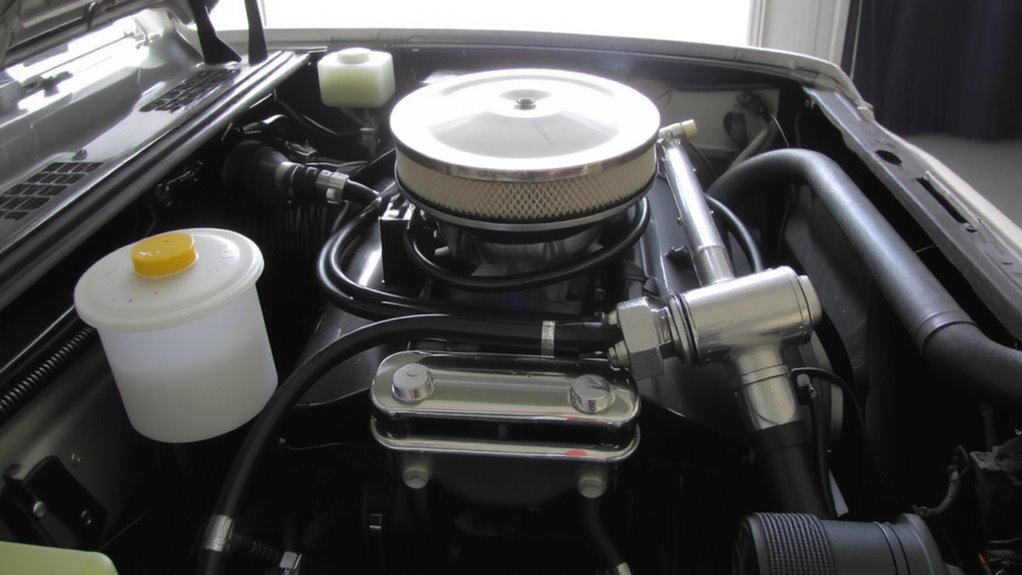
While your vehicle’s engine needs air, fuel, and spark to run, the fuel system plays a central role in determining how efficiently those elements combine. A well-maintained fuel system guarantees peak fuel combustion, directly impacting engine performance and MPG. Modern fuel injectors deliver fuel at precise pressures-typically 30 to 60 psi in port-injected engines and up to 2,900 psi in direct-injection systems. Incorrect spray patterns or clogged nozzles disrupt the air-fuel ratio, reducing combustion efficiency. The engine control unit (ECU) relies on oxygen sensor feedback to adjust fuel delivery within milliseconds. When components like fuel pumps, regulators, or injectors degrade, the ECU cannot compensate fully. This leads to incomplete fuel combustion, increased emissions, and reduced fuel economy. Proper fuel pressure and clean delivery components maintain ideal stoichiometry-14.7:1 for gasoline-maximizing energy output per gallon.
Spot Fuel Problems Early With These Symptoms
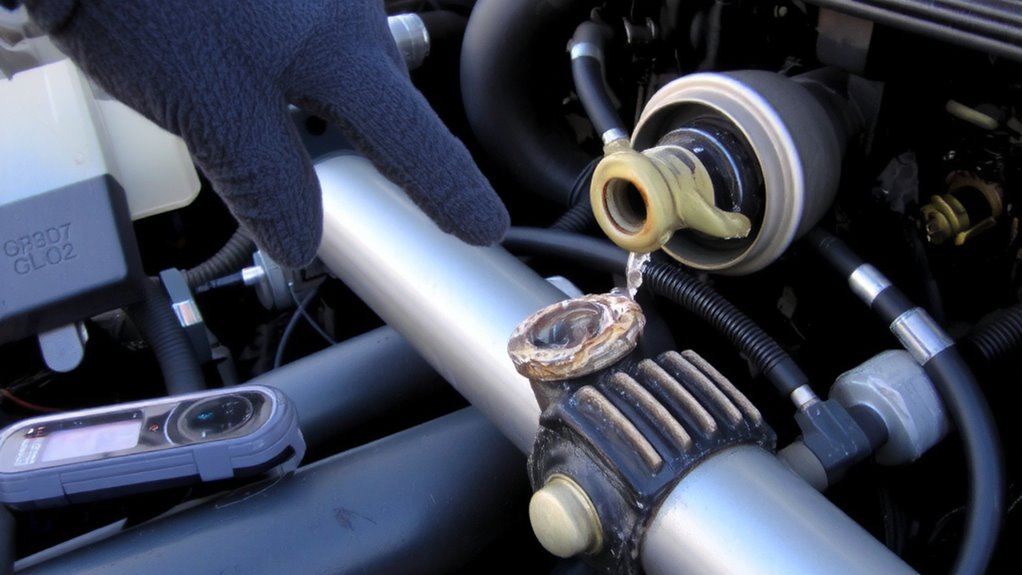
You can save money and prevent costly repairs by catching fuel system issues early. Engine knocking is a clear warning sign-it occurs when fuel burns unevenly in the cylinders, often due to incorrect air-fuel ratios or low-octane fuel. Persistent knocking can damage pistons and bearings, reducing engine efficiency and lifespan. A strong fuel odor inside or outside the vehicle signals leaks in fuel lines, connectors, or the fuel tank. These leaks release unburned gasoline, posing fire hazards and increasing emissions. Check engine seals, evaporative emissions (EVAP) system components, and fuel injector O-rings promptly. Modern vehicles use sensors to detect abnormal fuel pressure, typically ranging from 35 to 65 psi, depending on engine design. Ignoring symptoms leads to poor combustion, lower MPG, and potential catalytic converter damage. Stay alert to these signs-they’re critical indicators of underlying fuel delivery problems.
Clean Clogged Fuel Inject Remodel for Better Mileage
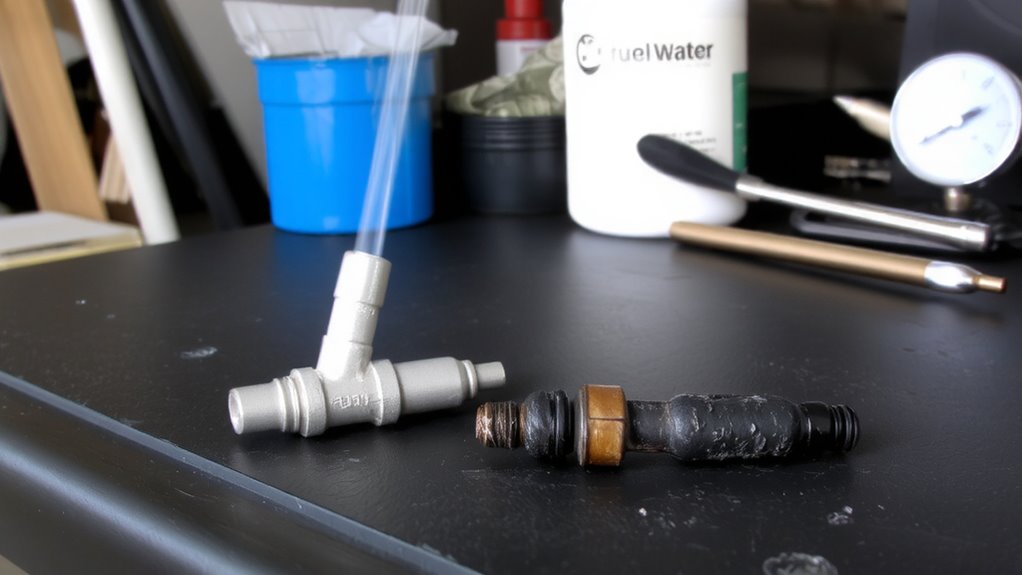
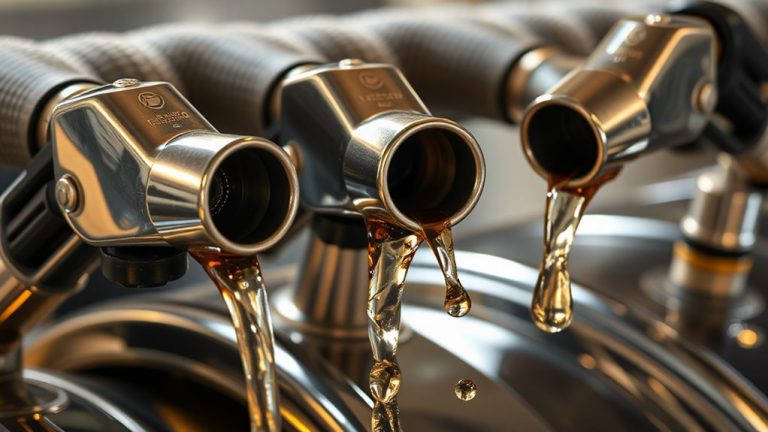
If your engine isn’t delivering the power or efficiency it once did, clogged fuel injectors might be to blame. Over time, carbon deposits restrict fuel flow and disrupt spray patterns. Fuel injector cleaning restores peak atomization, improving combustion. Most modern injectors operate at 30–70 psi, and even minor blockages reduce delivery accuracy. A professional cleaning removes varnish and debris using solvent-based solutions injected directly into the fuel rail. You can also use additive cleaners every 3,000 to 5,000 miles preventatively. Clogged nozzle restoration is critical-laser-focused cleaning reopens nozzle orifices as small as 0.1 mm. This guarantees precise fuel dispersion and uniform spray angles of 60–90 degrees. Restored injectors improve fuel economy by 10–15% and reduce emissions. Proper maintenance prevents long-term damage and sustains engine performance. Don’t overlook this essential part of fuel system care. For optimal results, consider using one of the best fuel injector cleaners recommended for your vehicle type.
Replace Dirty Fuel Filters and Restore Flow
A clean fuel system starts with unrestricted flow, and dirty fuel filters are a common bottleneck. Over time, fuel contamination clogs filters, creating flow restriction that hampers engine performance. Replacing them restores fuel delivery efficiency and protects essential components.
| Condition | Flow Rate (gal/min) | Pressure Drop (psi) |
|---|---|---|
| New filter | 0.45 | 0.5 |
| Moderately dirty | 0.32 | 2.1 |
| Severely clogged | 0.18 | 4.7 |
| Blocked | <0.1 | >6.0 |
You should replace your fuel filter every 20,000 to 40,000 miles. Older vehicles or those in dusty environments need more frequent changes. A clogged filter increases strain on the fuel pump and reduces efficiency. You’ll avoid poor acceleration and potential stalling by maintaining clean filtration. Address flow restriction early to prevent costly repairs and maintain peak fuel economy. For Duramax engines, using a high-quality fuel filter can significantly enhance contaminant capture and system longevity.
Fix Sensor Issues That Disrupt Fuel Delivery
While the engine relies on precise fuel delivery, sensor malfunctions often skew the air-fuel mixture, leading to inefficient combustion. You need a properly functioning oxygen sensor to monitor exhaust gases and adjust fuel metering. A faulty one can increase fuel consumption by up to 15%. It typically lasts 60,000 to 90,000 miles; test it with an OBD2 scanner for error codes like P0135. The mass airflow sensor measures incoming air volume and density, ensuring accurate fuel injection. Dirt or damage disrupts its hot-wire readings, causing hesitation or stalling. Clean it with electronic sensor spray-never touch the filament. Replace it if output drifts beyond 0.5 volts at idle or exceeds 4.5 volts at wide-open throttle. Both sensors work together like a scale and recipe in baking-precision matters. Keep them calibrated for maximum efficiency. Upgrading to high-performance tires such as the best tires for Kia K5 can further enhance fuel efficiency by reducing rolling resistance and improving traction.
On a final note
You’ve now optimized your fuel delivery system for peak efficiency. Clean fuel injectors restore precise fuel atomization, often improving mileage by 10–15%. Clogged filters restrict flow; replacing them every 30,000 miles maintains 60–70 psi line pressure. Faulty O2 or MAF sensors cause rich/lean conditions-correcting them boosts efficiency by up to 12%. These calibrated fixes guarantee accurate air-fuel ratios, directly enhancing combustion and fuel economy.