Air Suspension Alignment: Keep Ride Height Within ±10mm
Keep your vehicle’s ride height within ±10 mm of factory specs to maintain proper alignment. Incorrect height alters camber, caster, and toe-just 1 inch of change can shift camber by 0.8 degrees. Uneven tire wear or steering pull means geometry is off. Always check for air leaks, calibrate height sensors, and use a certified shop with OEM tools. Alignment must follow any suspension repair or height adjustment. There’s more to get right than just angles.
Notable Insights
- Maintain factory ride height within ±10 mm to preserve suspension geometry and prevent air spring damage.
- Check and correct alignment every 15,000 miles or after air suspension repairs and component replacements.
- Inspect air springs regularly for leaks, tears, or dampness to ensure consistent ride height and alignment stability.
- Use OEM-level diagnostic tools to calibrate height sensors after suspension service or ride height adjustments.
- Address symptoms like uneven tire wear or steering pull immediately to prevent accelerated component and tire wear.
Check Ride Height to Prevent Air Suspension Alignment Issues
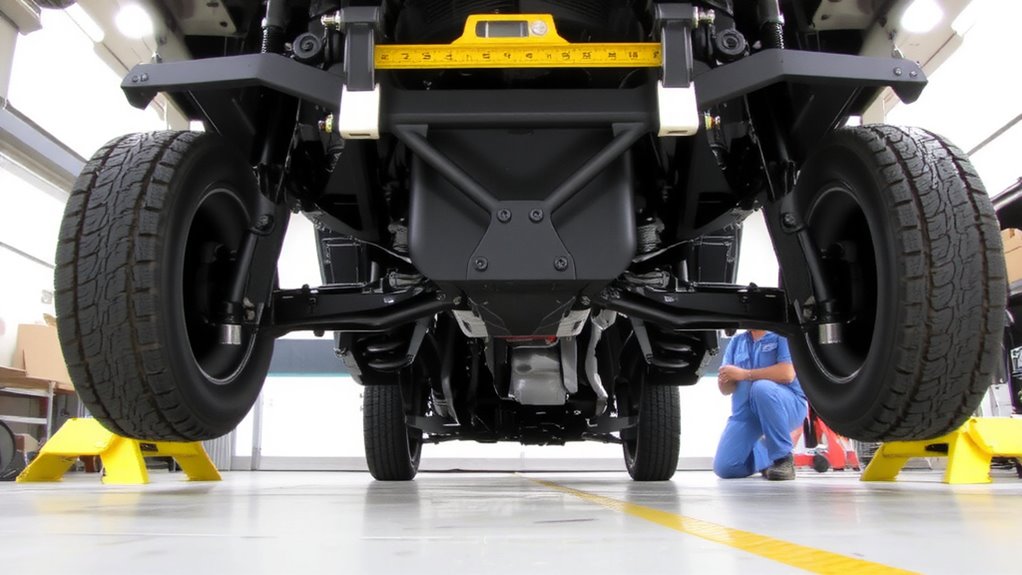
Why does your vehicle’s ride height matter so much? It directly affects suspension balance, ensuring even load distribution across all corners. When ride height deviates from factory specs-usually within ±10 mm-air spring wear accelerates due to constant overextension or compression. Uneven ride height also stresses air springs and compressors, leading to premature failure. Proper sensor calibration is critical because height sensors tell the control module when to inflate or deflate the air springs. If sensors aren’t calibrated after repair or adjustment, the system may incorrectly adjust ride height, disrupting suspension balance. You must measure ride height at designated chassis points using a level surface and ruler, per OEM guidelines. Regular checks help catch air spring wear early and maintain correct sensor calibration. Don’t wait for sagging or error codes-consistent ride height preserves alignment, ride quality, and system longevity.
How Rising or Falling Ride Height Messes With Alignment
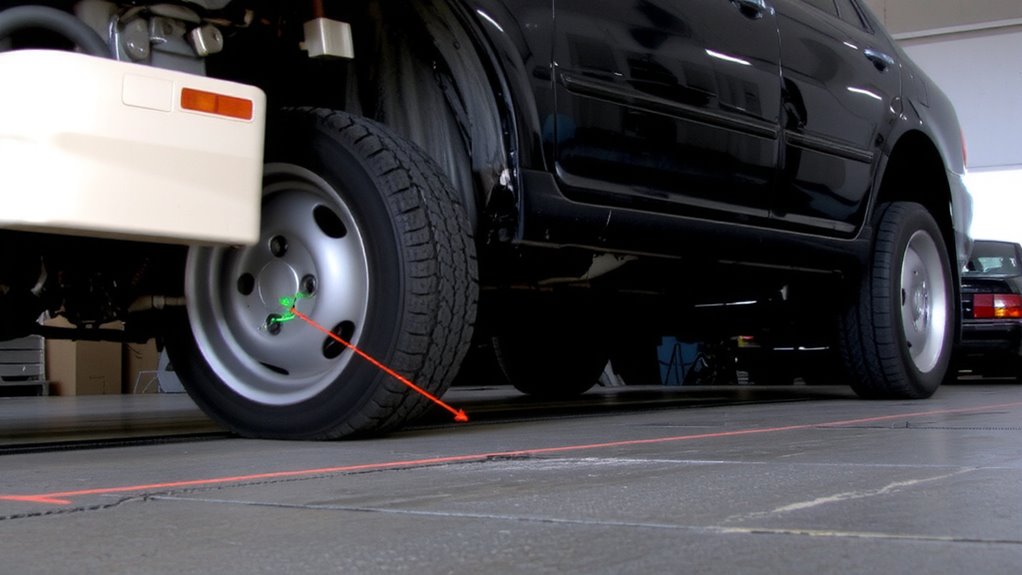
When your vehicle’s ride height shifts outside the manufacturer’s specified range, alignment angles change, and that’s something you can’t ignore. Ride height impact directly alters camber, caster, and toe settings, leading to uneven tire wear and poor handling. Even a 1-inch deviation causes measurable suspension geometry changes. Control arms operate at unintended angles, distorting force distribution across components. In air suspension systems, this shift misaligns the steering axis, reducing stability. For example, excessive ride height increases positive camber, wearing the outer tread; lowering the vehicle beyond spec creates negative camber, wearing the inner edge. These suspension geometry changes compromise the designed motion ratio, affecting how the suspension absorbs road impacts. The result? Reduced grip, longer braking distances, and imprecise steering response. Maintaining factory ride height guarantees alignment remains within acceptable tolerances, preserving safety, tire life, and performance.
Signs You Need an Air Suspension Alignment
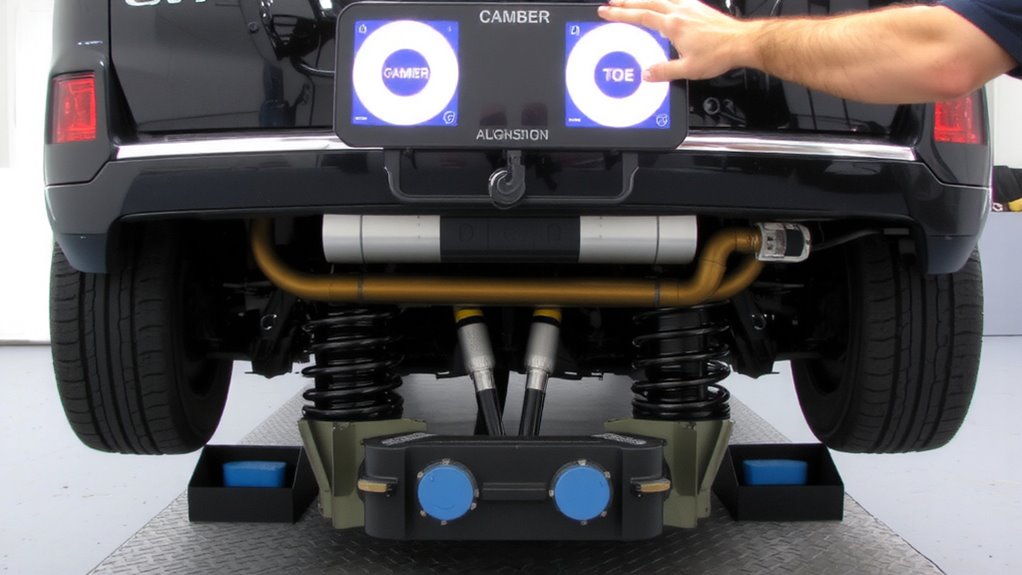
How do you know your air suspension system is out of alignment? Look for clear symptoms like uneven tire wear and steering wheel vibration. These indicate misalignment, which affects handling and tire lifespan. Uneven tire wear usually appears as excessive inner or outer edge wear, often after only 5,000 miles. Steering wheel vibration at highway speeds (60+ mph) suggests alignment angles are beyond OEM tolerances-typically more than 0.5 degrees off camber or toe specs.
| Symptom | Likely Cause |
|---|---|
| Uneven tire wear | Incorrect toe or camber settings |
| Steering wheel vibration | Out-of-spec caster or wheel imbalance |
| Vehicle pulling to one side | Misaligned front axle |
| Nose-high or nose-low stance | Faulty air struts affecting geometry |
| Increased road noise | Tire scrub from poor alignment |
Address these early to prevent premature component wear.
When to Get Your Air Suspension Alignment Checked
Though air suspension systems offer superior ride quality and adjustability, they still require periodic alignment checks to maintain peak performance. You should get your alignment checked every 15,000 miles or annually, whichever comes first. Noticeable tire wear-especially on the inner or outer edges-signals misalignment. Uneven tread patterns mean suspension angles are out of specification. Steering drift, where your vehicle pulls to one side without input, indicates improper camber or toe settings. This affects handling and reduces tire life. After adjusting ride height, especially lowering or raising beyond factory settings, realignment is essential since geometry changes. Even minor collisions or hitting potholes at speed can shift components. Air springs may settle or leak over time, altering suspension position. Regular checks preserve tire wear patterns and prevent premature component wear. Proper alignment guarantees safety, fuel efficiency, and consistent performance. Don’t wait-address symptoms early to avoid costly repairs.
Diagnose Air Suspension Leaks Before Alignment
You can’t align what isn’t stable, and air suspension systems demand integrity before adjustment. Air leaks compromise ride height, skewing alignment readings. Begin with a thorough air spring inspection-look for cracks, bellow tears, or dampness near fittings; even small leaks affect performance. Use soapy water on connections to spot bubbles indicating seepage. Faulty air springs often cause the compressor to overwork, so monitor compressor performance: listen for excessive cycling or delayed pressure buildup. A healthy system maintains 70–120 psi; anything outside this range suggests compressor wear or air loss. Address leaks first-replacement air springs should match OEM specs for diameter and stroke length. Restoring proper air pressure guarantees consistent ride height, which is critical for accurate camber, caster, and toe measurements. Skip this step, and your alignment won’t hold.
Choose an Alignment Shop That Knows Air Suspension
When selecting an alignment shop for a vehicle with air suspension, expertise matters more than convenience. Technicians must understand air spring calibration to set ride height accurately before alignment. Without proper calibration, measurements like camber and toe will be wrong. Air suspension systems rely on electronic leveling control, which adjusts the vehicle’s height using sensors and compressor inputs. If the shop doesn’t reset or monitor this system during alignment, the computer may correct alignment angles automatically, ruining your adjustments. Look for shops with OEM-level diagnostic tools capable of accessing suspension modules. They should disable automatic leveling control temporarily and verify sensor alignment. A qualified technician will follow manufacturer protocols for pressure checks, height sensors, and recalibration. Choosing the wrong shop risks inaccurate alignment, uneven tire wear, and ongoing handling issues. Expertise guarantees precision.
Sync Air Suspension Repairs With Alignment Checks
Since air suspension components directly influence wheel alignment, any repair to air springs, struts, or height sensors must be followed by a precision alignment check. You can’t assume the vehicle will maintain correct geometry after component replacement. After replacing an air spring, perform air spring calibration to guarantee the system reads ride height accurately. Misaligned sensors lead to incorrect electronic leveling adjustment, affecting handling and tire wear. Always reset the suspension control module and verify sensor alignment within ±0.5 degrees of factory specs. Use a four-wheel alignment rack with live data feedback to monitor real-time adjustments. Target camber within ±0.25 degrees and toe within ±0.10 degrees of manufacturer settings. Without recalibration and alignment, the system may overcorrect or underlevel, reducing ride quality and safety. Match component repair with full alignment and sensor validation. This synchronization guarantees stability, even tire contact, and long-term system reliability.
On a final note
You must maintain proper ride height to guarantee accurate alignment in air suspension systems. Uneven or incorrect height distorts camber, caster, and toe angles-leading to uneven tire wear and poor handling. Always diagnose leaks and repair air springs or compressors before alignment. Use shops with air suspension-specific calibration tools. Set suspension to manufacturer-specified height before adjusting alignment settings.