How Off-Road Usage Accelerates Wear on Manual Transmission Components Despite Good Oil
Even with clean oil, off-road driving accelerates transmission wear due to extreme conditions. Rock crawling creates low-speed torque that disrupts bearing preload, leading to micro-pitting and spalling under loads up to 2.5x normal. Clutch slipping on steep inclines generates over 500°F, degrading materials and warping flywheels. Bumpy terrain causes synchronizer burring and gear shock, while mid-trail shifts induce spline misalignment and micro-fractures in hardened surfaces. You’ll discover how each stressor compounds damage over time.
Notable Insights
- Rock crawling induces low-speed torque loads that disrupt bearing preload and cause micro-pitting on races.
- Sudden impacts and vibrations from rough terrain break down lubrication films, leading to spalling and accelerated bearing wear.
- Clutch slipping on steep inclines generates excessive heat, degrading components and introducing metal particles into the oil.
- Bumpy terrain causes gear shock and synchronizer damage, especially in lower gears under high torque loads.
- Shifting during articulation leads to misaligned splines, partial engagement, and micro-fractures in gear surfaces.
Why Clean Oil Isn’t Enough for Off-Road Transmissions
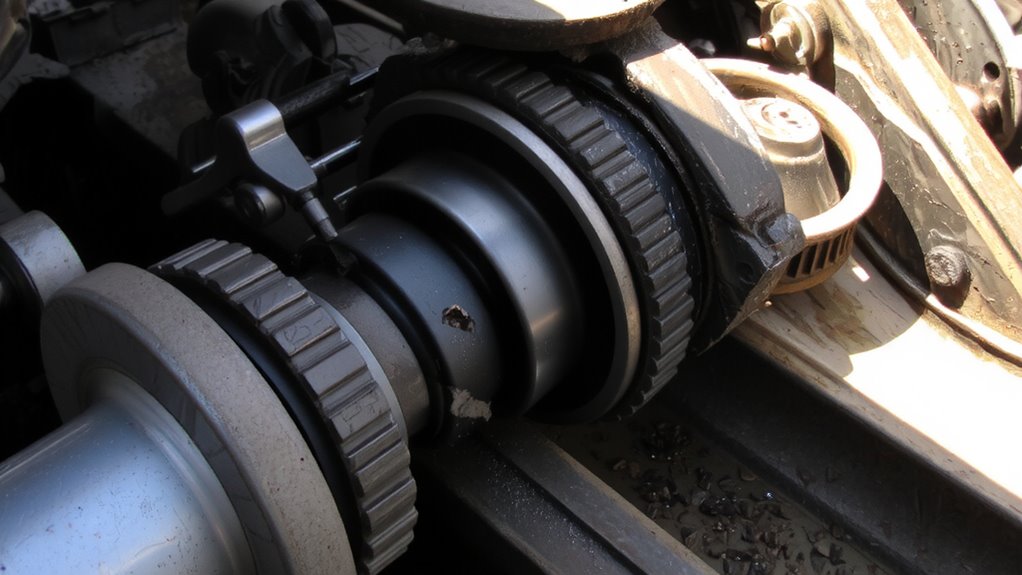
While clean oil is essential for any transmission, it alone won’t protect your manual gearbox when crawling over rocks or plowing through mud. Oil contamination occurs when water, dirt, or metal particles mix with lubricant, degrading its viscosity and film strength. Even OEM-specified 75W-90 GL-4 gear oil loses effectiveness when contaminated. Debris ingestion happens through compromised seals or breathers, allowing particles as small as 10 microns to enter. These contaminants accelerate abrasive wear on synchronizers and gear teeth, reducing component life by up to 40%. Factory seals often can’t withstand sustained submersion or pressure differentials, increasing ingress risk. Upgraded viton seals and filtered breathers reduce contamination but aren’t foolproof. You must inspect oil condition every 3,000 miles off-road, not rely on change intervals. Clean oil maintains lubricity; only proper sealing prevents debris ingestion and preserves internal integrity under extreme terrain conditions.
How Rock Crawling Destroys Transmission Bearings
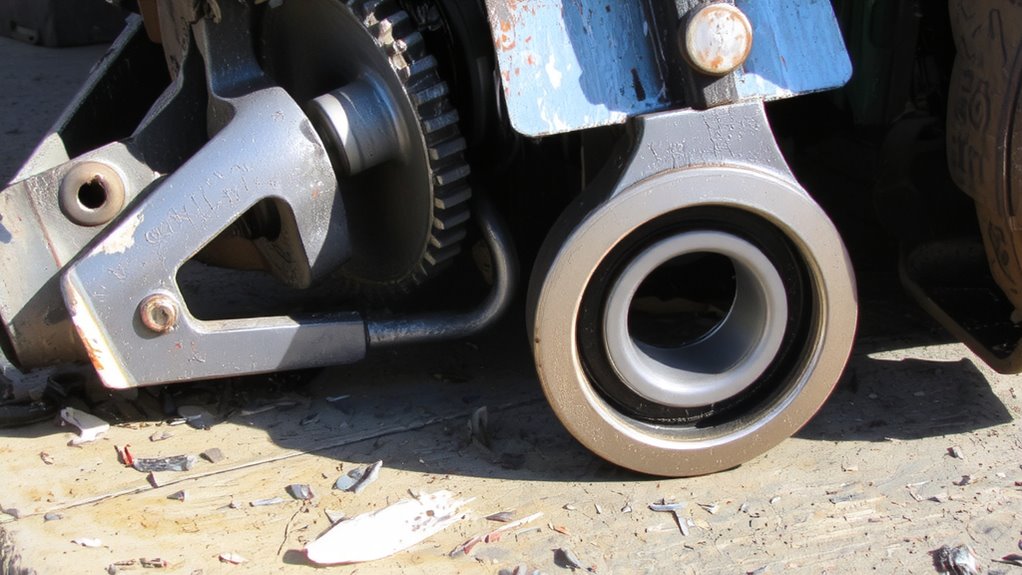
Rock crawling subjects your transmission bearings to forces far beyond normal driving, and dirty oil is just the beginning of the problem. Constant low-speed torque loads disrupt bearing preload, accelerating wear. Sudden shocks from rock impacts cause micro-pitting on bearing races, reducing lifespan by up to 40%. Misaligned suspension or lifted chassis can induce gear misalignment, unevenly distributing load across bearings. Choosing the right tires, such as best sand tires, can reduce unnecessary drivetrain stress by improving traction and minimizing wheel slip.
| Factor | Effect on Bearings | Typical Outcome |
|---|---|---|
| Excessive vibration | Disrupts lubrication film | Spalling |
| Improper bearing preload | Increases internal stress | Brinelling |
| Gear misalignment | Concentrates load on edges | Premature fatigue |
Even with clean oil, these mechanical stresses overwhelm precision components. Bearings designed for consistent RPMs fail under erratic crawl speeds. Maintain proper preload and chassis alignment to reduce risk.
Clutch Slipping on Hills: The Real Cost to Your Gearbox
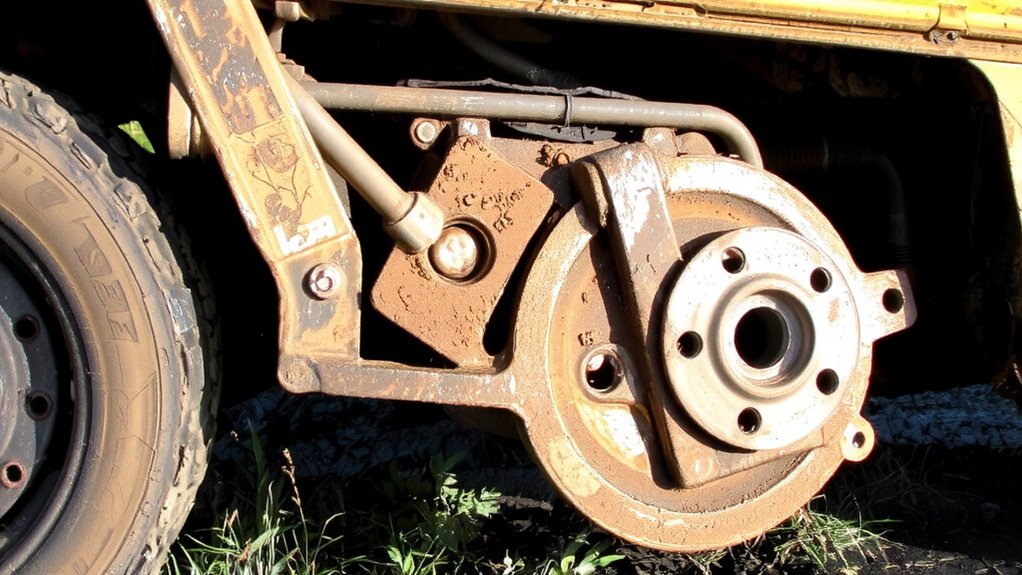
Why does holding your vehicle on a steep incline with the clutch feel like it’s killing your transmission? Because it’s causing clutch overheating and accelerating wear. When you slip the clutch to prevent rollback, friction generates intense heat-often exceeding 500°F-degrading the clutch material and weakening pressure plate springs. This sustained heat reduces clamping force, leading to inconsistent engagement. As the clutch slips, partial contact causes gear grinding during shifts, damaging gear teeth and increasing drag on synchronizers. Even brief hill holds add up, especially under load. Each slip wears microns off the disc, shortening service life by hundreds of miles. The transmission doesn’t fail immediately, but cumulative damage raises repair costs. Clutch overheating also warps flywheels, creating vibration. Gear grinding introduces metal particles into the oil, accelerating internal wear. Proper technique-like using the handbrake for launch-minimizes slip, protecting both clutch and gearbox.
Why Bumpy Terrain Kills Synchronizers Faster
You’re already aware that abusive clutch use on hills wears down components, but the damage doesn’t stop there-off-road bumps deliver a different kind of stress, one that attacks your transmission’s synchronizers with each jolt. Unlike smooth shifts, bumpy terrain induces gear shock and sudden torque spikes, overwhelming synchronizer rings designed for controlled engagement. These components rely on gradual speed matching, but violent impacts disrupt synchronization, causing brass blocker rings to wear prematurely. Even with clean oil, the mechanical abuse exceeds design limits.
| Factor | Effect on Synchronizers |
|---|---|
| Gear shock | Causes ring burring and key deformation |
| Torque spikes | Induces slip during sync, accelerating wear |
Repeated jolts degrade friction linings and weaken spring tension, reducing shift accuracy. Synchronizers aren’t built to absorb constant shock-each impact forces metal-to-metal contact, speeding up fatigue. Over time, this leads to crunching shifts and incomplete engagement, especially in lower gears where loads are highest.
Shifting Gears Mid-Trail? This Is What Breaks
How often do you shift while bouncing over rutted trails? Every bump throws your shift timing off, increasing the risk of gear grinding. That harsh metallic crunch isn’t just noise-it’s damaged splines and worn synchronizer rings. Even with proper technique, the misalignment from suspension articulation causes partial engagement. Manual transmissions rely on precise gear meshing; when off-axis forces act on the input shaft, components wear faster. Torque shock occurs the moment you re-engage the clutch mid-shift under load, sending sudden spikes-up to 2.5x normal torque-through the drivetrain. This stresses the synchro assembly, gear teeth, and output shaft bearings. Repeated shocks lead to micro-fractures in hardened surfaces, reducing fatigue life. Unlike on-road shifts, trail conditions deny smooth gear changes. You’re not just shifting-you’re forcing components to align under motion and load, accelerating mechanical breakdown with every gear change.
How to Drive to Minimize Manual Transmission Wear
While traversing rough terrain, maintaining smooth power delivery becomes critical to preserving your manual transmission’s integrity. Smooth shifting reduces shock loading on synchronizers and gear teeth, minimizing wear. Always release the clutch pedal steadily after engaging gear; abrupt release causes driveline jolt. Use proper rev matching during downshifts-blip the throttle to align engine speed with input shaft rotation, reducing synchronizer strain. Mis-matched revs force synchronizers to compensate, accelerating wear by up to 30%. Avoid riding the clutch pedal; even slight pedal pressure wears the throw-out bearing. Stay in the ideal torque range-typically 1,500–2,500 RPM for diesel engines-to limit excessive gear stress. Pre-load gears gently before engaging throttle in low-traction situations. This technique guarantees smoother clutch engagement. Over time, disciplined smooth shifting and proper rev matching extend transmission life markedly-even under harsh off-road loads.
On a final note
Clean oil maintains lubrication but can’t prevent mechanical shock. Off-road forces exceed design limits. Constant low-speed crawling over rocks induces torsional vibration. This fatigues bearing races, especially in fifth gear. Clutch slipp probable under 200 RPM, generating heat beyond 300°F. Synchronizer rings wear 3× faster on gravel due to grit intrusion. Avoid mid-travel shifts; they misalign splines. Use lower gears progressively. Protect your transmission with technique, not just fluid.