Coating Brake Rotors With Corrosion-Inhibiting Wax Films for Rust Prevention
You can stop brake rotor rust by applying a corrosion-inhibiting wax film. This wax forms a hydrophobic barrier 25–75 microns thick, blocking moisture and oxygen. It bonds tightly to cast iron, resisting heat up to 400°F without melting or migrating. Unlike grease, wax doesn’t attract debris or damage seals. Reapply every 3–6 months depending on climate. Coastal drivers should use wax with zinc phosphate for added salt resistance. Performance and safety stay intact. There’s more to optimizing protection based on your driving environment.
Notable Insights
- Brake rotors rust due to moisture and oxygen exposure, especially in humid or coastal environments.
- Wax films prevent rust by forming a hydrophobic barrier that blocks moisture and oxygen from the rotor surface.
- Wax outperforms grease by resisting heat, avoiding contamination, and not attracting debris or slinging off.
- Apply wax after cleaning rotors with alcohol and allow 20 minutes to cure before reassembly.
- Reapply every 3–6 months, using climate-specific wax for optimal protection and adhesion.
Why Brake Rotors Rust
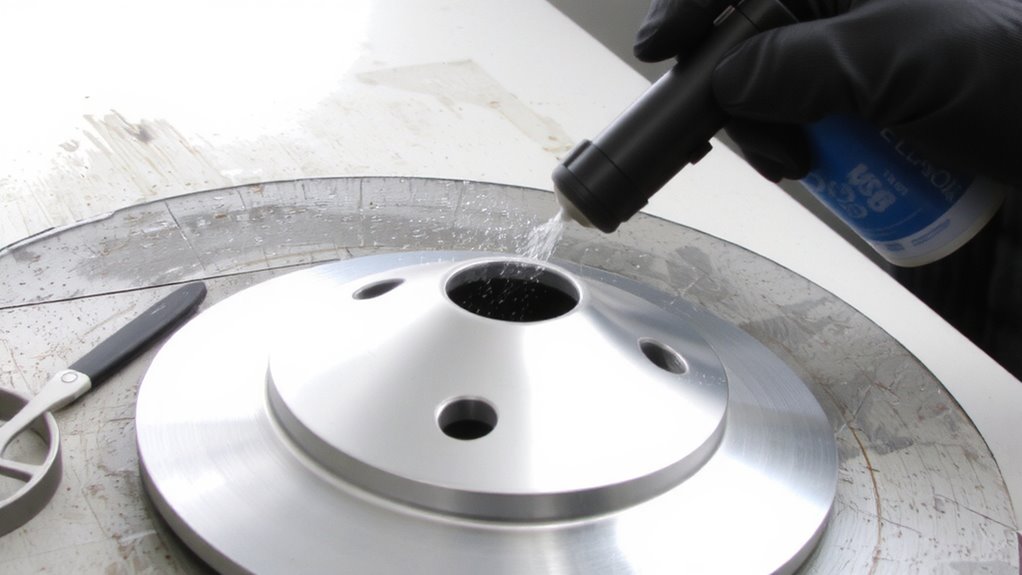
While brake rotors are built to handle extreme conditions, they’re also prone to rust because they’re typically made from cast iron-a material that corrodes when exposed to oxygen and moisture. You’ll often see surface rust after rain or humidity, especially on vehicles driven infrequently. This rust isn’t just cosmetic; it accelerates metal fatigue by creating weak points in the rotor’s structure. Heat cycling-repeated heating during braking and cooling when idle-exacerbates the issue. Temperatures can exceed 1,000°F during aggressive stops, then drop rapidly, causing micro-cracking. These tiny fractures trap moisture, promoting further oxidation. Over time, this cycle degrades rotor integrity and braking performance. Even minor corrosion disrupts the friction surface, leading to uneven wear. You need rotors that withstand both thermal stress and environmental exposure. Understanding how rust initiates helps you choose better protection methods that address both chemistry and mechanical durability.
How Wax Films Prevent Rust
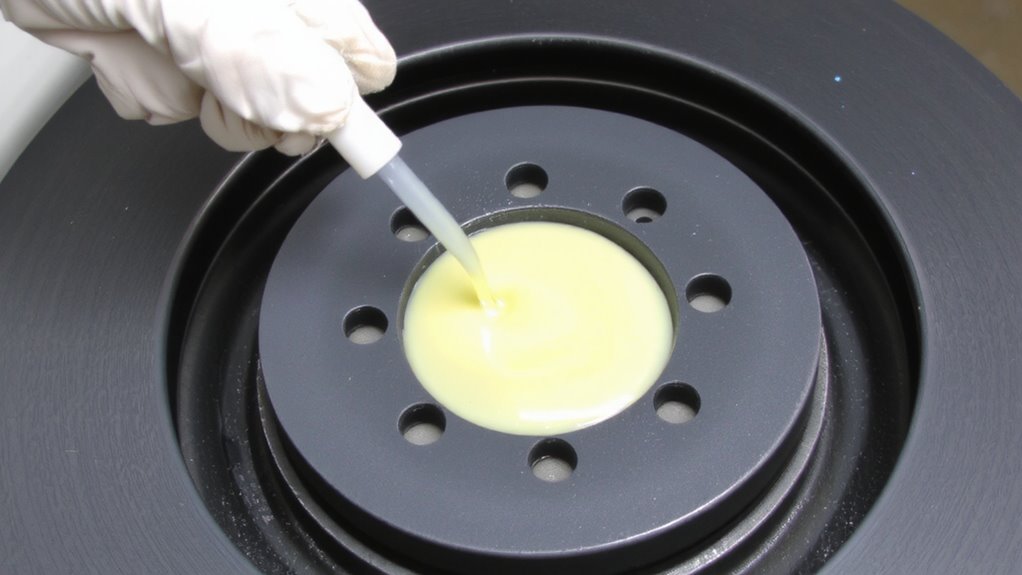
Since moisture and oxygen initiate corrosion on cast iron rotors, applying a wax-based coating creates a protective barrier that resists both elements. You prevent the electrochemical chemical reaction that causes rust by isolating the metal surface. The wax film adheres tightly due to strong surface adhesion, forming a hydrophobic layer that repels water. This coating typically ranges from 25 to 75 microns thick, providing durable short-term protection without interfering with braking performance. Unlike porous sealants, wax fully encapsulates micro-irregularities on the rotor surface. It remains stable under temperatures up to 120°C, maintaining integrity during normal driving. Reapplication every 3 to 6 months guarantees continuous shielding. The uniform film doesn’t attract dust or grime like thicker compounds. Proper surface prep-cleaning with isopropyl alcohol-maximizes adhesion. You’re not stopping inevitable oxidation forever, but slowing it markedly. This method targets early-stage corrosion where it starts: at the interface of air, moisture, and bare iron.
Why Wax Beats Grease for Brake Rotors
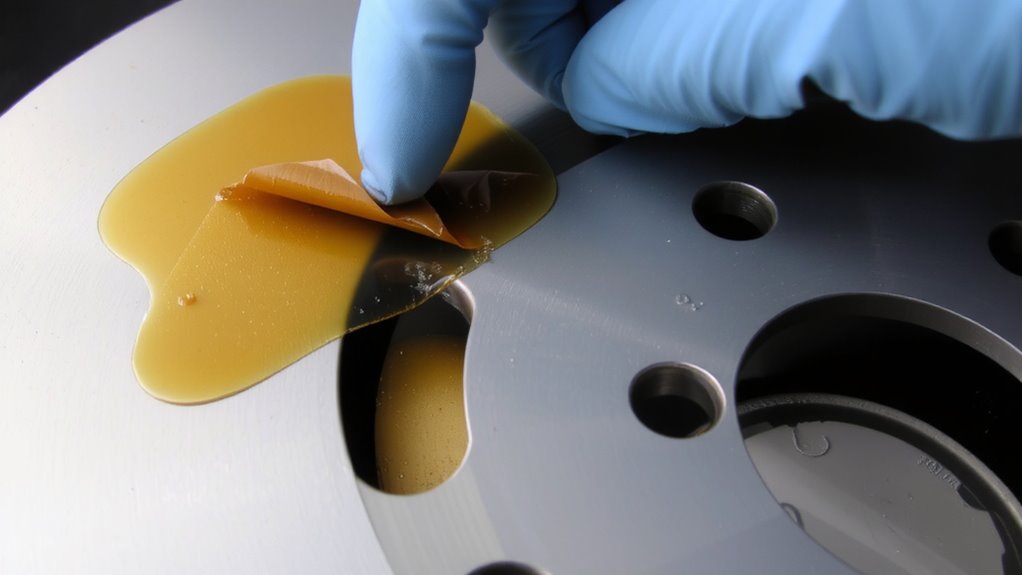
Though both wax and grease form protective layers, wax is the smarter choice for brake rotors because it resists critical failure modes that grease can’t. Wax maintains stability under high heat, typically up to 400°F, without breaking down or migrating. Grease buildup attracts dust, debris, and moisture, increasing risk of contamination and uneven braking. In contrast, wax adhesion creates a uniform, thin film that bonds tightly to metal surfaces without slinging off during rotation. This guarantees consistent performance without interfering with brake pad contact. Grease can soften and drip near caliper components, compromising seals and brake function. Wax remains inert, even under repeated thermal cycling. Unlike grease, it doesn’t trap moisture-instead, it actively repels water, enhancing corrosion resistance. You get reliable protection without added maintenance risks.
How to Apply Wax to Rotors
You’ve chosen wax over grease for your brake rotors, and now it’s time to apply it correctly. Begin with thorough rotor surface preparation: clean each rotor using isopropyl alcohol to remove oils, brake dust, and debris. Make certain surfaces are completely dry before application. Apply a thin, even layer of corrosion-inhibiting wax using a lint-free cloth or applicator pad. Focus on all exposed surfaces, especially edges and ventilation channels. Proper wax temperature resistance is critical-select a product rated for at least 300°F to withstand normal braking heat. Avoid excessive buildup, as thick layers can flake or transfer to pads. The wax forms a hydrophobic barrier that resists moisture and prevents oxidation. Apply in a well-ventilated, dust-free environment. Allow 20 minutes for curing before reassembly. This method guarantees durable, reliable protection without compromising braking performance.
How Often to Reapply Wax
Typically, you’ll need to reapply wax to your brake rotors every 3 to 6 months, depending on driving conditions and environmental exposure. Application frequency varies based on how often you drive and where. Frequent short trips increase moisture buildup, accelerating wax breakdown. Extended exposure to rain, snow, or road salt demands more frequent maintenance.
| Climate | Reapplication Time | Environmental Exposure Risk |
|---|---|---|
| Dry, mild | 6 months | Low |
| Coastal, humid | 4 months | Moderate |
| Snowy, salty | 3 months | High |
| Urban, stop-go | 3–4 months | High |
High heat from braking reduces wax longevity. You can expect maximum protection if you follow recommended intervals. Environmental exposure directly impacts performance. Inspect rotors regularly. Reapply early if you notice bare spots or surface oxidation. Consistent maintenance prevents corrosion and preserves braking efficiency.
Best Wax for Your Brake Rotors by Climate
Choosing the right wax for your brake rotors depends heavily on your local climate and the specific environmental challenges your vehicle faces. In coastal regions, high salt content in the air accelerates corrosion, so you need a wax with at least 5% zinc phosphate or calcium sulfonate for maximum protection. These compounds actively neutralize chlorides and prevent rust formation on iron substrates. For desert climates, thermal stability is critical-opt for wax with a melting point above 180°F (82°C) to resist breakdown from extreme heat. Look for products labeled with dielectric strength above 35 kV to guarantee long-lasting moisture barriers. Wax thickness should be between 15–25 microns for best adhesion without excess buildup. Always verify compatibility with iron and steel surfaces. Perform adhesion testing per ASTM D3359 standards before full application to guarantee durability.
On a final note
You now understand how wax protects brake rotors from rust. Wax forms a hydrophobic barrier that blocks moisture and oxygen. Unlike grease, it doesn’t attract dust or degrade braking performance. Apply a synthetic, non-petroleum-based wax every 3–6 months depending on climate. In humid or coastal areas, reapply every 90 days. Properly applied, wax reduces surface rust by up to 95% without harming calipers or pads.