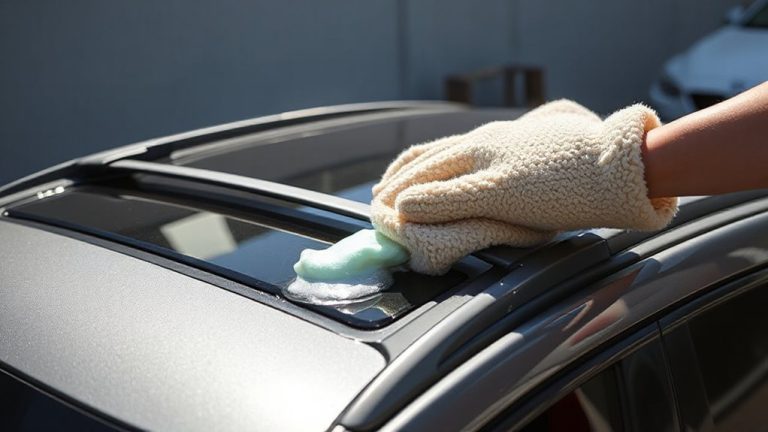
How to Prevent Scratches When Washing Cars With Embedded Debris
Start with a high-pressure pre-rinse at 1,200–1,800 psi to loosen embedded debris. Follow with a fine mist delivering 3–5 GPM to suspend particles. Use a grit-proof mitt (≥380 g/m² microfiber) and the two-bucket method to trap contaminants. Wash top to bottom, maintaining a 15–30° mitt angle with light 2–3 lb pressure. Rinse thoroughly at 40–80 psi, then dry with a clean 300+ g/m² microfiber towel using a blotting motion. There’s more to optimizing each step for flawless results.
Notable Insights
- Pre-rinse with high pressure and a fine mist to loosen and suspend embedded grit before contact washing.
- Use a grit-proof wash mitt and the two-bucket method to trap debris and prevent scratching during washing.
- Wash from top to bottom, section by section, to avoid dragging dirt across clean surfaces.
- Rinse each section thoroughly with angled sprays to remove loosened debris and soap residue.
- Dry with a clean, absorbent microfiber towel using a blotting motion to prevent swirl marks.
Pre-Rinse to Loosen Grit and Prevent Scratches
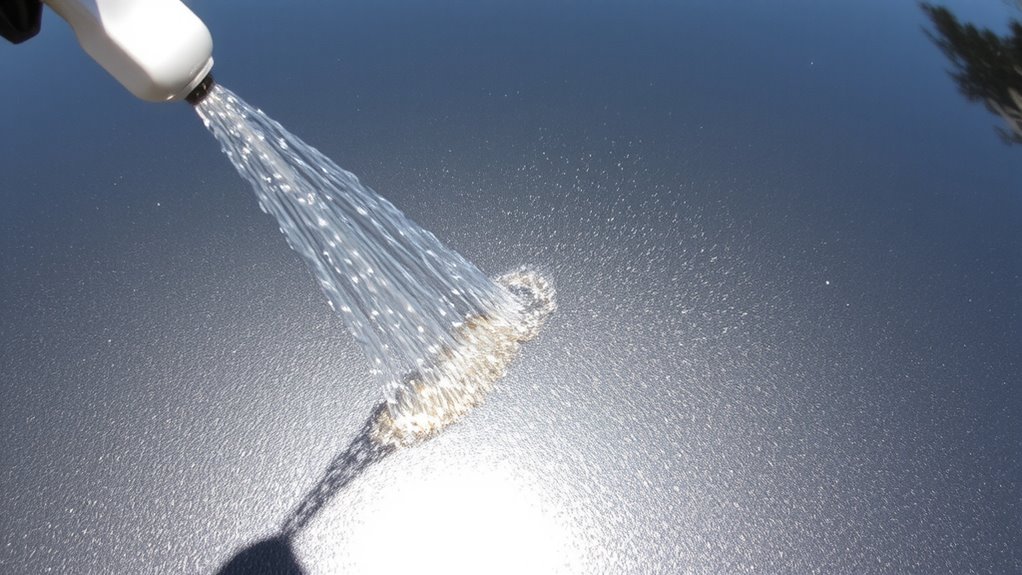
While starting your car wash, skipping the pre-rinse might seem like a time-saver, but it drastically increases the risk of micro-scratches. You need to remove loose debris before contact washing begins. Use high pressure-between 1,200 and 1,800 PSI-to effectively blast away caked-on dirt without damaging clear coat. A fine mist nozzle attachment, delivering 3–5 gallons per minute, softens and suspends airborne dust, reducing abrasive interactions. Begin from the roof, working downward to prevent recontamination. High pressure loosens embedded particles in panel gaps and wheel wells where brushes can’t reach. The fine mist cools surfaces, minimizing water spotting under direct sunlight. Always maintain a 12- to 18-inch nozzle distance to avoid paint distortion. This dual-phase pre-rinse-high pressure followed by fine mist-ensures contaminants are flushed away, not smeared. You’ll create a safer surface for cleaning, drastically lowering scratch potential during wiping. For optimal results, consider using a car pressure washer specifically designed for safe, efficient pre-rinsing and debris removal.
Use a Grit-Proof Wash System (Mitt and Two-Bucket Method)
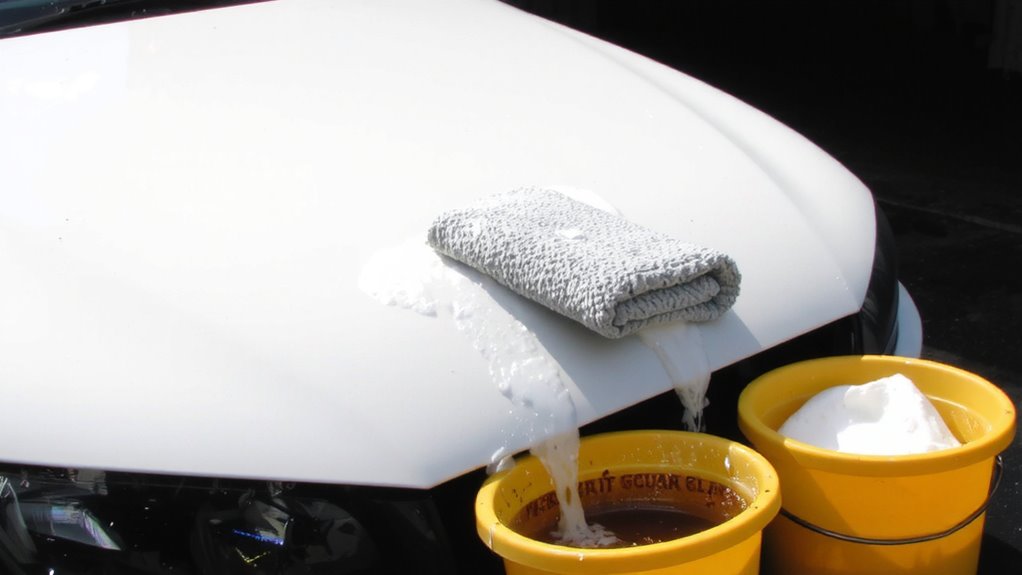
Since dirt and grit don’t stay on the surface, your washing technique must prevent particles from grinding into the paint. The two-bucket method is essential-use one bucket for soapy water and another for rinsing your mitt. This bucket separation minimizes contamination, ensuring grit isn’t redeposited on the paint. Use a grit-proof wash mitt made from plush, high-nap microfiber (minimum 380 g/m²) to trap debris deep within the fibers. The mitt material acts like a flexible sheath, suspending particles away from the paint surface. A drainage grid insert in the rinse bucket knocks loose dirt before the mitt returns to soap. Rinse the mitt thoroughly between passes, and never wipe dry. This system reduces microscopic scratches by up to 70% compared to a single bucket. Proper technique combined with effective tools keeps your finish swirl-free.
Wash From Top to Bottom to Avoid Swirls
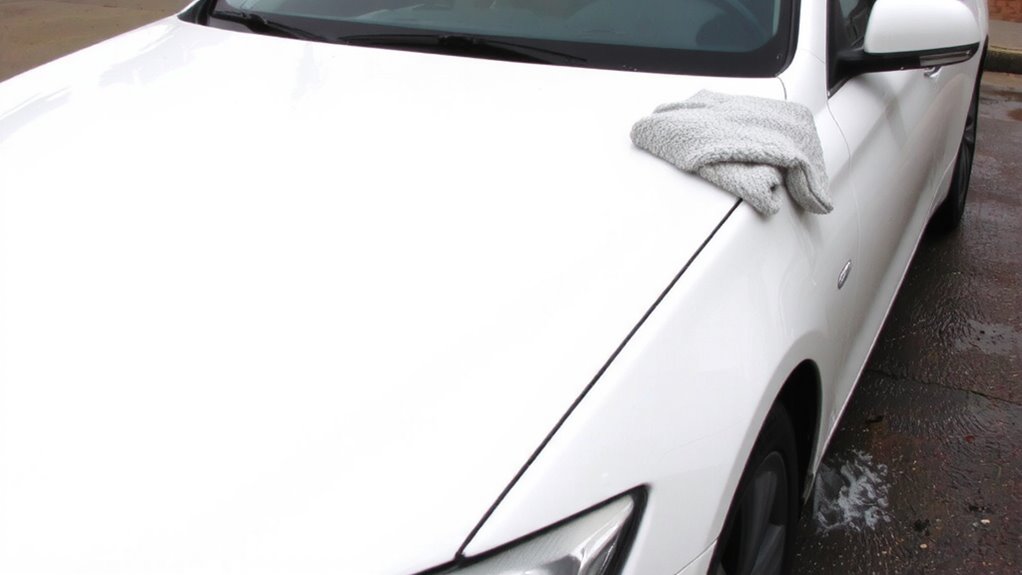
Start at the roof and work your way down to minimize swirl marks. This top down approach guarantees heavy contaminants are removed first, preventing debris from being dragged across cleaner lower panels. Begin with the roof, hood, and trunk-areas with less embedded grime-before moving to dirtier zones like fenders and bumpers. Use section washing: clean one panel at a time, thoroughly rinsing the mitt after each section to avoid cross-contamination. This method reduces the chance of transferring grit from heavily soiled areas to smoother surfaces. Maintain a flat mitt angle (15–30 degrees) and apply light, consistent pressure (2–3 lbs of force) to avoid pressing debris into paint. Foam lubrication from car shampoo lifts particles, reducing friction. Each pass should overlap slightly, covering 12–18 inch swaths. Top down approach with disciplined section washing limits contact with abrasive particles, preserving clear coat integrity and minimizing micro-scratches.
Rinse Again to Remove Soap and Remaining Debris
Rinse thoroughly after washing each section to eliminate soap residue and dislodge any remaining debris. Use medium to high water pressure-40–80 psi-ensuring effective removal without forcing grit into paint micro-imperfections. Direct the spray at a 45-degree angle to lift trapped particles from panel seams and textured surfaces. Maintain a distance of 12–18 inches between nozzle and surface to balance cleaning power and safety. Overlap rinse paths by 50% to prevent missed zones. Residual soap attracts contaminants, increasing abrasion risk during the drying technique phase. Inspect each panel under oblique lighting to confirm complete suds elimination. This step isn’t optional; skipping it compromises scratch prevention. A clean rinse sets the foundation for safe water removal. Proper pressure control and systematic coverage reduce surface contact later, minimizing potential marring.
Dry With a Clean Microfiber Towel to Prevent Marks
A flawless finish hinges on proper drying technique. Use a clean, 100% polyester microfiber towel with a minimum pile weight of 300 g/m² to avoid marring. Towel quality directly impacts scratch prevention-low-grade fabrics may carry grit and leave swirls. Fold the towel into quarters to maximize surface area and minimize particle redeposit. Employ a light, blotting motion instead of dragging; your drying technique should prioritize contact control over speed. High-loop weave towels (70% split fiber) offer superior absorbency, wicking water efficiently without friction. Replace towels after three to five uses or when visibly soiled. Never reuse a towel that’s been on the ground-contamination risk is too high. A dedicated drying towel, stored in a sealed bag, maintains cleanliness. Proper technique combined with premium towel quality guarantees a streak-free, mark-free finish. Your car’s finish stays protected only when both factors are optimized.
On a final note
You prevent scratches by starting with a thorough pre-rinse using 40–60 psi water pressure to dislodge embedded debris. Use a grit-guarded two-bucket method with a 16–24 oz pH-balanced car wash solution. Wash top-down with a 380–480 gsm microfiber mitt to limit contamination transfer. Rinse completely, then dry with an 800-series microfiber towel, 16×24 inches, to prevent water spots and surface marring.