Seasonal Storage Solutions for Multi-Vehicle Households
Keep your multi-vehicle garage efficient by maintaining 3-foot clearance around each vehicle and holding temperatures between 40°F and 70°F. Install R-6.5 closed-cell foam insulation and use a 10,000 BTU heater or dehumidifier if needed. Mount steel-reinforced overhead racks every 24 inches with lag bolts, ensuring 18 inches of clearance from the door path. Use 50+ lb-rated bike brackets and slatwall systems at eye level. Designate vehicle-specific zones with UV-resistant floor tape and 500 lb-capacity rails. Store seasonal items in color-coded, waterproof bins labeled with vinyl tags and checklists. Ideal organization starts with proper anchoring and durable materials-discover how each zone integrates seamlessly for year-round performance.
Notable Insights
- Maintain 3 feet of clearance around each vehicle for airflow and easy access during seasonal storage.
- Install steel-reinforced overhead racks with proper ceiling clearance to store off-season gear safely.
- Use wall-mounted bike brackets and slatwall systems to free up floor space and organize tools efficiently.
- Designate vehicle-specific storage zones with floor anchors and labeled floor tape for quick identification.
- Store seasonal items in color-coded, labeled bins with inventory checklists to streamline seasonal swaps.
Plan Garage Space for Seasonal Storage
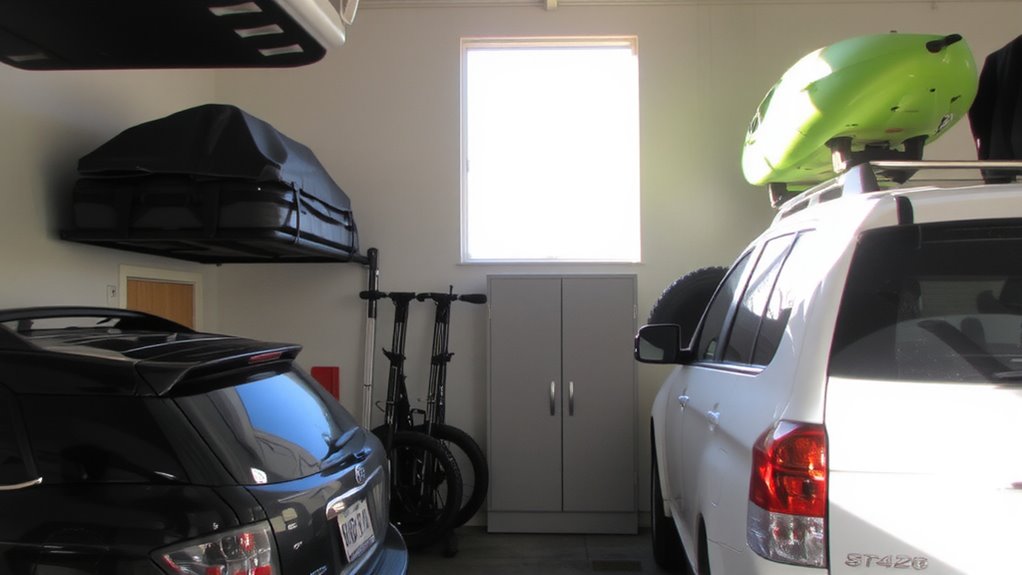
When preparing for seasonal vehicle storage, start by evaluating your garage layout to maximize space and protect each vehicle properly. You’ll need adequate clearance-ideally 3 feet around each vehicle-for airflow and access. Climate control is critical; maintain temperatures between 40°F and 70°F to prevent battery drain and fluid degradation. Install a 10,000 BTU portable heater or dehumidifier if humidity exceeds 50%, reducing corrosion risk. Upgrade insulation options like closed-cell foam boards (R-value 6.5 per inch) on walls and ceilings to stabilize internal temperatures. Consider radiant barrier sheathing to reflect up to 97% of radiant heat. Seal gaps around doors using weatherstripping with a durability rating of 10 years. Use epoxy-coated flooring to resist chemical spills and simplify cleaning. Position vehicles strategically-store classics away from exterior walls to minimize thermal stress. Proper planning guarantees ideal conditions, preserving performance and finish throughout storage. Equip your space with essential garage gadgets to streamline maintenance and improve storage efficiency.
Mount Off-Season Gear on Overhead Racks
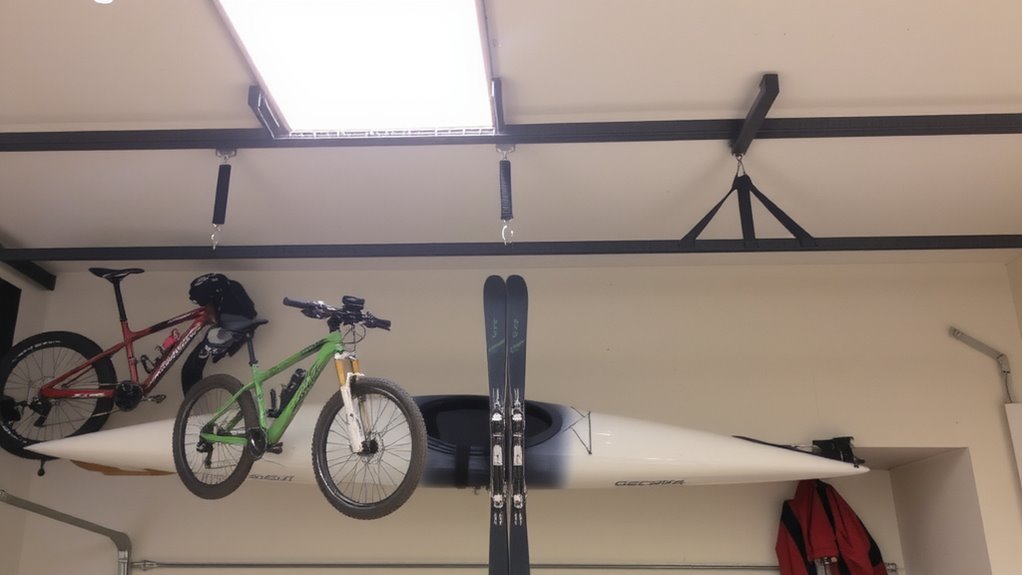
While floor space is at a premium during seasonal storage, overhead racks free up valuable square footage by relocating off-season gear like roof boxes, bike racks, and sleds. You can maximize overhead capacity with steel-reinforced racks rated for 400–600 lbs, depending on joist spacing and fastener type. Guarantee at least 18 inches of ceiling clearance between the top of stored items and the garage door’s highest travel point to prevent interference. Install racks perpendicular to ceiling joists using lag bolts every 24 inches for secure mounting. Most systems fit standard 16” or 24” joist spacing and include adjustable straps or cradles to secure irregularly shaped gear. Confirm your garage’s overhead capacity by checking manufacturer specs-many residential trusses support light storage but not heavy loads. Avoid suspending items over parked vehicles unless load ratings and clearance are verified. This setup keeps bulky accessories accessible yet out of the way.
Store Bikes and Tools on Wall Shelves
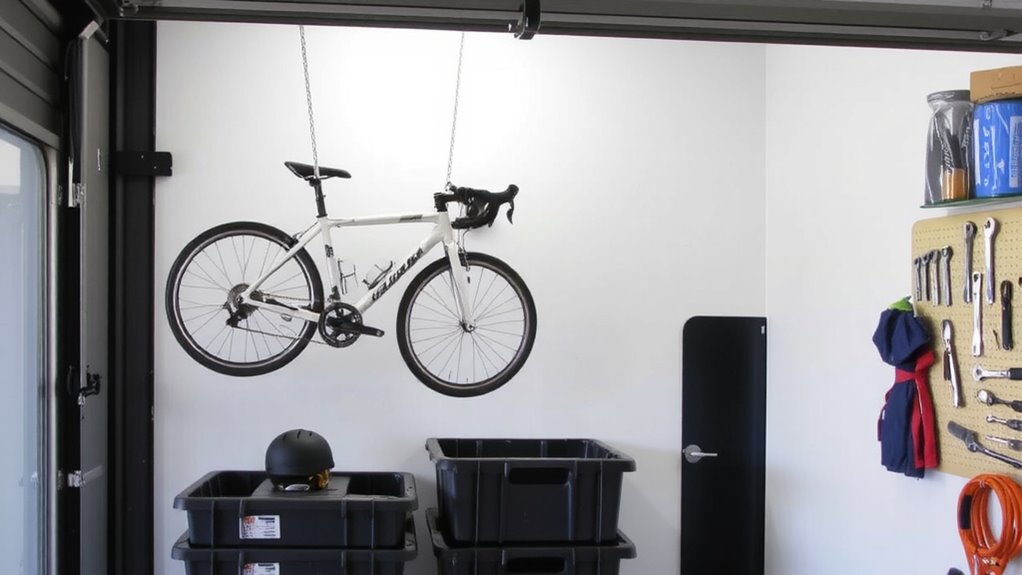
Freeing up floor and overhead space lets you make better use of your garage walls. Wall-mounted bike racks save space and improve tool accessibility. Vertical or horizontal mounting suits most frame types, with heavy-duty steel brackets rated for 50+ pounds per bike. Install at shoulder to eye level for easy access and to prevent tripping. Use slatwall panels or track systems to pair bike storage with tool organization. These systems support up to 75 pounds per square foot and allow reconfigurable layouts. Include pegboard sections for smaller tools used in bike maintenance. Position work zones where lighting and outlets are nearby. Mount shelves at 48 inches above the floor for comfortable access. Aluminum or steel brackets with a powder-coated finish resist rust and wear. Use labeled bins on shelves to store lubricants, patches, and tire pumps. Proper placement guarantees tools and bikes are secure, visible, and ready for use.
Organize by Vehicle With Dedicated Zones
Your garage’s efficiency starts with defining clear, vehicle-specific zones. Assign each vehicle a dedicated space based on size, use, and access frequency. Vehicle classification-cars, trucks, SUVs, motorcycles-determines zone layout and storage needs. Zone customization guarantees tools and accessories stay within reach. For example, SUVs often carry outdoor gear; allocate wall space near them using 18-gauge steel rails rated for 500 lbs. Trucks need heavy-duty floor anchors; install ⅜-inch concrete bolts spaced every 24 inches along the perimeter. Keep frequently used items at 36 to 48 inches above floor level for ergonomic access. Use low-profile bins (max 6 inches tall) so you can still park fully. Mark each zone with floor tape-2-inch wide, UV-resistant vinyl-outlining tire stops and clearance lines. This system reduces clutter by 40% and cuts retrieval time by half.
Swap Seasons Smoothly Using Labeled Bins
When seasonal changes demand a shift in stored gear, labeled bins make the change fast and error-free. You can minimize confusion by assigning each season a specific bin with clear labels and color coding-red for winter, green for spring, and so on. Use waterproof, stackable containers measuring 18” x 12” x 10” to protect items like tire chains, bike racks, or cargo boxes. Label each bin with permanent vinyl tags listing contents and vehicle assignments. Implement basic inventory tracking by including a dated checklist inside each bin. This guarantees nothing gets lost or misplaced over time. Color coding speeds up identification, cutting search time by up to 60%. Durable plastic bins with UV-resistant ratings last five to seven years in garages. Rotate stock seasonally, verifying inventory before storage. This system supports efficient space use and long-term organization, especially across multiple vehicles.
On a final note
You maximize garage efficiency by prioritizing space and accessibility. Overhead racks support up to 600 lbs, ideal for seasonal tires on rims stored vertically. Wall-mounted shelves, rated for 200 lbs per linear foot, keep bikes and tools off the ground. Labeled, stackable bins (18” x 12” x 10”) enable swift seasonal swaps. Dedicated zones-by vehicle-reduce clutter. This system cuts search time by up to 70%, ensuring ideal organization year-round.