Odor-Based Diagnostics: Recognizing Burnt Smells From Overloaded Rear Ends
You smell burnt toast or scorched oil from under your truck-this indicates your rear differential is overheating. Thermal breakdown occurs when fluid exceeds 250°F, degrading its viscosity and protective additives. Metal-to-metal contact generates oxidation, producing acrid odors before visible damage appears. Aggressive towing, heavy loads, or inadequate fluid changes accelerate failure. Use API GL-5–rated 75W-90 or 80W-90 synthetic oil and inspect every 15,000 miles. A burning smell means immediate shutdown is critical. There’s more to know about catching failure early.
Notable Insights
- A burnt smell from the rear differential often signals overheated gear oil due to excessive load or towing.
- Overheating above 250°F degrades lubricant, producing a scorched odor similar to burnt toast or clutch material.
- Burnt smells may precede visible damage, making them an early warning of fluid breakdown or gear wear.
- Metallic particles and oxidized fluid result from prolonged overheating, reducing lubrication and increasing friction.
- Check fluid routinely; dark, thick, or foul-smelling oil indicates degradation needing immediate service.
What Causes a Burnt Smell From the Rear Differential?
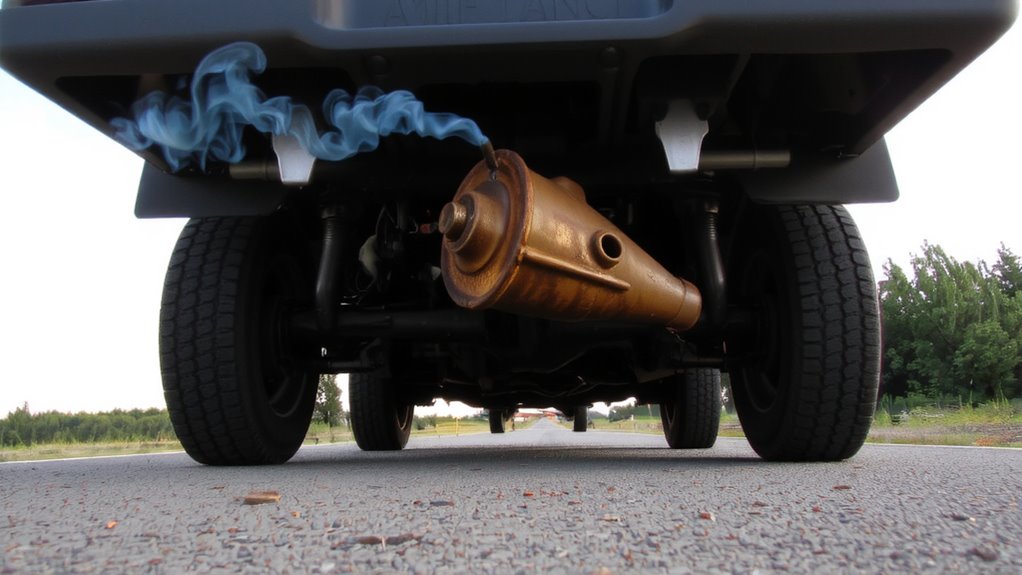
Why does your rear differential emit a burnt smell?
The odor often stems from gear wear and fluid degradation. Prolonged stress on differential gears accelerates metal-to-metal contact, producing fine metallic particles. These particles contaminate the lubricant, reducing its effectiveness. Differential fluid typically operates within 150–250°F; beyond this range, thermal breakdown occurs. Fluid degradation diminishes viscosity and load-carrying capacity, measured by its API GL-5 rating. Once compromised, the fluid can’t protect gear surfaces effectively. Gear wear follows a linear progression under normal conditions, but misaligned pinion angles or overloading accelerate it exponentially. The burning scent is often the oxidized fluid or clutch pack material in limited-slip units reaching combustion temperatures. Standard differentials use 75W-90 or 80W-90 fluid with a 30,000-mile service interval. Neglecting changes promotes sludge buildup. The smell signals advanced internal deterioration-inspect fluid color and particulate content immediately.
Why Rear Differential Overheating Creates a Burning Smell
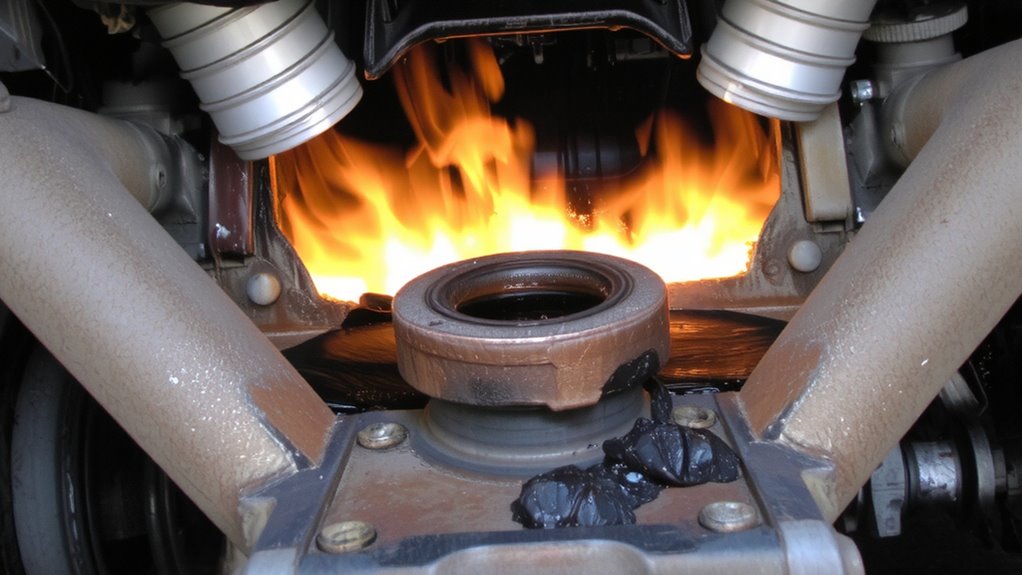
When the rear differential overheats, it doesn’t just reduce performance-it triggers chemical changes in the lubricant that produce a detectable burning odor. You’re smelling chemical breakdown caused by excessive heat, typically above 250°F. At that point, the lubricant begins to oxidize, leading to rapid lubricant degradation. The additives in gear oil, designed to protect metal surfaces, deplete quickly under thermal stress. As base oils decompose, they release volatile compounds that smell like burnt toast or overheated metal. This isn’t just a surface issue-internal components like bearings and pinion gears experience accelerated wear once the oil’s viscosity drops by 30% or more. You’ll notice the smell before visible damage occurs, making it an early warning sign. The odor indicates the fluid can no longer form a protective film, compromising component life. Recognizing this specific smell helps prevent catastrophic failure.
Signs Your Rear Differential Is Overheating
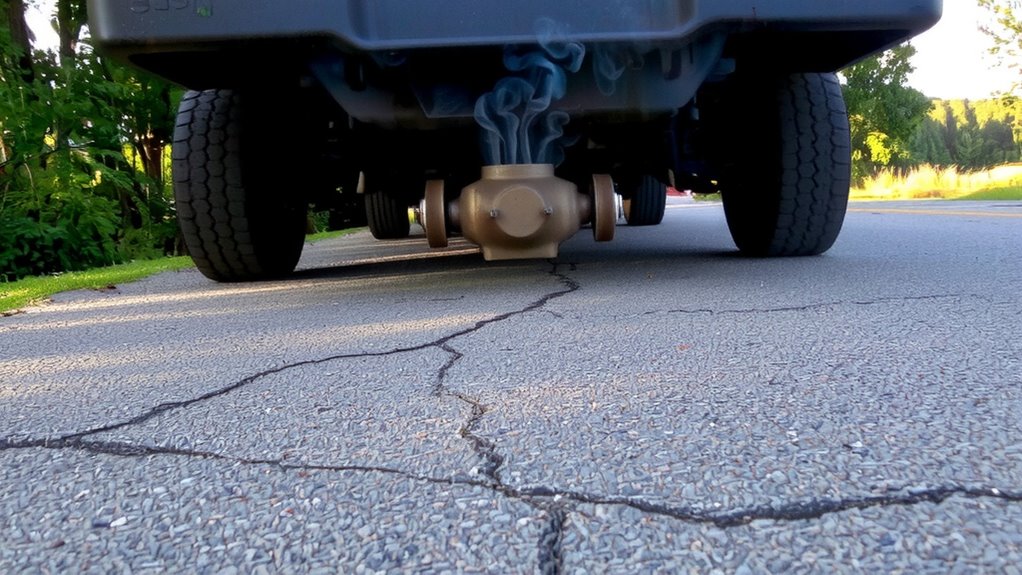
If you’ve ever caught a whiff of something burning while driving, especially a sharp, acrid scent similar to scorched transmission fluid or hot clutch material, it could mean your rear differential is overheating. This odor often signals fluid degradation, where the differential oil breaks down under excessive heat, losing its lubricating properties. Once the fluid fails, metal-on-metal friction rises, directly affecting the differential gears. You may notice hard-to-ignore symptoms: a loud howling or grinding noise during turns, or a visible wisp of smoke from under the rear axle. Operating temperatures exceeding 250°F initiate breakdown, while sustained temps above 300°F accelerate wear. Without proper lubrication, gear teeth erode prematurely. Catching these signs early helps prevent catastrophic differential failure, avoiding costly repairs and maintaining drivetrain efficiency under load.
Driving Habits That Overheat Your Rear Differential
Driving aggressively or towing beyond your vehicle’s rated capacity can push the rear differential beyond its thermal limits, leading to overheating and accelerated wear. Aggressive acceleration forces the differential to transfer sudden torque loads, increasing friction and heat in the gears and bearings. This stress can exceed design thresholds, especially in units rated for standard driving. Prolonged towing, particularly on inclines or in hot climates, sustains high differential loads, reducing oil cooling efficiency. Most rear differentials operate safely up to 250°F, but continuous strain can push temperatures past 300°F, degrading lubricant and risking gear damage. Frequent stop-and-go driving with heavy loads compounds thermal buildup. Differential airflow cooling depends on vehicle motion, so slow, loaded travel limits heat dissipation. Manufactures specify towing limits-often 3,500 to 8,000 lbs depending on model-exceeding them compromises thermal management. Maintain speeds under 65 mph during extended hauls to minimize strain.
What to Do Immediately When You Smell Burning
Why does that acrid, metallic odor fill your cabin? That smell means your rear differential is overheating-possibly due to gear oil breakdown at temperatures exceeding 250°F. This is an emergency response situation. Pull over immediately; continued driving risks catastrophic gear failure. Your safety depends on an immediate inspection. Shut off the engine and let the assembly cool for at least 20 minutes. Check the differential vent and fluid level once cooled. If fluid is dark, thick, or smells burnt, it’s degraded. Confirm gear oil viscosity-typically 75W-90 or 80W-90-matches manufacturer specs. Do not drive until you verify internal components like bearings and ring gears aren’t damaged. Ignoring this may lead to seized axles or differential lockup. Immediate inspection limits repair costs and prevents roadside failures. Record temperature trends using an IR gun if possible-readings above 275°F indicate critical thermal stress.
How to Prevent Rear Differential Overheating
Since rear differential overheating often stems from inadequate lubric combustion or excessive load, maintaining proper oil levels and using the correct viscosity grade-typically 75W-90 or 80W-90-is critical. Lubricant viscosity directly impacts heat dispersion; too thick and fluid can’t flow efficiently, too thin and metal surfaces aren’t protected. Operationally, this means checking fluid every 15,000 miles and changing it every 30,000 to 60,000 miles, depending on driving conditions. Proper ventilation design reduces internal pressure buildup and allows heat to escape. Rear differentials with inadequate breathers or clogged vents trap hot air, accelerating fluid breakdown. Verify the differential breather isn’t obstructed and routes away from water exposure. Under heavy towing or off-road use, consider synthetic lubricants for better thermal stability. Upgraded cooling fins or external coolers help maintain ideal temperatures. Prevent overheating through disciplined maintenance and attention to lubricant viscosity and ventilation design.
When to Stop Driving and Call a Mechanic
How long should you push it when the rear end starts smelling like burnt toast? Not one second longer. That odor signals overheating, possibly from lubricant breakdown in the differential. If you ignore it, increased friction can lead to catastrophic component wear. You’re risking immediate brake failure-especially if heat migrates to brake lines, compromising fluid integrity at temperatures above 311°F. Warped calipers lose clamping force, increasing stopping distance by up to 40%. Tire damage is also likely; prolonged heat degrades rubber compounds, reducing tread adhesion and raising blowout risk, particularly at highway speeds. Vibrations may worsen as axles distort under thermal stress. Once the smell appears, stop driving. Continued operation risks gear seizure or differential lockup. Call a mechanic immediately. Diagnostics should include thermal imaging, fluid analysis, and inspection for seal leaks. Safety isn’t worth the gamble.
On a final note
You must act fast when you smell burning from the rear differential. Overheating degrades gear oil, reducing lubrication and risking gear seizure. Normal operating temperature ranges from 160°F to 200°F; beyond 250°F accelerates wear. Stop driving immediately to prevent catastrophic failure. Inspect fluid level, viscosity (typically 75W-90 or 80W-90), and ventilation. Use high-temperature-resistant synthetic oil. Regular maintenance and load monitoring prevent recurrence.