The Complete Process for Winterizing a Convertible Before Long-Term Storage
Wash your convertible with pH-balanced shampoo and a microfiber mitt, then dry it completely to prevent water spots. Apply a synthetic wax with at least 98% carnauba for a 0.75 to 1.0 mil protective layer. Clean leather using a pH-balanced cleaner, then condition with lanolin and beeswax. Stabilize fuel with 1 ounce of stabilizer per 2.5 gallons, run the engine, and fog the intake. Disconnect the battery-negative first-and store it above concrete. Elevate the vehicle on jack stands at manufacturer-recommended points, inflate tires to spec, cover them with breathable material, and store in a dry, temperature-stable area. A proper setup now guarantees reliable performance later.
Notable Insights
- Wash and wax the exterior with a pH-balanced shampoo and synthetic sealant to prevent rust from winter grime and moisture.
- Deep-clean and condition leather surfaces with lanolin-rich products to prevent cracking due to cold and dry storage conditions.
- Stabilize fuel by filling the tank and adding stabilizer, then run the engine to prevent moisture buildup and corrosion.
- Disconnect the battery, clean terminals, and store it on a smart charger to maintain charge during long-term storage.
- Elevate the convertible on jack stands, maintain proper tire pressure, and store in a dry, covered area to prevent flat spots and deterioration.
Wash and Wax the Exterior to Prevent Winter Rust
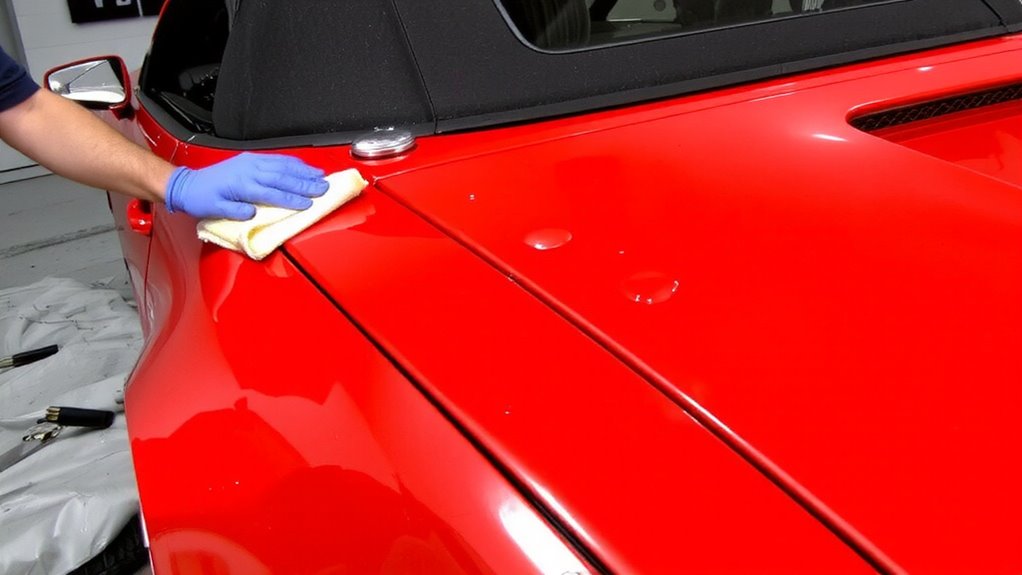
Dirt and road grime aren’t just eyesores-they’re rust accelerants when left unchecked. You need thorough exterior detailing before storing your convertible. Start by washing with a pH-balanced car shampoo and microfiber mitt to avoid swirl marks. Dry completely using a chamois or blower to prevent water spots. Apply a synthetic wax or sealant with at least 98% carnauba content for maximum paint protection. These products typically offer 6–12 months of durability and repel moisture, road salt, and UV rays. A dual-action polisher with a foam pad guarantees even application and enhances bonding. Wax thickness should measure 0.75 to 1.0 mils for effective barrier performance. This layer resists corrosion by sealing microscopic paint pores. Exterior detailing isn’t just cosmetic-it’s essential defense against winter’s corrosive elements. For stubborn underhood grime, a high-quality engine degreaser ensures critical components are clean and protected before storage.
Deep-Clean and Treat Leather to Stop Cracking
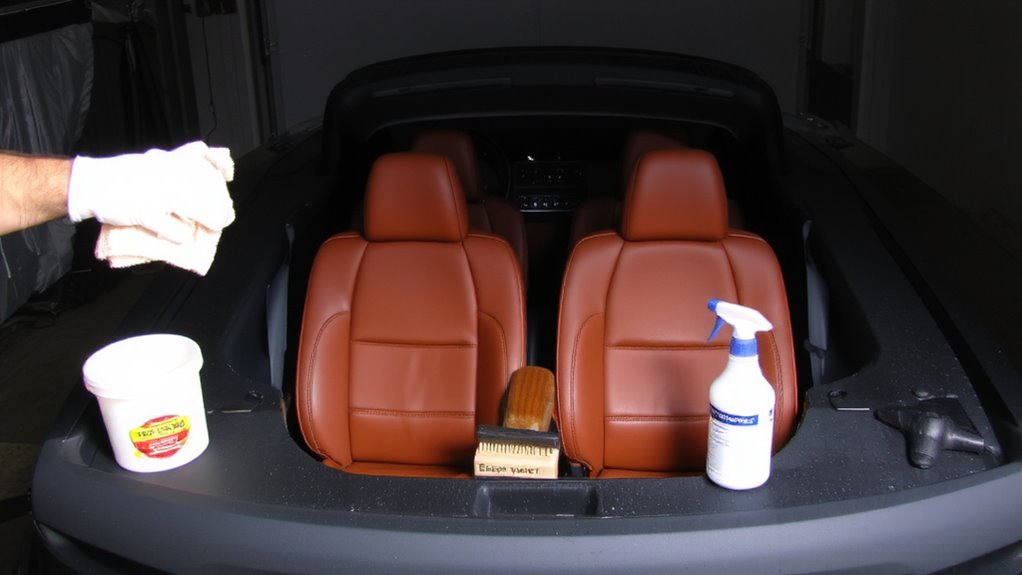
While moisture and cold temperatures can compromise untreated leather, properly conditioning the material before winter guarantees long-term durability. Begin with thorough stain removal using a pH-balanced cleaner to lift dirt without damaging the hide. Apply the solution with a microfiber cloth, working in small circles to avoid abrasion. Rinse residue with a damp cloth and allow the surface to dry completely-never apply conditioner to damp leather. Use a high-quality leather conditioning product containing lanolin and beeswax to replenish natural oils lost over time. Apply a thin, even layer with a lint-free applicator, letting it absorb for at least 12 hours. Proper leather conditioning prevents cracking by maintaining fiber flexibility. Test products on inconspicuous areas first. Repeat conditioning every six months for ideal protection during storage. For secure vehicle attachment during transport to storage, consider using a reliable hitch ball rated for your car’s weight.
Stabilize Fuel and Protect the Engine for Storage
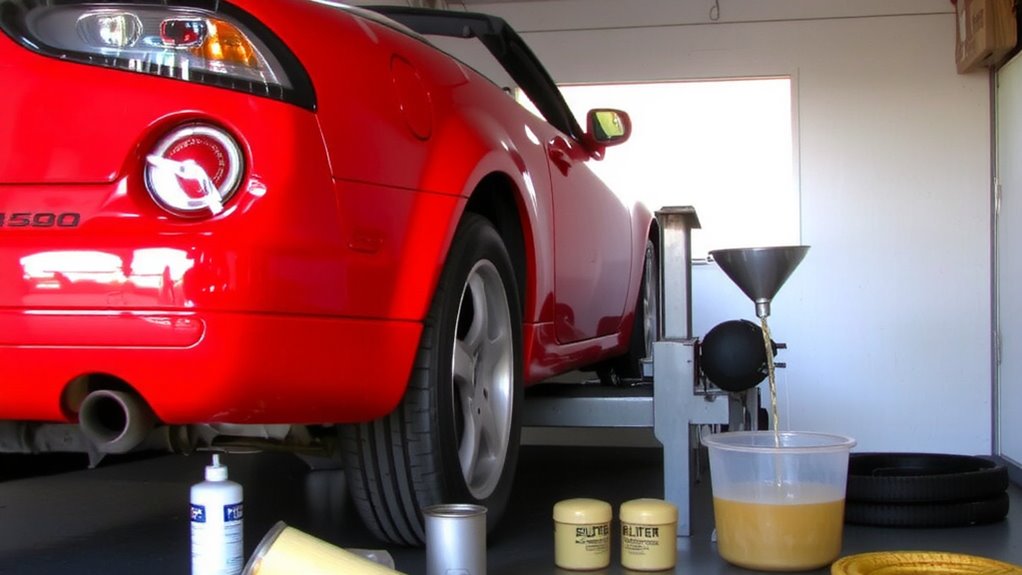
One full tank of stale fuel can do serious damage to your convertible’s engine during long-term storage. Ethanol in gasoline attracts moisture, leading to phase separation and internal corrosion. Fill the tank completely, then add a quality fuel stabilizer-use 1 ounce per 2.5 gallons of gas. Run the engine for 10 minutes so treated fuel reaches the injectors and carburetor. This preserves fuel integrity for up to 12 months. Next, perform engine fogging. Remove the air intake cover and spray fogging oil-about 10-second bursts-into the throttle body while the engine runs at idle. This coats cylinder walls and piston rings, preventing rust. Shut off the engine after RPMs drop slightly. Fogging creates a protective oil barrier equivalent to 20–30 psi of cranking compression. Together, fuel stabilizer and engine fogging safeguard internal components from degradation, ensuring reliable restart in spring. A complete maintenance routine also includes using an oil change kit to replace old oil before storage, preventing acid buildup and sludge formation.
Disconnect and Tend the Battery to Avoid Drain
Since a disconnected battery won’t power parasitic loads like alarm systems or onboard electronics, removing it is the most effective way to prevent discharge during storage. Disconnect the negative terminal first, then the positive, to reduce short-circuit risk. Inspect terminals for battery corrosion; clean with a baking soda solution and wire brush if needed. Rinse and dry thoroughly. Store the battery in a cool, dry place off concrete floors, which can accelerate discharge. Test voltage monthly; maintain charge above 12.4V to preserve longevity. Recharge as needed using a smart charger that monitors charging cycles and prevents overcharging. Avoid deep discharges-they shorten battery life. A fully charged, well-maintained battery can hold capacity for months. Proper storage reduces strain on internal components and guarantees reliable starting post-storage.
Elevate Tires and Store in a Dry, Covered Space
If you’re storing your convertible for the winter, elevating the tires prevents flat spots caused by prolonged static weight on the same section of rubber. Use jack stands rated for your vehicle’s weight, placing them at the manufacturer-recommended lift points. Before lifting, check tire pressure-maintain the PSI specified in your owner’s manual to avoid underinflation damage during storage. Once elevated, cover tires with breathable storage covers to shield them from UV rays, ozone exposure, and moisture. Avoid plastic bags, which trap condensation. Store the car in a dry, covered space with stable temperatures and low humidity. Concrete floors can wick moisture, so use rubber mats under jack stands. Elevated tires reduce stress on suspension components. This method maintains tire roundness and structural integrity for up to six months.
On a final note
You’ve protected your convertible from seasonal damage. Wash and wax the exterior with a carnuba-based wax to resist moisture intrusion. Condition leather at 72°F using pH-balanced products to prevent micro-cracking. Stabilize fuel with ethanol treatment; run the engine for 10 minutes to circulate. Disconnect the battery, store at 50% charge in a 40–60°F environment. Elevate tires to avoid flat spots; store in a dry, ventilated space below 60% humidity.