Step-By-Step Instructions for Draining and Flushing Old Gas From Stored Engines
Drain old gas using a hand siphon pump at 0.5 gal/min or open the tank’s 1/4-inch drain plug into a UL-rated container. Stale fuel degrades in 30 days, forming gum that clogs systems. Flush residual gas by running a PEA-based cleaner through the engine for 10–15 minutes. Inspect the tank for rust, replace cracked fuel lines, and swap dirty filters. Refill with fresh E10 or lower ethanol gas and add stabilizer at 1 oz per 2.5 gallons. Start the engine; smooth idle confirms proper function-persistent sputtering means deeper issues may remain unresolved.
Notable Insights
- Use a siphon pump or drain plug to remove old gas, avoiding sediment by inserting the tube fully into the tank.
- Flush the fuel system with a PEA-based cleaner to dissolve gums and varnish, running the engine for 10–15 minutes.
- Inspect the fuel tank, lines, and filter for rust, cracks, or clogs, cleaning or replacing components as needed.
- Refill with fresh gasoline at the correct octane, using E10 or lower to minimize ethanol-related moisture and corrosion.
- Add fuel stabilizer before refueling to extend gas life up to 12 months and prevent future degradation.
Drain Old Gas With a Siphon Pump or Drain Plug
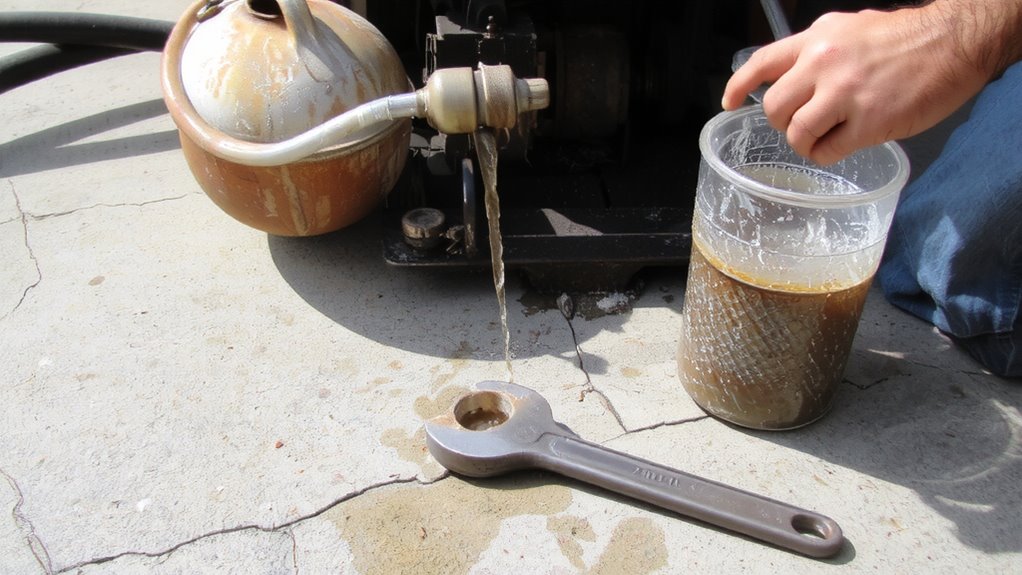
You’ll need to remove stale fuel safely and efficiently, and using a siphon pump or drain plug are the two most effective methods. A hand-operated siphon pump transfers fuel at roughly 0.5 gallons per minute, ideal for sealed tanks without access ports. Insert the tube fully to avoid drawing sediment. For engines with a drain plug, place a catch basin beneath and open slowly-most plugs use a 1/4-inch square or 8mm fitting. Stale fuel promotes fuel contamination, degrading performance and clogging passages. Left untreated, it accelerates tank corrosion, especially in steel reservoirs exposed to moisture. Ethanol-blended fuels attract water, increasing corrosion risks over 30–60 days. Remove all fuel promptly after storage. Siphoning captures 95% of liquid, but residual amounts remain near seams and baffles. Use puncture-resistant, UL-rated containers marked for gasoline. Never use mouth suction-risk of ingestion and chemical exposure is unacceptable. Safety goggles and nitrile gloves are essential.
Flush Fuel System of Residual Gas and Gunk
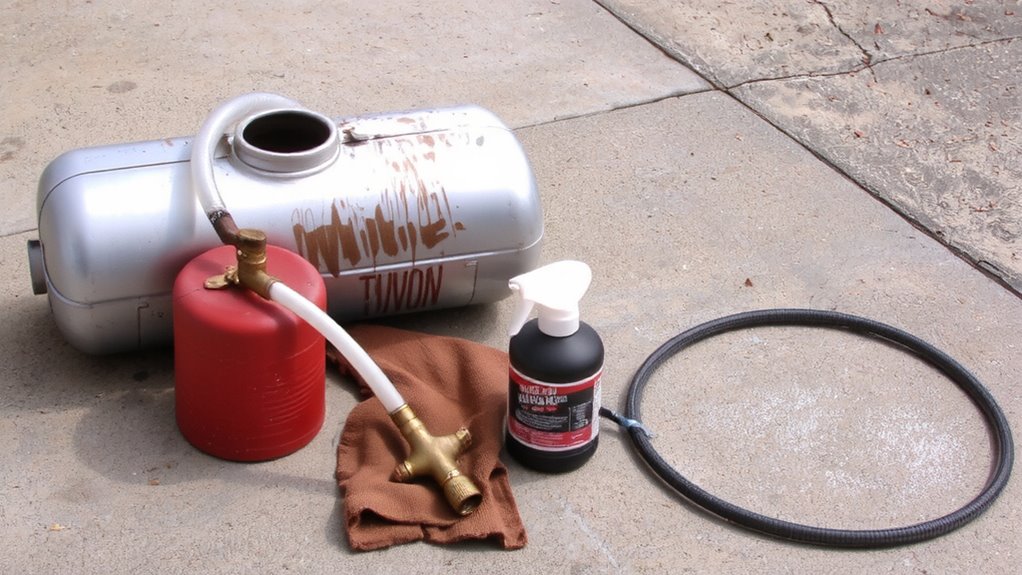
With the bulk of the old fuel removed, the next step is clearing residual gasoline and accumulated deposits from the system. Residual fuel leads to fuel oxidation, which degrades into gums and acids that corrode metal components. Over time, this causes varnish buildup in the carburetor, injectors, and fuel rails. To flush it out, disconnect the fuel line at the engine and connect a cleaning kit to a fresh gasoline can. Introduce a high-detergent fuel system cleaner-containing polyetheramine (PEA)-into the stream. Operate the engine for 10–15 minutes at moderate RPM. The solvent dissolves varnish and prevents new deposits. Use a cleaner rated for ethanol blends if applicable. Flushing at operating temperature improves solvency. This process restores flow rates, guarantees proper atomization, and prevents clogging. Always follow manufacturer dilution ratios-typically 1 oz per gallon. Never run the engine dry during flushing.
Inspect and Clean Fuel Tank, Lines, and Filter
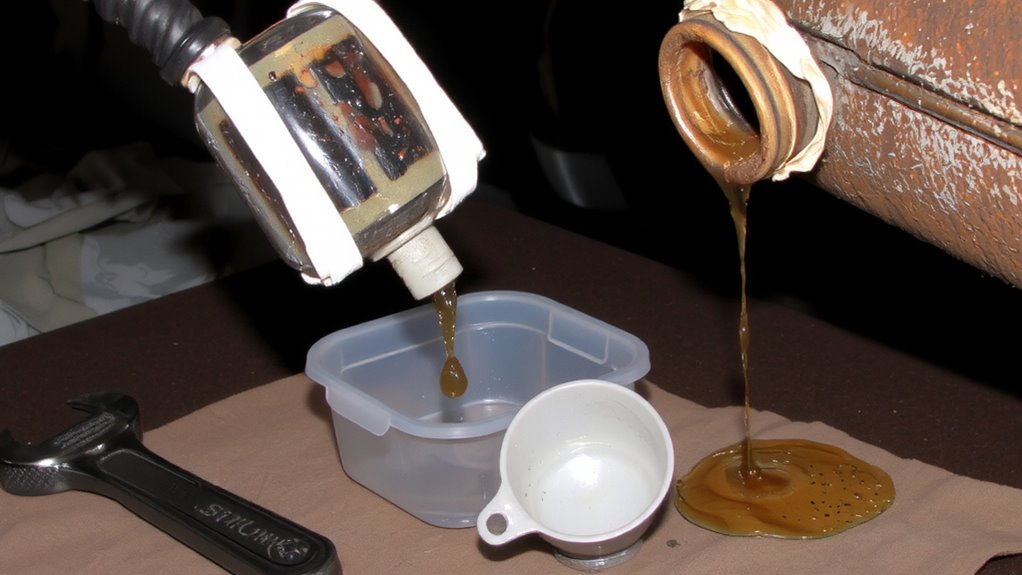
After draining and flushing the fuel system, it’s critical to inspect the fuel tank, lines, and filter for contamination and degradation. Look inside the fuel tank for fuel tank rust or cloudy discoloration, which indicates corrosion or moisture intrusion. Use a flashlight to check for sediment buildup along the bottom-it can clog lines and damage components. Remove the fuel lines and inspect them for cracks, brittleness, or internal residue. Replace any hose showing signs of deterioration. Examine the fuel filter closely; if it’s dark or restricted, replace it. Clean the fuel tank with a non-abrasive solvent and a lint-free cloth. Avoid wire brushes-they can dislodge rust particles. Guarantee all connections are dry and sealed. A clean, dry system prevents future clogs and guarantees reliable engine startup.
Refill With Fresh Gasoline and Stabilizer
Now that the fuel system is clean and dry, it’s time to refill with fresh gasoline and add a fuel stabilizer to maintain long-term performance. Use gasoline with the fuel octane rating specified by the engine manufacturer-typically 87 AKI for most small engines. Incorrect octane can cause knocking or reduced efficiency. Always check the ethanol content; use fuel with no more than 10% ethanol (E10) to prevent moisture absorption and material degradation. Ethanol attracts water, which can lead to phase separation and corrosion. Pour a fuel stabilizer into the tank before adding gas, following the product’s recommended ratio-usually 1 ounce per 2.5 gallons. This preserves fuel quality for up to 12 months. Mix thoroughly during refueling. Fresh, stabilized fuel prevents varnish and gum formation, keeping injectors and carburetors clean. Always store stabilized fuel in approved containers to maintain integrity.
Start the Engine and Check for Issues
Silence gives way to the hum of combustion as you turn the key or pull the starter cord. You should immediately assess engine performance. Smooth idle and consistent RPM suggest proper fuel quality and combustion. Irregular sputtering, stalling, or rough running indicate residual old gas or fuel system issues.
Monitor for these common symptoms during initial operation:
| Symptom | Likely Cause |
|---|---|
| Hard starting | Poor fuel quality, clogged filter |
| Rough idle | Dirty carburetor, air-fuel imbalance |
| Loss of power | Incomplete combustion |
| Excessive smoke | Contaminated fuel or oil mix |
| Unusual knocking | Low octane fuel or carbon buildup |
Run the engine for 10–15 minutes under light load. Verify steady operation and full throttle response. If issues persist, inspect fuel lines, filter, and carburetor. Proper fuel quality directly impacts engine performance. Address problems early to avoid long-term damage.
On a final note
You’ve successfully removed old fuel and protected your engine. Stale gasoline degrades in as little as 30 days, forming varnish that clogs carburetors. Draining with a siphon pump-minimum 3 mm internal diameter tubing-ensures complete evacuation. Flushing with fuel system cleaner dissolves residue. Replacing fuel filters, rated for 10–40 microns, prevents debris ingress. Fresh unleaded fuel, 87 octane minimum, mixed with ethanol stabilizer (1 oz per gallon) prevents phase separation. The engine should start cleanly, idle at 1,200 rpm, and show no leaks.