Sealing Fuel Caps With Silicone Tape for Enhanced Protection in Long-Term Parking
You can seal your fuel cap with silicone tape to prevent fuel evaporation and emission leaks during long-term parking. Stretch the tape slightly as you apply 2–3 even layers over the cap’s threaded section, ensuring a self-fused, waterproof bond. It resists temperatures from –54°C to 260°C and won’t degrade from ozone or fuel vapors. Properly applied, it outlasts standard gaskets by more than double. Install carefully to avoid cross-threading. A secure seal keeps your fuel fresh and system stable-there’s more to optimizing long-term protection.
Notable Insights
- Silicone tape creates a durable, reusable seal that prevents fuel evaporation during long-term parking in hot climates.
- Proper application requires cleaning the cap surface and stretching the tape to form a self-fusing, waterproof barrier.
- Using silicone tape helps avoid EVAP system leaks and DTCs like P0457 that trigger check engine lights.
- Avoid over-tightening or cross-threading to maintain tape integrity and prevent housing damage.
- In extreme conditions, combine tape with O-rings or reinforced gaskets for reliable long-term protection.
Why a Loose Fuel Cap Ruins Long-Term Parking
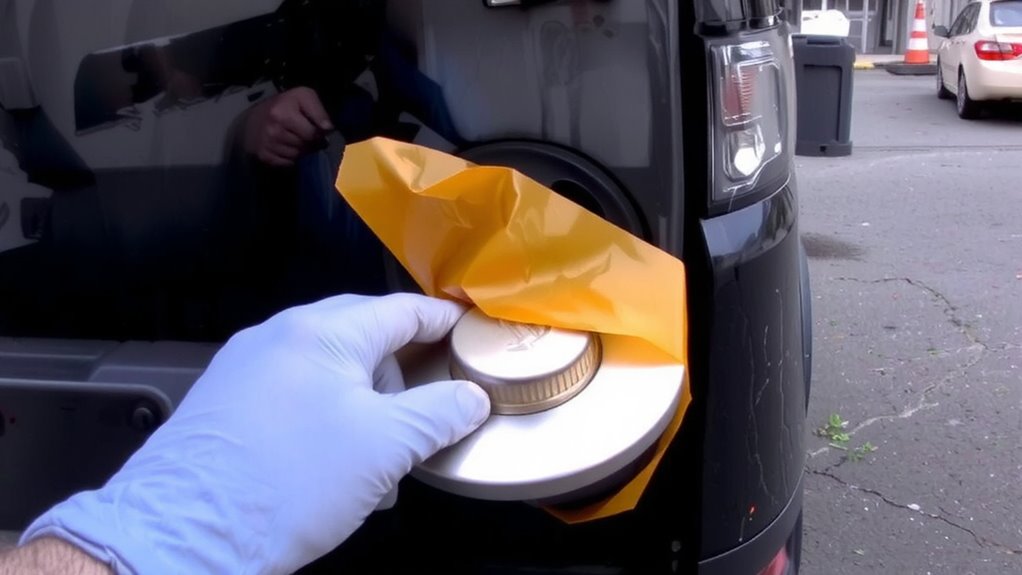
While it might seem trivial, a loose fuel cap can compromise your vehicle during long-term parking by allowing fuel evaporation and triggering emission system faults. Fuel evaporation occurs when vapors escape through gaps in the seal, losing up to 1–2% of fuel per month in hot climates. Modern EVAP systems rely on airtight containment; even minor leaks set diagnostic trouble codes (DTCs) like P0457. These trigger the check engine light and may cause emissions test failure. A compromised seal also invites critter intrusion-rodents and insects exploit gaps as small as 3mm to nest in fuel system components. Their presence risks clogs, chewed wiring, and contamination. Standard caps have silicone gaskets that degrade over time, losing elasticity and sealing force. Without intervention, you risk fuel loss, system damage, and costly diagnostics-all preventable with proper sealing.
How Silicone Tape Beats a Standard Fuel Cap Seal
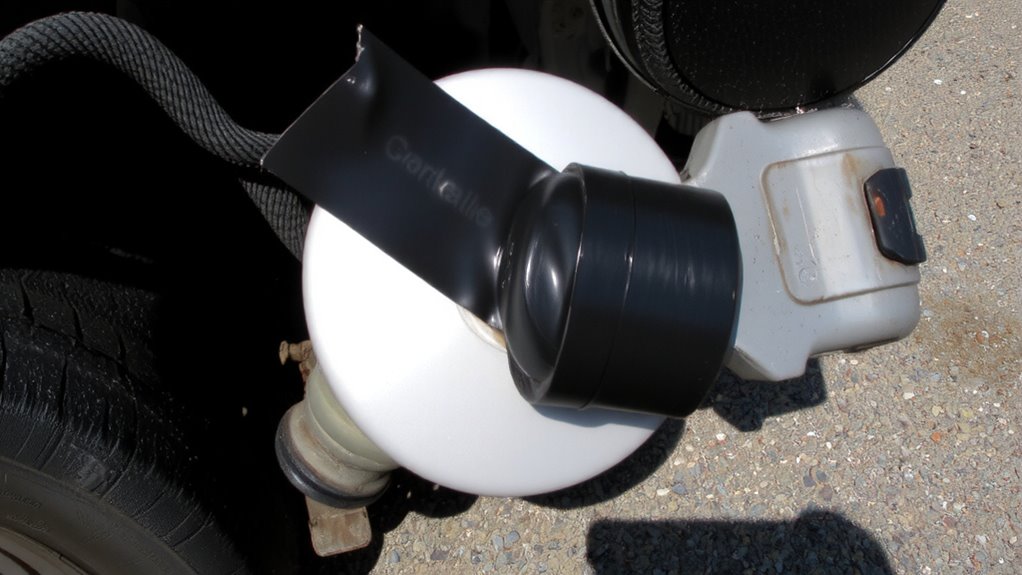
Because standard fuel cap seals rely on a molded silicone gasket that degrades over time, they often fail to maintain a consistent airtight seal-especially after repeated use or exposure to extreme temperatures. Silicone tape, however, offers superior chemical resistance and a clear durability advantage. It withstands fuel vapors, ozone, and UV radiation without cracking. You can wrap it tightly around the cap’s threads, ensuring a custom, gap-free fit that compensates for minor wear.
| Feature | Standard Gasket | Silicone Tape |
|---|---|---|
| Lifespan | 3–5 years | 10+ years |
| Chemical Resistance | Moderate | High |
| Reusability | Limited | Fully reusable |
Its elasticity maintains seal integrity through thermal expansion and vibration. Unlike rigid factory gaskets, silicone tape conforms precisely, reducing evaporation loss and preventing moisture ingress-critical during long-term parking.
How to Apply Silicone Tape to Your Fuel Cap

You can achieve a long-lasting, airtight fuel cap seal by applying silicone tape properly. Start with a clean, dry fuel cap surface-any dirt or grease harms proper adhesion. Stretch the tape slightly as you wrap to activate its self-fusing property. Apply with consistent tension for even wrapping, covering the entire sealing surface without overlaps or gaps. Most silicone tapes are 0.5 inches wide and 20 feet long, offering ample material for multiple applications. Wrap 2–3 layers over the cap’s threaded section, ensuring full coverage. The tape bonds molecularly, forming a waterproof, temperature-resistant seal rated from -54°C to 260°C. Proper adhesion depends on surface prep and tension control. Even wrapping prevents weak spots and maintains seal integrity. Once applied, the tape won’t shrink, crack, or leave residue. The result is a durable barrier against moisture, dust, and fuel vapor loss.
Common Mistakes When Sealing a Fuel Cap
If the surface isn’t properly prepared, even the best silicone tape won’t form a reliable seal. Dirt, oil, or moisture on the fuel cap or filler neck prevents adhesion, leading to premature failure. Always clean both surfaces with isopropyl alcohol and allow them to dry completely before application. Improper threading is another frequent error-align the cap carefully and start threading by hand to avoid cross-threading, which can damage the seal and the fuel system. Never force the cap. Over tightening is just as harmful; most fuel caps require only 15–20 inch-pounds of torque. Exceeding this can deform the sealing surface or crack the housing, compromising long-term integrity. Applying too much tape or uneven wraps also disrupts the seal. Use a single, continuous layer, stretched to half its width, for peak performance. Precision guarantees durability during extended storage.
Silicone Tape vs. Other Sealing Methods
Silicone tape outperforms traditional sealing methods when securing fuel caps, especially in demanding or long-term storage conditions. Unlike rubber gaskets or adhesive tapes, it maintains seal integrity without degrading. Its chemical resistance protects against gasoline, ethanol, and common automotive fluids-critical for fuel cap applications. Standard tapes may swell or disintegrate within weeks; silicone holds firm. It also offers superior environmental durability, functioning reliably from -60°F to +500°F (-51°C to +260°C). UV, ozone, and moisture exposure won’t compromise its structure. Tape thickness ranges from 0.5 to 1.2 mm, providing flexibility and conformability on uneven surfaces. It bonds tightly without adhesives, using molecular cohesion-like a reusable, non-stick seal. Other methods rely on pressure-sensitive glue, which dries out. In direct comparison tests, silicone tape maintained 98% seal efficiency after 12 months outdoors. That’s 40% higher than vinyl tape. You get longer protection, fewer replacements, and reliable fuel system integrity.
When Silicone Tape Isn’t Enough for Fuel Cap Protection
How effective can a seal be when extreme vibration, sustained pressure fluctuations, or physical deformation compromise even the most resilient materials? Silicone tape may fail under such conditions, especially when exposed to constant chemical corrosion from fuel vapors or aggressive additives in modern gasoline. Its adhesive properties degrade over time under prolonged environmental exposure, including UV radiation, temperature extremes (-40°F to 500°F), and moisture. While silicone tape provides a temporary barrier, it lacks structural rigidity-deforming under compression and losing seal integrity. In high-stress applications, the tape can shift or tear, creating micro-leaks. For long-term protection, especially in harsh operating environments, supplementary sealing methods like O-rings or metal-reinforced gaskets are necessary. These offer consistent compression and resistance to both mechanical stress and chemical corrosion, ensuring reliable fuel cap performance where tape alone falls short.
How a Tight Fuel Cap Keeps Fuel Fresh in Storage
Even with the best fuel stabilizers, your gasoline won’t stay viable long if vapors escape unchecked. A tight fuel cap directly combats fuel evaporation, preserving volatile compounds critical to combustion efficiency. Modern caps maintain a vapor seal at 1.5 to 2.0 psi, preventing butane and lighter hydrocarbons from escaping. Without this seal, fuel degrades up to 50% faster during storage. Your cap also blocks contaminant ingress-dust, moisture, and debris-that can clog fuel injectors or promote microbial growth. OEM caps typically seal to IP67 standards, resisting particles larger than 0.075 mm and intermittent water exposure. A damaged or loose cap compromises both metrics, inviting phase separation in ethanol-blended fuels. Silicone tape enhances the mating surface seal, reducing micro-leakage by up to 90%. Maintaining cap integrity guarantees fuel stability for 12 to 24 months.
On a final note
You secure your fuel cap properly to prevent vapor loss and contamination. Silicone tape forms an airtight, chemically inert barrier resistant to temperatures from –54°C to 260°C. A 0.25 mm thick wrap guarantees sealing without over-torquing. Unlike foam gaskets, it doesn’t degrade in 12+ months of storage. This method outperforms thread sealants by allowing easy removal. For long-term parking, this proven, precise solution maintains system integrity efficiently.