Using a Battery Conductance Tester to Assess Car Battery Health
You can assess your car battery’s health accurately using a conductance tester by connecting the red clamp to the positive terminal and the black clamp to the negative terminal. Make sure the battery is fully charged (12.6V minimum) and clean the terminals first. Select the correct battery type-AGM, flooded, or gel-and input the rated CCA. The tester measures internal resistance in Siemens, revealing charge acceptance and plate condition. A result below 70% of rated CCA or a “replace” indication means failure is likely. Conductance testing outperforms voltage checks by predicting real-world performance under load. Consistent results require stable temperatures and proper clamp contact. There’s more to learn about avoiding false readings and extending battery life.
Notable Insights
- Ensure the battery is fully charged (12.6V minimum) and clean the terminals before testing.
- Connect the conductance tester with red to positive and black to negative terminals securely.
- Select the correct battery type and enter the CCA rating for accurate test results.
- Perform the test in stable temperatures and allow 10 minutes after engine shutdown.
- Replace the battery if conductance is below 70% of rated CCA or tester indicates replacement.
How to Use a Battery Conductance Tester in 3 Steps
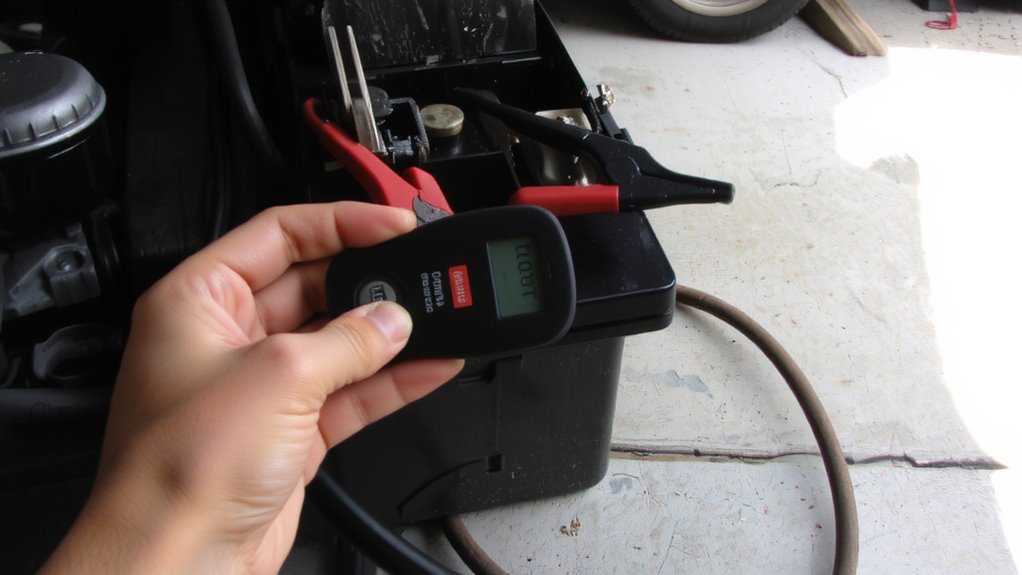
One simple test can save you hours of guessing when diagnosing a weak car battery. First, verify proper tester calibration-most digital conductance testers auto-calibrate on startup, but you must verify a fully charged battery (12.6V minimum) for accurate results. Connect the red clamp to the positive terminal, the black to the negative, matching polarity exactly. Second, select your battery type (e.g., AGM, flooded, or Gel) and CCA rating-this step is critical because incorrect input skews results. The device sends a high-frequency signal through the battery to measure internal conductance. Third, initiate the test and wait 15–30 seconds. You’ll get instant results: state-of-charge, CCA output, and health status. Maintain reading consistency by repeating the test twice with stable ambient temperatures (60°F–80°F). Consistent readings confirm reliability; erratic outputs suggest connection issues or tester malfunction. For dependable performance, choose a best battery tester that delivers consistent conductance measurements under real-world conditions.
What Your Battery Conductance Tester Is Really Telling You
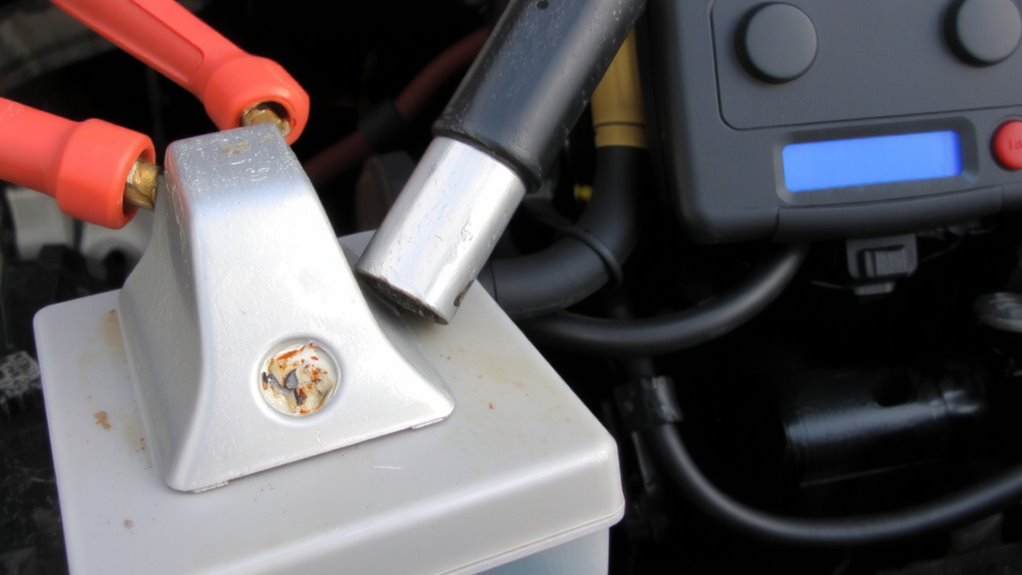
Why do some batteries test strong but still fail under load? Your battery conductance tester measures internal resistance and charge acceptance-two key indicators of health. Low internal resistance means the battery can deliver high current efficiently. As plates degrade, resistance increases, reducing cranking power. Conductance testers send a signal through the battery, measuring how easily current flows-essentially gauging internal resistance. A high conductance reading suggests healthy plates and strong charge acceptance. But surface charge or minor sulfation can mask weak performance under real demand. Charge acceptance reflects how well the battery recharges; poor acceptance indicates aging or damage. While conductance correlates with cold cranking amps (CCA), it doesn’t always reveal impending failure under high load. Think of it like a sprint test vs. a marathon-the battery may start the race but can’t finish. Use conductance as one diagnostic clue, not the final verdict.
Mistakes That Skew Your Battery Conductance Test
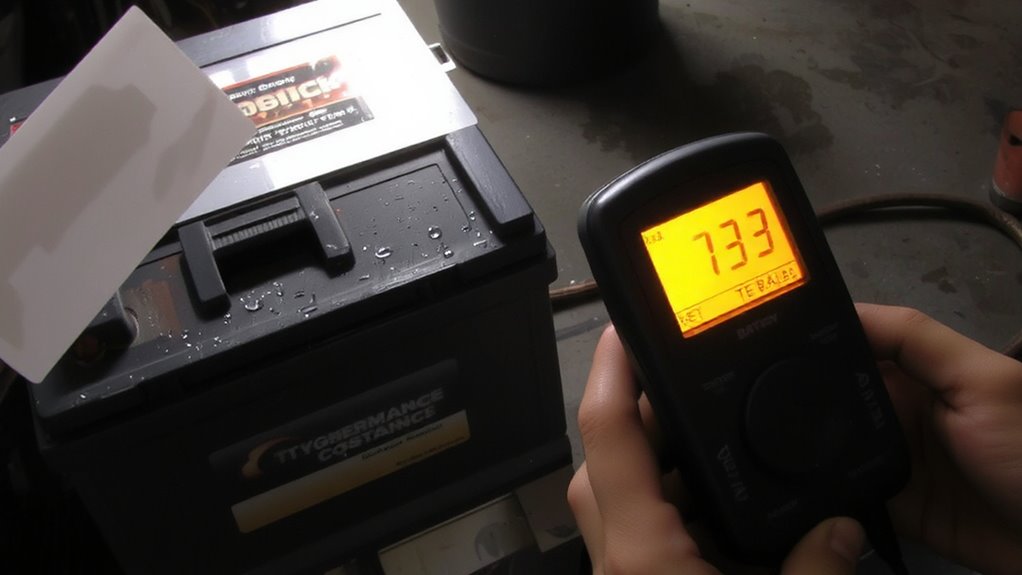
Even if your conductance tester shows a passing result, inaccurate readings can still mislead you when common testing errors go unchecked. Improper clamp placement is one of the most frequent mistakes. If the clamps aren’t securely fastened to clean, bare terminal surfaces, resistance increases, distorting conductance measurements. Poor contact can mimic low CCA (Cold Cranking Amps) performance, leading to false failure indications. Tester calibration errors are equally critical-uncalibrated devices may deviate by ±10% or more from actual values, compromising accuracy. Most manufacturers recommend recalibrating every 3–6 months or after 100 uses. Always follow the device’s protocol for temperature compensation, as readings vary by 0.5% per °F deviation. Conduct tests only on fully charged batteries, since voltage below 12.4V skews impedance data. Avoid testing immediately after engine shutdown; wait 10 minutes to stabilize internal chemistry. For reliable results, consider investing in one of the best battery testers recommended by experts for accuracy and durability.
Battery Conductance Tester Red Flags: Replace Now or Risk Failure
How often do you rely on a device that’s past its prime? If your battery is over five years old, it’s nearing the end of its service life. Battery age directly impacts conductance readings-older batteries show declining cold cranking amps (CCA) and increased internal resistance. A conductance tester revealing less than 70% of rated CCA means failure is imminent. Poor charging habits, like frequent short trips or leaving electronics on when the engine’s off, accelerate sulfation and reduce capacity. These habits distort conductance results and shorten lifespan. If the tester displays “replace” or conductance drops more than 25% below specification, act now. Delaying replacement risks no-start situations, especially in extreme temperatures. Modern testers detect weak cells and degradation invisible to voltage tests. Ignoring red flags won’t restore health-it only increases the chance of breakdown. Replace proactively. Your car’s reliability depends on it.
Why Conductance Testing Beats Voltage Checks Every Time
Reliability isn’t just about measuring voltage-it’s about understanding the battery’s true ability to deliver power when you need it most. Voltage checks only show surface charge, not real-world performance. Conductance testing goes deeper, measuring internal resistance and overall health. You’re not just guessing based on battery age; you’re verifying actual load capacity. A healthy battery at 12.6 volts might still fail under load, but conductance detects weak cells before they break down. The test sends an AC signal through the battery, measuring how well plates and electrolyte conduct current-typically in Siemens (S). This reveals sulfation, corrosion, and plate degradation that voltage alone can’t catch. You get a precise prediction of cold cranking amps (CCA) remaining. Unlike voltage, conductance directly correlates to the battery’s ability to start your engine in cold weather. It’s the only method that assesses both state of charge and load capacity accurately, giving you confidence every time. For reliable results, using a tester with advanced battery load testers technology ensures consistent, professional-grade diagnostics.
Battery Conductance Tester: How It Works and Why It’s Better
While voltage readings can be misleading, a battery conductance tester gives you a clear, science-based assessment of your car battery’s condition. It works by sending a low-frequency AC signal through the battery to measure internal resistance, which directly correlates to health and performance. Lower conductance means higher internal resistance, signaling aging or damage. Unlike basic testers, it evaluates both state of charge and overall capacity in seconds. You’ll get accurate readings even with surface charge present. Most models display results in CCA (cold cranking amps), comparing actual output to manufacturer specs. This method is non-invasive and safer than load testing. Conductance testing is repeatable, fast, and doesn’t degrade the battery. It accounts for sulfation, plate wear, and grid corrosion-issues voltage checks miss. You gain actionable data, not guesses. That’s why professionals rely on it. You should too.
On a final note
You now understand how conductance testing accurately measures your battery’s cold cranking amps (CCA) and internal resistance. Unlike basic voltage checks, it analyzes the plate surface area and sulfate buildup. A conductance tester sends a 10–20 Hz AC signal to determine impedance. Results display as a percentage of original CCA-below 70% means replacement is urgent. This method detects aging cells and hidden weaknesses. Use it annually for reliable starting performance and to avoid unexpected failure.