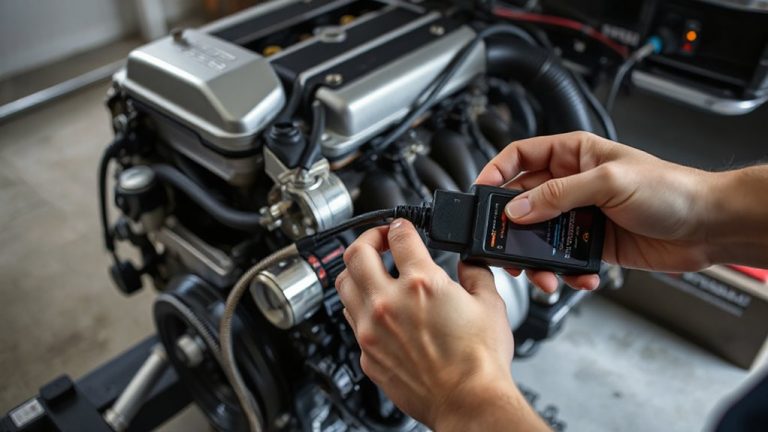
Flushing Residual Ethanol From Small Engine Fuel Lines Before Winter Layup
You should stabilize, not flush, residual ethanol from small engine fuel lines before winter. Draining invites moisture via condensation, while ethanol attracts water from air-E10 holds 0.5% water at 60°F, risking phase separation. Instead, add fuel stabilizer at 1:1000 ratio (1 oz per 2.5 gal), run engine 5–10 mins to circulate. Stabilizers prevent oxidation and acid formation, protecting rubber, plastic, and metal. This method keeps fuel viable up to 24 months. The right approach guarantees reliable spring startup with less corrosion and clogging. More details on ideal storage follow.
Notable Insights
- Run the engine until it stops to burn off residual ethanol-blended fuel in the lines and carburetor.
- Add a fuel stabilizer formulated for ethanol fuels before storage to prevent degradation and phase separation.
- Close the fuel valve after starting the engine to drain the carburetor bowl completely.
- Replace old fuel with stabilized fuel if the existing gasoline has been sitting over 30 days.
- Inspect and replace cracked or swollen fuel lines that may have been damaged by ethanol exposure.
How Ethanol Harms Stored Small Engines
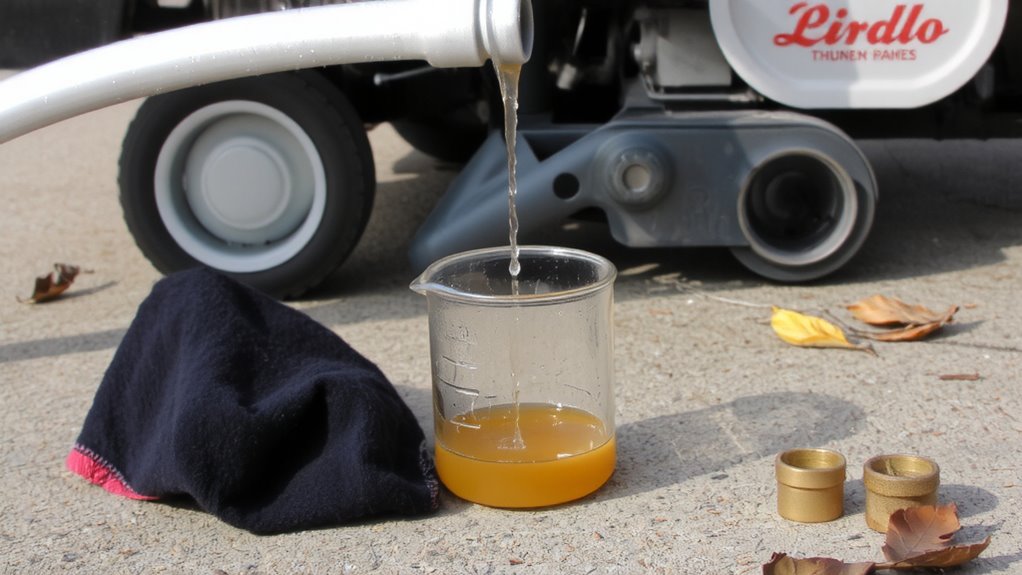
While it may seem harmless, ethanol in fuel can cause serious damage to small engines during storage. Ethanol attracts moisture from the air, leading to fuel phase separation, especially in tanks with temperature fluctuations. This means the ethanol-water mixture sinks, leaving degraded gasoline that won’t combust properly. You’ll see poor engine performance or failure upon startup. Ethanol corrosion is another issue-ethanol degrades rubber, plastic, and certain metals in fuel systems, including carburetors and seals. Components like fuel lines and diaphragms swell, crack, or disintegrate after prolonged exposure. Even E10, the common 10% ethanol blend, holds about 0.5% water at 60°F-but that rises in humidity, accelerating damage. Over months, phase-separated fuel creates acidic byproducts that further corrode metal parts. These processes start within 30 days of storage. Without intervention, your engine risks clogged passages, varnish buildup, and costly repairs. Prevention begins with understanding these chemical interactions.
Drain or Stabilize: Best Method for Winter?
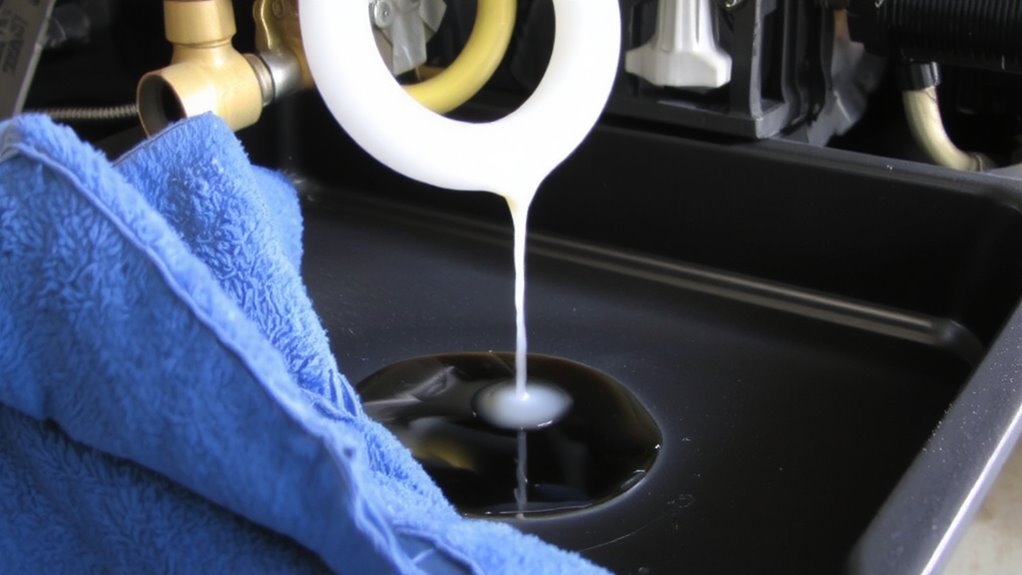
If you’re prepping your small engine for winter, choosing between draining the fuel system and using a stabilizer depends on storage duration and equipment design. Draining eliminates fuel evaporation and removes ethanol-laden gas, reducing ethanol corrosion risk in carburetors and fuel lines. However, residual moisture can condense in empty tanks, leading to rust. For storage over 30 days, fuel stabilizers are often better. Add stabilizer at a 1:1000 ratio (common for ethanol-blend fuels) and run the engine 5–10 minutes to circulate treated fuel. This preserves fuel integrity and coats metal surfaces, inhibiting ethanol corrosion. Closed fuel systems with sealed tanks minimize fuel evaporation, making stabilization effective. For carbureted engines with open fuel bowls, draining may still be preferable. Always consult your equipment manual-some manufacturers void warranties if fuel isn’t fully drained or properly stabilized.
Run Your Small Engine Dry Safely
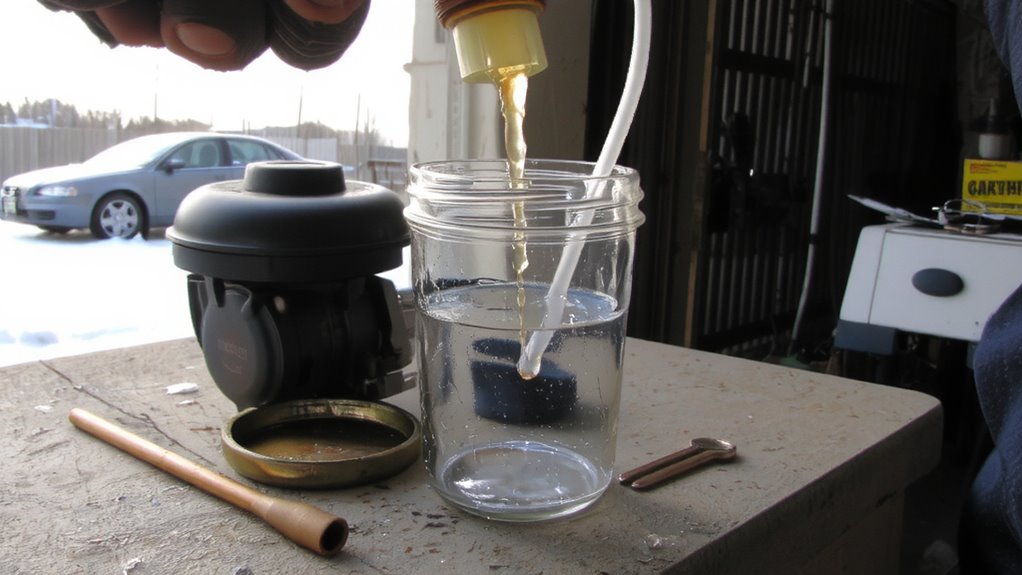
Though running your small engine dry may seem like a straightforward way to prevent fuel-related issues, doing it improperly can lead to damage. Always operate the engine under light load to burn fuel gradually. This controlled burn allows fuel evaporation to occur without overheating internal components. Once the fuel supply is nearly depleted, initiate engine shutdown by closing the fuel valve-if equipped-then let the engine run until it stops. This sequence guarantees the carburetor bowl empties, reducing gum and varnish buildup. Avoid pulling the spark plug or choking the engine to force shutdown; these methods may cause uncontrolled fuel pooling or hydraulic lock. Instead, a gradual shutdown prevents pressure imbalances. Metal components contract during cooling, so residual ethanol can condense. Running dry minimizes moisture retention. Complete this process outdoors with proper ventilation.
Use Fuel Stabilizer for Long-Term Storage
One effective way to preserve fuel quality during extended downtime is by adding a fuel stabilizer before storage. You should use a stabilizer specifically formulated to prevent chemical breakdown in ethanol-blended fuels. These additives interrupt degradation processes, maintaining octane levels and combustion efficiency for up to 24 months. Most quality stabilizers recommend a ratio of 1 ounce per 2.5 gallons of gasoline. They work primarily through oxidation prevention, neutralizing free radicals that form when fuel sits. Without this protection, gum and varnish deposits can clog carburetors and fuel injectors. For best results, run the engine for 5–10 minutes after adding stabilizer to circulate treated fuel. This guarantees complete system protection. Never rely on old fuel without treatment-untreated gasoline begins degrading in as little as 30 days, especially in fluctuating temperatures.
Fix Common Winter Fuel Mistakes
Why do so many small engines struggle to start after winter storage? Because you left old fuel sitting in the system. That fuel degrades, causing fuel contamination and inviting moisture buildup. Ethanol attracts water, and that mix corrodes components. You need to fix these common mistakes before they ruin your engine.
| Mistake | Consequence |
|---|---|
| Leaving ethanol-blended fuel | Gum and varnish clog carburetors |
| Skipping fuel stabilization | Oxidation degrades fuel in 30 days |
| Not sealing fuel tanks | Airflow increases moisture buildup |
| Ignoring fuel filters | Contaminated fuel damages injectors |
Drain old fuel or use a fuel conditioner with dispersants. Replace inline filters annually. Use ethanol treatments that bind water up to 5,000 ppm. Keep fuel tanks 90% full with vapor-tight caps to minimize condensation. These steps prevent corrosion and guarantee clean combustion.
Store Seasonal Equipment the Right Way
Even if you’ve powered down your equipment for the season, skipping proper storage steps now can cause costly damage by spring. Begin by running the engine dry to eliminate ethanol-blended fuel that degrades in as little as 30 days. Residual fuel leaves varnish in the carburetor, restricting ports as small as 0.014 inches. Use carburetor cleaner with a plastic-safe solvent to dissolve deposits without damaging internal components. Remove the bowl and spray cleaner through all passageways until clear. Replace the fuel cap seal if cracked or compressed; a compromised seal allows moisture ingress, promoting phase separation. Store equipment in a dry place at temperatures between 40°F and 80°F. Cover units with breathable fabric to prevent condensation. Check oil levels before storage and change if near or past service limits. These precise actions preserve engine integrity over months of dormancy. For optimal results, choose a top-rated fuel additive that stabilizes fuel and cleans internal components during storage.
On a final note
You must protect your small engine from ethanol damage during storage. Ethanol attracts moisture, leading to phase separation in as little as 90 days. Running the engine dry removes fuel but risks carburetor varnish. Fuel stabilizer, added at a 1:500 ratio before fresh gasoline, prevents oxidation and maintains combustibility for up to 24 months. Always store in a cool, dry place with stabilized fuel in the tank and carburetor.