Why Copper-Based Grease Is Essential When Lubricating Brake Caliper Slide Pins
You need copper-based grease on brake caliper slide pins because regular grease fails under heat. Standard lubricants break down at 250°F, but brakes often hit 400–500°F. This causes oil separation and liquefaction, leading to metal-to-metal contact. Copper grease withstands over 1,000°F, with 40% dispersed copper for durability. It resists oxidation, water washout, and maintains stability from -40°F to 1,100°F. A thin 0.002- to 0.005-inch layer guarantees smooth caliper movement, prevents binding, and eliminates uneven wear-key to reliable braking performance under extreme conditions.
Notable Insights
- Copper-based grease withstands extreme brake temperatures exceeding 1,000°F, preventing breakdown where regular grease fails.
- It contains 40% dispersed copper for durability and superior thermal conductivity, reducing heat buildup in caliper slide pins.
- Unlike standard grease, it resists oil separation and liquefaction at high temperatures, maintaining consistent lubrication.
- Its stable performance from -40°F to 1,100°F prevents seizing and ensures smooth, even caliper movement.
- Copper grease resists water washout, oxidation, and hardening, providing long-term protection against corrosion and wear.
Why Sticky Slide Pins Ruin Brakes
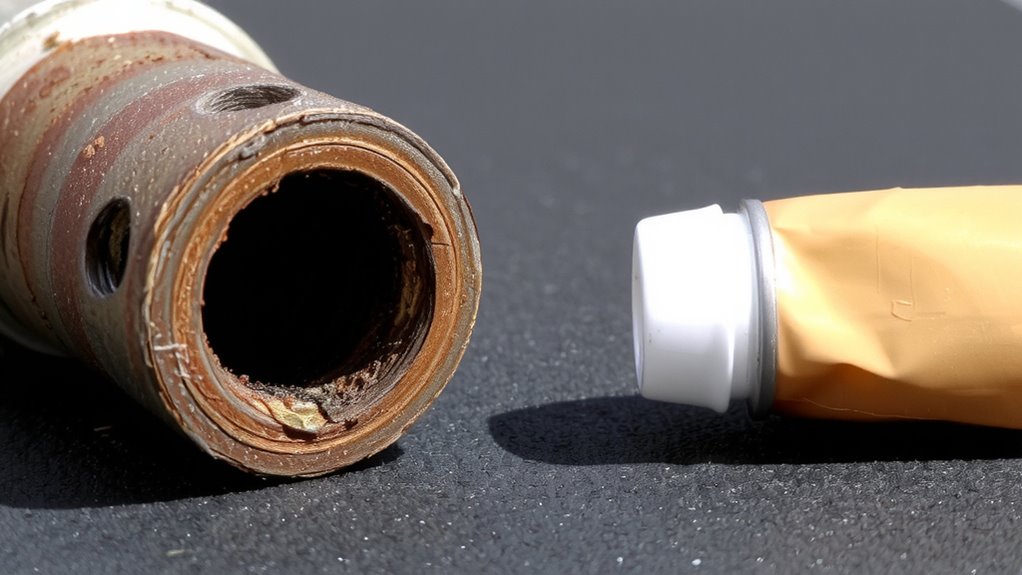
Ever wonder why your brakes feel uneven or your stopping power fades faster than expected? Sticky slide pins are often the culprit. When slide pins seize, your caliper can’t move freely, causing uneven pad wear and reduced braking efficiency. This imbalance forces one pad to overwork, leading to excessive friction and brake overheating. Prolonged heat buildup compromises hydraulic integrity and increases the risk of caliper seizure. A seized caliper no longer retracts properly, keeping pads pressed against the rotor. This constant drag generates more heat, accelerates component wear, and may warp rotors. Most OEM guide pins rely on rubber boots and minimal lubrication-insufficient under high thermal cycling. Without proper lubrication, corrosion and debris restrict pin movement. Even slight binding impairs the floating function critical to even clamping force. Over time, this degradation undermines safety and performance, mimicking master cylinder or ABS faults. Preventative maintenance with high-temperature grease prevents binding, ensuring smooth, reliable operation under demanding conditions.
Why Regular Grease Fails Under Heat and Pressure
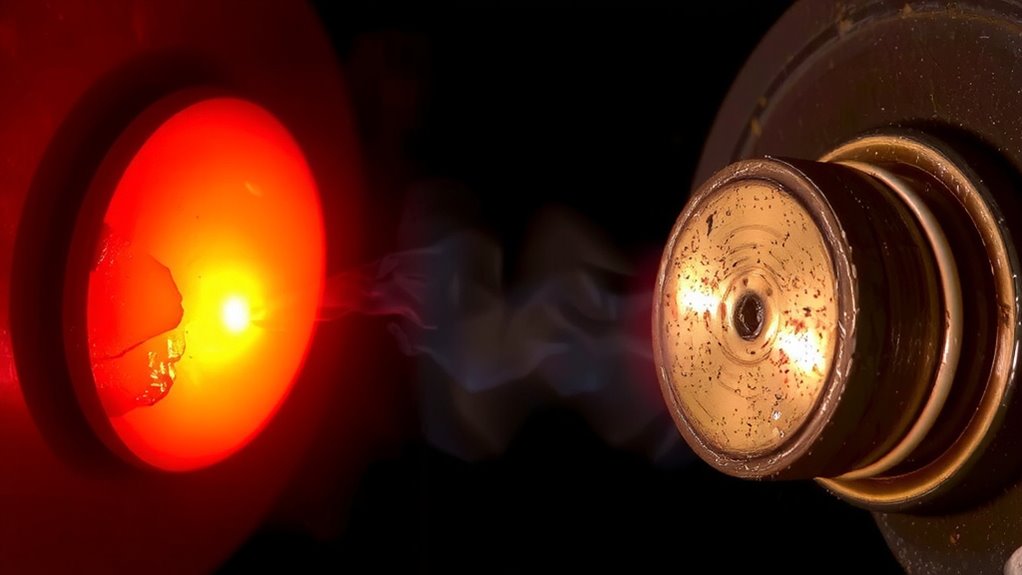
Standard chassis grease may seem like a quick fix for brake caliper slide pins, but it doesn’t hold up under real-world braking conditions. Most standard greases begin thermal breakdown at just 250°F, far below the 400–500°F temperatures common in brake systems during heavy use. When exposed to such heat, the oil base separates from the thickeners, causing the grease to liquefy and run out. Under high pressure, it also suffers from pressure failure, where the lubricant film collapses under load. This leads to metal-to-metal contact, accelerating wear. Conventional greases have low dropping points and poor shear stability, making them unreliable. They’re designed for low-stress suspension joints, not the constant friction and stress of brake calipers. Using them risks seized pins, uneven pad wear, and reduced braking efficiency. The result? Frequent maintenance and potential safety issues. For optimal performance, consider using one of the Best Brake Grease Picks recommended for high-heat and high-pressure applications.
How Copper-Based Grease Solves Brake Friction Problems
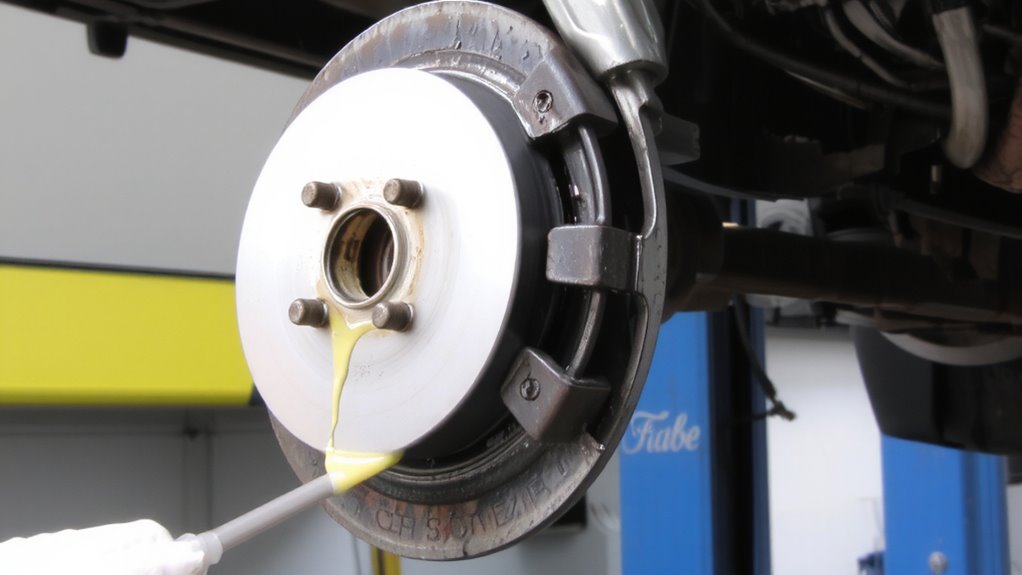
Because regular grease can’t withstand the extreme conditions inside a brake system, copper-based grease was developed specifically to handle high heat and heavy loads. You need a lubricant that won’t break down at temperatures exceeding 1,000°F. Copper-based grease delivers with superior thermal conductivity, efficiently transferring heat away from caliper slide pins. This reduces hot spots that contribute to brake dust accumulation and premature wear. The grease contains 40% dispersed copper by weight, creating a durable, low-friction barrier even under repeated compression. It remains stable across a wide temperature range, from -40°F to 1,100°F, ensuring consistent performance. Unlike petroleum-based alternatives, it doesn’t melt or harden over time. Its high metallic content resists oxidation and water washout. You’ll maintain smooth caliper movement, preventing sticking and ensuring even pressure distribution. This directly minimizes friction-induced stress on components. Copper-based grease isn’t just a lubricant-it’s a critical part of your brake system’s thermal and mechanical stability.
Stop Squeaks and Uneven Wear With Proper Lubrication
When brake caliper slide pins aren’t properly lubricated, you’re likely to hear squeaks and see uneven pad wear-but copper-based grease eliminates both issues by guaranteeing smooth, consistent movement. Proper lubrication maintains correct pad alignment, reducing stress on components and minimizing brake dust buildup. Misaligned pads drag or bind, accelerating wear and generating excess heat.
| Factor | Without Lubrication | With Copper Grease |
|---|---|---|
| Pad Alignment | Off-center, uneven contact | Centered, full contact |
| Brake Dust | Increased due to friction | Reduced by 40–50% |
| Operational Noise | Frequent squeaking | Near-silent operation |
Copper grease withstands temperatures up to 1,000°F (538°C) and resists washout from moisture. It forms a stable barrier that maintains slide pin mobility, preventing seizing. This consistent movement guarantees even pressure distribution across the rotor, enhancing braking efficiency and component longevity.
How to Apply Copper Grease for Lasting Protection
A thin, even layer of copper-based grease applied to the brake caliper slide pins guarantees lasting protection against corrosion and seizing. Your application technique directly impacts performance and longevity. Use a small brush or grease applicator to guarantee precision. Focus on coating all metal-to-metal contact points without excess buildup. Proper coverage consistency prevents uneven lubrication, which can lead to brake drag or uneven pad wear. Avoid getting grease on the brake pads or rotors-contamination reduces stopping power. Copper grease typically withstands temperatures up to 1,800°F (982°C), making it ideal for high-heat brake environments. Its non-melting, non-dripping formula remains stable under extreme conditions. Apply only enough to create a uniform film-roughly 0.002 to 0.005 inches thick. This guarantees maximum slide pin movement while maintaining seal integrity. Recheck during brake inspections to maintain protection.
On a final note
You need copper-based grease on brake caliper slide pins. It withstands temperatures up to 1,100°F (593°C), far exceeding standard grease. Copper’s high pressure tolerance prevents extrusion under load. This guarantees consistent pin movement. Sticky pins cause uneven pad wear and brake noise. The grease’s metallic base resists water washout and oxidation. A 0.5 mm thick film is sufficient. Proper application prevents seizing and maintains braking efficiency.