The Role of the Exhaust Pipe Diameter in Modern Vehicles: How It Affects Sound Quality, Back Pressure Levels, and Overall Vehicle Handling Characteristics
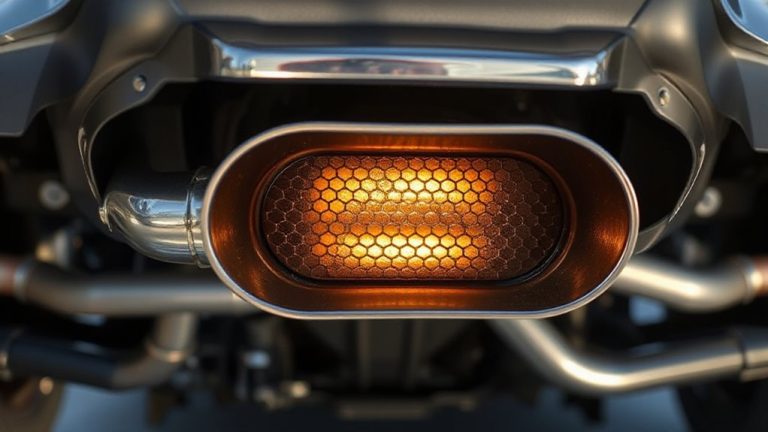
Your exhaust pipe diameter shapes performance, sound, and handling. Too small, and back pressure builds-hurting power above 1.5–2.5 psi at full load. Too large, and gas velocity drops, weakening low-end torque. A 2.25-inch pipe suits four-cylinders; V8s often need 3.5 inches. Larger pipes deepen tone but add weight-over 40 pounds for 3-inch stainless steel-shifting balance rearward. You’ll discover how material, engine type, and use case refine the ideal setup.
Notable Insights
- Exhaust pipe diameter influences sound quality, with smaller pipes producing higher-pitched tones and larger pipes creating deeper, throatier exhaust notes.
- Proper diameter sizing maintains optimal exhaust gas velocity, balancing back pressure to preserve low-end torque while maximizing high-RPM power.
- Excessive diameter reduces exhaust velocity, increasing back pressure instability and weakening scavenging efficiency, which lowers engine performance.
- Larger diameter pipes, especially over 3 inches, add weight that can shift vehicle balance and increase rearward mass, affecting handling and oversteer tendency.
- Material choice combined with diameter-such as 304 stainless steel or titanium-affects weight, durability, and sound, tailoring performance for street, track, or off-road use.
How Exhaust Diameter Affects Performance
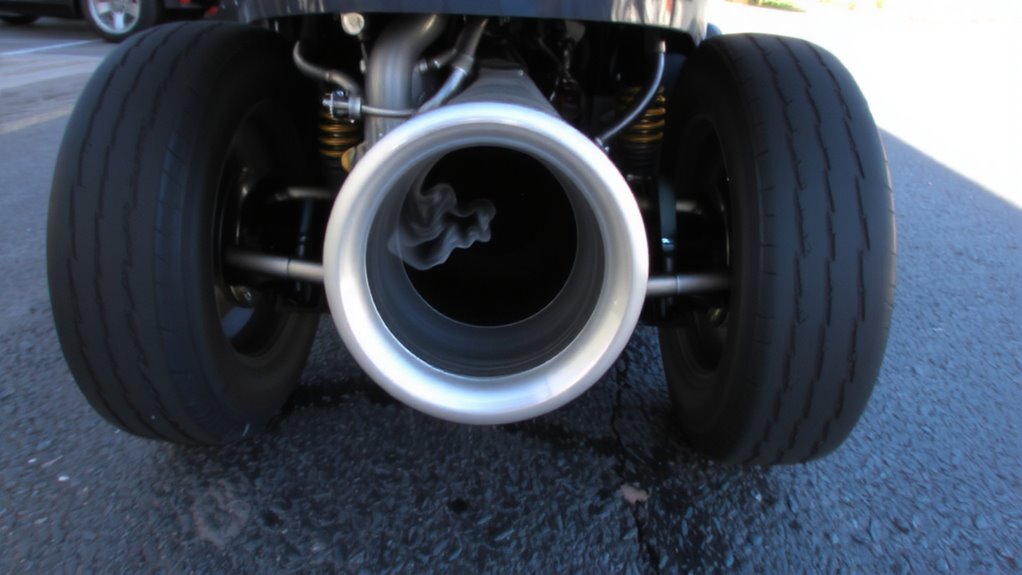
Flow capacity is the key factor when considering how exhaust pipe diameter impacts engine performance. You need proper flow dynamics to move exhaust gases efficiently. A larger diameter allows more exhaust to escape, improving horsepower and torque at high RPMs. However, if the pipe’s too wide, velocity drops, hurting low-end power. Most performance vehicles use 2.5 to 3-inch diameters for balance. Flow dynamics change markedly with diameter-too narrow, and turbulence increases; too wide, and scavenging efficiency falls. Material thickness matters too. Thinner walls save weight but reduce durability and heat retention. Standard 16-gauge steel offers a solid balance between strength and weight. High-performance setups often use 304 stainless steel with 0.065-inch wall thickness. This maintains structural integrity under high heat and stress. Proper diameter and material thickness together optimize exhaust flow, engine breathing, and long-term reliability.
What Is Back Pressure and Why It Matters?
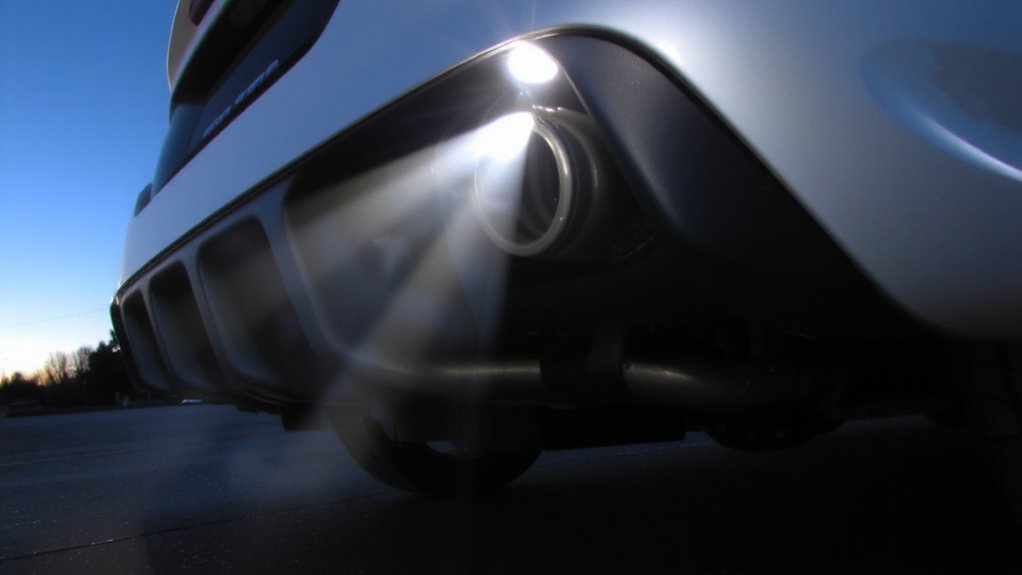
Back pressure is the resistance exhaust gases encounter as they move through the exhaust system. Too much back pressure restricts flow, reducing engine efficiency and power. You need some back pressure to maintain low-end torque, but excessive levels hurt performance. Turbulent flow occurs when exhaust pulses collide or slow abruptly, increasing resistance and heat buildup. A well-designed system minimizes turbulence by balancing pipe diameter and length. The scavenging effect, where outgoing exhaust pulses pull in fresh air-fuel mixture, depends on proper timing and flow velocity. Narrow pipes increase velocity but may raise back pressure too much. Wider pipes reduce resistance but can weaken the scavenging effect if oversized. Ideal back pressure ranges between 1.5 and 2.5 psi at full load for most naturally aspirated engines. Managing this balance improves throttle response, fuel efficiency, and engine longevity.
Finding the Right Pipe Size for Your Engine
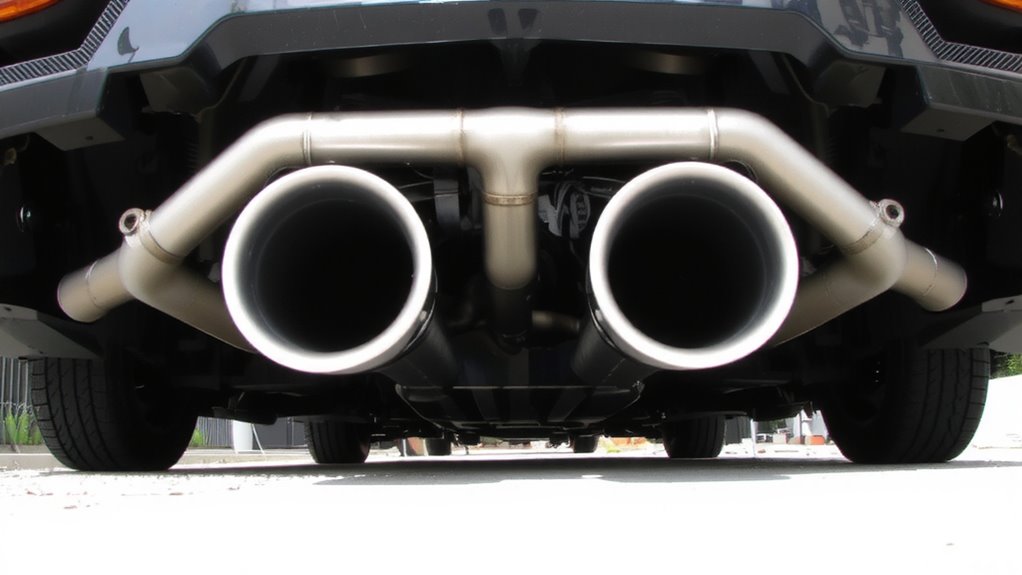
How do you know if your exhaust pipe is the right size for your engine? Selecting the correct diameter maximizes exhaust flow efficiency and prevents power loss. Too small, and restricted flow increases back pressure, choking performance. Too large, and exhaust velocity drops, reducing scavenging and low-end torque. For most naturally aspirated four-cylinder engines, a 2.25-inch pipe balances flow and velocity. V6 engines typically perform best with a 2.5 to 3-inch diameter, while V8s often require 3 to 3.5 inches. Matching pipe size to engine displacement and RPM range guarantees peak gas dynamics. High-quality systems also consider material corrosion resistance-stainless steel (304 or 409 grade) resists rust and maintains structural integrity under extreme heat. Aluminum-coated and aluminized steel offer moderate protection at lower cost. Proper fitment and durable materials guarantee long-term exhaust flow efficiency and system reliability.
How Pipe Size Changes Exhaust Sound
Your exhaust pipe’s diameter doesn’t just affect engine performance-it directly shapes the sound your vehicle makes. A smaller pipe increases exhaust velocity, raising sound frequency and creating a higher-pitched tone. This setup often amplifies exhaust resonance, especially at lower RPMs, producing a droning or raspy idle. Larger pipes reduce gas velocity, lowering sound frequency for a deeper, throatier exhaust note. The change in flow dynamics alters harmonic vibrations within the system, affecting how exhaust resonance builds and travels. You’ll notice this most between 2,000 and 3,500 RPM, where standing waves in the piping can amplify certain frequencies. Pipe diameter also influences sound wave reflection and dissipation. While a 2.25-inch pipe might deliver sharp, aggressive tones, a 3-inch pipe typically produces a muffled growl due to reduced turbulence and lower frequency output. Sound isn’t just volume-it’s shaped by precise dimensional changes.
Small vs. Large Pipes: Power Trade-offs
A properly sized exhaust system can make a noticeable difference in engine performance, and choosing between small and large pipes involves clear power trade-offs. Small diameter pipes increase exhaust gas velocity, improving low-end torque due to better scavenging and back pressure. However, they restrict flow efficiency at high RPM, limiting horsepower gains. Large pipes reduce back pressure and enhance turbulence reduction, allowing engines to breathe easier at high speeds. But oversized pipes hurt low-end response by lowering gas velocity. For most street-driven vehicles, 2.25 to 2.5 inches offers a suitable balance. High-performance engines above 400 horsepower often need 3-inch systems to maintain flow efficiency. Turbulence reduction improves exhaust pulse separation, critical for V8s and turbocharged applications. Matching pipe size to engine output prevents power loss. Too small or too large harms performance-precision matters.
Does Exhaust Size Affect Car Weight?
Every pound matters when you’re tuning for performance, and the exhaust system’s size plays a direct role in overall vehicle weight. Larger diameter pipes require more exhaust material, increasing the system’s mass. A 3-inch stainless steel exhaust can weigh over 40 pounds, while a 2.5-inch system might weigh under 30. The added weight affects weight distribution, shifting the balance rearward, especially in mid- or rear-exhaust layouts. This shift alters handling dynamics, potentially increasing oversteer tendencies. Stainless steel is heavier than aluminized steel or titanium, so material choice impacts total mass considerably. For example, titanium systems cut weight by up to 50% but cost more. Even small changes in exhaust size and material influence the car’s curb weight and structural balance. You’ll feel the difference during cornering and braking. Optimizing exhaust size isn’t just about flow-it’s about managing weight distribution and vehicle response.
Choosing Diameter for Street, Track, or Off-Road
Exhaust diameter selection directly impacts performance across driving environments, and your choice should match the vehicle’s intended use. For street driving, 2.25 to 3 inches is typical-balanced for low-end torque and acceptable fuel economy. Material durability matters here, as daily exposure to moisture and road debris demands aluminized or stainless steel. Installation complexity increases with larger systems, often requiring custom hangers and tuning. On track, 3 to 3.5-inch pipes optimize high-RPM airflow, reducing back pressure by up to 18% over stock. These setups prioritize performance, accepting louder tones and reduced low-end response. Off-road use demands rugged materials; 3-inch mandrel-bent tubing resists dents and corrosion from rough terrain. Mounting clearance and ground protection add to installation complexity. Always align diameter with engine output-oversizing hurts efficiency. Each environment demands precise calibration between flow, durability, and fit. Upgrading to performance exhaust systems can significantly enhance both sound and efficiency when matched correctly to the engine’s needs, with top choices including best exhaust pipes for optimized results.
On a final note
Your exhaust pipe diameter directly influences engine efficiency and sound output. A 2.25-inch pipe suits most street 4-cylinder engines, maintaining ideal back pressure around 1.5 psi. Larger 3-inch pipes reduce back pressure to ~0.8 psi, aiding high-RPM power but possibly hurting low-end torque by up to 10%. Proper sizing guarantees exhaust gas velocity remains between 200–300 ft/sec. Mismatched diameters disrupt scavenging, reducing horsepower and fuel efficiency.