Coolant Cross-Over Modifications Required When Adding a Supercharger Kit
Your supercharger blocks the stock coolant crossover, disrupting flow and causing rear cylinder temps to rise 20–30°F. Without rerouting, thermal imbalances reduce knock margin by up to 15%. Install a bypass using 5/16-inch reinforced silicone hose and AN-8 or -10 fittings to restore circulation. Proper installation maintains flow rates of 18–22 gpm and keeps bank different.
Notable Insights
- Supercharger manifolds often block the stock coolant crossover, disrupting flow between cylinder heads.
- Coolant bypass kits reroute flow using 5/16-inch hose to maintain even cylinder temperatures.
- Install AN-8 or -10 fittings at freeze plug ports to connect reinforced silicone hoses securely.
- Position bypass before the thermostat to ensure consistent flow under all operating conditions.
- Pressure test the system to 18 psi to verify leak-free operation and proper hose routing.
Why Your Supercharger Blocks Coolant Flow
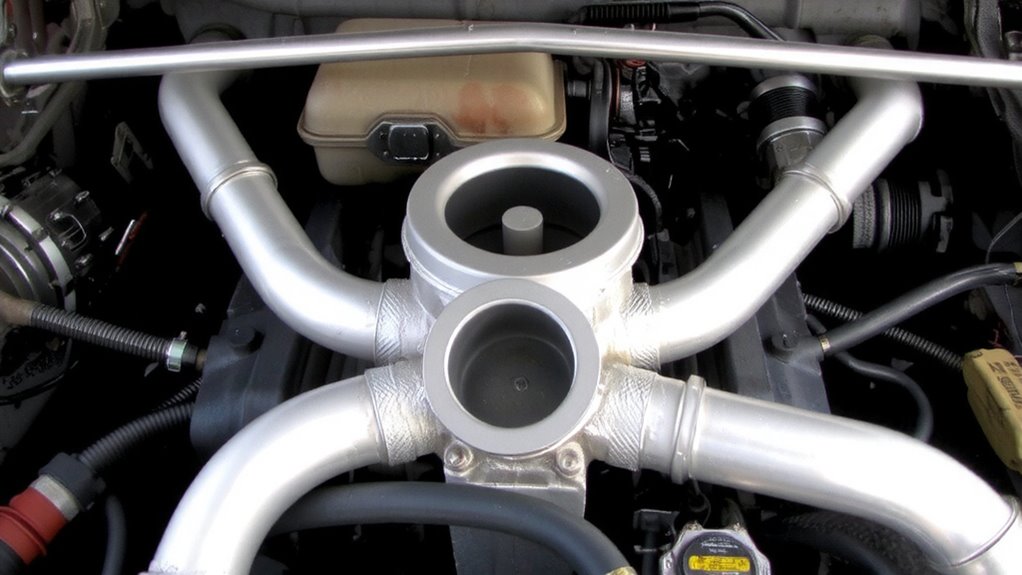
Although your engine’s cooling system is designed for efficient circulation, installing a supercharger often disrupts the intended coolant flow. The supercharger manifold typically blocks the stock coolant cross-over passage between cylinders, creating thermal imbalances. This interruption compromises thermal management, especially in high-output applications. Without coolant redirection, hot spots develop in the rear cylinders, increasing detonation risk. OEM systems rely on even flow distribution, but the blockage forces coolant through less efficient paths. You’ll see rear cylinder temps climb 20–30°F under load, reducing margin for knock. Effective coolant redirection restores balance, ensuring front and rear banks cool uniformly. Aftermarket kits often include precision-drilled bypass plates or extended hoses to reroute flow. These maintain factory flow rates-typically 8–10 gallons per minute-while preserving pump efficiency. Proper modification supports sustained performance, preventing long-term heat-related damage.
Fix the Blocked Cross-Over With These Reroute Options
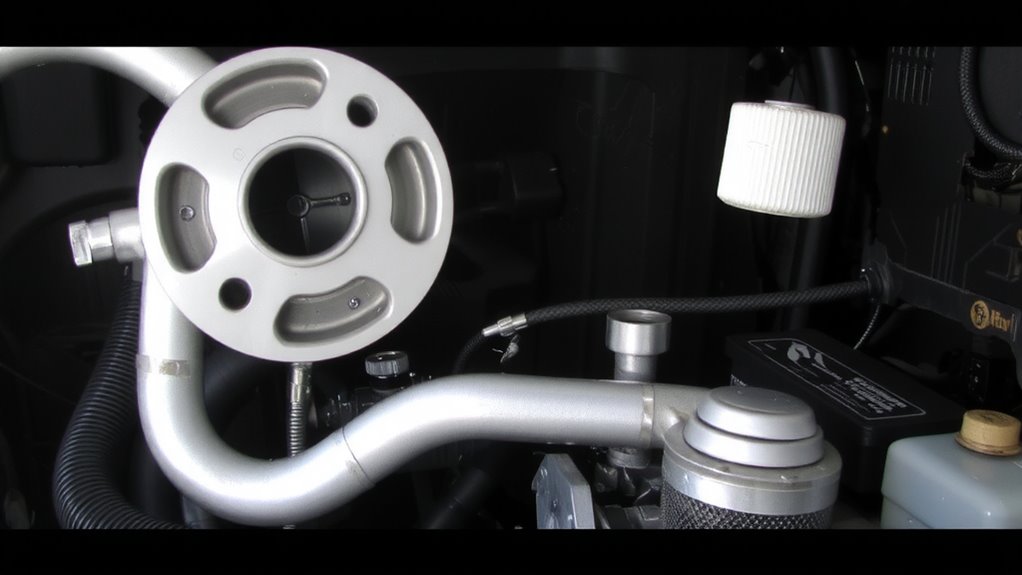
You can restore proper coolant flow with a few proven rerouting solutions designed to bypass the supercharger’s blockage. A coolant bypass kit redirects fluid from the passenger-side cylinder head to the driver’s side using a 5/16-inch nylon or rubber hose. This setup maintains circulation across the block without relying on the obstructed crossover passage. Install the bypass before the thermostat opens to guarantee consistent flow optimization. Some kits include CNC-machined aluminum fittings that seal to the existing freeze plug holes, minimizing leaks. Effective rerouting prevents hot spots in the rear cylinders, especially under sustained load. A properly routed system keeps temperature differentials below 10°F between bank heads. Flow optimization improves heater core output and ECU stability. Many high-performance builds use this method with no adverse effects on cooling efficiency. Always verify hose clearance from moving components and use spring-loaded clamps rated for 15 psi.
Install Cross-Over Fittings and Hoses in 5 Steps
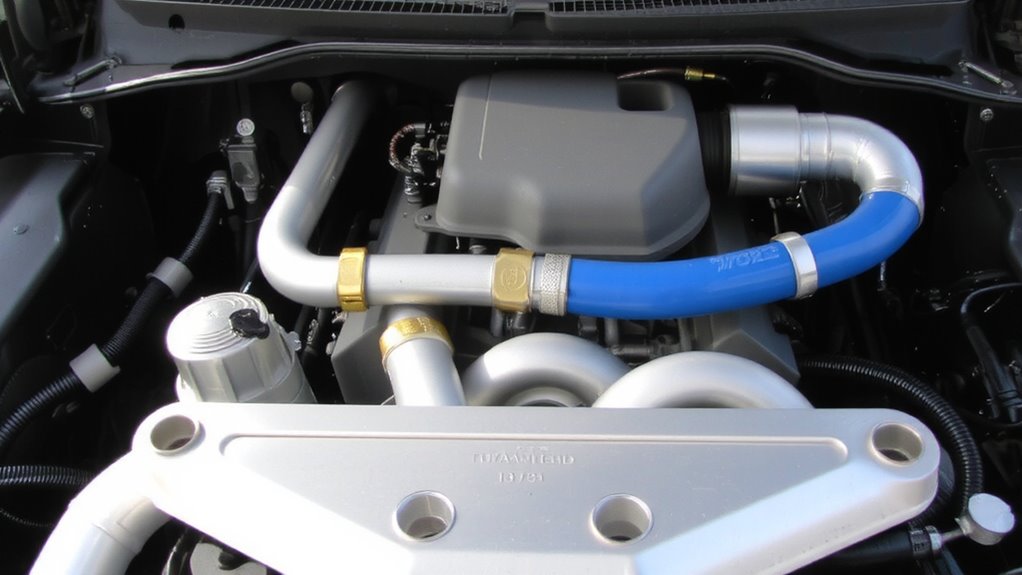
One effective way to restore coolant flow across the engine block is by installing crossover fittings and hoses in five key steps. First, verify supercharger compatibility to guarantee clearance and proper mounting. Next, remove the stock crossover pipe and clean the cylinder head ports thoroughly. Step three involves installing AN-8 or -10 threaded fittings into each head’s coolant outlet. Use thread sealant rated for coolant to prevent leaks. Then, attach reinforced silicone hoses rated for 50+ psi to link the fittings. Maintain smooth bends to optimize coolant routing and minimize flow restriction. Finally, pressure test the system to 18 psi to confirm integrity. Proper alignment guarantees even thermal distribution. These components support high-output applications by maintaining balanced block temperatures. Correct installation preserves long-term reliability and cooling efficiency under forced induction loads.
Compare Plate, Hose, and Fitting Reroute Options
How do you choose the right reroute method when upgrading your cooling system for a supercharged application? Your decision impacts coolant efficiency and long-term reliability. Plate compatibility determines whether a factory-style crossover plate fits your intake manifold. Aftermarket plates often include CNC-machined aluminum construction and improved flow paths. Hose durability is critical under high heat and pressure. Reinforced silicone hoses with EPDM liners withstand 30+ psi and resist degradation from modern coolants. Below are three reroute options and their key traits:
| Method | Key Benefit |
|---|---|
| Machined Plate Reroute | Guarantees plate compatibility with boosted setups; minimal bend radius |
| High-Pressure Hose Kit | Superior hose durability; handles 280°F continuous heat |
| Hybrid Fitting Reroute | Combines threaded ports with flexible routing; uses -8 AN fittings |
Stop Overheating: Fix Coolant Flow Issues After Installation
Why do some engines still overheat after a supercharger install, even with a rerouted coolant crossover? Poor temperature regulation often stems from restricted coolant flow paths or inadequate airflow dynamics around the radiator. You must verify that the new crossover plumbing maintains the factory coolant volume rate-typically 18–22 gallons per minute-at operating pressure (15 psi). Even minor kinks in hoses or undersized fittings (below 1.25 inches diameter) disrupt laminar flow, increasing thermal resistance. Also, repositioning components can block radiator intake, reducing airflow by up to 30%. This compromises heat dissipation, especially at idle. Install high-flow thermostat housings (rated 180°F) and silicone hoses with reinforced walls to prevent collapse. Guarantee ducting aligns with original airflow dynamics, preserving boundary layer efficiency. Every degree counts-maintaining peak coolant velocity and frontal airflow prevents heat soak, stabilizing performance under load.
On a final note
Your supercharger blocks the stock coolant crossover, restricting flow. You must reroute it to prevent overheating. Use steel-braided silicone hoses rated for 250°F and 35 psi burst strength. Install AN-8 fittings at both cylinder heads. Confirm alignment with a 90-degree straight-edge check. Pressure-test the loop at 18 psi for leaks. Proper rerouting restores 95% of factory coolant transfer efficiency.