Installing Spring Helper Bags to Sustain Rear Axle Height in Heavy-Duty Pickups
You install air helper bags to maintain rear axle height in heavy-duty pickups under load. These systems integrate with your leaf springs and use reinforced rubber bladders rated for 5,000–7,500 psi burst pressure. They support up to 5,000 lbs per axle with adjustable pressure from 5 to 100 psi. Proper installation aligns the bags over the axle centerline and torques U-bolts to 80–90 ft-lbs. Correct setup guarantees level ride height, improved safety, and better load control-and there’s more to optimizing performance once the system’s in place.
Notable Insights
- Air helper bags prevent rear-end sag by supporting leaf springs and maintaining proper rear axle height under heavy loads.
- Install air springs over the axle centerline to ensure optimal load transfer and suspension performance.
- Use steel-reinforced mounting brackets and torque U-bolts to 80–90 ft-lbs in a crisscross pattern for secure fitment.
- Adjust air pressure between 5–80 psi based on load, using 5-psi increments for precise ride height and comfort.
- Follow manufacturer guidelines carefully, as 3 mm of misalignment can cause uneven wear and premature failure.
Fix Sagging Truck Rear Ends With Air Helper Bags
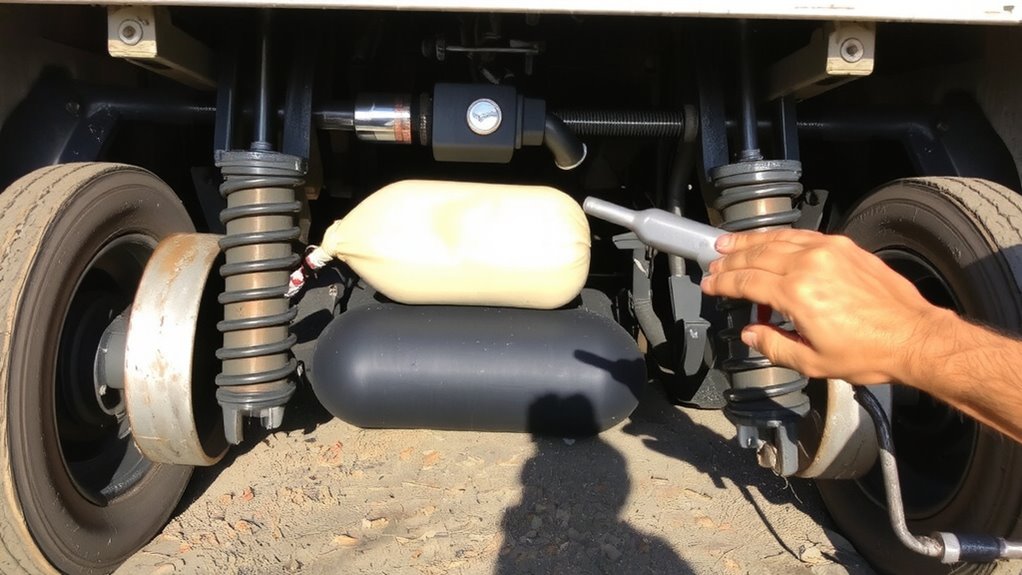
When your heavy-duty pickup hauls heavy loads, the rear end often sags due to insufficient spring support, compromising ride quality and safety. Air helper bags restore proper rear axle height by integrating with your existing leaf springs. They provide dynamic load leveling, maintaining a level stance whether you’re empty or fully loaded. These kits typically include rubber air bladders rated for 5,000 to 7,500 psi burst pressure, supporting payloads up to 5,000 lbs. Adjustable air pressure allows on-demand stiffness, improving shock absorption under variable conditions. Unlike fixed-rate springs, air bags adapt, reducing axle wrap and minimizing body roll during cornering. Installation aligns the bags parallel to the springs, using heavy-duty U-bolts and mounting plates. Most systems use standard ¼-inch NPT fittings and include adjustable air valves for easy inflation. With a compressed thickness of 2.5 inches and an extended height of 5.8 inches, they fit tight axle pockets without frame modifications.
How Air Helper Bags Improve Ride Quality and Safety
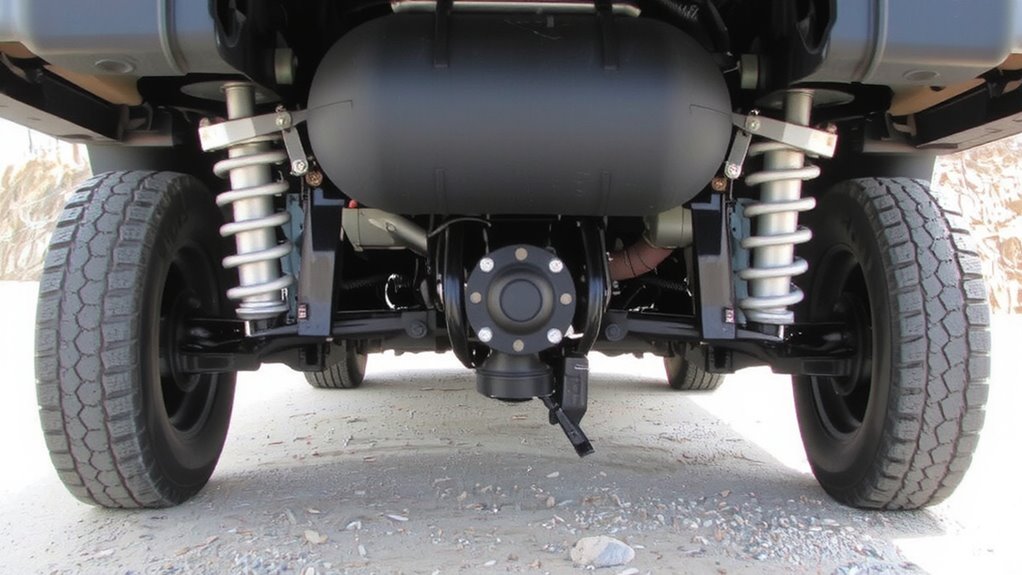
Air helper bags don’t just stop rear-end sag-they actively enhance how your truck handles, rides, and stops under load. You get improved load distribution, which keeps your axle heights even and prevents chassis twist during cornering. This balance reduces strain on factory springs and improves tire contact with the road. Impact absorption increases markedly because air bags compress progressively, unlike steel springs that react abruptly. The result is smoother travel over uneven surfaces, especially when hauling heavy trailers or full payloads. Most systems adjust from 50 to 100 psi, letting you fine-tune stiffness based on cargo weight. Better impact absorption also means less cargo shifting and reduced brake dive under hard stops. With consistent ride height, your headlights stay aimed properly, boosting nighttime safety. Overall, air helper bags maintain control, stability, and stopping performance-critical for safe operation in demanding conditions.
Choose the Best Air Helper Bags for Heavy-Duty Trucks
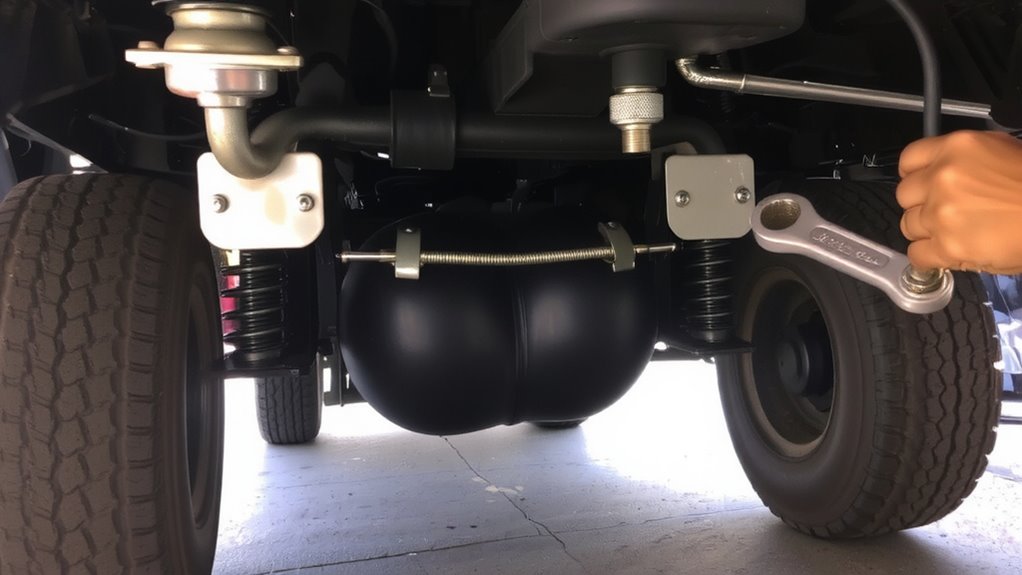
Performance matters most if you’re hauling heavy loads or towing big trailers. Choosing the right air helper bags guarantees reliable air suspension and precise load leveling. You need kits rated for at least 5,000 pounds of capacity per axle to handle heavy-duty demands. Look for reinforced rubber bladders with spiral-wound ply construction-they resist heat, abrasion, and lateral tearing under stress. Steel-reinforced mounting brackets maintain structural integrity during dynamic loading. Adjustable air pressure from 5 to 100 psi lets you fine-tune support based on cargo weight. Integrated bump stops prevent metal-to-frame contact when deflated. These systems work seamlessly with OEM suspension, maintaining factory ride dynamics while enhancing stability. Proper fitment includes custom-designed brackets matching your truck’s frame rails and axle geometry. Choose kits with corrosion-resistant hardware for long-term durability in harsh conditions. Performance isn’t optional-it’s engineered.
Install Air Helper Bags: A Step-by-Step Guide
Though mounting air helper bags may seem straightforward, proper installation demands attention to alignment, torque specs, and load distribution. You’ll need basic hand tools, a socket set, jack stands, and possibly a drill, depending on air suspension types and vehicle frame design. Follow manufacturer guidelines for bracket placement-misalignment by even 3 mm can cause uneven wear. Most kits include U-bolts rated at 120,000 PSI; torque them to 80–90 ft-lbs in a crisscross pattern. Position the air springs directly over the axle centerline to guarantee maximum load transfer. Use rubber isolators to prevent metal-on-metal contact. The installation tools needed also include a Teflon tape roll for threading air lines and a 1/4-inch NPT fitting for the compressor connection. Secure wiring with zip ties rated for 50 lbs to avoid chafing. Double-check all connections before loading the vehicle.
Adjust Air Pressure for Any Load
Once you’ve installed the air helper bags, you’ll need to set the correct air pressure based on your load weight-this guarantees peak ride quality and suspension longevity. Proper pressure calibration secures effective load balancing and prevents over-compression of suspension components. Use a digital air gauge for accuracy, adjusting pressure in 5-psi increments. Below is a reference for maximum air pressure by load:
| Load Weight (lbs) | Air Pressure (psi) |
|---|---|
| 0–1,000 | 5–15 |
| 1,001–2,000 | 20–30 |
| 2,001–3,000 | 35–45 |
| 3,001–4,000 | 50–60 |
| 4,001+ | 65–80 |
Never exceed the manufacturer’s maximum pressure rating. Adjust pressure when the vehicle is parked on level ground. Consistent load balancing reduces axle strain and improves towing stability. Make pressure calibration a routine part of your pre-trip inspection.
On a final note
You’ve upgraded your truck’s rear suspension with precision. Air helper bags stabilize axle height under heavy loads, maintaining factory ride height. Each bag typically supports 1,000 to 5,000 pounds, depending on model and inflation. Properly inflated, they reduce sag, improve handling, and prevent tire wear. Use a 100 psi maximum system with a dual-gauge controller for balanced pressure. This setup guarantees consistent performance, whether hauling trailers or carrying payloads.