Preventing Brake Squeal by Matching OEM-Specified Friction Material Composition
You prevent brake squeal by using OEM-specified friction materials with a stable coefficient between 0.35 and 0.45. These pads use ceramic fibers, graphite, and metallic alloys to maintain consistent damping and reduce high-frequency vibrations. Precision engineering includes edge chamfers and bonded viscoelastic shims that suppress resonance. Aftermarket pads often vary in composition, leading to uneven wear and noise. Matching OEM specs guarantees proper fit, friction, and system harmony-key to quiet, durable braking performance. There’s more to optimizing this balance than meets the eye.
Notable Insights
- OEM-specified friction materials maintain a stable coefficient of friction, reducing stick-slip vibrations that cause squeal.
- Matching pad composition ensures friction consistency between 0.35 and 0.45, critical for system harmony and noise prevention.
- Ceramic, graphite, and metallic alloy blends in OEM pads dampen high-frequency oscillations that lead to brake squeal.
- Proper material density (1.6–2.2 g/cm³) balances damping and wear resistance to suppress vibration transmission.
- Using branded, OEM-engineered compounds like Akebono or Bosch ensures correct formulation and noise-control performance.
What Causes Brake Squeal in Modern Vehicles?
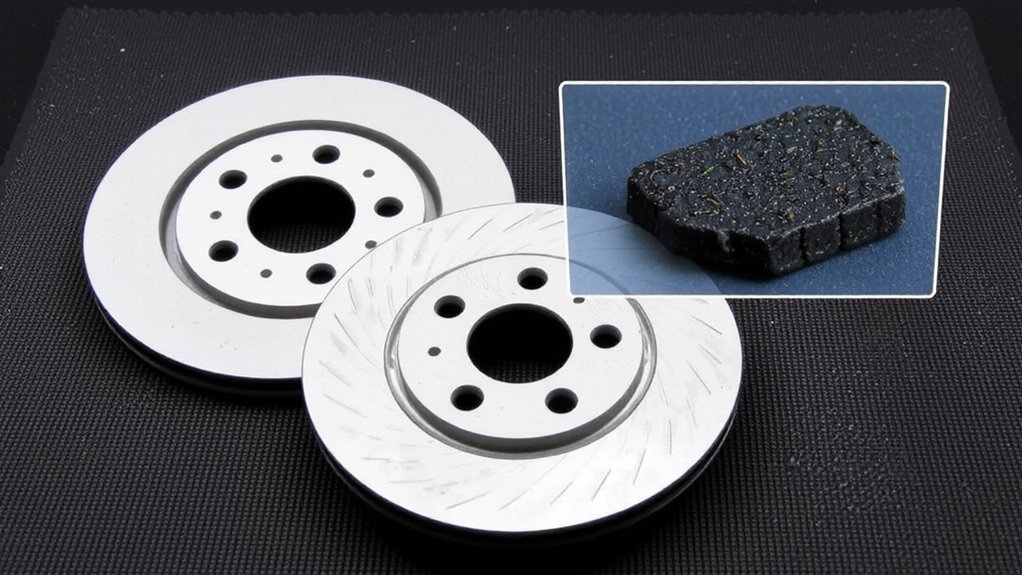
While modern brake systems are engineered for durability and performance, brake squeal remains a common issue drivers encounter. You experience this high-pitched noise when vibration occurs between the brake pad and rotor during deceleration. Brake pad degradation is a leading cause-worn friction material reduces damping capacity and alters contact dynamics. As pad thickness drops below 3mm, uneven wear patterns amplify harmonic resonance. Rotor surface contamination also contributes; oil, brake dust, or rust disrupts the friction interface, creating inconsistent grip. Contaminants reduce the coefficient of friction by up to 30%, triggering stick-slip vibrations. These oscillations, often between 1–4 kHz, radiate as audible squeal. Surface metallurgy and edge chamfers affect noise propensity, but contamination and wear remain primary culprits. Ensuring clean, properly torqued components minimizes excitation sources. Addressing these factors maintains OEM-level noise control.
Why OEM Brake Pads Prevent Squeal by Design
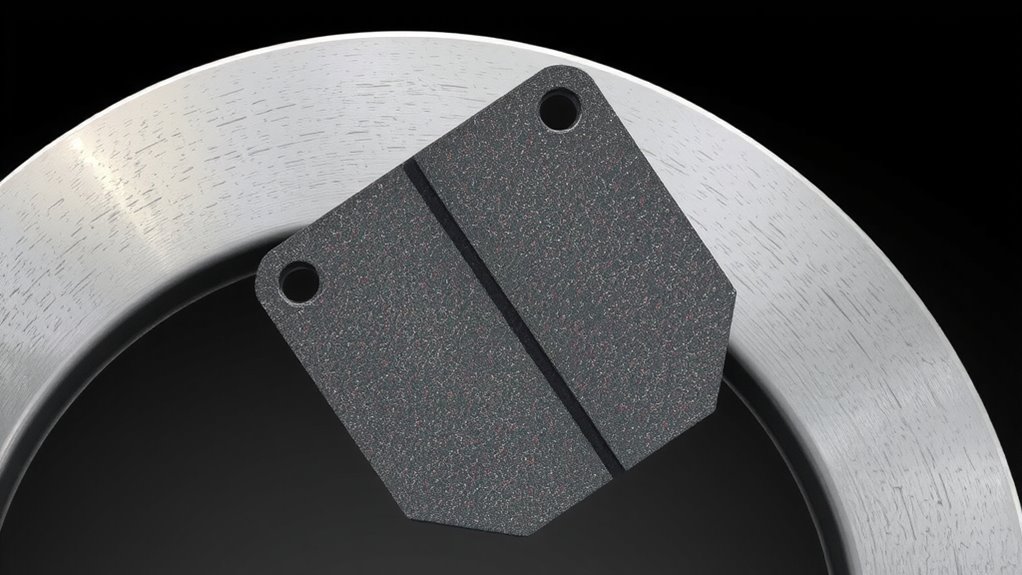
OEM brake pads are engineered from the ground up to suppress vibration and deliver quiet stops. Every design choice targets ideal brake acoustics, minimizing noise across operating conditions. The friction material is formulated with precise filler ratios-often including ceramic fibers, graphite, and metallic alloys-to guarantee consistent friction stability. This stability prevents abrupt stick-slip motion, a primary cause of squeal. Shims and damping layers bonded to the pad backplate further absorb high-frequency oscillations. Engineers tune pad geometry and edge chamfers to disrupt resonant frequencies. These features work together like a noise-canceling system, targeting sound waves before they form. Material density typically ranges from 1.6–2.2 g/cm³, balancing wear resistance and damping. OEM pads undergo extensive dyno and on-road testing under variable loads and temperatures, guaranteeing performance integrity. You get reliable stopping power without the noise-by design.
How Aftermarket Pads Trigger Brake Squeal and Wear
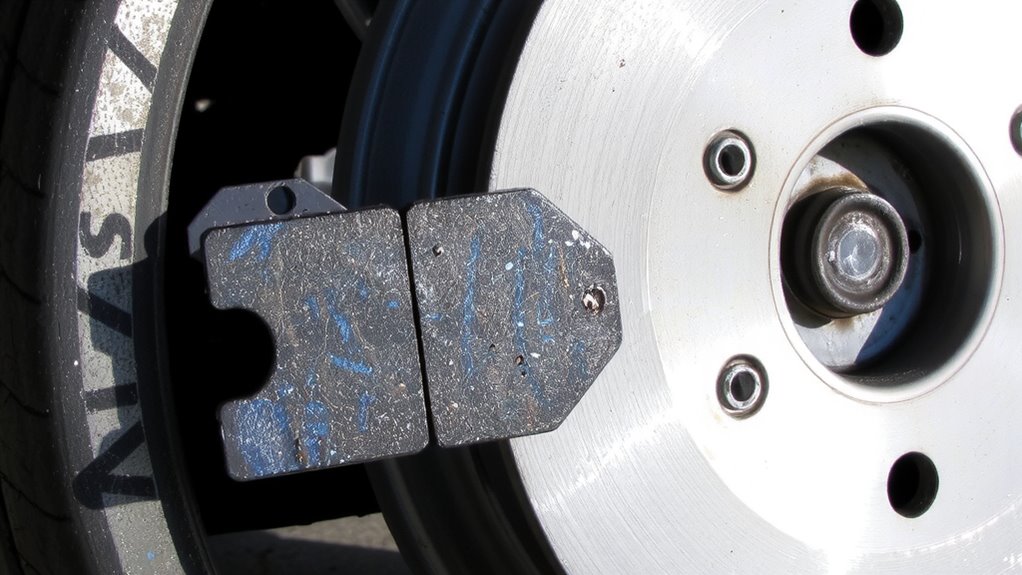
Since not all aftermarket brake pads prioritize noise control, you might find yourself dealing with persistent squeal despite a fresh install. Pad material inconsistency disrupts uniform contact with the rotor, creating high-frequency vibrations. Unlike OEM formulations, many aftermarket compounds use variable raw materials, leading to inconsistent friction coefficients-often fluctuating between 0.35 and 0.48 under normal conditions. This variance promotes harmonic resonance, a primary cause of brake squeal. Additionally, harder compounds generate more brake dust accumulation, which acts like abrasive grit. It accelerates rotor wear and further destabilizes the interface. Excessive dust also clogs caliper guides, reducing pad mobility. These factors combine to shorten pad life by up to 30% compared to OEM-matched materials. Without engineered damping shims or slotting, noise-dampening features are absent. You’re left with compromised performance and reliability, all due to non-specification friction formulations.
How to Match Brake Pad Specs to Your Vehicle
If you want your brakes to perform quietly and efficiently, matching the brake pad specs to your vehicle’s engineering requirements is essential. Manufacturers design brake systems around specific friction profiles, and deviating risks noise and premature wear. Always verify the friction material branding listed on the pad-this identifies the exact compound engineered for your vehicle. OE brands like Akebono, Wagner, or Bosch formulate these materials to meet strict performance standards. The brake pad color can also indicate material type; for example, blue often means ceramic, while yellow may signal low-metallic. These colors help technicians quickly identify composition during inspection. Guarantee the replacement pads match your vehicle’s required coefficient of friction, typically between 0.35 and 0.45. Dimensional accuracy matters too-pads must fit the caliper without play. Using non-matched specs disrupts system harmony, increasing the chance of vibration and squeal.
How Technicians Avoid Squeal With OEM Installations
When technicians install OEM brake pads, they follow a calibrated sequence to eliminate noise at the source. You guarantee every component meets factory torque specs, starting with a thorough brake hardware inspection. Worn clips, corroded abutments, or fatigued springs compromise pad stability, creating vibration points. Technicians replace defective parts with OEM-spec hardware to maintain precise caliper alignment and pad movement. They apply high-temperature anti-seize compound only on designated contact points-never on friction surfaces. Noise dampening techniques include bonding shims made of viscoelastic materials between pad backing and caliper piston. These shims absorb high-frequency oscillations, reducing sound transmission. Each pad material formulation matches the rotor’s surface harmonics. Proper bedding procedure follows-typically 10 moderate stops from 30 mph-allowing transfer film formation. You follow OEM protocols exactly, avoiding deviations that risk premature noise.
Why OEM Pads Last Longer and Stop Quieter
OEM brake pads deliver longer service life and quieter operation because they’re engineered as part of a complete, synchronized braking system. Your vehicle’s performance relies on precise brake pad chemistry tailored to rotor material, caliper pressure, and heat dispersion rates. Off-the-shelf pads often use inconsistent formulations, leading to uneven wear and noise. OEMs enforce strict material consistency, ensuring every batch meets exact friction coefficients-typically between 0.35 and 0.45-minimizing squeal. This consistency also maintains ideal pad-to-rotor contact under varying temperatures, from -40°C to over 350°C. You get predictable stopping power, reduced harmonic vibration, and extended rotor life. Unlike aftermarket variants, OEM pads are tested over 100,000 cycles in real-world conditions. The result? Fewer complaints, fewer replacements. Matching the original specs isn’t just smart-it’s designed for your car’s exact demands, down to the micron-level tolerances.
On a final note
You prevent brake squeal by using OEM-specified friction materials. These pads match your vehicle’s engineered harmonic damping requirements. Aftermarket variants often alter compound stiffness, increasing resonance at 3–5 kHz. OEM formulations maintain a consistent coefficient of friction, typically 0.38–0.42, minimizing vibration. Precision backing plate coatings and shim layer thickness-usually 1.2–1.8 mm-absorb high-frequency energy. Properly matched pads reduce rotor wear by up to 30%.