Identifying Alternator Wiring Harness Damage in High-Heat Environments
You’re risking electrical failure if you ignore heat damage in your alternator wiring. Look for discolored, brittle, or cracked insulation-signs of exposure above 105°C. Check connectors for melting or corrosion, which increase resistance and disrupt charging. Voltage fluctuations below 13.8V or drops over 0.5V indicate harness issues. Damaged wires often can’t handle 80–120 amps, leading to battery drain. Thermal cycling causes copper fatigue, creating open circuits. Proper heat shields and 125°C-rated materials prevent failure-knowing the full risks helps you avoid costly breakdowns.
Notable Insights
- Dimming or flickering headlights may indicate voltage fluctuations due to heat-damaged alternator wiring insulation.
- Check for discolored, brittle, or cracked insulation, which are visible signs of thermal degradation in wiring harnesses.
- Voltage instability or intermittent charging below 13.8V suggests high-resistance connections from heat-induced wire damage.
- Inspect connectors for melting, warping, or corrosion, as these disrupt electrical continuity in high-heat environments.
- Replace wiring with widespread brittleness or corrosion, especially if conductors can’t carry 80–120 amps under load.
Signs Your Alternator Wiring Is Damaged by Heat
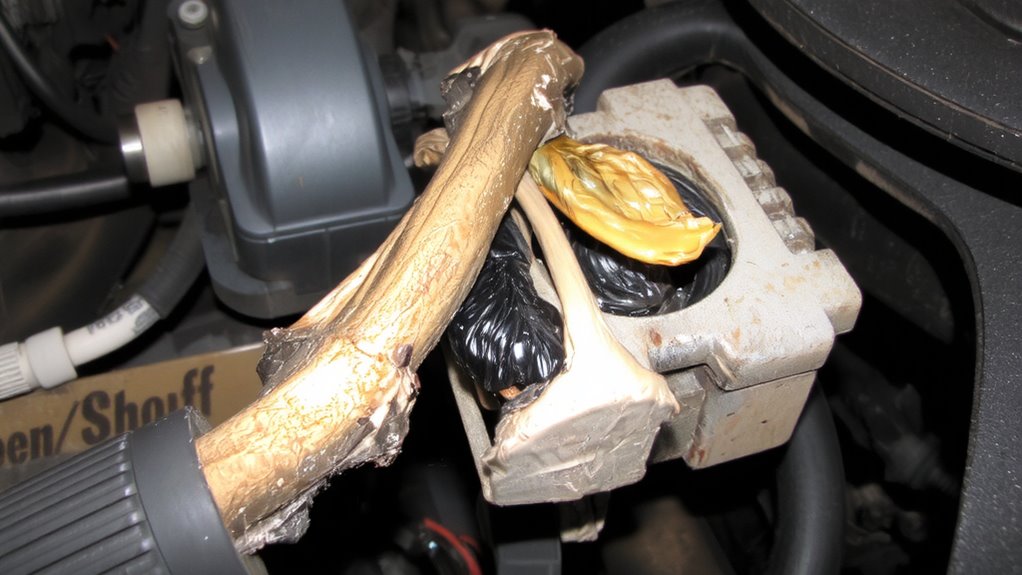
If you’ve noticed dimming headlights or a battery that won’t hold a charge, heat damage to your alternator wiring harness could be the culprit. Flickering headlights often indicate voltage fluctuations caused by degraded wiring insulation. Prolonged exposure to engine heat above 105°C (221°F) softens standard PVC insulation, increasing resistance and reducing current flow. You may experience intermittent charging, where the alternator outputs 12.3V one moment and 14.2V the next, failing to maintain the ideal 13.8V–14.4V range. This instability stems from broken or high-resistance connections within the harness, especially at terminal ends. Damaged wires can’t reliably carry the 80–120 amps modern alternators produce under load. Without consistent power delivery, the battery drains despite alternator operation. Thermal stress cycles-daily heating and cooling-accelerate metal fatigue in copper conductors. Over time, this leads to open circuits or shorting, disrupting charging system performance.
How to Inspect for Melting, Cracking, and Corrosion
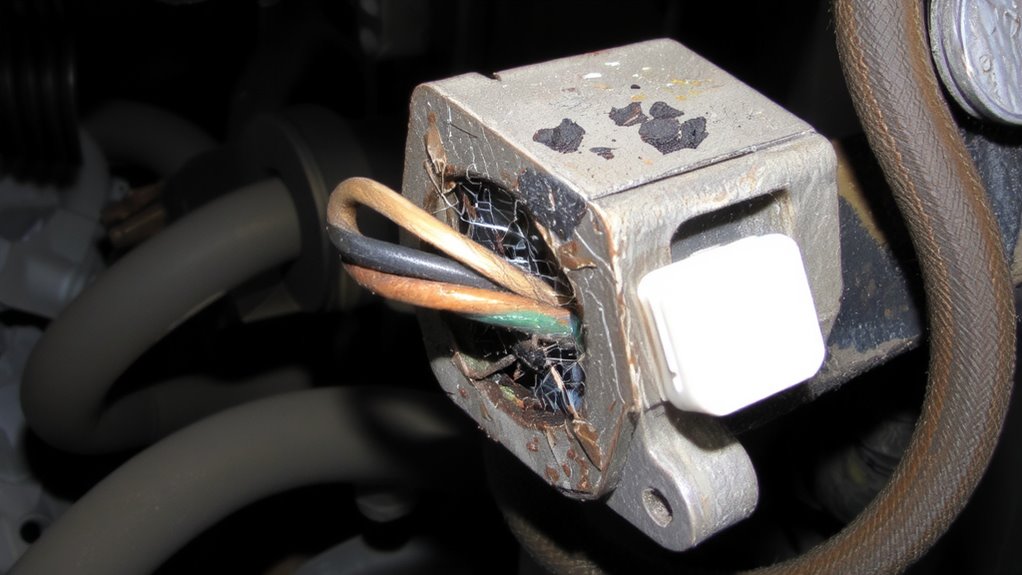
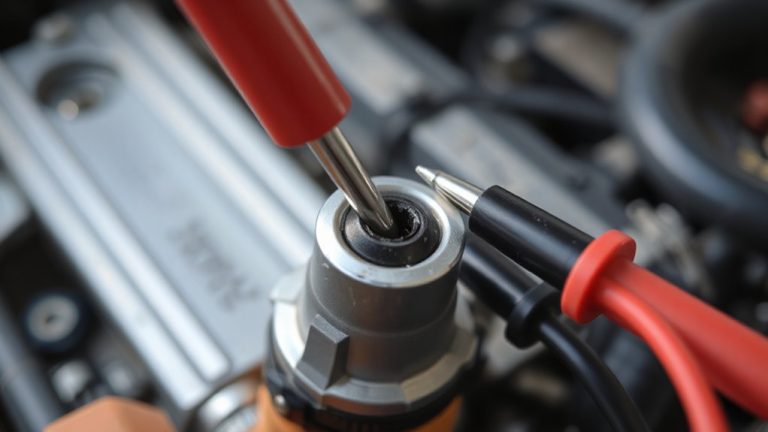
Visual and tactile inspection is your first line of defense against severe charging system failure. Start by examining the alternator wiring harness in good light. Look for wiring insulation discoloration-brown or blackened insulation indicates overheating. Use gloves to feel for brittleness or soft spots; cracked insulation exposes conductors, raising short-circuit risks. Check connectors closely for connector deformation issues: melted housing, warped tabs, or loose pins disrupt electrical continuity. A deformed plug may not seat fully, causing intermittent charging. Inspect metal terminals for white or green corrosion, which increases resistance and generates heat. Use a multimeter probe to verify terminal integrity without forcing connections. Pay special attention to areas near exhaust manifolds, where temperatures exceed 200°F. Early detection of melting, cracking, or corrosion prevents catastrophic alternator failure. Handle wires gently to avoid worsening hidden damage.
What Heat Does to Alternator Wiring Over Time
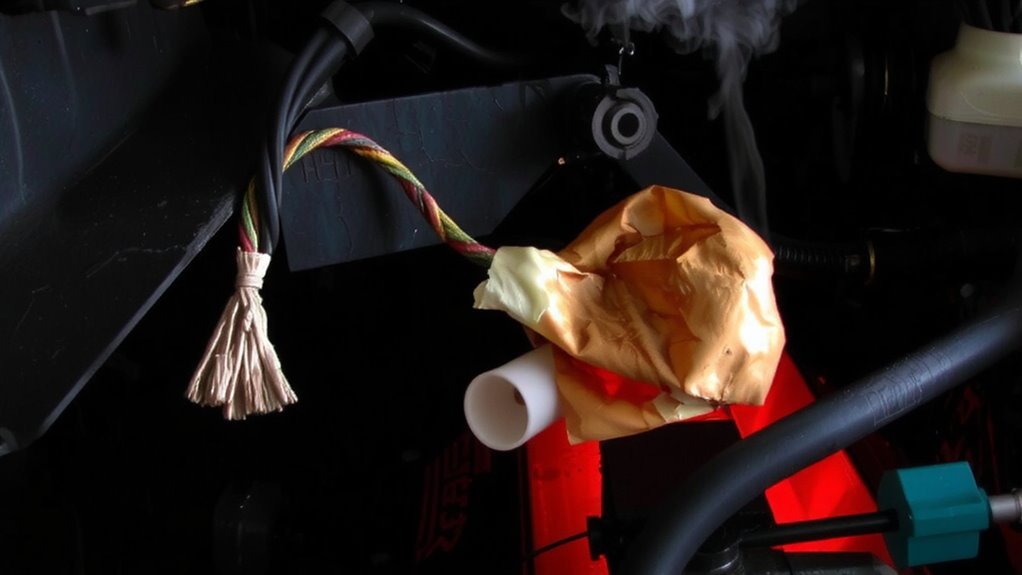
Heat steadily degrades alternator wiring over time, weakening its performance and reliability. Prolonged exposure to high temperatures causes thermal expansion, stressing conductor bonds and increasing resistance. Repeated cycles of heating and cooling lead to metal fatigue and eventual wire breakage. Insulation degradation occurs as heat embrittles protective sheathing, making it prone to cracking and exposing conductors.
| Effect | Consequence |
|---|---|
| Thermal expansion | Loose connections, increased resistance |
| Insulation degradation | Short circuits, voltage leaks |
| Sustained high temps | Reduced ampacity, premature failure |
You’ll notice voltage output drops under load as internal resistance climbs. Standard PVC insulation begins breaking down at 105°C, while premium wires rated to 150°C last longer but still degrade. Over months or years, these changes reduce charging efficiency and increase failure risk-all before visible damage appears.
How to Protect Wiring From Engine Compartment Heat
Though the engine compartment is inherently hostile to electrical components, you can considerably reduce heat damage to alternator wiring with proper protection strategies. Heat shielding deflects radiant energy from exhaust manifolds and turbochargers, typically reducing wire exposure by 30–50°F. Use aluminized fiberglass or reflective metal shields rated for continuous use above 500°F. Install them between wiring and heat sources, securing with high-temperature ties. Insulation wrapping adds thermal resistance; materials like silicone rubber or ceramic fiber sleeves withstand up to 1,200°F intermittently. Wrap alternator wiring harnesses completely, overlapping layers by at least 30% for full coverage. Guarantee wraps stay clear of moving parts or sharp edges. Combine both techniques for maximum protection. Properly shielded and wrapped wiring maintains integrity, operates within safe temperature limits, and resists premature insulation breakdown.
When to Replace or Repair a Damaged Wiring Harness
You’ve taken steps to shield and insulate your alternator wiring harness from engine heat, but even well-protected wires can degrade over time. When insulation cracks or conductors corrode, electrical resistance increases, causing a voltage drop that starves components of needed power. A drop exceeding 0.5 volts across the harness indicates trouble. Minor abrasions or isolated heat damage may only require repair with high-temperature wire and heat-resistant connectors. But if multiple wires show brittleness, melting, or high resistance, replace the entire harness. Factory-spec gauge wiring guarantees proper current capacity-typically 10 to 12 AWG for main charging circuits. Repairs should use materials rated above 125°C. A compromised harness can’t maintain stable voltage under load, risking alternator failure or erratic charging. Replace rather than repair when damage is widespread or near connectors. Safety and reliability depend on it.
On a final note
You must address damaged alternator wiring promptly. Heat exposure degrades insulation, increasing resistance and risk of failure. Wiring rated below 125°C often fails in high-heat environments. Inspect for discoloration, cracking, or melted sheathing near exhaust components. Use multimeter testing to confirm voltage drops exceeding 0.5V, indicating compromise. Replace damaged harnesses with high-temperature automotive wire, such as 18-gauge GXL rated to 150°C. Protect with fiberglass sleeving or heat shields positioned at least 2 inches from exhaust manifolds.