How to Clean Paint Protection Film on Retractable Door Handles
Clean your PPF on retractable door handles every 2–3 weeks using a pH-neutral cleaner diluted 5:1 with distilled water. Use a 300 GSM microfiber cloth or soft wash mitt to prevent micro-abrasions. Avoid ammonia, bleach, or abrasive tools that degrade the 8–12 mil film and weaken UV protection. Rinse first to remove grit, then wipe in straight lines. Dry with a second microfiber cloth to prevent water spots. Proper technique maintains the self-healing layer and extends service life beyond 5 years. Ideal care preserves clarity and impact resistance over time. Further details on long-term film preservation follow.
Notable Insights
- Rinse the PPF surface with water first to remove grit and prevent micro-scratches during cleaning.
- Use a pH-neutral, non-abrasive soap diluted properly to avoid degrading the self-healing layer.
- Clean with a soft microfiber cloth or wash mitt using straight-line motions to prevent marring.
- Avoid harsh chemicals, solvents, and abrasive tools that can damage the film and cause yellowing.
- Dry with a clean, lint-free microfiber cloth to prevent water spots and streaks after rinsing.
How to Clean PPF on Retractable Handles
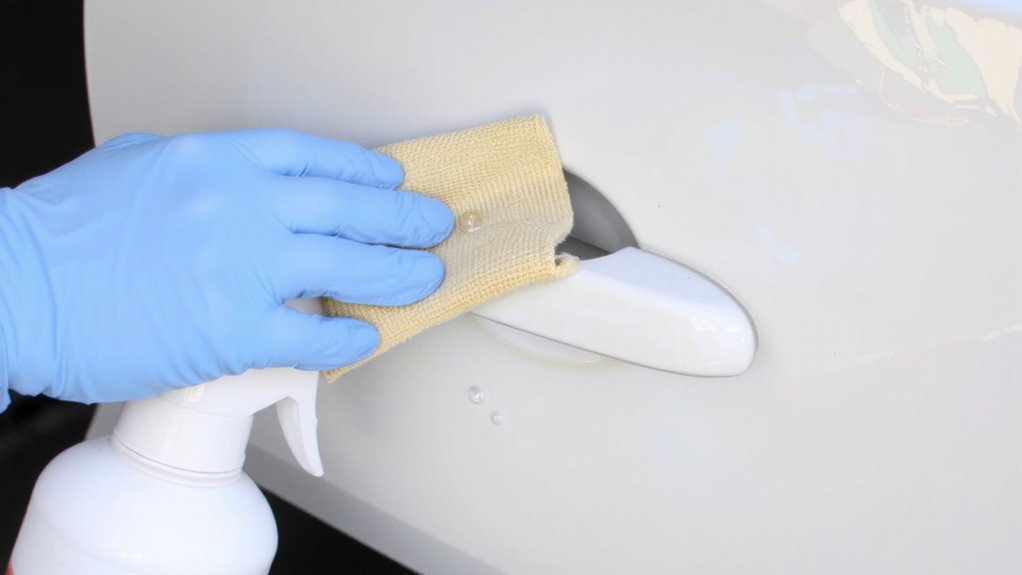
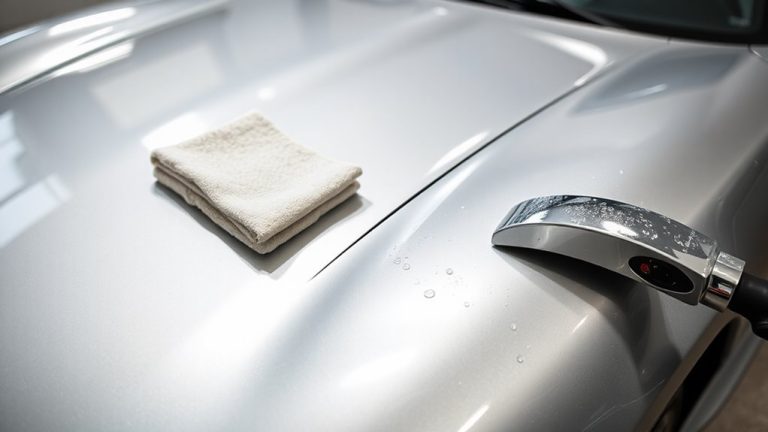
While keeping your retractable door handles looking factory-fresh, cleaning the paint protection film (PPF) demands care to avoid damaging the self-healing layer. You must use a pH-neutral soap and soft microfiber cloth to prevent micro-abrasions. Harsh chemicals degrade UV protection, reducing film longevity. PPF typically has a 5- to 10-year lifespan under normal conditions. Exposure to intense sunlight accelerates polymer breakdown if UV blockers in the film become compromised. You should rinse first to remove grit, then gently wipe in straight lines-not circles-to minimize scratching. Water temperature should not exceed 104°F (40°C), as extreme heat weakens adhesive bonds. Self-healing properties only work within top-coat limits-deep gouges won’t recover. Regular, gentle cleaning preserves clarity and impact resistance. Maintaining film longevity guarantees sustained protection against stone chips, road debris, and environmental fallout.
What Supplies You Need for Safe PPF Cleaning
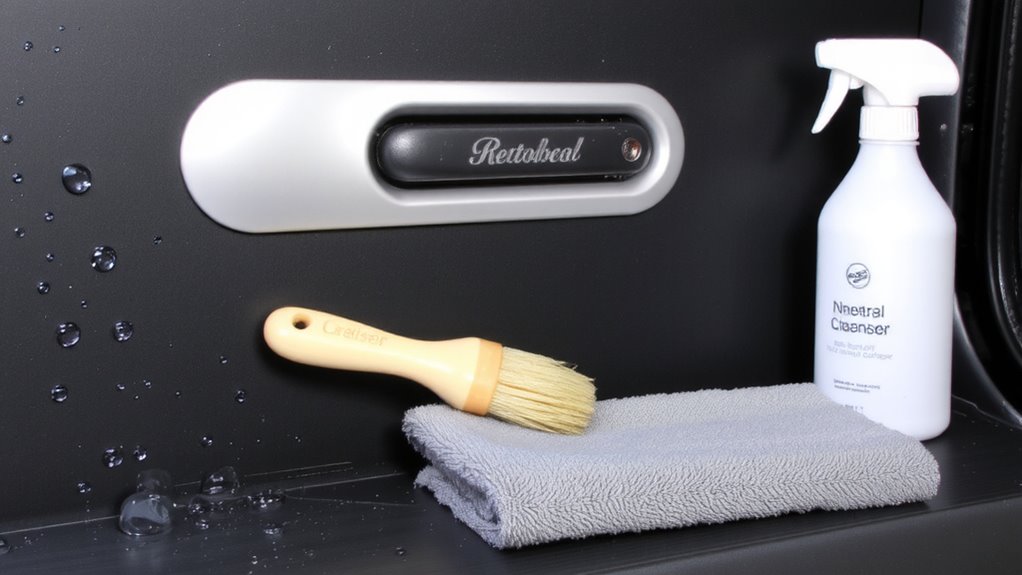
You’ll need a few specific supplies to clean paint protection film (PPF) safely and effectively. Microfiber cloths are essential-they trap fine particles without scratching the surface. Choose cloths with a minimum 300 GSM density and split fibers to lift dirt efficiently. Use them dry first to remove loose debris, then damp for washing. Always wash cloths after use to prevent grit buildup. Pair microfiber cloths with a mild soap-preferably pH-neutral, non-abrasive car wash solution diluted at 5:1 with distilled water. This ratio prevents residue and preserves PPF’s self-healing layer. Avoid household cleaners; they degrade urethane. A soft sponge or wash mitt complements the soap, helping spread suds evenly without marring. For drying, use a second clean microfiber cloth to prevent water spots. These tools maintain optical clarity and protect adhesive integrity. For long-term protection, consider applying a dedicated paint protection film sealant after cleaning to enhance durability and gloss.
Avoid These PPF-Damaging Cleaning Mistakes
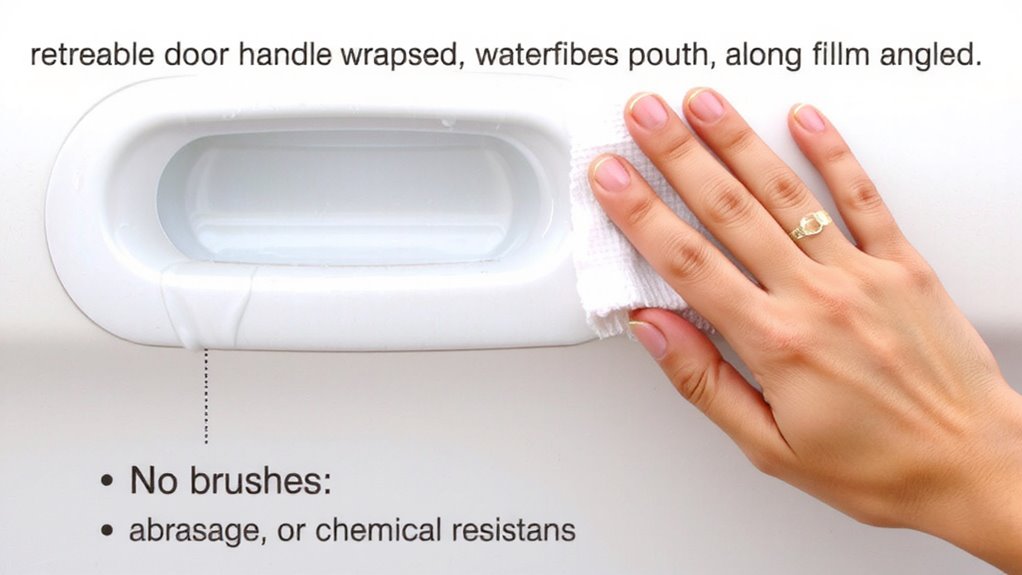
What if cleaning your paint protection film actually harms it? Using harsh chemicals or abrasive tools can degrade the film’s adhesive layer and scratch its surface. PPF is designed to withstand UV exposure and minor abrasions, but improper cleaning compromises its integrity.
| Mistake | Effect on PPF |
|---|---|
| Harsh chemicals (ammonia, bleach) | Weakens adhesive, causes yellowing |
| Abrasive tools (steel wool, stiff brushes) | Creates micro-scratches, hazing |
Avoid solvents with pH levels below 5 or above 9. Stick to manufacturer-approved cleaners. Never use scouring pads-they exceed 3,000 µm surface roughness, far too aggressive for 150–200 µm-thick PPF. Microfiber cloths (softness < 0.3 dtex) are ideal. Even pressure matters: apply no more than 3–5 N/cm² during wiping to prevent delamination. Prevention is simpler than repair.
How Often to Clean Retractable Handle PPF
Regularly cleaning your retractable door handle’s paint protection film helps maintain its clarity and longevity, but overclean annealing can be just as harmful as neglect. Clean every 2–3 weeks for ideal ppf longevity. Frequent washing risks delamination, especially with abrasive cleaners. The film withstands typical environmental exposure like UV radiation, road grime, and light impacts, but constant dirt buildup accelerates degradation. In high-pollution or coastal areas, monthly cleaning may suffice due to increased salt and mineral deposits. Use only pH-neutral soaps and microfiber cloths. Each cleaning session removes microscopic contaminants; excessive sessions wear down the topcoat’s sacrificial layer, reducing its self-healing capacity. PPF thickness ranges from 8–12 mils-overcleaning thins this margin. Balance maintenance with preservation. Proper intervals prevent haze and micro-scratches, ensuring long-term optical clarity and structural resilience under daily environmental exposure.
Fixing Streaks, Smears, and Residue on PPF
Though invisible contaminants often go unnoticed, they can leave behind streaks, smears, or hazy residue on paint protection film if improper cleaning methods are used. You should rinse the surface first with distilled water to remove loose particles. Then, apply a pH-neutral cleaner with a microfiber cloth using straight-line motions-avoid circular scrubbing to prevent micro-scratches. Residue typically stems from mineral deposits or silicone-based products, which may lead to film discoloration over time. Streaks often appear when cleaners aren’t fully wiped off; use a second dry, lint-free cloth to buff the surface. Never use ammonia-based solutions, as they compromise the film’s adhesive layer and may cause adhesive failure. Cleaners with high alcohol content can degrade the topcoat. For stubborn residue, a diluted isopropyl alcohol solution (30% concentration) is acceptable, but only for spot treatment. Immediate correction prevents long-term blemishes.
Why Regular PPF Maintenance Prevents Damage
Cleaning your paint protection film properly keeps it looking clear and free of defects, but skipping routine care leads to long-term issues. Regular maintenance prevents surface oxidation, which occurs when UV exposure degrades the film’s topcoat, causing hazing and reduced clarity. Most PPFs have a sacrificial layer designed to absorb damage, but without cleaning every two weeks, contaminants like salt and acid rain accelerate this deterioration. You also risk adhesive breakdown, where trapped moisture and grime weaken the bond between film and paint. High-quality polyurethane films typically resist this for five years, but poor upkeep shortens lifespan by up to 40%. Proper washing with pH-neutral cleaners preserves film integrity. Retractable handles, frequently exposed to road debris, need extra attention. Your diligence guarantees maximum protection and optical performance.
On a final note
You must clean PPF on retract combustible door handles regularly to preserve optical clarity and adhesion. Use pH-neutral cleaners; avoid wax or abrasives. Clean every 2–4 weeks with microfiber cloth and distilled water. Residue stems from improper drying; streaks indicate contaminant exposure. Proper maintenance prevents delamination and yellowing. PPF thickness ranges 6–10 mils; damage reduces its 5–10 year lifespan.