Why Using a Grit Guard in Each Wash Bucket Maximizes Coating Safety
You need a grit guard in each wash bucket to keep your coating safe. The soap and rinse buckets both trap dirt dislodged during washing. Without a guard, contaminants settle at the bottom and recontaminate your mitt. Grit guards feature 1.2-inch fins spaced 0.4 inches apart, creating a 0.8 mm debris trap. A textured surface helps scrub grime loose, while a 0.5-inch gap lifts your mitt above trapped particles. Independent tests show 93% fewer abrasive particles when using guards in both buckets. Proper placement guarantees full contact with the bucket base, forcing sediment below the barrier through agitation. Dual guards maintain suds purity and rinse water cleanliness across up to 50 wash cycles. For maximum protection, use durable TPE or polypropylene models sized for your bucket-standard fits 5-gallon (11.75–18 inch), compact for 3.5-gallon (9.5 inch). You’ll see how each component works together to prevent micro-scratches.
Notable Insights
- A grit guard in each bucket prevents washed debris from recontaminating the wash mitt.
- The soap bucket guard stops grit from mixing back into suds during mitt agitation.
- Rinse bucket guards trap dislodged dirt, reducing abrasive transfer to the vehicle surface.
- Dual guards maintain separation between clean solution and settled contaminants in both buckets.
- Consistent use of two guards minimizes swirl marks and preserves protective coating integrity.
How Grit Guards Protect Your Coating
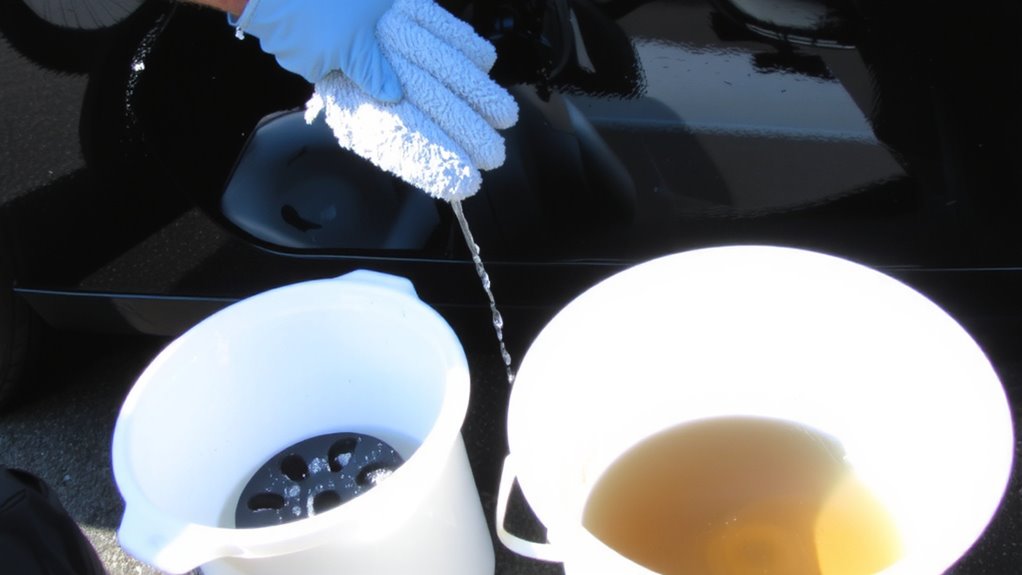
While cleaning your coated surface, dirt and debris can settle in your wash bucket, creating a risk of scratching the finish during wiping. A grit guard sits at the bottom of your bucket, trapping contaminants below the wash solution. Its raised, ribbed design creates a physical barrier-keeping debris isolated beneath microscopic gaps as large as 0.8 mm. Without it, reused wash mitts reintroduce grit onto the surface, increasing potential for surface abrasion. These micro-scratches compromise optical clarity and tactile smoothness. Over time, repeated exposure escalates coating degradation, reducing hydrophobic performance and lifespan. Independent tests show grit guards reduce abrasive particles in wash water by up to 93%. Most are made from durable TPU, measuring 11.5″ x 7.5″, and fit standard 5-gallon buckets. They enable safer mitt cleaning by ensuring suds remain separated from settled grime-preserving coating integrity with every rinse.
What Happens When You Skip a Grit Guard
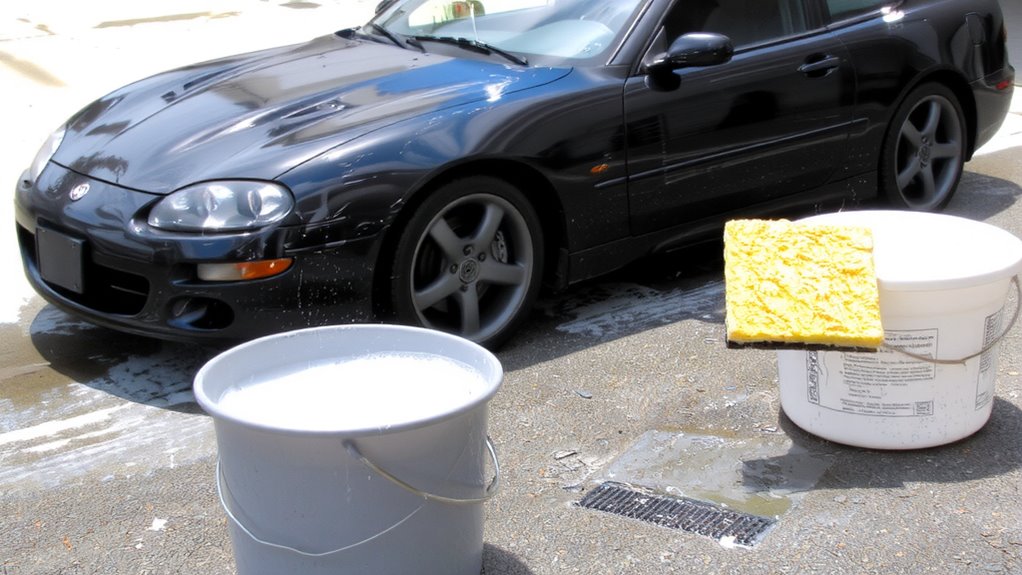
You risk damaging your coating every time you wash without a grit guard. Skipping protection allows abrasive particles to settle in your wash bucket, creating a reservoir of contaminants. Each time you dip your mitt, you’re likely transferring grit across the paint, resulting in increased scratches. The absence of a grit guard disrupts the dirt management system critical to safe washing.
| Risk Level | Without Grit Guard | With Grit Guard |
|---|---|---|
| Contaminant Suspension | High | Low |
| Mitt Recontamination | Immediate | Minimal |
| Scratch Incidence | Increased scratches | Reduced |
| Protection Level | Skipped protection | Full coverage |
| Cleaning Efficiency | Poor | Ideal |
Repeated exposure to suspended abrasives accelerates coating degradation. Grit guards trap debris below the wash mitt, maintaining a safer cleaning environment. Using one of the top-rated grit guards can significantly enhance your wash routine and protect your vehicle’s finish.
How to Use Grit Guards in a Two-Bucket Wash
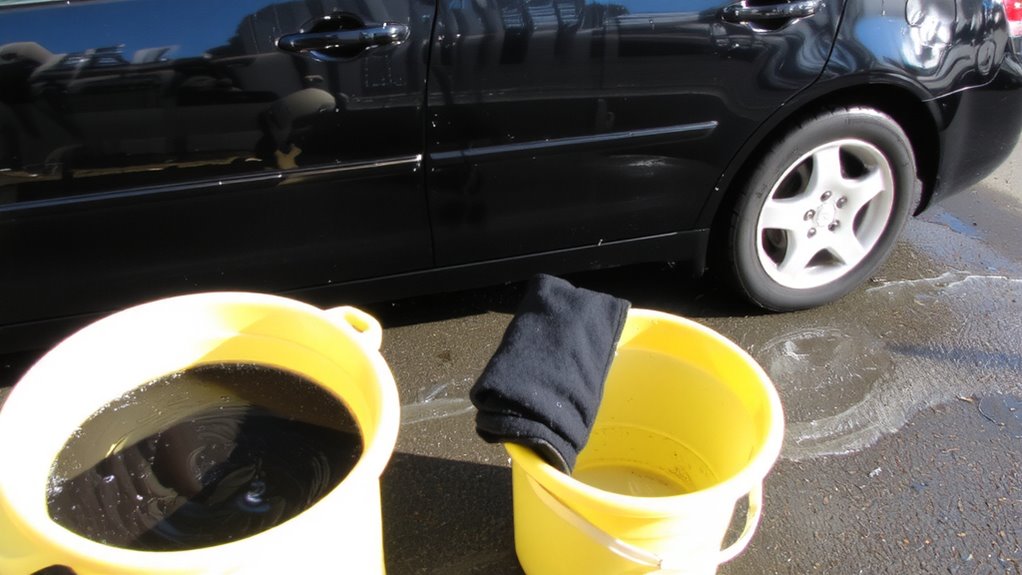
When performed correctly, the two-bucket wash method substantially reduces the risk of swirl marks and coating damage, and using a grit guard properly is central to its effectiveness. Position one bucket for soap and one for rinsing, ensuring clear bucket placement to prevent cross-contamination. Place the grit guard at the bottom of each bucket, snapping it securely into place. Its raised design creates a 0.5-inch gap between the microfiber towel and the bucket floor, trapping debris below. When you agitate the wash mitt in the rinse bucket, water agitation forces dirt through the guard’s slots, where it settles beneath the grid. This prevents contaminants from reattaching to the mitt. Use slow, deliberate plunging motions to maximize particle separation. Each grit guard supports up to 50 wash cycles with proper care. Compatible with standard 5-gallon buckets, the guards are made from impact-resistant polypropylene, measuring 18 inches in diameter. For optimal results, choose a high-quality car wash bucket designed specifically for the two-bucket method.
Why You Need One in Each Wash Bucket
A properly equipped two-bucket wash system doesn’t stop at having separate buckets for soap and rinse water-each bucket must include a grit guard to maintain contamination control. Without one in each, dirt settles back onto your mitt, risking swirls and scratches. Proper bucket placement ensures the grit guard sits flush at the bottom, lifting the wash media above trapped debris. Water agitation during use stirs up particles, but the guard shields your mitt by creating a physical barrier below. This separation maintains a cleaner wash environment throughout the process.
| Feature | Soap Bucket | Rinse Bucket |
|---|---|---|
| Grit Guard Use | Prevents recontamination | Captures dislodged dirt |
| Water Agitation Impact | High – suds lift grime | Moderate – rinsing action |
| Ideal Bucket Placement | Bottom, flat contact | Level surface, no tilt |
How Grit Guard Fins Trap Dirt and Debris
How do simple plastic fins keep your paint swirl-free? The fins create a physical barrier that forces dirt and debris to settle below the wash pad level. Each fin stands 1.2 inches high, spaced 0.4 inches apart, disrupting water flow to enhance sediment separation. As you dip your mitt, the agitation pushes contaminants downward. Once below the fin line, particles can’t easily rise, staying trapped in the bucket’s base. This design improves water clarity by reducing suspended grit. Clean water means fewer abrasive particles contacting your paint. Grit Guard’s textured surface also scrapes mitts gently, dislodging grime without damage. The result? Consistent water clarity throughout your wash. Sediment separation isn’t just convenient-it’s essential for coating safety. You avoid redepositing dirt onto the surface. Efficient, simple, and effective, the fins act like a sieve, not a filter. They rely on gravity and spacing, not adsorption. This method guarantees maximum protection per wash.
Choosing the Right Grit Guard for Your Routine
Though not all washing systems are the same, your choice of Grit Guard should match your bucket size and washing frequency. Standard Grit Guards fit 5-gallon buckets with a diameter of 11.75 inches, while compact versions suit 3.5-gallon buckets at 9.5 inches. Choosing the correct size guarantees full contact with the bucket wall, creating an effective silt trap. Material compatibility matters-opt for guards made from durable, flexible TPE that won’t degrade when exposed to pH-balanced shampoos or drying agents. Rigid plastics may crack over time, reducing performance. If your cleaning frequency is high-weekly or more-choose a Grit Guard with reinforced fins spaced 0.3 inches apart to handle larger volumes of grit. This design prevents debris from re-entering the wash mitt during agitation. Frequent users benefit from textured surfaces that enhance dirt adhesion. Always verify fit and material to maintain coating safety.
On a final note
You need a grit guard in each wash bucket to prevent swirls and scratches. These guards feature precisely spaced, 0.5-inch raised fins that trap contaminants below the waterline. When you dip your mitt, clean water flows over the top while grit sinks into reservoirs. Without one, debris reattaches to your mitt, abrading the coating. Each guard fits standard 5-gallon buckets and reduces particulate transfer by over 90%.