Mounting Motion-Activated Lights Outside Garages Housing Rare Collector Cars
You protect your collector car by installing motion-activated lights with a 0.5-second response and 1,200 lumens of LED output. Mount fixtures at 8–10 feet high, using 180-degree coverage at corners for full visibility. IP44-rated or higher models resist dust and moisture, while dual-tech sensors cut false alarms. Aim detection ranges at 30–40 feet with adjustable time delays. Hardwired 120V systems offer reliability; wireless models allow quick setup. Proper placement and settings guarantee consistent security performance night after night.
Notable Insights
- Mount lights at 8–10 feet high for optimal motion detection and wide coverage around garage entrances.
- Focus on entry points like doors, windows, and driveways to deter intruders and enhance security visibility.
- Use IP65-rated LED floodlights with 5000K color temperature for reliable, daylight-like illumination in all weather.
- Position lights at corners with overlapping 180-degree detection zones to eliminate blind spots and maximize coverage.
- Adjust sensitivity to 30–40 feet and use dual-tech sensors to reduce false alarms from environmental movement.
Why Your Collector Car Needs Motion-Activated Lights
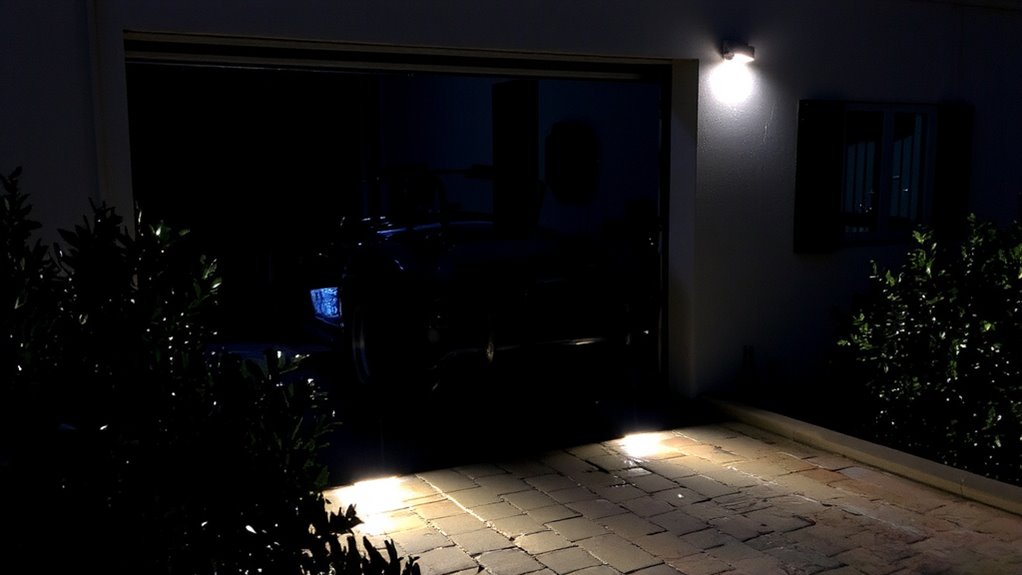
While your collector car sits protected in the garage, sudden darkness can still pose a risk during late-night inspections or unexpected visits. Motion-activated lights provide immediate artificial illumination, enhancing visibility within 0.5 seconds of detecting movement. Most units use LED technology, drawing 5–10 watts and emitting 800–1,200 lumens, sufficient to cover 100–150 square feet. This instant response reduces collision risks and safeguards delicate finishes. Beyond utility, these lights contribute to security aesthetics, combining sleek housing designs with strategic beam angles to deter unauthorized access. Units with adjustable sensitivity (0.5–2.5m detection range) and time delays (15–300 seconds) offer customization. IP44-rated fixtures resist dust and moisture, ensuring reliable operation in varied climates. The integration of artificial illumination through motion sensing blends function and form, protecting both car and property without compromising visual appeal.
Where to Place Motion-Activated Lights for Maximum Coverage
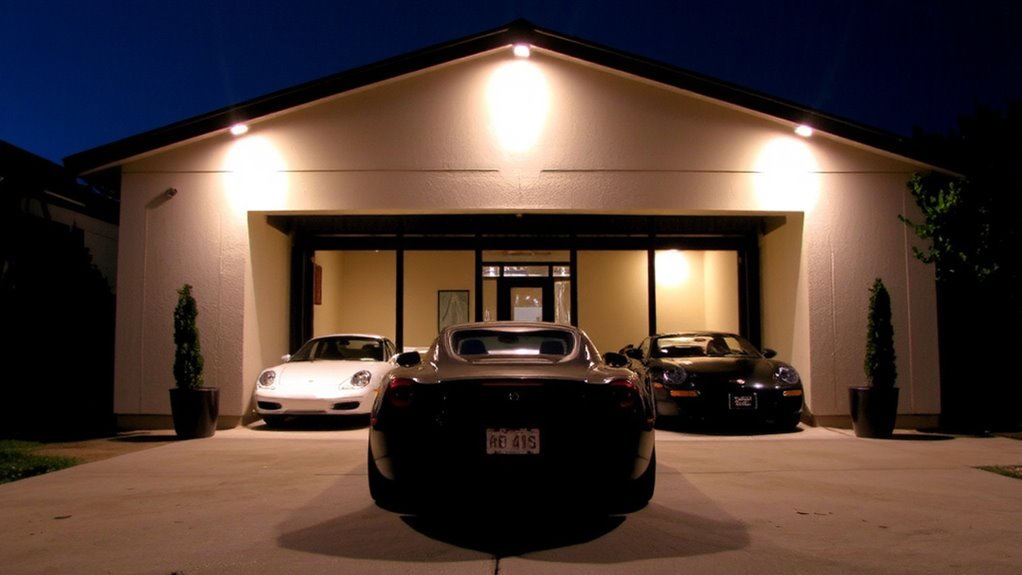
Where should you position motion-activated lights to guarantee every corner of your garage is properly illuminated? Strategic light placement guarantees maximum security and visibility. Mount lights at eight to ten feet high to maximize detection range and minimize blind spots. Focus on entry points-doors, windows, and driveways-where intruders are most likely to approach. Use fixtures with 180-degree coverage angles for broad side-yard visibility, and position them at corners for overlapping fields. For rear or side walls, choose models with at least 30-foot motion detection ranges.
| Location | Recommended Coverage Angle |
|---|---|
| Front corners | 180° |
| Rear wall center | 140° |
| Side entryways | 120° |
| Over garage door | 90°–110° |
Proper coverage angles and light placement eliminate shadows and enhance surveillance effectiveness.
Best Motion-Activated Light Types for Garage Security
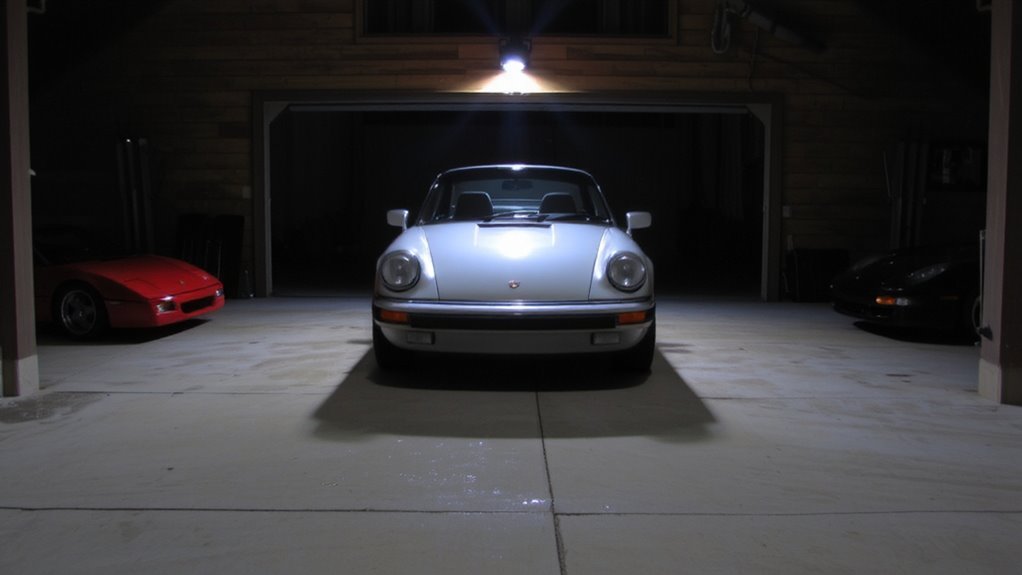
You’ve positioned your lights for full coverage-now it’s time to choose the right type to match your security needs. LED floodlights are ideal, offering up to 100,000 hours of bulb longevity, drastically reducing maintenance. These lights use 70% less energy than halogen and provide instant, full-brightness illumination. Look for models with a lumen output of at least 2,600 and a color temperature near 5000K for crisp, daytime-like visibility. Light aesthetics matter for high-end properties-choose sleek, low-profile housings in matte black or brushed aluminum to blend with modern garage architecture. Dual-tech sensors, combining passive infrared and microwave detection, enhance reliability. Choose fixtures with an IP65 rating or higher to endure rain, dust, and temperature swings. Hardwired units offer consistent power, while some premium wireless models use long-life lithium batteries. Prioritize technical performance alongside design cohesion. For added durability in harsh conditions, consider lights designed with off-road toughness, such as best off-road lights, known for withstanding extreme vibrations and weather exposure.
Fine-Tune Sensitivity to Stop False Alarms
Often, improper sensitivity settings trigger unnecessary light activation from non-threatening sources like swaying branches or passing headlights. You can avoid this by adjusting the sensitivity dial to match your garage’s surroundings. Most units offer a range from 10 to 80 feet detection distance-set it to 30–40 feet for ideal balance. High sensitivity in poor weather conditions, like heavy rain or wind-blown debris, increases false triggers. Lower the setting during storms or seasonal changes. Pair sensitivity adjustments with time delays: choose 1–5 minutes to keep lights on long enough without wasting energy. A 30-second delay may suffice for quick access, while 5 minutes works better for loading or unloading. Use models with independent controls for sensitivity, duration, and lux threshold. This precision prevents overreaction while maintaining security. You’ll reduce nuisance lighting and extend bulb life without sacrificing response to real threats.
Hardwired vs. Wireless: Which Garage Setup Works Best?
How do you choose between hardwired and wireless motion-activated lights for your garage?
Hardwired systems use your home’s electrical circuit, providing constant power without battery replacements. They require professional installation due to wiring into junction boxes and compliance with local electrical codes, increasing installation complexity. These units typically support 120V AC power source and deliver sustained 1,500–2,000 lumens across 180-degree detection zones.
Wireless models run on batteries or solar power, offering flexible placement. Their installation complexity is low-most mount with screws and pair to sensors in minutes. However, battery life lasts 6–12 months under nightly use, and solar variants need six hours of daily sunlight for reliable operation.
Choose hardwired for consistent performance, wireless for adaptability. Each power source shapes long-term reliability and setup demands.
Maintain Your Lights for Reliable Nightly Protection
Reliability begins with routine care. You must perform regular light maintenance to guarantee your motion-activated lights protect your rare collector cars nightly. Clean the lens every three months using a microfiber cloth and isopropyl alcohol to prevent dust and grime buildup, which can reduce sensor range by up to 40%. Check the motion sensor alignment semi-annually; most units have a 30-foot detection radius and 180-degree field of view when unobstructed. Inspect wiring connections annually for corrosion, especially in coastal areas. For maximum bulb longevity, use LED bulbs rated for at least 25,000 hours and guarantee proper ventilation to prevent overheating. Replace seals on housings every two years to maintain IP65 weather resistance. Functional lights deter intruders-failing components compromise security. Preventive upkeep guarantees consistent performance and maximizes system lifespan without unexpected failures.
On a final note
Your collector car deserves reliable protection. Motion-activated LED lights with 180-degree detection and 30-foot range deter intruders effectively. Use hardwired 120V models for consistent power and flicker-free operation. Set sensitivity to ignore small animals-adjust to 6–8 feet mounting height. IP65-rated fixtures resist rain and dust. Test monthly. Replace bulbs every 50,000 hours. Proper placement and maintenance guarantee round-the-clock security.