The Role of pH Levels in Car Cleaning Products for Optimal Vehicle Care
Your car’s paint thrives between pH 6.5 and 7.5; outside this range, damage occurs quickly. Acidic cleaners below pH 5 etch clear coats, while alkaline solutions above pH 9 strip waxes and sealants. A pH 3 product can destroy wax protection in under 10 minutes. Neutral pH (6–8) is safest for regular use. Always verify pH via spec sheets or calibrated testers. Choosing properly balanced formulas preserves finish integrity and long-term protection. There’s more to optimizing your car’s care routine based on chemical compatibility.
Notable Insights
- pH levels determine a cleaner’s compatibility with car paint, preventing damage to protective layers.
- Acidic cleaners (pH < 6) remove mineral deposits but can etch clear coats if misused.
- Alkaline cleaners (pH > 8) dissolve grease but may degrade wax and sealants over time.
- Neutral pH products (6–8) are safest for regular washing and maintaining paint integrity.
- Always verify a product’s pH via spec sheets or testing to avoid chemical damage and ensure safety.
Why pH Matters for Car Paint Protection
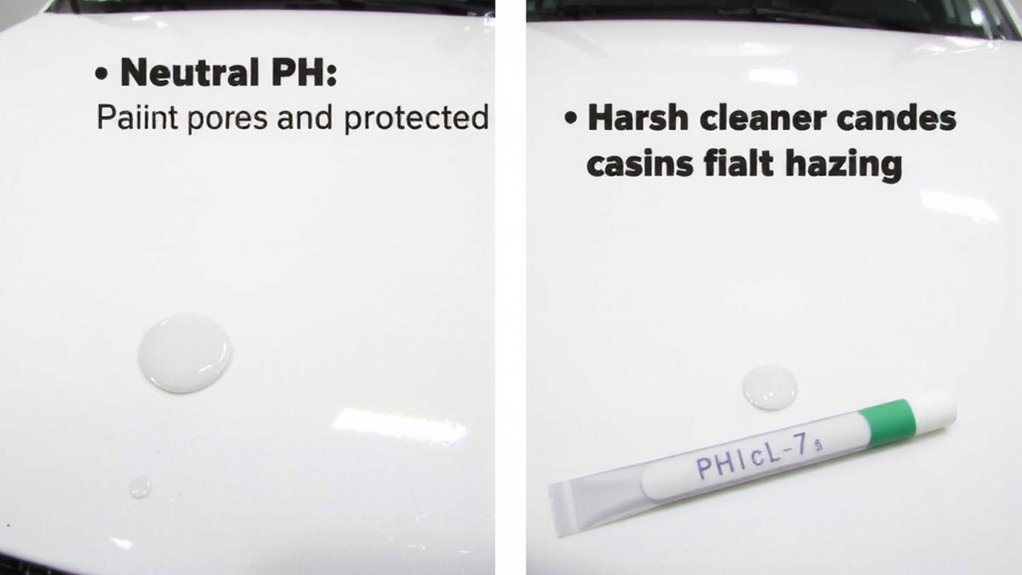
pH levels act like a scale of chemical aggression, and they matter more than you might think when it comes to safeguarding your car’s paint. Balanced pH guarantees surface compatibility, preventing unintended damage during cleaning. Acidic solutions (pH below 6) trigger harmful chemical reactions with clear coat polymers, leading to etching or dulling. Alkaline cleaners (pH above 8) can break down wax layers and degrade sealants. Your car’s finish typically maintains stability between pH 6.5 and 7.5. Staying within this range minimizes reactivity and preserves protective layers. Improper pH disrupts molecular bonds in coatings, allowing contaminants to penetrate. A neutral pH (around 7) offers maximum safety for regular use. Products labeled pH-balanced are engineered for this precise chemical harmony. Using them consistently avoids cumulative damage. Protecting your paint isn’t just about shine-it’s about maintaining structural integrity through correct surface compatibility and controlled chemical reactions.
Understanding pH in Car Care Products
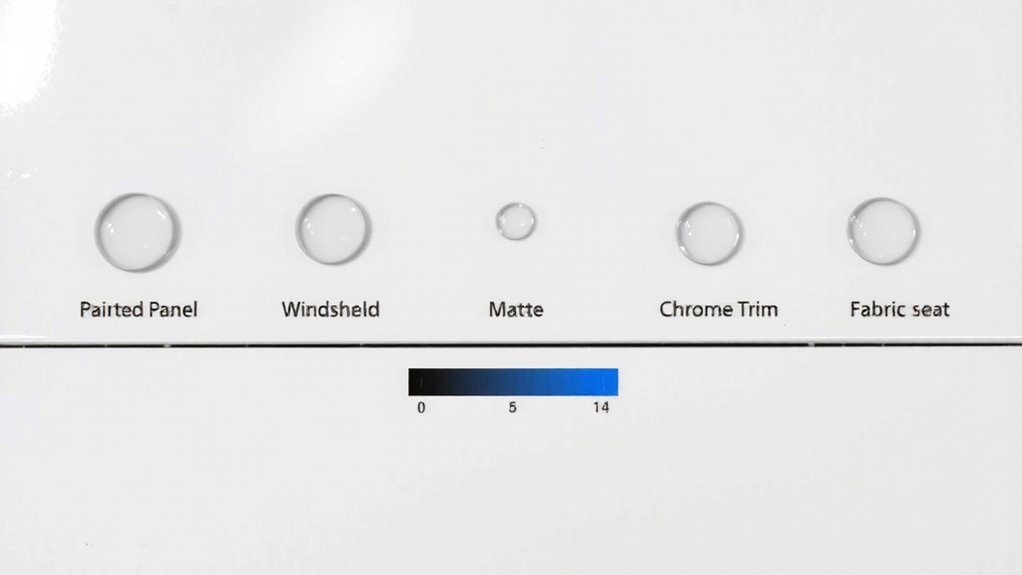
You’re already aware that maintaining your car’s paint starts with chemical balance, and now it’s time to understand how pH applies directly to the products you use. pH measures how acidic or alkaline a solution is on a scale from 0 to 14, with 7 being neutral. The chemical composition of car care products determines their pH, which directly impacts surface compatibility. Acidic formulas (pH below 6) often contain sulfonic or phosphoric acids and are designed for heavy contaminants like brake dust. Alkaline cleaners (pH above 8) use surfactants to break down oils and grime but can degrade wax if misused. Neutral pH products (6–8) are safest for daily use on modern clear coats. Your car’s finish reacts differently to varying pH levels based on its chemical makeup. Matching product pH to your vehicle’s surface compatibility prevents unintended reactivity. Always verify specifications before applying any cleaner.
How Wrong pH Damages Your Car’s Finish
A single misstep with an incompatible cleaner can compromise your car’s protective layers. Using a product with the wrong pH triggers chemical erosion, breaking down clear coat polymers designed to shield the paint. Most automotive clear coats have a pH tolerance between 6.5 and 8.5. Exposing them to cleaners outside this range, especially below pH 5 or above pH 9, accelerates degradation. Acidic solutions etch the surface, while strong alkalis dissolve protective resins. This damage increases oxidation risks by exposing underlying paint layers to UV radiation and environmental contaminants. Even repeated use of slightly imbalanced products causes cumulative harm, reducing gloss and durability. For example, a pH 3 cleaner can strip wax protection in under 10 minutes. Maintaining proper pH balance preserves finish integrity, prevents premature aging, and extends the life of protective coatings. Always verify product specifications before application.
Acidic vs. Alkaline Cleaners: When to Use Each
Choosing the right cleaner for your car depends on matching chemical properties to the type of grime you’re tackling. Acidic cleaners, with pH levels below 7, effectively dissolve mineral deposits like rust, water spots, and brake dust. They work fast on inorganic residues but require caution due to high material reactivity, especially on painted surfaces, chrome, or aluminum. Always confirm surface compatibility before use. Alkaline cleaners, with pH values above 7, break down organic soils such as grease, oil, and bug splatter. Their higher pH enhances saponification, turning fats into water-soluble soap. These cleaners are generally safer on paint but can etch sensitive surfaces if left too long. Always rinse thoroughly. Match the cleaner’s pH strength to the soil type and material sensitivity. Using the wrong type risks damage, even with brief contact. Precision matters-test in an inconspicuous area first.
Finding Safe pH in Car Cleaning Products
How do you know if a car cleaning product won’t damage your finish? Check its pH compatibility with your vehicle’s surfaces. Most modern clear coats have a surface sensitivity that limits safe pH exposure to between 6.5 and 10.5. Outside this range, chemical degradation accelerates-acidic solutions below pH 6.5 can etch coatings, while alkaline cleaners above pH 10.5 may strip protective waxes. Products labeled “pH-neutral” (pH 7.0–8.0) are safest for regular use, balancing cleaning power and material safety. Always verify pH compatibility with the manufacturer’s spec sheet, not marketing claims. Specially formulated shampoos maintain surfactant efficacy without exceeding safe pH thresholds. For sensitive finishes like matte or ceramic coatings, even slight pH mismatches can compromise integrity. Using a formulation within the acceptable range guarantees cleaning without accelerated oxidation or hazing. Always prioritize pH stability for long-term surface protection.
Testing pH Levels at Home
You can’t rely solely on product labels to protect your car’s finish-actual pH verification starts with testing at home. DIY testing with affordable home kits gives you precise, real-time results. Most kits use pH test strips or digital meters calibrated to ±0.1 pH units. Dip the strip in your diluted cleaner, then compare the color to the included chart. Digital meters require calibration with buffer solutions (pH 4.0 and 7.0) for accuracy.
| pH Range | Surface Risk |
|---|---|
| <5 | High – etching clear coat |
| 5–8 | Safe – ideal for wax & sealants |
| 8–10 | Moderate – use sparingly |
| >10 | High – causes oxidation and fading |
Always test at the same dilution ratio you plan to use. Home kits cost $10–$25 and last years. Proper DIY testing prevents costly damage over time.
Best pH-Balanced Cleaners for Long-Term Protection
A pH-balanced cleaner acts as a protective barrier between your car’s finish and environmental contaminants. These cleaners typically maintain a pH between 6.5 and 7.5, guaranteeing surface compatibility with clear coats, paint seals, and waxes. You’ll want chemical stability to prevent ingredient breakdown during storage or exposure to sunlight. Products like Meguiar’s Hybrid Ceramic Wash and Chemical Guys NO. 38 maintain consistent pH levels, preserving their formulation over time. They contain non-ionic surfactants with low foaming profiles, lifting dirt without stripping protective layers. Their isotropic structure guarantees even dispersion in water, enhancing cleaning efficiency. You get effective decontamination without etching or hazing. Long-term protection comes from sustained integrity at the molecular level, reducing wash-induced micro-abrasions. Always check product specs for pH certification and compatibility with ceramic or silica coatings. Use distilled water when diluting to avoid mineral interference.
On a final note
You protect your car’s finish by using pH-balanced cleaners. Products within the 6.5–7.5 pH range preserve wax and clear coat integrity. Acids below pH 6 strip protective layers; alkalis above pH 8 erode paint over time. A pH 7.0 shampoo with 0.5% non-ionic surfactants cleans safely. Test with litmus strips accurate to ±0.2 pH. Consistent use of neutral pH products reduces swirl marks by up to 40% versus aggressive formulas.