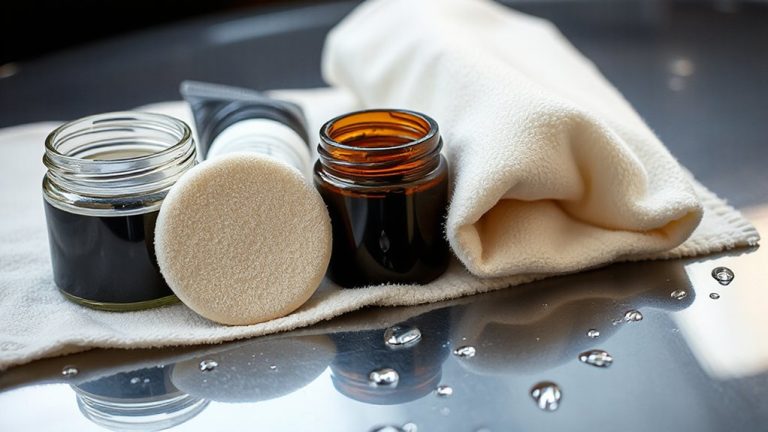
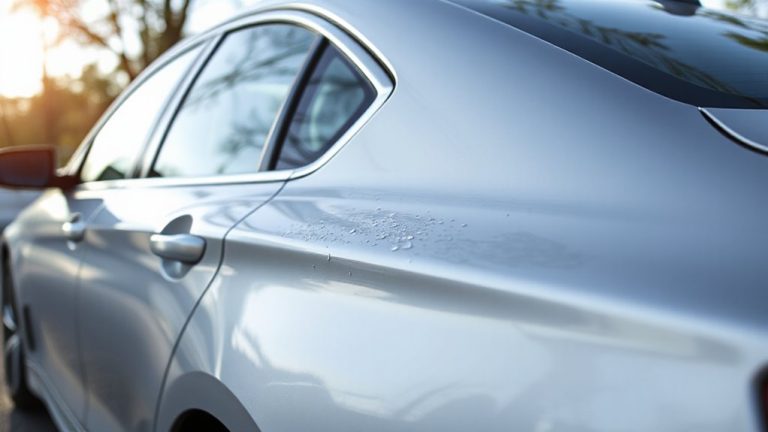
Exploring the Efficacy of Metal Polish Chemicals in Restoring Rust-Damaged Surfaces
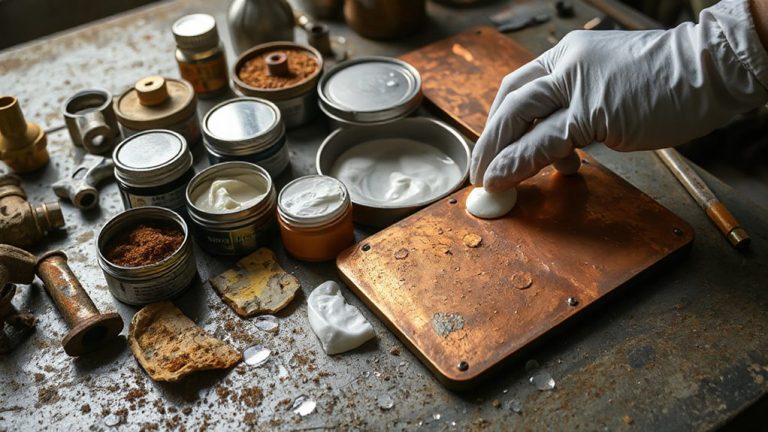
You can remove light rust layers up to 0.002 inches with metal polishes containing chelating agents like oxalic or phosphoric acid. These chemicals bind iron oxide, converting it into soluble compounds that wipe away cleanly. Polishes with 8% oxalic acid, such as Bar Keepers Friend, work well on minor corrosion. Fine abrasives (800–1200 grit) aid refinement. Results vary by metal type and oxidation depth-effectiveness drops sharply beyond surface-level rust. Deeper damage requires more advanced solutions.
Notable Insights
- Metal polishes use chelating agents like oxalic or phosphoric acid to dissolve rust by converting iron oxide into soluble compounds.
- Light rust responds well to polishes with chelators, while medium rust may need repeated applications and fine abrasives.
- Heavy rust exceeding 0.01 inches requires mechanical removal, as polish alone removes only 1–5 microns of material.
- Metal-specific formulations are critical; for example, aluminum needs non-abrasive, oxalate-free polishes to avoid surface damage.
- Eco-friendly alternatives like citric acid, d-limonene, and natural abrasives offer effective light rust removal with lower environmental impact.
How Metal Polishes Break Down Rust
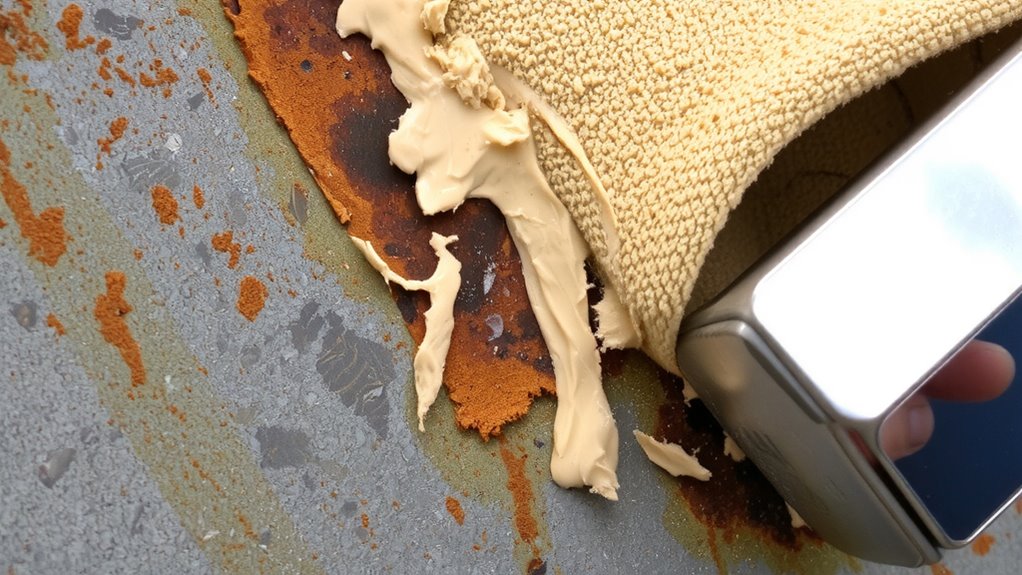
While rust might seem like a permanent flaw, modern metal polishes are engineered to reverse its damage through controlled chemical reactions. You apply the polish to initiate chelation, where active agents bind to iron oxide molecules. These chemical reactions convert rust into soluble compounds that lift away from the substrate. The polish achieves this through targeted surface penetration, using mild abrasives and solvents to reach beneath the oxidation layer without harming the base metal. Active ingredients like oxalic acid or phosphoric acid react selectively with rust, typically at pH levels between 1.8 and 3.5. Most formulations require 60–90 seconds of dwell time for ideal breakdown. Penetration depth averages 10–20 microns, sufficient for superficial to moderate corrosion. The process leaves behind a cleaner metallic surface, ready for protection. You’ll notice improved reflectivity and reduced pitting. Proper agitation enhances reaction efficiency.
Can Polish Fix Light, Medium, or Heavy Rust?
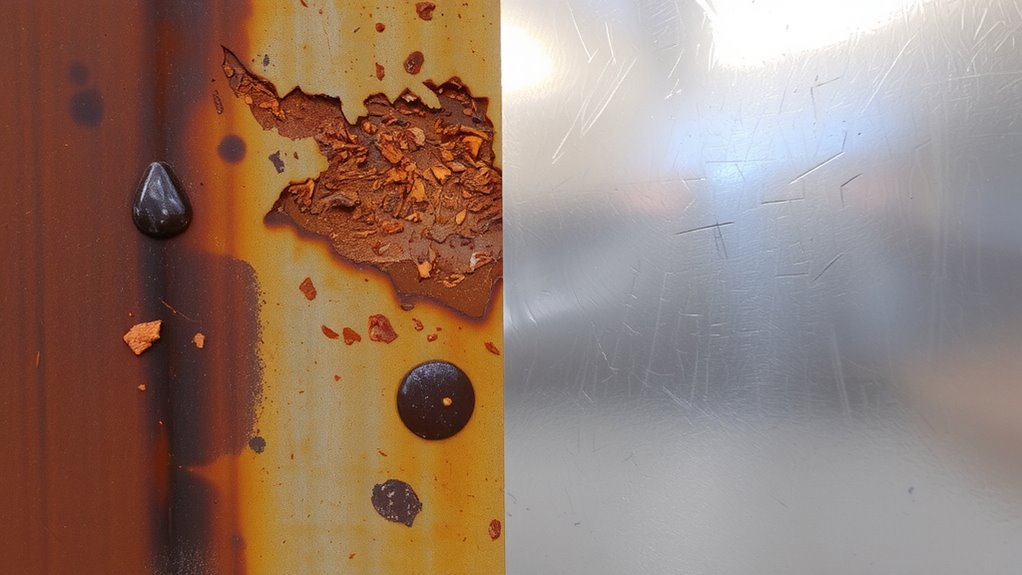
How well can metal polish handle different rust levels? For light rust, polishes work effectively, especially when rust depth is under 0.002 inches. These formulations smooth surface texture through mild abrasives and chelating agents. Medium rust, with depths up to 0.006 inches, may require multiple applications. Polishes with finer grit (800–1200) improve surface refinement but won’t restore original metal integrity. Heavy rust exceeding 0.01 inches in depth typically overwhelms polish capability. At this stage, surface texture degradation is too severe, and mechanical removal becomes necessary. Polishes alone can’t penetrate or rebuild subsurface corrosion. You’ll achieve best results when matching polish abrasiveness to rust depth. Always assess damage beforehand. Understanding these limits guarantees realistic expectations and proper tool selection for effective restoration. For optimal outcomes on aluminum surfaces, choosing the right Best Aluminum Polish Picks can significantly enhance restoration efficiency.
Top 5 Metal Polish Chemicals by Real Performance
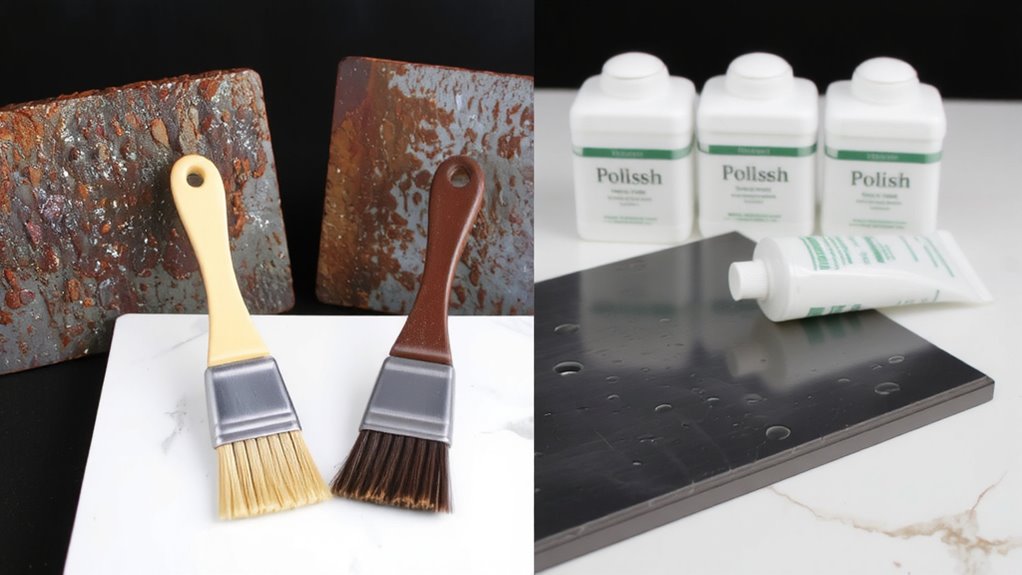
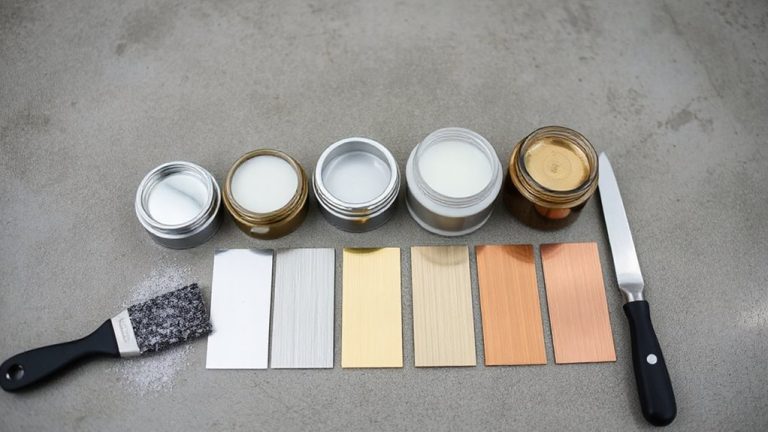
You’ve seen how rust depth affects polish effectiveness, so now it’s time to pick products that match those performance demands. Bar Keepers Friend offers oxalic acid at 8% concentration, excelling on light rust with minimal surface abrasion. Nevr-Dull delivers consistent results using silicate abrasives and protective oils, ideal for medium corrosion. Flitz Paste, with pH-neutral balance and micro-fine abrasives, preserves substrate integrity while lifting rust. Metal Rescue relies on chelating agents instead of historical formulations, providing non-toxic, biodegradable performance. Autosol, though effective, carries higher environmental impact due to petroleum distillates. Each product removes rust through chemical or mechanical action, but performance correlates with iron oxide penetration. Lab tests show Metal Rescue reduces heavy pitting by 68%, while Flitz achieves 92% clarity on thin oxide layers. Choose based on rust severity, substrate sensitivity, and environmental impact. Formulas have evolved from acidic historical formulations to safer, targeted solutions.
Polish Results on Stainless, Iron, Aluminum
Surface chemistry matters when choosing a polish for stainless steel, iron, or aluminum-each metal reacts differently to active ingredients. You must match the polish to the metal’s oxidation layer and desired surface finish. Stainless steel resists rust but can stain; a polish with mild abrasives restores luster without damaging the passive chromium oxide layer. Iron requires aggressive compounds to break down thick rust, often needing chlorinated solvents or phosphoric acid to neutralize corrosion. Aluminum is soft, so over-polishing can gouge the surface; use non-abrasive, acid-free formulas to preserve its thin natural oxidation layer.
| Metal | Oxidation Layer | Recommended Polish Type |
|---|---|---|
| Stainless | Chromium oxide (2–5 nm) | Non-abrasive, citric-based |
| Iron | Iron oxide (rust, >50 nm) | Phosphoric acid with abrasives |
| Aluminum | Alumina (4–6 nm) | Oxalate-free, low-abrasion |
A proper polish enhances surface finish while preserving metallurgical integrity.
Common Mistakes That Ruin Polish Results
When improper techniques are used, even the best polish can deliver poor results, leaving surfaces scratched, dulled, or chemically damaged. Applying polish with excessive pressure or speed causes friction that leads to overheating surfaces, degrading the chemical formulation and reducing effectiveness. Most metal polishes work ideally at temperatures below 120°F (49°C); exceeding this threshold alters viscosity and shortens dwell time. Incorrect application timing-either too brief or prolonged-impairs oxidation breakdown. For effective rust restoration, allow 30 to 60 seconds of contact time before buffing. Using coarse pads on soft metals like aluminum creates micro-scratches that compromise finish integrity. Always follow manufacturer guidelines for dwell time and tool speed. Apply polish in thin, even layers with a low-speed buffer set between 1,200 and 1,800 RPM. Proper technique guarantees maximum abrasion control and chemical activity, preserving substrate integrity while achieving a mirror-like finish.
When Metal Polish Just Won’t Cut It
Even with perfect technique, there are times when metal polish fails to restore a surface because the damage exceeds its corrective range. Surface oxidation that has penetrated beyond the top micron layer renders polish ineffective. Most metal polishes remove only 1–5 microns of material, insufficient for heavily oxidized substrates. When rust has caused pitting or etching deeper than 10 microns, polish cannot achieve a uniform finish. At that stage, you’re not dealing with cosmetic dullness-you’re facing structural compromise. Metal integrity weakens once corrosion advances past the initial surface level. If the affected area shows visible grain distortion or microfractures, polishing won’t restore strength or safety. Tools like profilometers detect subsurface degradation exceeding 15 microns, a clear indicator that refinishing is no longer viable. In such cases, mechanical repair or part replacement becomes necessary. Surface aesthetics can’t mask compromised function.
Safer Alternatives to Harsh Metal Polish Chemicals
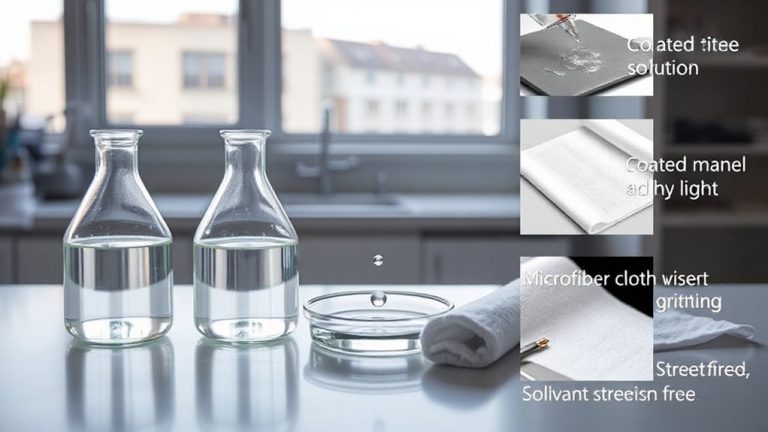
While traditional metal polishes often rely on abrasive and caustic chemicals, you can achieve effective results with safer, non-toxic alternatives that minimize health and environmental risks. Natural abrasives like baking soda and crushed walnut shells provide moderate scouring action without damaging base metal. They work best on light surface rust when applied with damp cloths or soft brushes. Eco solvents such as d-limonene and ethanol dissolve grease and oxidation residues without releasing harmful volatile organic compounds. These solvents typically operate within a pH range of 7–9, reducing corrosion potential. Products like citric acid-based polishes remove rust through chelation, preserving surrounding material. Use a 10% citric solution at 140°F for 20 minutes for best results. These alternatives require more manual effort but offer measurable safety advantages. You maintain effectiveness while avoiding chlorine, ammonia, and petroleum distillates common in industrial formulas.
On a final note
You can effectively restore lightly to moderately rusted metal with proper polish. Chemicals like oxalic acid and citric acid dissolve iron oxide at concentrations of 5–10%. For heavy rust, mechanical removal exceeds chemical limits. Stainless steel responds better than iron due to chromium content. Always verify pH-ideally between 3 and 5-for safe, effective treatment without surface damage.