How to Verify Wheel Compatibility With Adaptive Suspension Systems
Match your wheel’s bolt pattern-like 5x112mm or 5x120mm-and keep diameter within OEM specs to avoid disrupting adaptive damping. Guarantee hub bore fits exactly, typically 54mm–72mm, for proper centering. Stay within ±5mm of factory offset to prevent rubbing and alignment issues. Maintain at least 1.5mm clearance around ABS sensors to avoid signal loss. Use wheels rated for 1,500 lbs or more per corner. Stick to certified fitments-errors trigger suspension faults. You’ll uncover deeper compatibility factors next.
Notable Insights
- Confirm wheel bolt pattern matches OEM specifications to prevent sensor errors and vibration in adaptive suspension systems.
- Ensure hub bore size exactly matches the vehicle’s hub diameter for proper centering and rotational balance.
- Match wheel offset within ±5mm of factory specs to maintain suspension geometry and avoid tire or brake contact.
- Verify at least 1.5 mm clearance between the wheel’s inner barrel and ABS sensors to prevent signal interference.
- Use wheels with certified load ratings of at least 1,500 lbs per corner to support adaptive suspension requirements and avoid system faults.
Check Wheel Size and Bolt Pattern for Adaptive Suspension
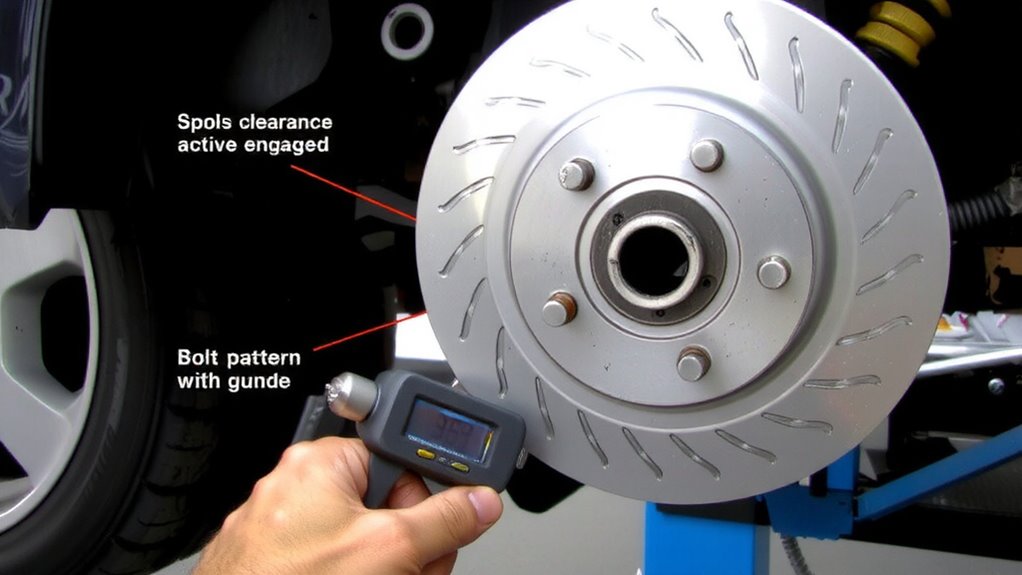
Every wheel you consider must match both the required size and bolt pattern to function properly with an adaptive suspension system. Your vehicle relies on precise wheel dimensions to maintain accurate tire pressure readings. Incorrect bolt patterns cause vibration and sensor errors, disrupting suspension calibration. Always confirm the bolt count and pitch circle diameter-most luxury performance vehicles use 5×112 or 5×120 mm. Wheel size impacts ride quality and suspension response; deviating from OEM diameter alters damping algorithms. Larger wheels reduce sidewall height, increasing ride harshness. Stick to factory-recommended diameters and widths. Wheel finish doesn’t affect performance but must withstand environmental stress without cracking or corroding. Poor finishes can mask structural damage. Use factory-specified torque when installing. Even minor deviations compromise safety and adaptive tuning. Always validate wheel specs before purchase.
Get Offset and Hub Bore Right
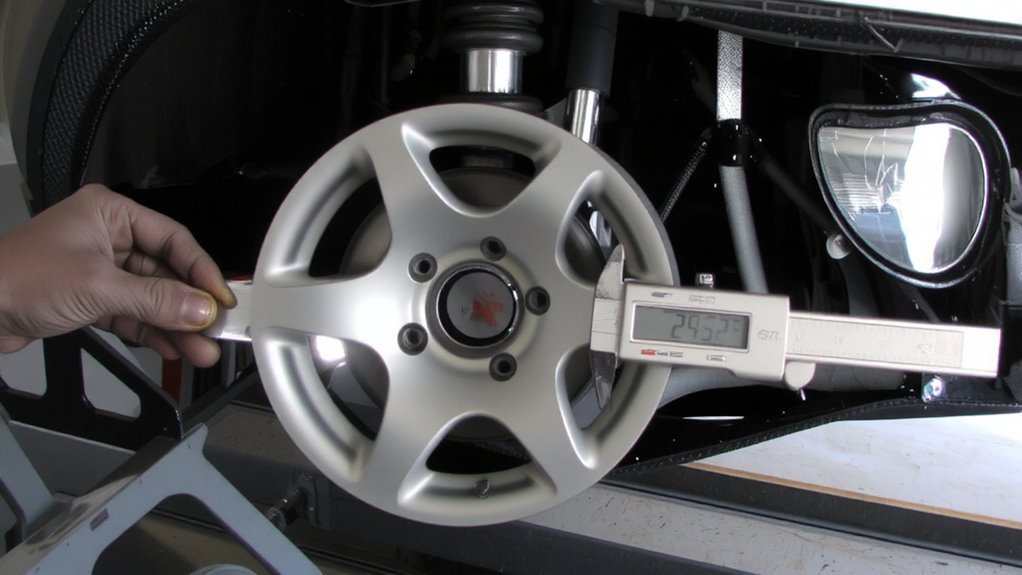
Matching the correct offset and hub bore is critical when fitting wheels to a vehicle with adaptive suspension. You must guarantee hub centering to maintain rotational balance and prevent vibration. Hub bore should match your vehicle’s hub diameter exactly-typically between 54mm and 72mm-so the wheel centers properly without relying solely on lug bolts. Incorrect offset alters wheel position, affecting suspension geometry and tire clearance. Even a 5mm deviation can cause rubbing against fenders or suspension components. Plus, wrong offset impacts brake clearance, risking contact between the inner wheel and brake calipers. Verify your factory offset, usually stamped on the wheel’s back, and match within ±5mm. Proper hub centering and accurate offset maintain ride quality, protect adaptive suspension components, and guarantee safe, stable handling. Never assume compatibility-measure and confirm every specification.
Don’t Block Sensors or ABS
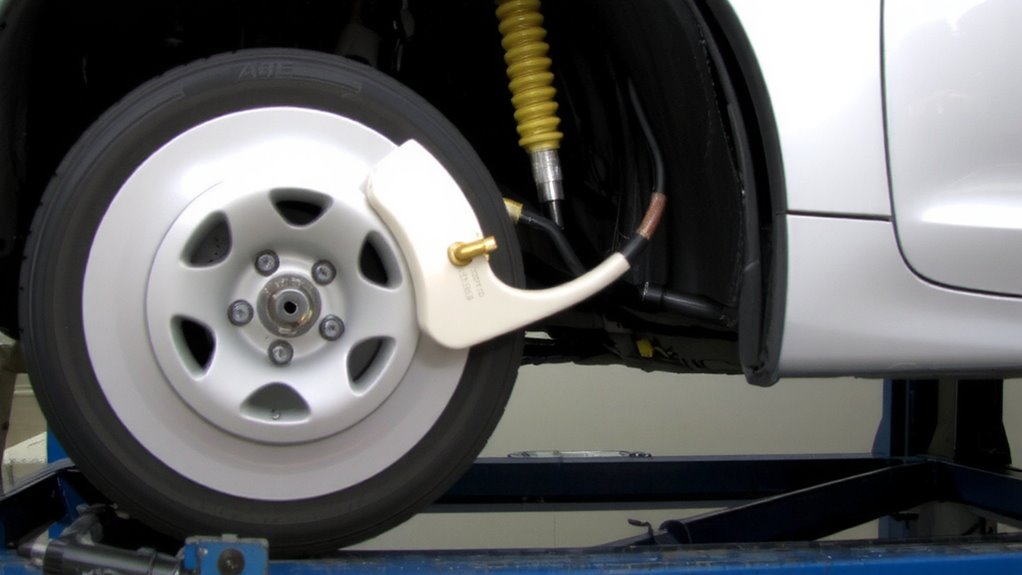
Why risk triggering a warning light or disabling critical safety systems? Installing incompatible wheels can obstruct essential components like ABS sensors and brake integration systems. You must guarantee adequate sensor clearance-typically at least 1.5 mm-between the wheel’s inner barrel and the sensor mounting point. Even slight contact or interference disrupts signal transmission, leading to false error codes or complete system shutdown. ABS rings and wheel speed sensors rely on precise electromagnetic fields; any obstruction from aftermarket wheels disrupts this balance. Brake integration systems, which coordinate stability control and adaptive damping, depend on uninterrupted data flow. A blocked sensor delays response during hard braking or slippery conditions. Always verify the wheel’s internal profile matches OEM specifications. Test-fit when possible. Never assume fitment based on bolt pattern alone-hidden clearances matter just as much. Your safety depends on attention to these details.
Meet Load Rating for Adaptive Systems
You’ve guaranteed sensor clearance, but that’s only half the battle when fitting wheels to a vehicle with adaptive suspension. You must meet the manufacturer’s specified load capacity to preserve system performance and safety. Each wheel must support the vehicle’s dynamic weight distribution under acceleration, braking, and cornering. Most OEM wheels are rated to handle a minimum of 1,500 lbs per corner, but aftermarket options often fall short. Always verify the wheel’s load capacity stamp-typically etched on the back of the spoke or inner rim. Insufficient structural integrity risks cracking under stress, especially on vehicles with adaptive damping that adjusts stiffness based on driving conditions. Using substandard wheels can trigger false fault codes or premature wear in the suspension system. Match or exceed OEM load ratings to maintain structural integrity and guarantee the adaptive suspension functions as designed.
Avoid Aftermarket Wheel Mistakes
While many drivers prioritize aesthetics when upgrading wheels, skipping the technical specs can compromise an adaptive suspension system’s functionality. You must match wheel size, offset, and hub bore precisely to avoid triggering error codes or uneven load distribution. A mismatched wheel finish might look good, but it won’t fix sensor inaccuracies from improper fitment. Always choose wheels with the correct load rating and fitment specifications outlined in your owner’s manual. Brand reputation matters-reputable manufacturers provide certified testing data, including JWL/VIA ratings and impact test results. Cheap, unbranded wheels often lack these validations, increasing failure risk. Verify bolt pattern, center bore, and spoke design clearance with adaptive suspension components. A forged wheel may cost more but delivers better weight savings and strength. Never assume fitment based on appearance-measurements and certification documents are essential for long-term system reliability.
How Adaptive Suspension Affects Fitment
Though adaptive suspension systems enhance ride quality through real-time damping adjustments, they also impose strict requirements on wheel fitment that you can’t afford to overlook. Incorrect wheel dimensions or materials may cause sensor interference, disrupting data used for suspension calibration. Conductive metals or improper valve stem placement can degrade signal accuracy from height or wheel-speed sensors. Even slight deviations in offset or bore size alter suspension geometry, forcing the system to compensate unnecessarily. You need exact fitment to maintain performance and avoid error codes.
| Factor | Risk | Impact on System |
|---|---|---|
| Incorrect offset | Altered camber | Faulty suspension calibration |
| Conductive rim material | Sensor interference | Erroneous damping response |
| Wrong center bore | Improper mounting | Persistent stability alerts |
Always verify specs match OEM tolerances-your adaptive suspension depends on it.
When to Talk to a Suspension Specialist
Signs you need a suspension specialist often appear after changes to wheel or tire specs-especially if you’ve already adjusted offset, width, or ride height. You notice uneven tire wear, reduced ride quality, or warning lights on your dashboard. These issues suggest the adaptive suspension can’t compensate for the new setup. Modern systems rely on precise sensor data; incorrect wheel dimensions disrupt feedback loops. Suspension diagnostics can identify calibration errors or component strain before failure occurs. Adaptive dampers, air springs, or electronic stability controls may require reprogramming. A professional consultation guarantees compatibility with your vehicle’s onboard systems. Specialists use OEM-level tools to assess alignment angles, clearances, and sensor outputs. They verify that modifications won’t compromise safety or performance. Don’t guess-verified fitment prevents costly damage. Seek expert help when altering critical dimensions. Proper integration protects both your investment and driving experience. A clean microfiber towel helps prevent debris from affecting sensitive suspension sensors during inspection.
On a final note
Always match wheel diameter, width, and bolt pattern to your vehicle’s factory specs-typically 5×112 or 5×120 for luxury performance models. Incorrect offset alters suspension geometry, affecting camber and tire wear. Verify hub bore size to guarantee proper centering; mismatched bores cause vibration. Most adaptive suspensions require wheels with correct load ratings-usually 1,430 lbs or higher per wheel. Never obstruct sensor paths; some systems use wheel-speed sensors near the hub. When in doubt, consult a suspension specialist.