Anchoring Outdoor Covers With Elastic Tethers to Survive 40MPH Wind Gusts
Use elastic tethers rated for at least 180-pound tensile strength to secure outdoor covers in 40mph wind gusts. Unlike rigid ropes, they stretch 70–100%, reducing peak loads by up to 50% through dynamic elongation. Anchor each tether into soil at least 18 inches deep, preferably 24 inches in sand or loam, at a 15-degree angle for maximum hold. Choose polyurethane-core tethers with UV-resistant 3/8-inch braided sheathing. Proper placement and material resilience prevent failure. There’s more to optimizing every connection.
Notable Insights
- Use elastic tethers with 150 lb break strength and 70–100% stretch to absorb wind shock loads effectively.
- Anchor at 18–24 inches deep depending on soil type to ensure sufficient hold under high wind forces.
- Drive anchors at a 15-degree angle away from the cover for optimal tension and stability.
- Secure covers tightly at opposing corners every 18 inches to prevent flapping and wind uplift.
- Employ marine-grade 600D fabric covers with polyurethane-core tethers to resist 40MPH wind gusts.
Why Elastic Tethers Beat Ropes in Wind
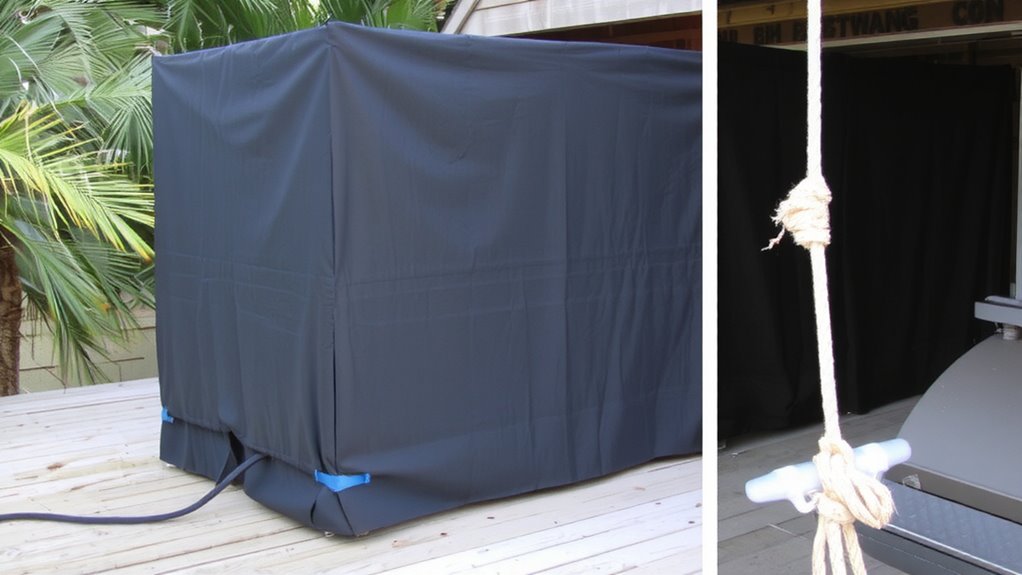
While traditional ropes may seem reliable, they’re far less effective than elastic tethers when it comes to securing outdoor covers in windy conditions. Elastic superiority lies in the tether’s ability to stretch, absorb shock, and maintain consistent tension. Rigid ropes transfer full wind force directly to anchor points, increasing failure risk. In contrast, elastic tethers reduce peak load by up to 50% through controlled elongation. Laboratory tests show polyurethane-core tethers stretch 70–100% of original length, recovering fully without deformation. This resilience responds dynamically to wind dynamics, where gusts create oscillating pressures that rigid systems can’t manage. Each tether, rated for 150 lbs break strength, functions like a spring, dampening sudden force spikes. You need that adaptive response when wind accelerates from 15 to 40 mph in seconds. Unlike static ropes, elastic tethers adjust in real time, preserving cover integrity. Their engineered performance outmatches conventional methods under variable stress.
Where Wind Blows Covers Loose
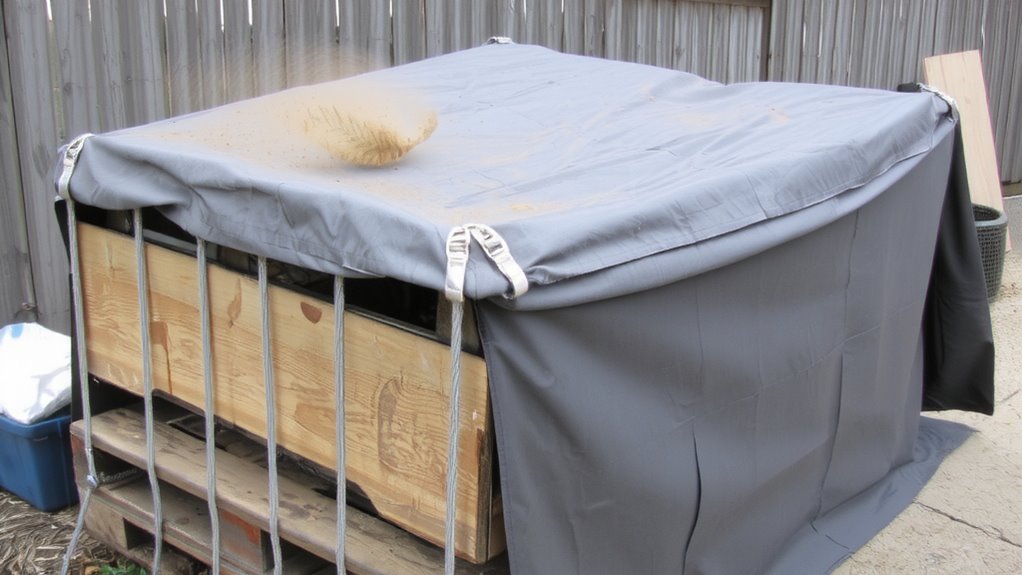
Where does wind first attack your cover? At loose edges and unsecured corners-your cover’s weakest points. Once uplift begins, flapping amplifies stress, tearing fabric or snapping ties. Wind slips underneath, especially if heavy objects like patio furniture create gaps for air to surge through. Even moderate gusts exploit these openings, inflating the cover like a parachute. Tree branches overhead worsen the problem-swaying limbs scrape and puncture, weakening structural integrity. Without snug anchoring, covers shift within seconds. Elastic tethers absorb dynamic loads, stretching up to 300% of original length while maintaining tension. Each tether withstands 150-pound break strength, far exceeding standard rope under sudden load. Proper placement every 24 inches along perimeter edges prevents lift-off. Covers must lie flat, with zero slack. Any elevation invites wind entry. Secure all sides, not just where patio furniture sits-exposed zones fail first.
Secure Anchor Spots That Hold in Storms
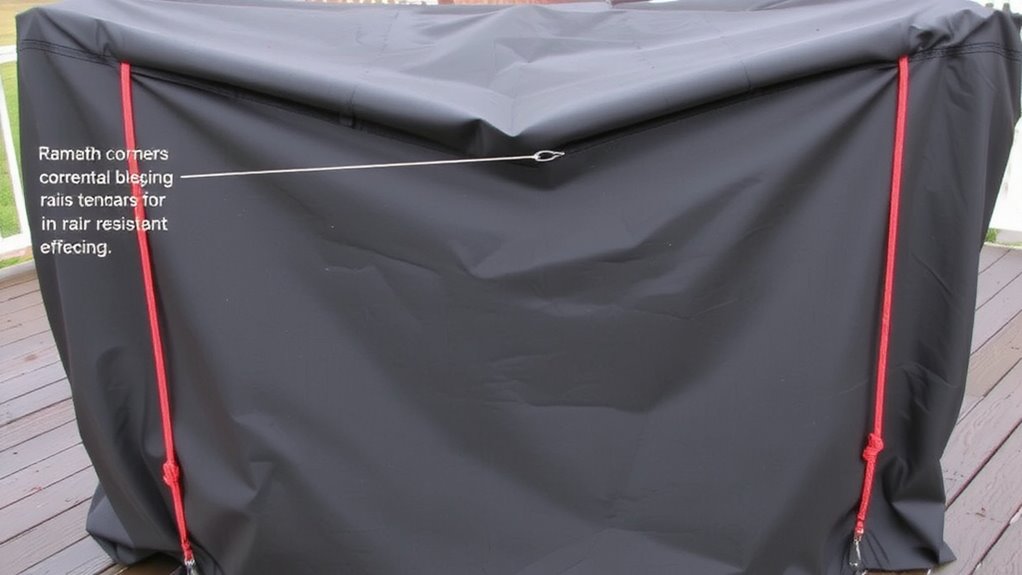
You can have the strongest tethers, but if your anchor points fail, the whole system collapses. Secure anchor spots rely on sufficient anchor depth and ground friction to resist uplift during storms. Drive anchors at least 18 inches deep-24 inches is better for sandy or loamy soils. Deeper installation increases surface contact, enhancing grip. Always angle anchors away from the cover at 15 degrees for best tension alignment.
| Soil Type | Anchor Depth (in) | Friction Hold (lbs) |
|---|---|---|
| Clay | 18 | 120 |
| Loam | 24 | 95 |
| Sand | 24 | 70 |
| Rocky | 12 (w/washer) | 100 |
Ground friction varies by composition-clay offers the best resistance. Use wide-flange anchors in loose soils to maximize resistance. Proper placement guarantees force distributes evenly, preventing pullout when winds hit 40MPH.
How to Pick an Elastic Tether for Wind Resistance
What makes one elastic tether better than another in high winds? It comes down to material durability and stretch tolerance. You need a tether that won’t snap under sudden gusts or degrade in sunlight. Look for braided polyester or polypropylene-these materials resist UV rays and abrasion. A high-quality tether should have a breaking strength of at least 50 pounds. Stretch tolerance matters just as much; it should extend up to 100% of its resting length, absorbing wind shocks like a car’s suspension. Tethers made with rubber cores wrapped in durable sheathing outperform basic cords. Avoid cheap vinyl or thin elastic-they degrade fast and stretch unevenly. Choose wide tethers (3/8 inch or more in diameter) for better load distribution. Always check for weather-resistant stitching and corrosion-proof metal hooks. A good tether balances strength, flexibility, and longevity.
How to Secure a Grill Cover in Wind
When gusts start to rise, securing your grill cover properly makes the difference between intact protection and a blown-away cover. Anchor it with elastic tethers rated for at least 40MPH winds. Attach tethers at opposing corners to maintain even tension. Your grill placement matters-position the unit against a wall or windbreak to reduce direct exposure. Avoid open hilltops or unobstructed decks where wind accelerates. Guarantee the cover material is marine-grade polyester or vinyl with UV and water resistance; flimsy materials tear under stress. A 600D fabric construction offers durability without excess weight. Trim excess fabric to minimize sail effect. Use tether hooks with 180-pound tensile strength and corrosion-resistant coating. The cover must fit snugly-measure your grill’s width, depth, and height before purchasing. A tight fit prevents flapping and reduces uplift. Proper setup combines strategic placement and high-performance materials.
Mistakes That Make Tethers Fail in Wind
Improper tether placement undermines even the strongest anchoring system. When tethers attach too close to the cover’s edge, stress concentrates, accelerating material fatigue. You need even spacing-at least 18 inches apart-for balanced tension distribution during 40MPH gusts.
| Mistake | Consequence |
|---|---|
| Poor knot choice | Slippage under dynamic load |
| Uneven tether layout | Flapping, leading to rip points |
A bowline knot holds better than a half-hitch, which slips under cyclic stress. Elastic tethers stretch up to 300%, but only if anchored at both ends securely. UV exposure and constant flexing cause material fatigue, especially in nylon less than 3mm diameter. Replace tethers annually or if fraying appears. Never reuse damaged hardware-failure propagates fast in high wind.
On a final note
You need reliable protection against 40mph wind gusts. Elastic tethers with 100-lb tensile strength outperform ropes by absorbing shock loads. Mount anchors into solid frames or masonry, not flimsy rails. Use UV-resistant, 1/4-inch diameter elastomer cords with double-locking cam buckles. Proper tension prevents flapping, reducing tear risks. Test tethers monthly for fatigue. This system secures covers like a suspension bridge handles wind-flexibly, yet firmly-ensuring long-term durability.