Flushing Coolant Reservoirs and Refilling With -40°C Rated Antifreeze Mixtures
Flush your coolant reservoir every 2 years or 48,000 km to prevent freeze-related damage. Aged coolant loses protection, raising its freeze point from -45°C to -28°C. Use a 60:40 ethylene glycol mix with distilled water for ideal -40°C performance. Guarantee compatibility with your vehicle’s OAT, HOAT, or IAT specs. Avoid air pockets and improper ratios. Test concentration with a refractometer-accuracy matters. There’s more to get right.
Notable Insights
- Flush the coolant reservoir with distilled water to remove debris and prevent freezing or cracking in cold weather.
- Replace old coolant every 2 years or 48,000 km to maintain freeze protection down to -40°C.
- Use a 50/50 mix of ethylene glycol and distilled water for optimal freeze and boil protection.
- Test glycol concentration and freeze point with a refractometer to ensure accurate -40°C rating.
- Avoid mixing coolant types to prevent sludge, corrosion, and reduced cold-weather performance.
Flush Your Coolant Reservoir in Cold Weather
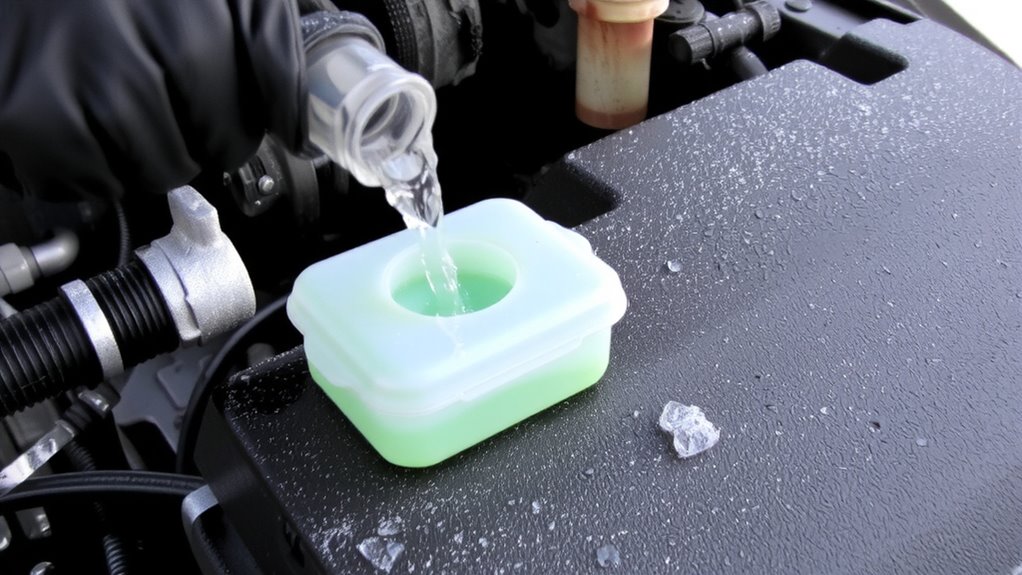
Why risk a cracked reservoir or blocked flow when cold weather hits? Flushing your coolant reservoir prevents debris buildup and guarantees efficient circulation. You must perform regular reservoir inspection to detect cracks, leaks, or contamination early. Over time, coolant degradation reduces thermal efficiency and promotes corrosion. Old fluid accumulates sludge, impairing heat transfer and increasing pressure risks. Flush the system completely using distilled water first, then refill with a 50/50 ethylene glycol mix rated for -40°C. This ratio maintains boiling points near 106°C and prevents freezing down to -37°C. Inspect hoses, caps, and seams for brittleness or warping. Replace damaged components immediately. A clean reservoir supports consistent coolant chemistry and system longevity. You protect the radiator, water pump, and engine block by maintaining purity. Prevention is cheaper than repair. For optimal performance, choose a high-quality antifreeze coolant that matches your vehicle’s specifications and climate demands.
Why Old Coolant Fails at -40°C
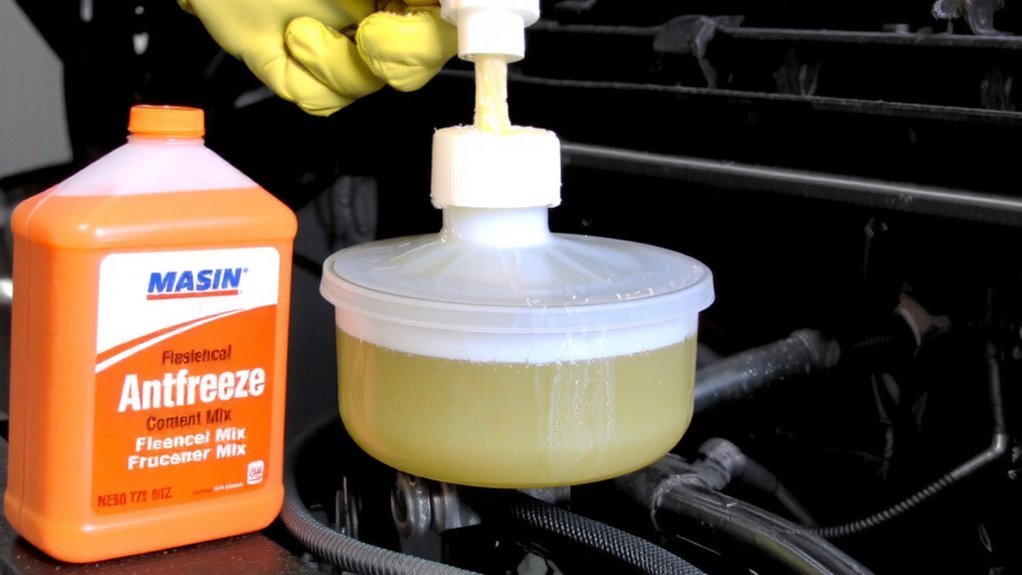
Even if you’ve relied on the same coolant for years, it won’t hold up at -40°C when degradation sets in. Chemical degradation and thermal breakdown reduce effectiveness over time. Acids form, corroding internal components, while inhibitors deplete, lowering freeze protection. Here’s how aging affects key properties:
| Property | New Coolant | Aged Coolant |
|---|---|---|
| Freeze Point (°C) | -45°C | -28°C |
| pH Level | 9.5 | 7.1 |
| Inhib习近平新 Level (%) | 100% | 42% |
| Glycol Concentration | 50% | 38% |
Thermal breakdown cracks glycol molecules, reducing heat capacity and viscosity stability. You lose boil-over protection too-old coolant boils at 107°C versus 129°C initially. Oxidation byproducts clog passages, impairing flow. At -40°C, weakened mixtures begin crystallizing, risking blockages and cracking. Even if the reservoir looks full, performance is compromised. Relying on degraded coolant is like trusting worn tires in a blizzard-dangerous and predictable only in failure. Choosing the right best automotive coolant ensures long-term protection against extreme temperatures and chemical breakdown.
Choose the Right -40°C Antifreeze Mix
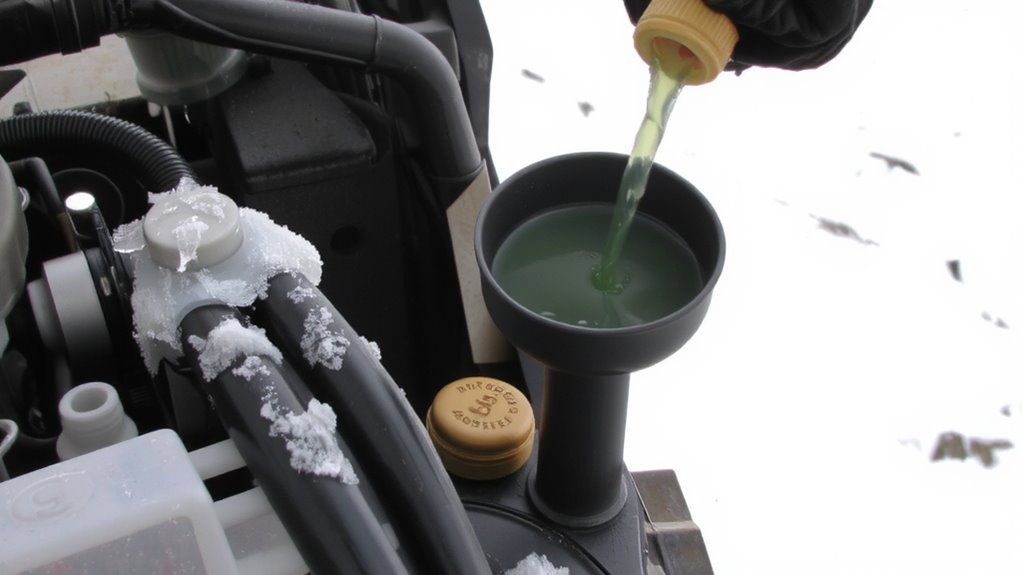
When selecting an antifreeze mix rated for -40°C, your best choice is a 60:40 ratio of ethylene glycol to distilled water. This blend guarantees maximum freeze protection and heat transfer efficiency. Ethylene glycol lowers the freezing point, while distilled water prevents mineral buildup. Always verify color identification-coolants use dyes (like green, orange, or blue) to signal specific formulations, but color alone doesn’t guarantee compatibility. Never rely solely on appearance. Instead, perform compatibility testing before mixing. Check your vehicle manufacturer’s specs to match the correct coolant type (e.g., OAT, HOAT, IAT). Mixing incompatible coolants can form sludge or reduce corrosion protection. A refractometer gives an accurate freeze-point reading. Use only pre-mixed, high-purity solutions or mix manually with precise measurements. This ratio maintains viscosity and thermal capacity under extreme cold. Correct formulation guarantees long-term system integrity and prevents engine damage. For optimal performance and extended engine life, consider choosing one of the top antifreeze picks recommended by experts.
Avoid These Coolant Refill Mistakes
A coolant refill done incorrectly can compromise your engine’s thermal management and lead to costly damage. Avoid introducing air bubbles by refilling slowly and with the heater valve open. Air pockets insulate hot spots, reducing cooling efficiency and risking overheating. Always use a funnel to prevent spills and maintain a clean reservoir neck. Never mix coolant types-it degrades chemical stability. Improper disposal harms the environment; recycle used fluid at certified facilities.
| Mistake | Consequence | Prevention Method |
|---|---|---|
| Trapped air bubbles | Hot spots, overheating | Bleed system, fill slowly |
| Using wrong mix | Freezing above -40°C | Verify 50/50 glycol/water ratio |
| Improper disposal | Environmental contamination | Recycle at approved center |
How Often to Flush for Winter Readiness
Regularly flushing your coolant reservoir is essential for reliable winter performance. You should flush the system every two years or 48,000 km (30,000 miles), whichever comes first. This interval prevents issues tied to coolant aging, which degrades inhibitors and raises corrosion risk. Old coolant can’t maintain proper freeze protection, even if mixed to -40°C. During each reservoir inspection, check for cloudiness, sediment, or discoloration-signs degradation has begun. Also, verify coolant concentration with a refractometer for accuracy. A fresh flush removes contaminants and restores thermal efficiency. Use only ethylene glycol-based coolant rated for -40°C and a 50/50 mix with deionized water. Skipping scheduled maintenance risks engine damage when temperatures dip. Preventive flushing guarantees consistent heat transfer and prevents freeze-related cracking. Stay ahead of failure with disciplined reservoir inspection and timely service.
Keep Your Engine Protected in Extreme Cold
Though winter’s worst can strike without warning, your engine doesn’t have to pay the price-proper coolant management keeps critical components safe down to -40°C. Coolant degradation reduces antifreeze effectiveness, leaving your system vulnerable. Old or contaminated fluid accelerates engine corrosion, especially in aluminum and cast-iron parts. You need a 50/50 mix of ethylene glycol and distilled water for maximum freezing point depression and heat transfer. This formulation maintains fluidity and prevents expansion damage. Below is a comparison of coolant conditions and risks:
| Condition | Risk Level |
|---|---|
| Fresh 50/50 mix | Low |
| 3+ years, no flush | High |
| Diluted coolant | Moderate |
| Contaminated fluid | Critical |
Flush every two years to prevent coolant degradation. Use only -40°C rated antifreeze to guarantee reliable protection against engine corrosion and freeze-related failure.
On a final note
You’ve guaranteed your coolant system is ready for extreme cold. Flushing removes corrosive scale and old glycol breakdown products. Refill with a 50/50 mixture of ethylene glycol antifreeze and deionized water, rated to -40°C (ASTM D3306 compliant). This mix prevents freezing and cavitation erosion. Check the reservoir cap seal and bleed air from the system. Inspect hoses and connections for leaks. Protection below -40°C risks engine damage.