How to Wash a Vehicle After Exposure to Volcanic Dust Without Abrasion
Wait for air quality officials to confirm it’s safe, with PM2.5 below 35 µg/m³ and PM10 under 150 µg/m³, before starting. Rinse your vehicle using a 25-degree spray tip at 500–800 PSI, keeping 18 inches away, from top to bottom. Wash with pH-balanced shampoo (6.5–8.5) using a two-bucket method and microfiber mitt (300–400 g/m²). Dry with clean, folded microfiber towels. Apply synthetic wax or ceramic sealant for long-term protection. More details follow on proper decontamination steps.
Notable Insights
- Wait for official air quality clearance before starting any cleaning to ensure airborne ash levels are safe.
- Rinse the vehicle with cool water using a wide-angle spray tip to lift ash without scratching the surface.
- Wash with a pH-balanced shampoo using the two-bucket method and grit guards to minimize contamination.
- Dry with clean, high-quality microfiber towels using straight-line motions to prevent grit transfer.
- Apply synthetic or ceramic-infused wax after washing to seal and protect the paint from residual contaminants.
Wait for Air Quality Clearance
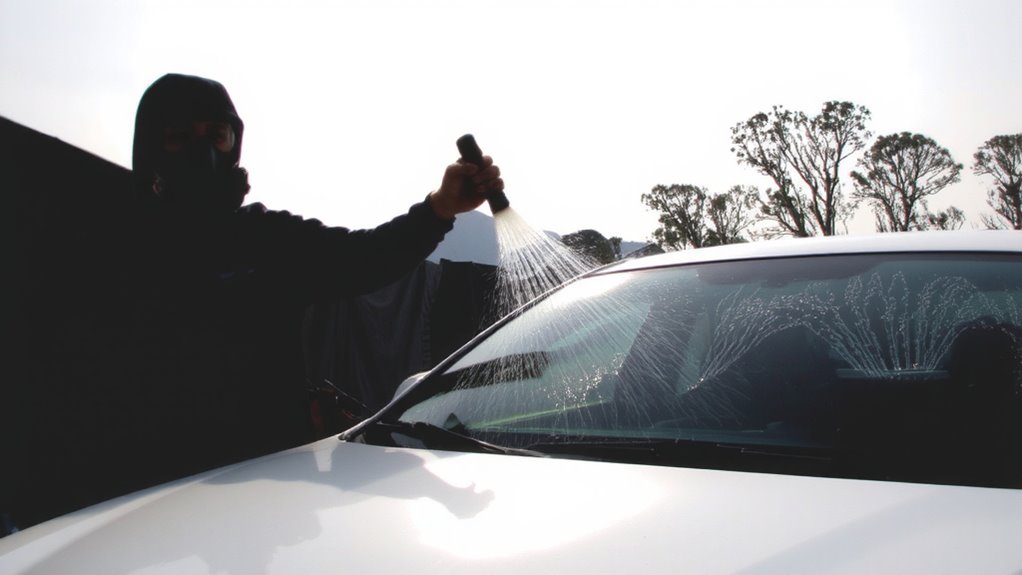
Once air quality officials confirm it’s safe, you can begin cleanup-until then, stay indoors and avoid exposure. Do not initiate vehicle washing until local authorities lift airborne ash advisories. Poor air quality poses health risks and compromises cleanup effectiveness. Safety protocols require monitoring real-time air quality data, typically measured in PM2.5 and PM10 concentrations. When levels fall below 35 µg/m³ for PM2.5 and 150 µg/m³ for PM10, conditions are generally acceptable. Confirm updates through official environmental or emergency management channels. Attempting decontamination earlier risks respiratory harm and recontamination. Ash particles suspended in air act like fine sandblasting grit, damaging paint if disturbed prematurely. Adhering to clearance guidelines guarantees personal safety and prevents unnecessary vehicle wear. Always prioritize safety protocols over convenience. Compliance reduces both health hazards and long-term maintenance costs.
Rinse Off Volcanic Ash Safely
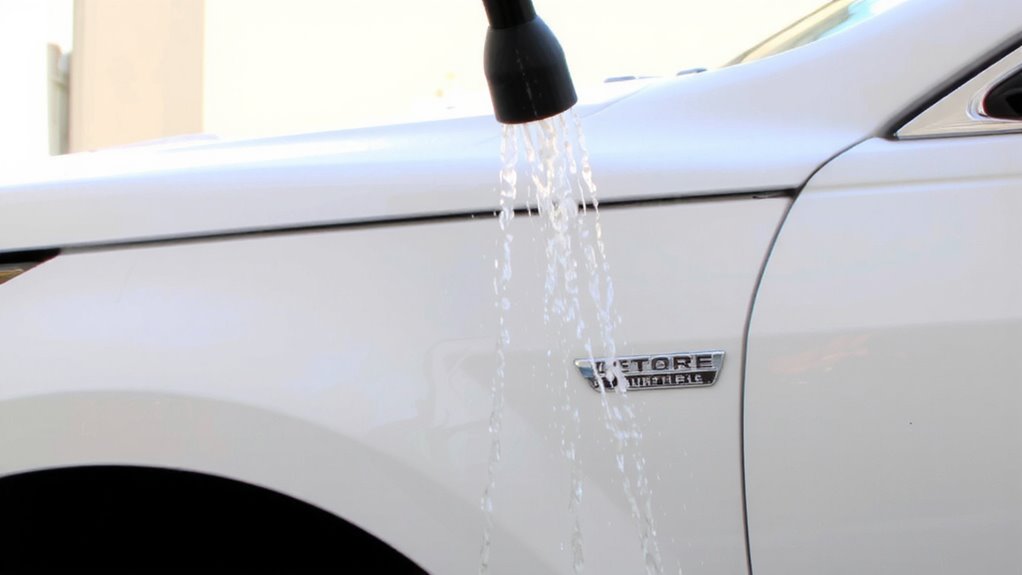
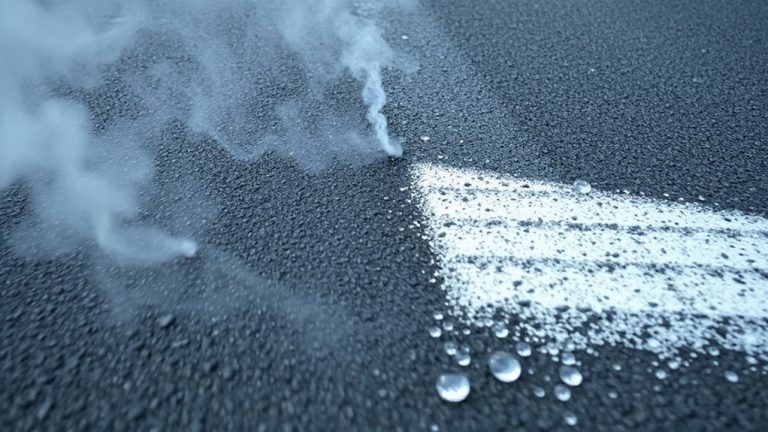
You can begin rinsing your vehicle only after air quality has been officially cleared. Use cool or lukewarm water-never hot-to maintain temperature control and prevent thermal shock to the paint. High-pressure nozzles set above 1,500 PSI may embed ash particles; instead, use a 25-degree wide-angle spray tip at 500–800 PSI for safe particle containment. Start from the roof and work downward to minimize cross-contamination. Keep the nozzle at least 18 inches from surfaces to avoid forcing particles into the clear coat. A continuous flow guarantees ash lifts away without scratching. Capture runoff with tarps if possible, preventing environmental dispersion. This pre-wash step removes up to 70% of bonded particulates. Avoid dry wiping or brushing during rinse-those actions increase abrasion risk. Effective particle containment at this stage reduces damage potential during the wash phase. For optimal results, consider using a car pressure washer kit designed for gentle, effective cleaning.
Wash With pH-Balanced Soap and a Two-Bucket Method
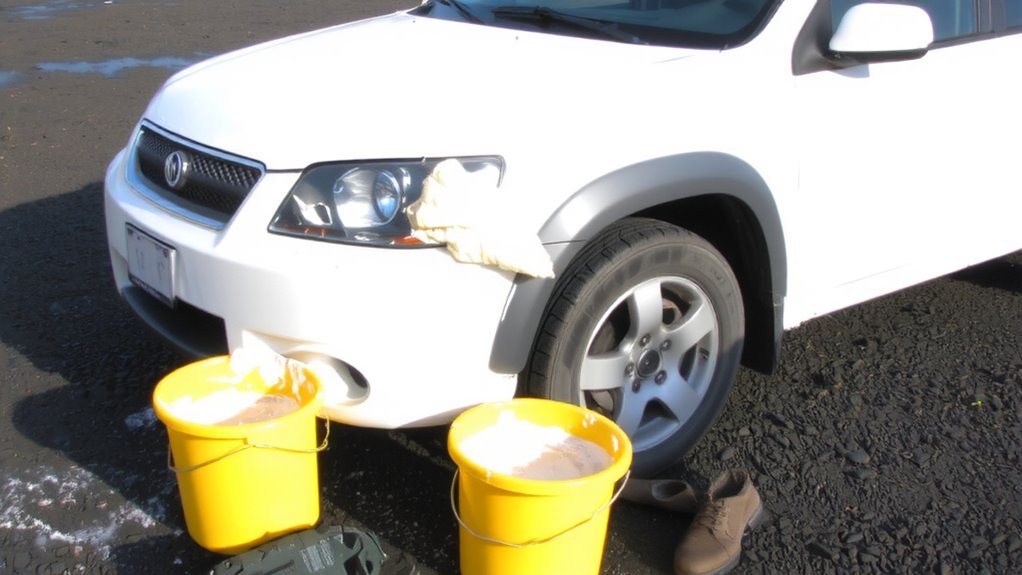
A proper wash begins with selecting a pH-balanced car shampoo-typically in the 6.5 to 8.5 range-to safely dissolve residual volcanic ash without stripping wax or degrading clear coat polymers. Maintaining pH balance is critical; acidic or alkaline cleaners can etch delicate surfaces or compromise protective coatings. Use a foam cannon or hand mitt to evenly apply soap, working top to bottom. Always pair your pH-balanced shampoo with a two bucket system: one holds soapy water for washing, the other clean water for rinsing your mitt. Use a grit guard in each bucket to trap contaminants below the cleaning surface. This method prevents redepositing abrasive ash particles onto the paint. Microfiber mitts with 300–400 g/m² density lift grit efficiently while minimizing marring. Rotate mitts frequently between buckets to maintain cleanliness. The two bucket system reduces swirls by up to 70% compared to single-bucket washing.
Dry With Clean Microfiber Towels
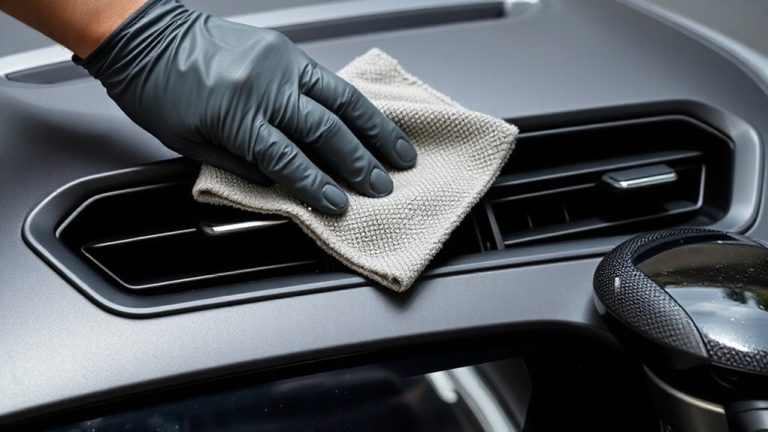
After rinsing away soapy water and loosened contaminants, the drying phase begins-this step prevents water spots and locks in surface protection. Use clean, high-quality microfiber towels for lint free drying and superior dust trapping. Each towel should measure at least 16” x 24” with a plush 300–400 g/m² weight for maximum absorbency. Microfibers, typically 0.1–0.3 denier, lift water efficiently without scratching. Fold the towel into quarters to create eight clean drying surfaces, minimizing contact with contaminated areas. Use straight-line motions, not circles, to avoid redistributing grit. Replace towels immediately when damp or soiled. A hydrophobic surface dries faster and reduces water spotting risk. Proper microfiber care-washing with no fabric softener-maintains performance. Effective drying isn’t just about removing moisture; it’s the final barrier against residue and microscopic abrasives left behind after volcanic dust exposure. For optimal results, consider using one of the best car drying towels designed specifically for high absorbency and scratch-free performance.
Apply Wax to Protect Your Car’s Finish
Always follow volcanic dust decontamination with a protective wax layer-this step seals the paint and shields against residual acidity and future particulate adhesion. Apply a high-quality synthetic wax or ceramic-infused sealant to achieve durable paint protection. Most quality waxes offer 6–12 months of defense when properly applied. Use a foam applicator pad and apply wax in thin, overlapping 2×2-foot sections. For best results, consider a best car wax applicator that ensures even wax distribution and minimizes hand fatigue. Allow it to haze for 3–5 minutes, depending on ambient temperature and humidity. Buff off with a clean microfiber cloth to avoid residue. The wax creates essential surface lubrication, reducing friction from wind-driven particles. Carnauba-based waxes provide a glossy finish with UV resistance up to 30%, while synthetic polymers offer enhanced hardness (rated 6–9H on pencil hardness scale). Reapply every 3–6 months in volcanic zones. This maintenance guarantees long-term finish integrity and reduces future decontamination effort.
On a final note
Wait until authorities confirm safe air conditions. Rinse your vehicle with low-pressure water at 40–60 psi to prevent embedding particles. Use a pH-neutral car shampoo diluted at 1:10 ratio with the two-bucket method-grit guards in each bucket reduce swirl marks. Dry with plush, 100% microfiber towels measuring 16×24 inches and 380–400 GSM. Apply a synthetic polymer sealant or natural carnauba wax with UV blockers to shield the clear coat from residual acidity.