A Guide to Choosing Solvents Based on Their Application in Automotive Finishing
Choose solvents based on your specific auto finishing stage and environmental conditions. Use fast-evaporating solvents like acetone in cool, dry air, but switch to slower ones like xylene in heat or humidity. Always match the solvent to your paint system-ketones for solvent-borne coatings, glycol ethers for epoxies. For degreasing, use 99% isopropyl alcohol or xylene with a two-cloth wipe. Thin paints 10–30% with compatible solvents to achieve 18–22 seconds viscosity for HVLP. Clean equipment promptly using acetone for fast cleanup or xylene for longer action, ensuring materials like rubber seals are compatible. There’s a precise solvent solution for every step.
Notable Insights
- Match solvent evaporation rate to environmental conditions to ensure proper film formation and avoid defects.
- Select solvents compatible with the paint system’s chemistry to prevent resin damage or film weakness.
- Use fast-drying solvents like acetone for equipment cleaning and slow-evaporating types like xylene when longer working time is needed.
- For surface degreasing, choose residue-free solvents such as isopropyl alcohol or xylene using a two-cloth wipe method.
- Thin paints with the correct solvent and ratio to achieve optimal viscosity for the spray system and prevent application issues.
Choose the Right Solvent for Auto Finishing
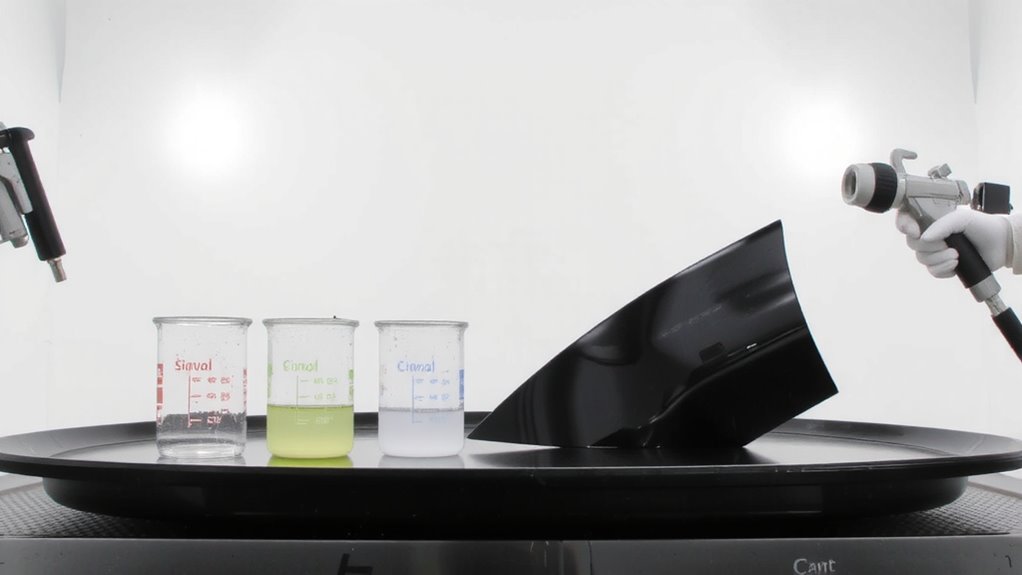
When selecting a solvent for auto finishing, matching the evaporation rate and chemical composition to your specific paint system is critical. Solvent evaporation directly affects film formation and finish quality. Fast-evaporating solvents work well in cool, dry environments, but can cause dry-spray issues in hot conditions. Slow solvents prevent sagging in high humidity but may extend drying times. You’ll need to adjust for ambient temperature and relative humidity-typically 68–77°F and 40–60% RH for best results. Flash timing, the interval between coats, depends on solvent volatility. A properly timed flash allows solvents to escape, reducing the risk of blistering or poor adhesion. For most systems, a 10–15 minute flash is standard, but always refer to technical data sheets. Choosing the right solvent guarantees proper flow, leveling, and a smooth, durable finish.
Match Solvents to Paint Types and Systems
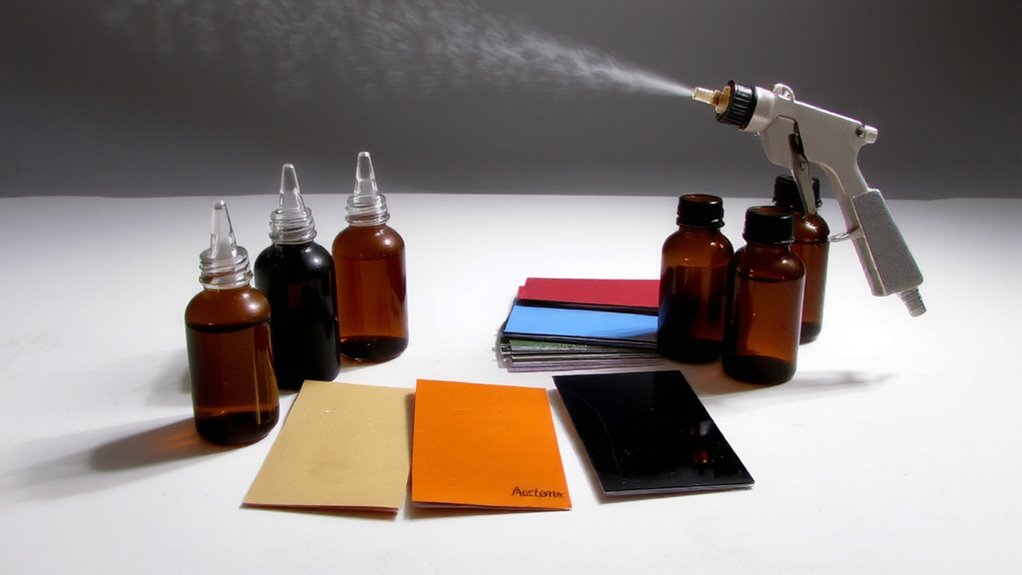
You’ve selected a solvent based on evaporation rate and environmental conditions-now it’s time to verify it’s compatible with your paint system. Solvent compatibility is critical-using the wrong solvent can weaken resin structures in acrylics, polyurethanes, or enamels. For example, ketones like MEK may damage waterborne basecoats but work well with solvent-borne systems. Always consult the paint manufacturer’s technical data sheet for approved thinners. Inadequate compatibility leads to poor paint adhesion, blooming, or delamination. Epoxy primers require glycol ether solvents for maximum cross-linking; using aromatics like toluene may inhibit cure. Acrylic lacquers perform best with ester-based solvents that balance flow and dry time. Applying incompatible solvents can shrink film thickness by up to 15%, compromising durability. Proper pairing guarantees uniform atomization, leveling, and long-term adhesion. Test on a small panel first.
Use the Best Solvents for Degreasing Surfaces
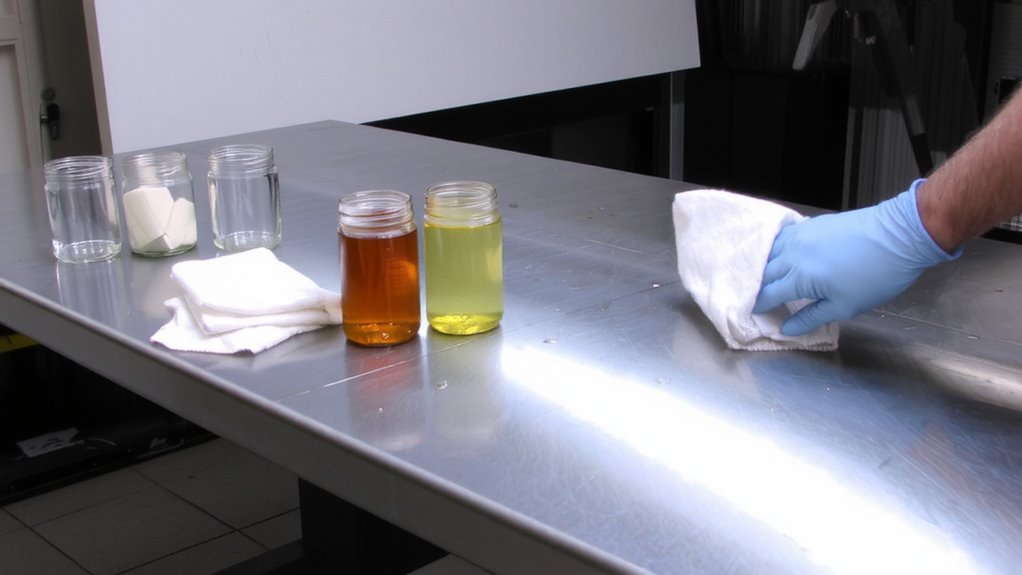
A majority of paint failures originate from improper surface preparation, and using the right solvent for degreasing is critical to guaranteeing adhesion. You need effective contaminant removal to eliminate oils, grease, wax, and silicones. Isopropyl alcohol (IPA) at 99% concentration works for light cleaning but lacks power for heavy residues. For tougher jobs, chlorinated solvents like perchloroethylene offer strong degreasing action but require ventilation due to toxicity. Xylene is common and effective, dissolving most automotive contaminants quickly with a flash point around 65°F (18°C). Always use a two-cloth wipe method: one dampened with solvent, the other dry to avoid spreading grime. Surface preparation isn’t optional-it’s the foundation. Poor cleaning leads to fisheyes, peeling, or delamination. Choose solvents specifically designed for automotive use, guaranteeing they leave no residue. Proper contaminant removal guarantees a chemically clean surface, critical for lasting paint adhesion.
Thin Paint With the Correct Solvent
Though paint flows poorly straight from the can, thinning it properly guarantees a smooth, defect-free finish. You must match the solvent to your paint system-solvent compatibility prevents resin separation or poor curing. Using the wrong thinner can destroy adhesion or cause hazing. Always verify chemical resistance between the solvent and base paint. Adjust paint viscosity according to application method: HVLP sprayers typically require 18–22 seconds on a Zahn cup #3, while airless systems run thicker. Thin in small increments, stirring gently to avoid entrapping air. Fast-evaporating solvents work in cool, dry conditions; slow solvents prevent dry-spray in hot environments. Never over-thin-excess solvent reduces film build and promotes sagging. Follow manufacturer data sheets for precise mix ratios, usually 10–30% thinner by volume. Proper thinning guarantees peak atomization, flow, and final film integrity.
Clean Equipment Using the Right Solvent
Cleaning your equipment promptly with the proper solvent prevents paint buildup and guarantees long-term tool reliability. You must choose a solvent with appropriate solvent evaporation rates-too fast, and residues form; too slow, and drying takes longer than necessary. For instance, acetone evaporates quickly (boiling point 56°C), ideal for fast cleanup, while xylene (boiling point 139°C) allows more working time. Equipment compatibility is critical-some plastics and rubber seals degrade when exposed to chlorinated or aromatic solvents. Always verify manufacturer specifications: HVLP spray guns often require ethanol-free solvents to protect internal seals. Using incompatible solvents leads to leaks, poor atomization, and costly replacements. Confirm material resistance ratings; nitrile gaskets tolerate ketones, but natural rubber doesn’t. Matching solvent chemistry to your tools assures effective cleaning without damage. This balance protects your investment and maintains consistent performance across applications.
On a final note
You must select solvents based on chemical compatibility and evaporation rate. Fast evaporators like acetone cut grease but can blister coatings if trapped. Slower solvents such as xylene suit high-solids paints, allowing even flow. Always match solvent strength to resin type-use esters for epoxy systems, glycol ethers for waterborne finishes. Proper thinning maintains 18–22-second flow cup viscosity. Clean spray guns immediately with dedicated solvent flushes to prevent clogs.