Exploring the Role of Surfactants in Soap Formulas for Optimal Cleanability During Auto Exterior Maintenance
You rely on surfactants to clean your car effectively. These molecules reduce water’s surface tension from 72 mN/m to under 30 mN/m, enabling deep penetration into grime. With hydrophilic heads and hydrophobic tails, they surround oil and suspend it in water through micelle formation. Ideal cleaning happens at 0.1–1.0% concentration, where emulsification peaks. pH between 7.5 and 8.5 maximizes performance without harming wax. The right balance means better results-you’ll see how formula design drives real-world performance.
Notable Insights
- Surfactants reduce water’s surface tension, enabling effective spreading and deep penetration into dirt on vehicle surfaces.
- Their hydrophilic heads and hydrophobic tails allow surfactants to bind water and oil, facilitating emulsification of grime.
- Micelle formation at critical micelle concentration encapsulates contaminants, preventing redeposition during rinsing.
- Anionic and nonionic surfactants are most effective in car wash soaps due to strong cleaning and oil-emulsifying properties.
- Optimal surfactant performance occurs in pH-neutral to slightly alkaline formulas (7–8.5), balancing cleanability and surface safety.
What Are Surfactants and Why Do They Matter in Car Wash Soap?
Surfactants, short for surface-active agents, are the chemical workhorses behind every effective car wash soap. You rely on them to reduce water’s surface tension, allowing it to spread evenly and penetrate tightly packed dirt. Without lowered surface tension, water would bead up and roll off, leaving grime untouched. Surfactant molecules have a hydrophilic head and a hydrophobic tail, making them uniquely capable of interacting with both water and oil. This dual nature enables micelle formation-where tails cluster inward, trapping oils. Micelles suspend contaminants in water, preventing redeposition. In car wash formulas, surfactant concentration typically ranges from 5% to 15%, optimized for effective cleaning without foaming excessively. Their performance is measured by critical micelle concentration (CMC), below which micelle formation fails. Proper surfactant selection guarantees stability, solubility, and compatibility with waxes or sealants. You need this precision to maintain paint integrity while achieving a thorough clean.
How Surfactants Remove Dirt, Oil, and Road Film
When you spray soap onto your car’s surface, the real cleaning action begins as surfactants immediately start interacting with contaminants at the molecular level. Each surfactant molecule has a hydrophilic head and a hydrophobic tail. The hydrophobic tail is attracted to oil, grease, and road film through hydrophobic attraction, embedding itself into the contaminant. Meanwhile, the hydrophilic head remains oriented toward water. As more surfactants surround the grime, they form spherical structures called micelles, trapping oil and dirt inside. Micelle formation effectively suspends contaminants in water, preventing redeposition. This emulsification process allows even stubborn residues to be rinsed away easily. Surfactants reduce water’s surface tension from 72 mN/m to as low as 30 mN/m, improving wetting and penetration. Maximum cleaning occurs at the critical micelle concentration, typically between 0.1% and 1.0% concentration by volume.
The 4 Types of Surfactants in Car Wash Soaps
While not all car wash soaps behave the same, their cleaning power largely depends on the type of surfactant used. Anionic surfactants, like sodium lauryl sulfate, reduce surface tension effectively and support strong micelle formation, lifting dirt and oil. They’re highly effective in soft water but can leave residues in hard water. Cationic surfactants are less common; they adhere to surfaces, offering anti-static benefits but poor cleaning alone. Nonionic surfactants, such as alcohol ethoxylates, excel at cutting grease and work well across varying pH levels. They rely on micelle formation without charge interference. Amphoteric surfactants, like cocamidopropyl betaine, adjust charge based on pH, offering mildness and foam stability. All four types lower surface tension, enabling water to spread and penetrate grime. Blending them optimizes performance-balancing cleaning, foaming, and surface compatibility-critical in automotive applications demanding precision and safety.
How pH and Surfactants Work Together
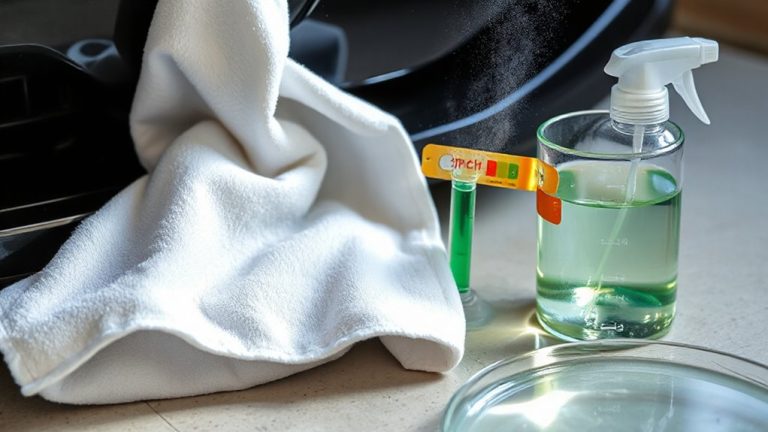
If you’ve ever wondered why some car wash soaps perform better in certain conditions, the answer often lies in how pH influences surfactant behavior. pH balance directly affects molecular charge and stability. In acidic formulas (pH < 7), nonionic and cationic surfactants remain stable and effective. Alkaline solutions (pH > 9) boost anionic and nonionic performance by enhancing oil emulsification. Maximum cleaning occurs when surfactant synergy aligns with pH to maximize micelle formation and reduce surface tension-critical for lifting grime. A pH between 7.5 and 8.5 is often ideal, balancing effectiveness with material safety. Outside this range, surfactants may degrade or irritate surfaces. Proper pH guarantees electrostatic compatibility between surfactant head groups and contaminants. You’ll see faster soil release and lower rinse times. Matching pH to surfactant chemistry isn’t optional-it’s essential for performance. Precision here defines professional-grade results.
How to Clean Without Scratching Your Paint
A scratch is the enemy of gloss. You must prioritize scratch prevention during every wash. Use only clean, high-quality microfiber towels and wash mitts with a pile depth of at least 300 g/m² to trap contaminants safely. Proper microfiber care guarantees fibers remain soft and effective-machine wash in cold water without fabric softener to preserve integrity. Two-bucket washing with grit guards minimizes debris re-contact, reducing micro-marring by up to 80%. Apply soap with low-abrasion application tools and rinse thoroughly before wiping. Never dry with towels not designed for automotive use. Contaminants like sand or brake dust act like sandpaper under pressure. A 1,500-micron paint layer can lose 1–2 microns per improper wipe, degrading clear coat over time. Consistent technique and tool maintenance prevent irreversible surface damage. Your finish stays smooth, deep, and scratch-free. For maximum protection, consider using a wash mitt made from plush, high-pile microfiber material designed to lift dirt away without abrasion.
How to Spot a High-Quality Car Wash Soap
You already know how to protect your paint during washing, but the soap you use plays just as big a role in preserving that flawless finish. A high-quality car wash soap delivers strong foaming action, lifting contaminants with minimal agitation. Look for pH-neutral formulas (pH 7–8.5) that won’t strip wax or clear coat. Effective surfactants like sodium lauryl sulfate generate dense suds that encapsulate dirt particles, reducing marring risk. Suds longevity matters-premium soaps maintain foam for 10–15 minutes, allowing thorough coverage before rinsing. Poor suds break down in under five minutes, signaling weak surfactant concentration. Avoid dish detergents; they’re alkaline and aggressive, degrading protective layers. Instead, choose products with added lubricants like glycol distearate, which enhance sheeting and reduce water spotting. Concentration ratios also indicate quality-professional-grade soaps perform well at 1:300 dilution. Real performance comes from balanced chemistry, not flashy packaging.
Choosing the Right Car Wash Soap for Your Vehicle’s Finish
While your vehicle’s finish type should guide your soap selection, not all formulas deliver equal protection or cleaning efficiency. You need a car wash soap that balances surfactant strength with wax compatibility to preserve existing protective layers. Modern clear coats require pH-neutral soaps (pH 6.5–8.5) to prevent dulling or etching. Soaps labeled “wax-safe” use non-ionic surfactants that clean without stripping sealants. For matte finishes, use specially formulated soaps that won’t introduce shine or compromise texture. Always check product specifications: look for 0.5–1.5% active surfactant concentration-high enough to lift grime, low enough to minimize residue. Proper finish protection comes from lubricity additives like polymers or silicones, which reduce friction during washing. These reduce swirl marks by up to 60% compared to basic detergents. Choose a formula that explicitly states wax compatibility and finish protection on the label. For top performance, consider best car wash soaps that combine advanced surfactant technology with protective additives.
On a final note
You get superior cleaning when surfactants lift contaminants via micelle formation, reducing surface tension to 28–32 dynes/cm. Properly balanced anionic and nonionic surfactants remove grime without stripping wax. pH between 6.5 and 8.5 protects clear coat. High-quality formulas include corrosion inhibitors and biodegradable surfactants. Always choose a soap with low scratch potential-verified by abrasivity tests under 3 µm.