Draining Washer Fluid Tanks to Prevent Nozzle Ice Expansion Damage
You should drain your washer fluid tank before winter to prevent ice expansion damage. Water in standard fluid expands 9% when frozen, generating over 2,000 psi-enough to crack plastic reservoirs and burst rubber hoses. Even antifreeze blends can fail if diluted. Draining eliminates pressure risks, especially in older tanks. Disconnect the hose at the pump and siphon out all fluid. Properly dispose of used fluid. A dry system won’t crack or clog, ensuring reliability when temperatures drop below freezing. Further steps reveal how to protect nozzles and restore function in spring.
Notable Insights
- Drain washer fluid when temperatures drop below 32°F to prevent ice expansion damage.
- Disconnect the hose at the pump to fully evacuate fluid from the reservoir.
- Use a siphon or hand pump to safely remove 1.5–2 liters of fluid without spills.
- Blow compressed air through lines to ensure complete dryness and prevent residual freezing.
- Dispose of old fluid at a hazardous waste facility; never pour it into drains or soil.
What Happens When Washer Fluid Freezes?
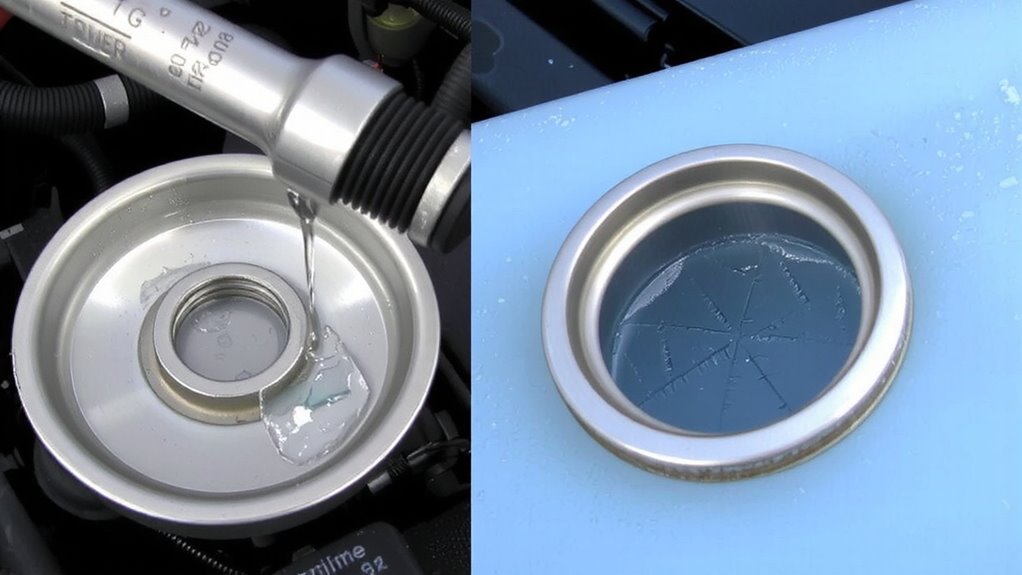
Why does your washer fluid suddenly stop spraying in winter? The answer lies in fluid expansion and ice pressure. When temperatures drop below freezing, water in standard washer fluid begins to solidify. As it freezes, it expands by approximately 9%, generating substantial ice pressure within sealed reservoirs and hoses. This force can exceed 2,000 psi, surpassing the burst strength of most plastic tanks and rubber tubing. Cracks form silently, often invisible at first. Nozzles and valves clog as ice blocks narrow passages measuring as little as 1 mm in diameter. Even “winter-grade” fluids with methanol or ethanol can fail if improperly diluted. Fluid expansion doesn’t just stop spraying-it compromises system integrity. Once structural damage occurs, leaks persist even after thawing. Prevention requires understanding chemistry and physics, not just refilling the reservoir. Ice pressure is relentless, exploiting weak points in your washer system.
When to Drain Washer Fluid Before Winter
If you wait too long to act, freezing temperatures can compromise your washer fluid system before you realize it. You should drain the reservoir when temperatures consistently drop below 32°F (0°C), especially if your current fluid type isn’t rated for subzero conditions. Most standard washer fluids freeze at around 20°F (–6°C), but winter blends can withstand temps as low as –20°F (–29°C). Check your vehicle’s reservoir age-older tanks, especially those made of polyethylene with visible brittleness or clouding, are prone to cracks under pressure from ice expansion. Units over five years old have a 40% higher failure rate in cold stress tests. Even with antifreeze-rated fluid, draining is wise if the system has sat unused for months. Fluid type degradation and reservoir age both reduce system resilience. Drain preemptively in late fall, before the first hard freeze.
How to Empty Your Washer Fluid Reservoir
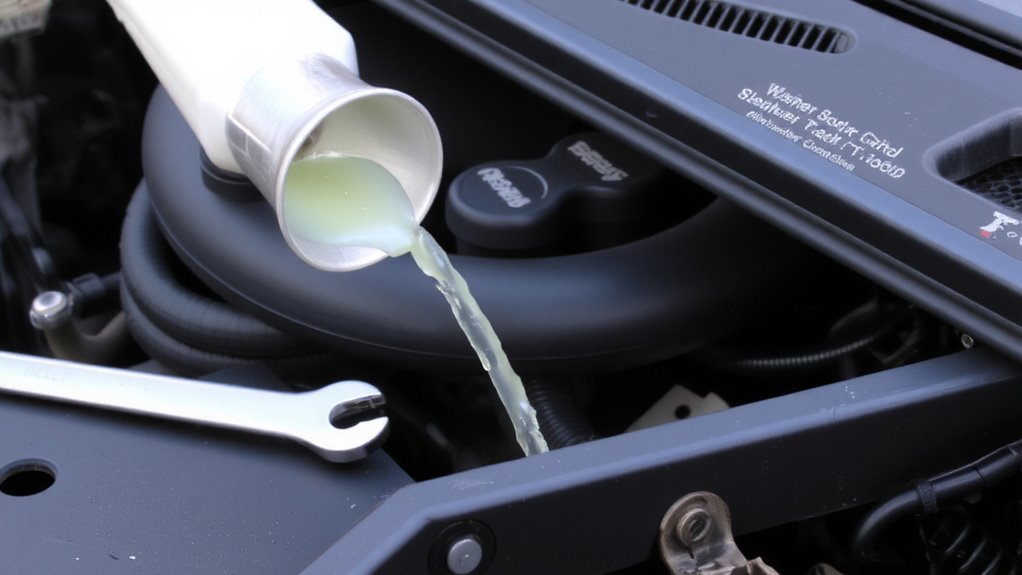
Before temperatures drop below freezing, you’ll need to safely empty your washer fluid reservoir to prevent ice damage. Begin by opening the hood and locating the reservoir, typically a white plastic tank near the windshield. Perform a thorough reservoir inspection to identify cracks or debris that could impede draining. Disconnect the output hose at the pump to allow complete fluid evacuation. Use a hand pump or siphon to extract the remaining liquid, minimizing spillage. Proper fluid disposal is essential-never pour washer fluid onto the ground or into storm drains. Instead, transfer it to a sealed container and take it to a hazardous waste facility. The average reservoir holds 1.5 to 2 liters; guarantee every ounce is removed. Confirm dryness by blowing compressed air into the tank. This guarantees no residual moisture freezes and expands.
Prevent Nozzle Freeze-Ups in Winter
While ice buildup in washer fluid nozzles can disable visibility during winter driving, proper maintenance prevents clogs before they start. You can avoid frozen nozzles by using nozzle insulation and installing heating elements. Insulation sleeves reduce heat loss, keeping nozzles above freezing. Heating elements, typically 12V with 5–10 watts output, activate with the ignition and prevent ice formation. These systems work best when combined with winter-grade fluid.
| Feature | Nozzle Insulation | Heating Elements |
|---|---|---|
| Power Required | None | 12V DC |
| Activation | Passive | Ignition-linked |
| Material | Closed-cell foam | Flexible heating tape |
| Installation Time | <10 minutes | 15–20 minutes |
Both solutions maintain nozzle function at temperatures as low as -30°C. Insulation traps ambient heat, while heating elements actively warm outlets. Use them together for maximum reliability.
Winterize Your Washer System in 3 Steps
Protecting your washer system from winter damage starts with proactive steps you can complete in under an hour. First, locate your reservoir and drain all fluid using a siphon pump or gravity drain if equipped. Residual fluid causes fluid contamination when mixed with fresh concentrate later, reducing cleaning efficiency. Second, disconnect the feed line at the pump outlet and blow compressed air through the system to guarantee complete evacuation. This prevents expansion-related cracks. Finally, inspect the reservoir interior for signs of reservoir corrosion, especially around joints and seams. Corroded components compromise structural integrity and promote leaks. Use a flashlight to check for pitting or white powdery deposits-signs of advanced degradation. Address minor corrosion with a vinegar rinse, but replace the tank if damage is deep. These steps preserve system function and prevent costly repairs.
Refill and Test When Spring Returns
How do you know your washer system is ready for spring use? Perform a complete spring maintenance check. Start with a proper fluid refill using a high-quality windshield washer solution with antifreeze properties, typically rated to -20°F (-29°C). This prevents future ice damage and guarantees peak cleaning. Reconnect the washer hose and inspect for cracks or leaks, especially at the nozzle and pump connections. Power the system and activate the washers to verify spray pattern coverage across the windshield. Nozzles should deliver a consistent 45–60 psi fan spray, clearing debris without pooling. Check fluid pump operation; most operate at 12V DC, drawing 2–5 amps under load. If flow is weak, clean clogged nozzles with a pin or compressed air. Confirm the reservoir is filled to within 1 inch of the top to avoid overflow during operation.
On a final note
You must drain your washer fluid reservoir before temperatures drop below freezing. Ice expansion can crack the 1.5- to 2-liter plastic tank or damage 3-millimeter-diameter nozzles. Disconnect the 6-mm hose at the pump to fully evacuate fluid. Refill with -30°C rated solution in spring. Test spray pattern and adjust nozzle angles to guarantee full windshield coverage. This prevents costly repairs and maintains visibility.