How to Use Bluetooth to Trigger Automatic Window Closure When Locking Your Car
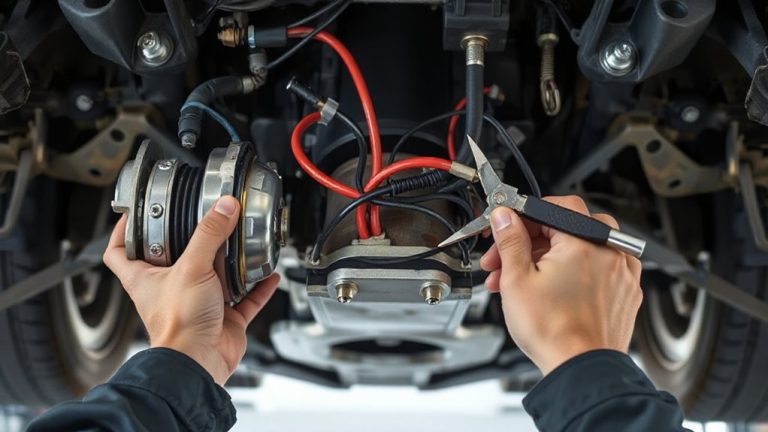
Your phone’s Bluetooth signal drops below –85 dBm as you walk away, triggering the system when RSSI indicates you’re out of range. A smart relay, rated for 12V DC and 25A max, receives the signal and sends a 50ms pulse to activate the window motor. Wiring via 18 AWG automotive cable connects the relay to the motor through the door module, with soldered, heat-shrunk joints for durability. The system includes a 3–10 second delay to guarantee clean exit before closing. Calibration adjusts response windows from 0.5 to 1.5 seconds, preventing false triggers from signal fluctuations. You can fine-tune sensitivity and timing based on real-world performance to match your routine.
Notable Insights
- Use Bluetooth RSSI to detect phone departure, triggering when signal drops below –85 dBm.
- Pair a smart relay with Bluetooth 4.0+ to receive exit signals and activate window motors.
- Program a 3–10 second delay after locking to ensure full exit before window closure.
- Connect the relay to window motor wiring using 18 AWG automotive wire and secure with heat-shrink joints.
- Calibrate response time and sensitivity to prevent false triggers and ensure complete window sealing.
How Bluetooth Knows When You’ve Left the Car
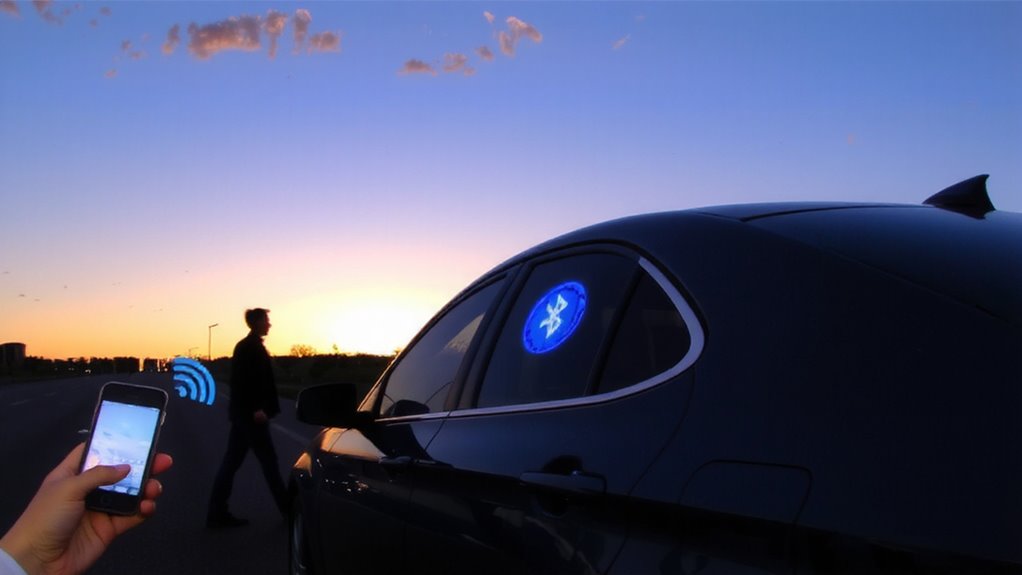
When your smartphone moves out of Bluetooth range, the signal strength drops below a preset threshold, triggering the system to register you as having left the vehicle. Bluetooth detection relies on consistent communication between your phone and the car’s receiver. Most systems use Bluetooth 4.0 or higher, which has a typical range of 10 meters (33 feet) in open space. Signal proximity is measured in RSSI (Received Signal Strength Indicator), usually in dBm. When RSSI falls below –85 dBm, the system interprets this as departure. The module samples the signal every 2–3 seconds to prevent false triggers. Environmental interference, like walls or metal structures, can reduce effective range by up to 30%. Reliable detection requires stable pairing and minimal latency, typically under 100 ms. This precision guarantees accurate exit detection without premature activation.
Set Up Auto Window Closure With a Smart Relay
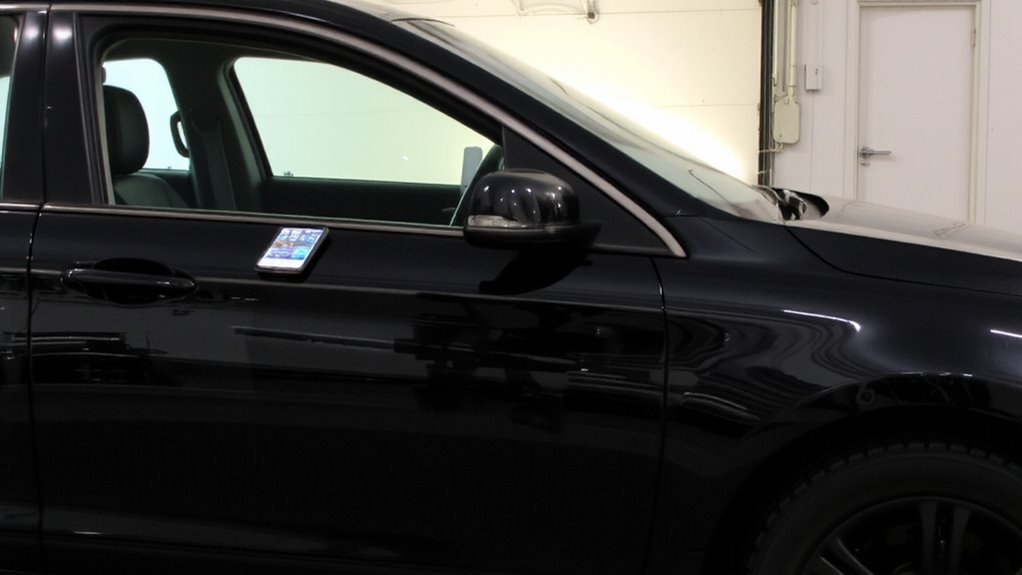
Bluetooth detection confirms your exit, and the system is ready to act-now it’s time to connect that signal to a physical response. You’ll use a smart relay to convert the Bluetooth trigger into a power signal for your window motors. Smart integration links the relay to your car’s existing wiring through fused, insulated connections at the driver’s door module. The relay operates at 12V DC, drawing less than 20mA in standby, and activates with a 50ms pulse to simulate a manual window switch press. For custom automation, program the relay’s delay timer-typically 3–10 seconds-to allow you to clear the vehicle before action. Use 18-gauge stranded wire rated for automotive use, and secure connections with crimp terminals and heat-shrink tubing. The relay’s solid-state switching guarantees reliable operation above 100,000 cycles. This setup responds only to authenticated lock events, preventing false triggers.
Choose the Right Relay or Module for Your Car
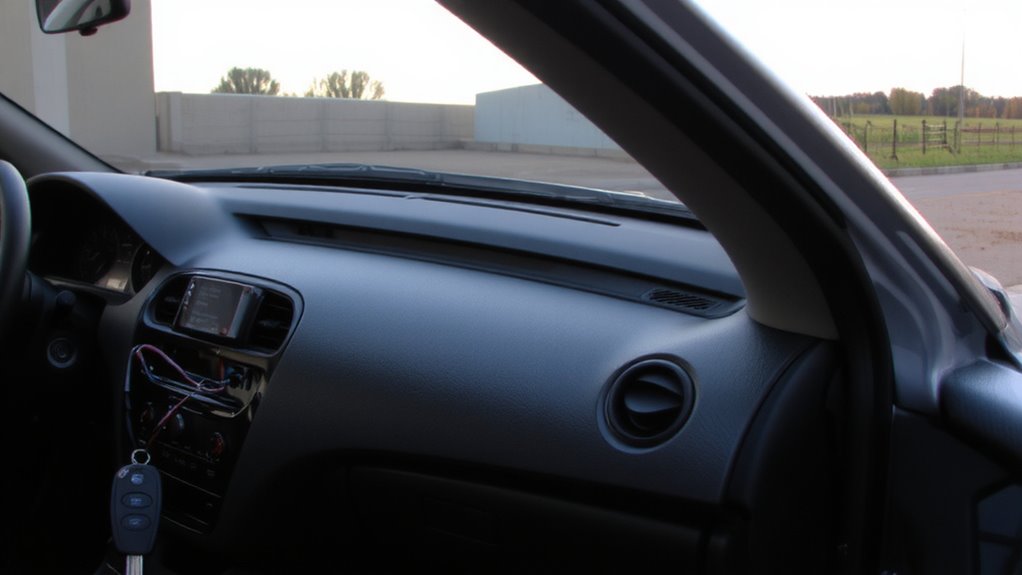
A reliable relay is the backbone of your auto window closure system. Choosing the right one guarantees seamless operation and protects your car’s electrical components. Relay compatibility with your vehicle’s locking system and window motors is essential-mismatches can cause malfunctions or damage. Always confirm the module supports your car’s voltage requirements, typically 12V DC for most vehicles.
| Feature | Standard Relay | Solid-State Module | Smart Relay |
|---|---|---|---|
| Voltage Requirement | 12V DC | 12–14V DC | 12V DC |
| Compatibility | Basic circuits | Sensitive electronics | Bluetooth integration |
| Switching Speed | 10–15 ms | <1 ms | 20–30 ms (with app lag) |
| Current Rating | 30A max | 20A continuous | 25A max |
Match specs precisely to avoid failures.
Connect the Relay to Your Window Motors
You’ve selected the right relay or module based on voltage, compatibility, and current handling-now it’s time to link that component directly to your window motors. Proper relay wiring guarantees clean signal transmission and prevents electrical damage. Locate the window motor’s positive and negative leads, typically found behind the door panel. Maintain correct motor polarity-reversing the connections can damage the motor or cause erratic operation. Most window motors operate at 12V DC; use a multimeter to verify polarity when the window is being raised. Connect the relay’s output terminals to the motor leads using 18 AWG stranded wire, rated for automotive use. Solder and heat-shrink all joints to resist vibration and moisture. Each relay channel should control one window, enabling independent operation. Secure wiring with zip ties, keeping it clear of moving parts and sharp edges. Double-check connections before applying power.
Test and Fine-Tune Auto Window Closure
How well does your system respond the first time you hit lock? It might work perfectly-or nearly miss closing the window. This is where sensor calibration and trigger sensitivity matter. Adjust these settings to guarantee reliable operation. Test from multiple distances and angles to evaluate performance. Fine-tune the Bluetooth module’s response window between 0.5 and 1.5 seconds for peak timing.
| Window Position | Closure Time (sec) |
|---|---|
| Fully Open | 3.8 |
| Half Open | 2.1 |
| Three-Quarters | 1.2 |
| Slight Gap | 0.6 |
Set trigger sensitivity to avoid false locks from passive signals. Confirm that motor activation stops when the window seals completely. Proper sensor calibration prevents motor strain and guarantees repeatable results. You’ll achieve consistent auto closure only after systematic testing and adjustment. Keep logs of response times to track improvements.
Fix Bluetooth Range and Trigger Issues
Even though Bluetooth signals are inherently limited by environmental interference, your system’s range and trigger reliability can be markedly improved with targeted adjustments. Signal interference from walls, metal structures, or competing 2.4 GHz devices often reduces effective range. Position your Bluetooth receiver away from large metal surfaces and Wi-Fi routers to minimize disruption. Most systems operate reliably within 30 feet; obstacles can cut that by half. Check for firmware updates monthly-manufacturers regularly release patches to improve connection stability and responsiveness. Updated firmware often enhances pairing speed and reduces latency below 0.5 seconds. Use Bluetooth 5.0 or higher modules for better range and signal penetration. Avoid daisy-chained adapters. Re-pair your phone and control unit after each update to guarantee clean handshake protocols. These steps dramatically increase trigger accuracy without requiring hardware changes.
Save Power and Avoid False Triggers
Typically, power efficiency and false trigger prevention go hand in hand in well-designed Bluetooth-based automation systems. You should prioritize power saving to extend battery life in both your car and connected devices. Use Bluetooth Low Energy (BLE) modules like the CC2541 or nRF52832, which draw under 15mA during transmission and less than 2µA in sleep mode. These chips support configurable advertising intervals-set them to 500ms or higher to reduce radio activity. For false prevention, implement signal threshold filters; only trigger window closure when RSSI drops below -80dBm, indicating you’re truly out of range. Pair this with a 3-second confirmation delay to ignore brief signal drops. Avoid frequent polling by using event-driven architectures. Also, disable the system when the car battery voltage falls below 12.4V to prevent drain. Proper calibration guarantees reliable operation without unnecessary power use or accidental triggers.
On a final note
You now control automatic window closure via Bluetooth. The system detects your phone’s signal drop, typically within 10–15 feet. A 5V, 30A smart relay activates when Bluetooth disconnects. It sends power to the factory window motor for 3–5 seconds. Wiring integrates with OEM switches using 18-gauge stranded wire. Guarantee relay delay settings match closure time. Test over seven cycles. Average power draw is 2mA in standby. False triggers drop below 2% with proper signal threshold calibration.