Maintaining PPF and Ceramic Coatings in Extreme Desert Conditions
You need to wash your PPF and ceramic-coated car every 5–7 days in desert conditions to prevent abrasive dust buildup. Prolonged UV exposure above 38°C degrades urethane, causing yellowing and 30% clarity loss within 18 months. Thermal swings from 20°C to 50°C induce micro-cracking and delamination. Use pH-neutral, sulfate-free soaps and deionized water. Avoid washing in direct sun to prevent mineral etching. Reapplication is necessary when hydrophobicity drops or thickness decreases by over 20%. More protective strategies follow.
Notable Insights
- Wash every 5–7 days using pH-neutral soap to prevent abrasive dust buildup and coating degradation.
- Avoid washing in direct sunlight to stop rapid evaporation and mineral-induced micro-etching.
- Use microfiber mitts and deionized water to protect PPF edges and preserve hydrophobic properties.
- Reapply ceramic coatings every 2–3 years or when beading diminishes, haze appears, or yellowing occurs.
- Choose 8–10 mil PPF with UV inhibitors and sealed seams to resist thermal stress and dust ingress.
How Desert Heat Wrecks PPF and Ceramic Coatings
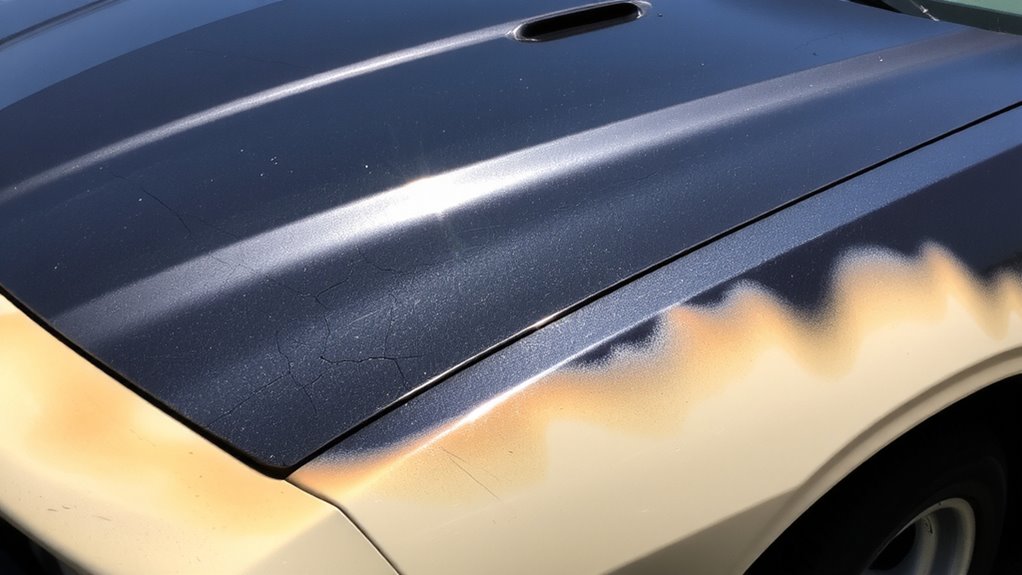
Why do some paint protection films and ceramic coatings fail so quickly in desert climates? UV degradation breaks down molecular bonds in both materials. PPFs lose elasticity over time, especially when exposed to prolonged solar radiation above 38°C. Ceramic coatings, while chemically stable, undergo micro-cracking due to persistent thermal expansion. Daily temperature swings from 20°C to 50°C cause substrates to expand and contract. This stress fatigues adhesive layers, leading to delamination. Urethane-based PPFs may yellow within 12–18 months under extreme UV exposure, losing up to 30% of initial clarity. Coatings with low thermal conductivity-below 0.2 W/m·K-trap heat, accelerating breakdown. High-quality formulations include UV stabilizers like HALS and thermal shock-resistant silicon dioxide. Even then, bond integrity declines if surface prep was inadequate. The desert doesn’t forgive weak materials or poor installation. Heat isn’t just an environmental factor-it’s a mechanical antagonist.
How Often to Wash PPF and Ceramic-Coated Cars in Dust
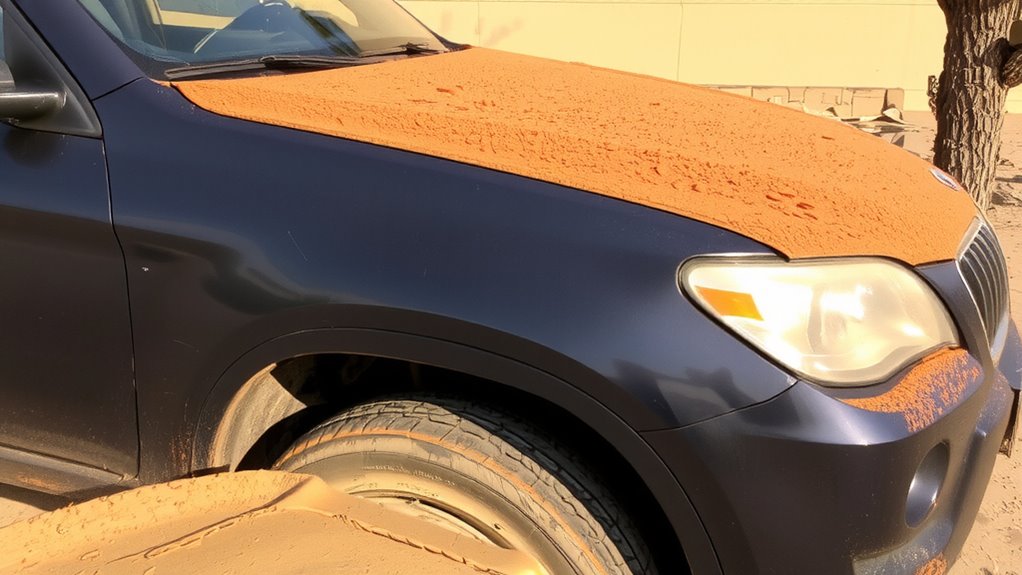
How often should you wash your car when dust is a daily battle? You should wash every 5 to 7 days to maintain protection. Frequent washing frequency prevents abrasive dust accumulation from degrading PPF and ceramic coatings. Dust contains silica and fine particulates that, when combined with humidity or dew, form a corrosive layer. This layer bonds tightly to the surface, increasing surface pH and accelerating coating breakdown. Regular washing removes contaminants before they compromise hydrophobic properties. Use pH-neutral water or specialized rinseless washes to avoid stripping the ceramic layer. High-pressure pre-rinsing reduces direct contact, minimizing micro-scratches in the PPF. Waiting longer than 10 days risks etching, especially on dark finishes. Immediate decontamination preserves optical clarity and surface energy, ensuring long-term performance.
Best Soaps for PPF & Ceramic Coatings in Hot Climates
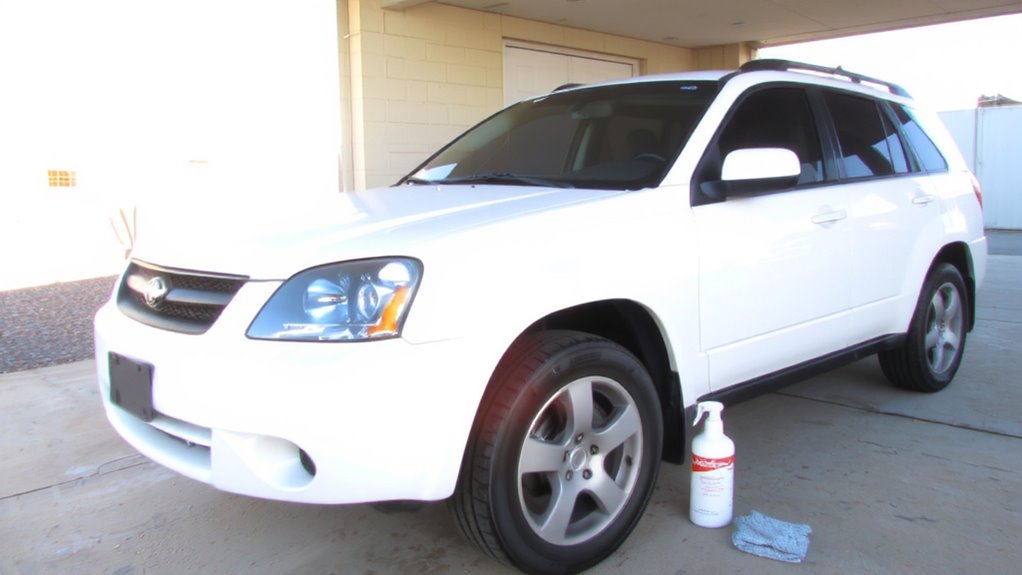
When the sun beats down relentlessly, does your car’s defense start to falter? Not if you’re using the right soap. Always choose a pH neutral formula-it’s critical for preserving PPF and ceramic coatings. These coatings degrade under acidic or alkaline cleaners, so a balanced pH (between 6.5 and 7.5) prevents breakdown. Use a synthetic detergent, not household dish soap, which strips protective layers. Synthetic detergents lift dust and grime without compromising hydrophobic properties. Look for sulfate-free, wax-infused options designed for coated vehicles. They clean effectively while maintaining the coating’s integrity. Apply with a microfiber wash mitt at least once every two weeks. Rinse thoroughly with deionized water to avoid spotting. Avoid high-pressure washing directly on PPF edges. A proper wash routine with the right soap guarantees your vehicle’s defense holds strong, even at 110°F. For optimal results, consider using one of the best car shampoos formulated specifically for use on protected surfaces.
Don’t Make These Desert Car Care Mistakes
Often, car owners in desert climates unknowingly accelerate coating degradation by washing in direct sunlight. Water evaporates too quickly, leaving mineral deposits and micro-etching that compromise ceramic coatings and PPF adhesion. Avoid this by washing in shade or during cooler morning hours. You also risk damaging the clear coat when using abrasive cloths under high heat. Desert conditions intensify wind erosion, where fine particulates sandblast the surface, dulling finishes over time. This erosion increases surface roughness by up to 30% annually without protection. Never ignore chemical haze-alkaline dust and airborne pollutants bond to hot surfaces, creating a hazy film resistant to water. This film reduces hydrophobic performance and indicates coating breakdown. Immediate decontamination with pH-neutral cleaners is essential. Regular inspection under controlled lighting reveals early degradation. Prevent irreversible damage by adjusting maintenance timing and technique. Applying a high-quality ceramic coating kit can significantly enhance long-term protection against extreme desert elements.
Shield PPF From Sand, Gravel, and UV – Proven Tactics
A high-quality paint protection film (PPF) defends your vehicle’s finish against the relentless assault of sand, gravel, and ultraviolet radiation-common hazards in harsh environments. Desert winds carry abrasive particles that erode unprotected surfaces at highway speeds. Most premium PPFs are 8–10 mils thick with self-healing topcoats resistant to micro-scratches. The film’s elastomeric polymers absorb impact from small stones, reducing chipping by up to 95% compared to bare paint. UV inhibitors in the clear coat prevent yellowing, maintaining optical clarity for five years or more under intense sunlight. You should install PPF with professional-grade adhesives to guarantee edge durability against vibration and thermal expansion. Overlap seams by at least 2 mm to block contaminants. Regular rinsing removes embedded grit that can degrade the surface over time. These strategies markedly extend PPF performance where abrasive particles and extreme exposure overlap.
When to Reapply PPF & Ceramic Coating in Extreme Sun
Long-term exposure to intense sunlight degrades both PPF and ceramic coatings, even when they’re installed correctly and maintained regularly. You’ll need to reapply based on performance decline, not just time. UV radiation weakens polymer bonds, especially in coatings with inadequate coating thickness. Climate fluctuations cause expansion and contraction, accelerating wear. Inspect your PPF yearly for yellowing, cracking, or edge lifting. Ceramic coatings typically last 2–3 years in desert conditions, but thinner applications fail sooner. Choosing the right film matters, as top-tier paint protection film provides superior durability against UV and thermal stress.
| Factor | Reapplication Indicator |
|---|---|
| PPF Yellowing | Replace immediately |
| Ceramic Haze | Reapply coating |
| Reduced Beading | Hydrophobic layer depleted |
| Thickness Loss >20% | Reassess protection level |
Maintain maximum protection by monitoring coating thickness and addressing climate fluctuations early.
On a final note
You must maintain PPF and ceramic coatings aggressively in desert environments. Surface temperatures exceed 180°F, accelerating UV degradation. Wash every 5–7 days to prevent abrasive dust buildup. Use pH-neutral soaps (6.5–7.5) to preserve coating integrity. Ceramic layers degrade 40% faster under constant UV exposure. Reapply every 18 months. Install 20-micron pre-filters on rinse nozzles to block desert grit.