Rejuvenating Aged Ceramic Coatings Without Complete Removal
You can rejuvenate an aged ceramic coating without stripping it. Start by evaluating beading and contact angles-angles above 90° mean some hydrophobicity remains. Use a clay bar with lubricant to remove bonded contaminants safely. Apply a pH-neutral booster with 5–7% SiO₂ to restore gloss and protection. Cure for 10–15 minutes in low humidity. Maintain with pH-balanced washes and a ceramic-safe mitt. If thickness falls below 0.5 microns, reapplication becomes necessary. Next steps reveal how to evaluate when full removal is truly needed.
Notable Insights
- Assess coating effectiveness using a water beading test and contact angle; beads and angles above 90° indicate viable hydrophobicity.
- Decontaminate the surface with a fine clay bar and lubricant to remove bonded contaminants without damaging the aged coating.
- Restore hydrophobic properties and gloss by applying a ceramic coating booster containing 5–7% SiO₂ and a pH-neutral formula.
- Maintain longevity by washing every two weeks with pH-neutral soap and a ceramic-safe mitt to prevent coating degradation.
- Reapply booster or coating if water no longer beads and thickness drops below 0.5 microns, avoiding stripping unless adhesion fails.
Check If Your Ceramic Coating Is Still Effective
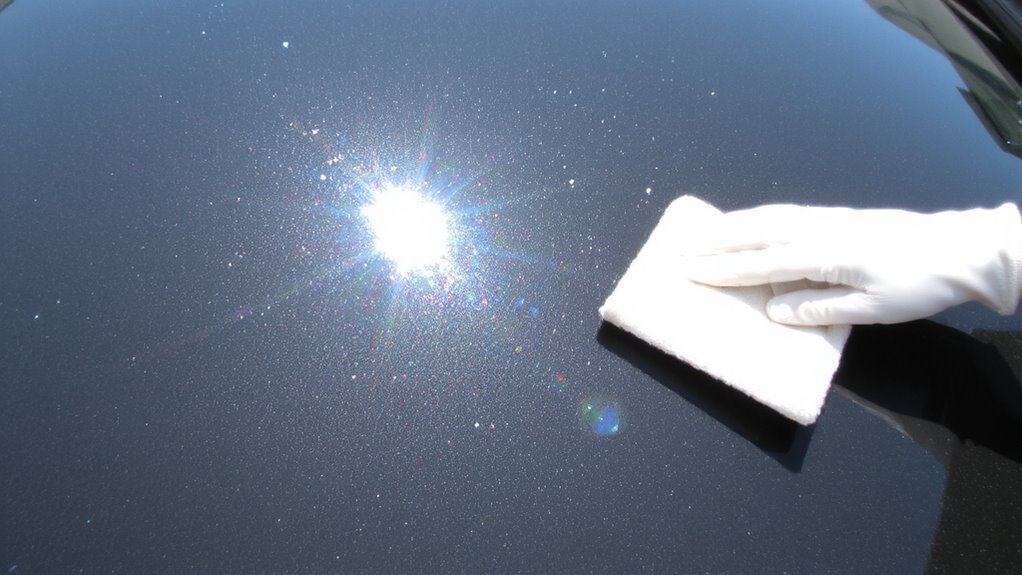
How can you tell if your ceramic coating is still protecting your vehicle? Perform a water beading test-effective coatings cause water to form tight beads and roll off easily. Poor beading indicates the top layer may be degraded. Check surface contact angles; above 90° suggests remaining hydrophobic function. Coating thickness matters: use a reliable paint thickness gauge (PTG) to measure values. Initial application typically adds 0.5 to 2.0 microns. If current readings are near baseline, the coating likely wore off. Inspect for uneven sheen or increased surface friction, signs of oxidation or thinning. UV exposure and improper washing accelerate breakdown. Even if some hydrophobicity remains, below 0.5 microns offers minimal protection. Assess both performance and measurement. Water beading alone isn’t conclusive-combine results with coating thickness data for an accurate evaluation. This dual-method approach guarantees precision in determining protection levels. For optimal results, consider using one of the best ceramic coating kits designed for professional-grade protection and durability.
Remove Bonded Contaminants Safely
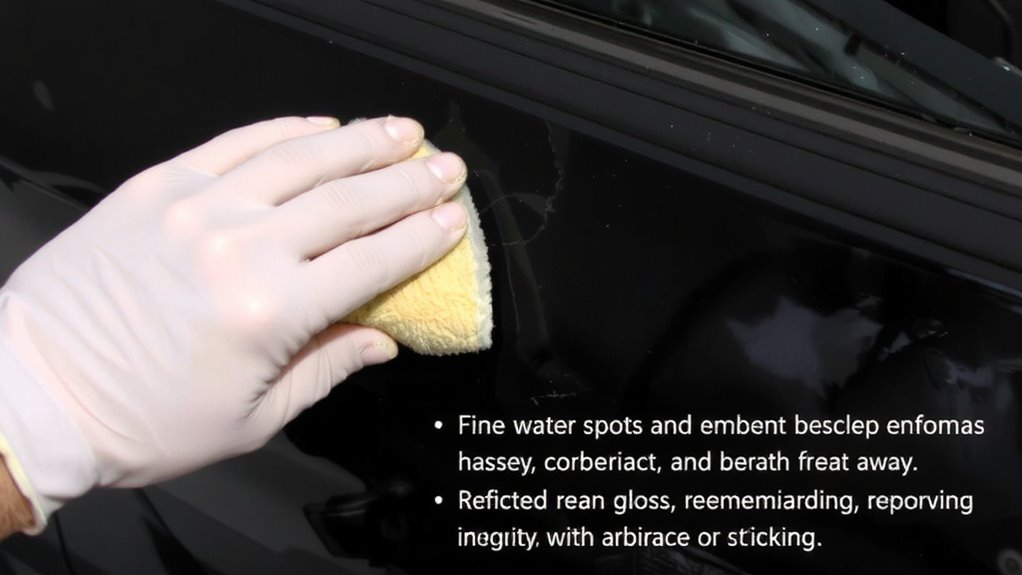
What lurks on your paint even after a thorough wash? Bonded contaminants like iron particles, tree sap, and industrial fallout cling to your ceramic coating. You can’t see them all, but they compromise protection and appearance. Surface decontamination is essential to remove these hazards safely. Use a clay bar with proper lubrication-apply a dedicated clay lubricant or quick detailer spray. Glide the clay bar gently across the surface using straight-line motions; never scrub in circles. Most clay bars have a fine, medium, or heavy grade-opt for fine or medium for coated surfaces to avoid marring. The clay bar chemically pulls contaminants from the pores of the coating without scratching. Decontamination should leave the surface glass-smooth when wiped with a flat hand. This step guarantees peak adhesion for any follow-up treatment. Skip it, and you risk trapping grime underneath, accelerating coating degradation. For optimal results and ease of use, consider starting with one of the top-rated car clay bar kits available for safe and effective decontamination.
Use a Ceramic Coating Booster to Restore Shine
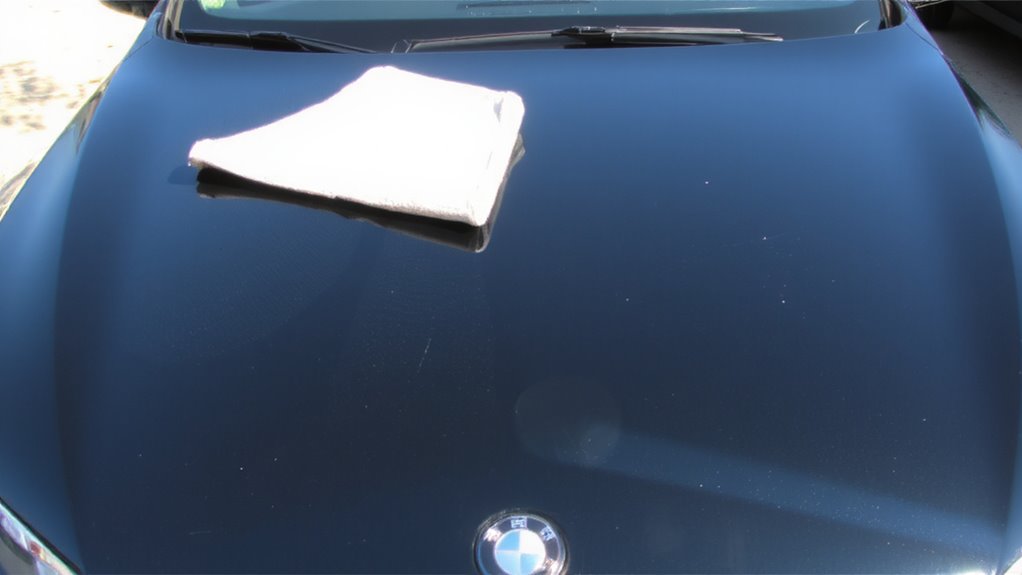
A ceramic coating booster isn’t just a detailer’s trick-it’s a precision-engineered product designed to revitalize aged nanocoatings. It delivers targeted surface enhancement by replenishing sacrificial SiO₂ layers, restoring hydrophobicity and slickness. You’ll notice immediate gloss optimization, thanks to optical clear coat polymers that fill micro-defects. Unlike sealants, boosters bond covalently with existing ceramic layers, enhancing durability without buildup. For best results, consider using a ceramic coating kit that includes a booster for comprehensive maintenance and long-term protection.
| Feature | Benefit | Application Tip |
|---|---|---|
| SiO₂ concentration: 5–7% | Strengthens coating matrix | Apply to clean, dry surface |
| Refractive index: 1.42 | Maximizes gloss optimization | Use microfiber applicator |
| pH-neutral formula | Guarantees surface enhancement | Work in shaded area |
| Curing time: 10–15 min | Fast turnaround | Avoid high humidity |
| Layer bonding energy: 450 kJ/mol | Long-term adhesion | Buff with plush microfiber |
Extend Protection With Proper Maintenance
Maintaining your ceramic coating doesn’t end with application-it starts there. Proper maintenance guarantees long-term hydrophobic performance and surface protection. Wash your vehicle every two weeks using pH-neutral soap to prevent chemical degradation. Avoid abrasive cleaners that strip the coating’s silica matrix. Apply a ceramic-compatible wash mitt to minimize micro-marring. Perform routine inspections monthly by checking water beading and sheeting behavior-consistent beading indicates intact cross-linking. If water sheets prematurely, coating integrity may be compromised. Use a 30-degree contact angle test for precision; angles below this threshold signal wear. Keep contaminants like rail dust and tree sap off the surface, as they bond to weak points in the coating. Protect against UV degradation with garage storage or car covers. Proper maintenance extends life cycles beyond 36 months. Routine inspections catch issues before they demand repair.
When to Reapply or Strip Your Ceramic Coating
How do you know when your ceramic coating has reached the end of its service life? Coating degradation becomes evident when water no longer beads or sheets off the surface. If you notice persistent water spotting or reduced chemical resistance, the protective layer is failing. Surface oxidation may appear as dull, chalky areas on the clear coat, especially on horizontal panels exposed to UV. These signs mean the silica or SiO₂ content in the coating has eroded below effective levels-typically below 0.5 microns. You should reapply if the coating tests below 30 on a gloss meter or fails the swipe test with isopropyl alcohol. Complete stripping is needed only if contamination, etching, or adhesion failure occurs beneath the coating. Otherwise, rejuvenation with a compatible top-up layer restores protection effectively.
On a final note
You can rejuvenate aged ceramic coatings effectively without full removal. Inspect for haze, water beading loss, or surface roughness-signs of degradation. Use a pH-neutral prep spray and clay bar to remove bonded contaminants without damaging the coating. Apply a ceramic coating booster with SiO₂ or TiO₂ content; these nanoparticles fill micro-scratches and restore hydrophobicity. Maintain with weekly pH-balanced washes and quarterly inspections to extend protection up to two additional years.