Turbo Anti-Surge Valves: Purpose and Integration Into OEM Recirculating BOVS
Your turbo anti-surge valve prevents compressor surge by redirecting pressurized air from the outlet back to the inlet during rapid throttle closure. It opens within 50 milliseconds at an 8–10 psi differential, maintaining rotor momentum and preventing damaging airflow reversal. OEM systems use recirculating blow-off valves (BOVs) integrated between the compressor and throttle body, controlled via vacuum or solenoids. These valves stabilize pressure, protect bearings, and guarantee accurate MAF readings. You’ll see how design choices impact durability and performance.
Notable Insights
- Turbo anti-surge valves prevent compressor surge by recirculating pressurized air during sudden throttle closure.
- They maintain compressor wheel momentum, reducing turbo lag and stabilizing airflow within the intake system.
- OEM systems integrate anti-surge valves as recirculating blow-off valves (BOVs) for reliability and emissions compliance.
- These valves respond in under 50 milliseconds, triggered by ECU-monitored pressure, throttle, and RPM inputs.
- Unlike atmospheric BOVs, OEM anti-surge valves recirculate air to avoid MAF sensor disruptions and ensure stable engine operation.
What Is a Turbo Anti-Surge Valve?
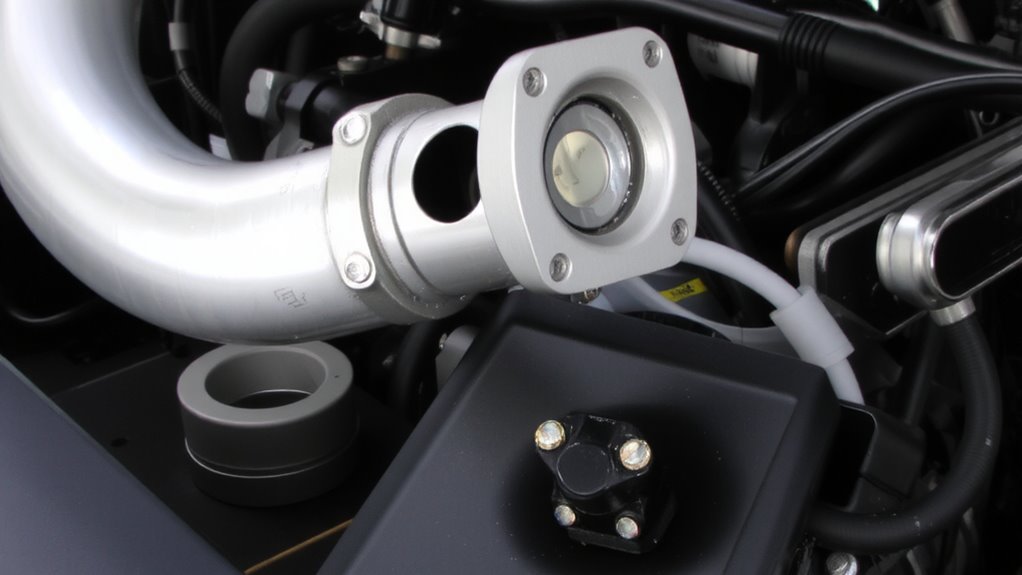
Think of it as a pressure relief guard for your turbocharger. You rely on the anti-surge valve to prevent compressor instability during rapid throttle lift. It actively enables compressor recycling by redirecting pressurized air from the turbo’s outlet back to its inlet. This maintains rotor momentum and reduces lag upon reacceleration. Flow stabilization is achieved by equalizing pressure differentials across the compressor wheel. The valve typically opens at 8–10 psi differential, responding in under 50 milliseconds. Constructed from aerospace-grade aluminum and Viton seals, it withstands temperatures up to 230°C. OEM versions integrate directly into intake manifolds or charge pipes, with port diameters ranging from 1.5 to 2.0 inches for ideal flow. You’ll find it standard on turbocharged gasoline and diesel engines above 150 kW output. It doesn’t eliminate surge but mitigates its occurrence, ensuring smoother turbo operation under transient conditions.
Why Compressor Surge Damages Turbochargers
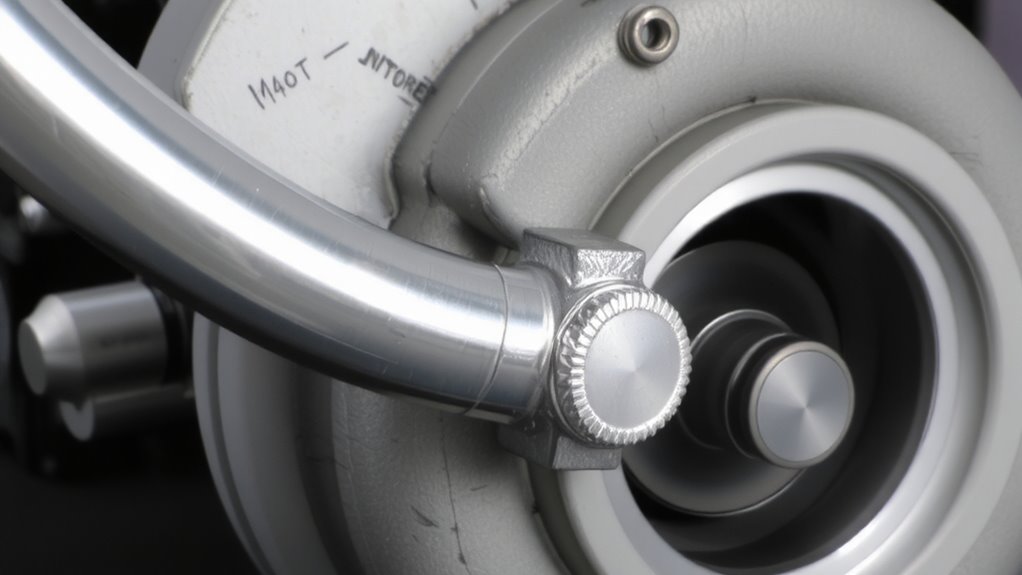
Although compressor surge might seem like a brief hiccup in turbocharger operation, it actually subjects the system to violent pressure oscillations that can lead to mechanical failure over time. You experience rapid backflow of compressed air, forcing the compressor wheel to decelerate suddenly and spin inefficiently. This creates intense stress on the blades, leading to blade fatigue-a condition where repeated pressure cycles weaken the metal until cracks form. Modern compressor wheels spin over 100,000 RPM; even minor disruptions magnify stress exponentially. Simultaneously, the surge induces thrust reversals, increasing axial load on the turbo’s bearings. That extra strain accelerates bearing wear, reducing turbo lifespan. The journal or ball bearings, designed for consistent loads, degrade faster when exposed to these irregular forces. Over time, excessive play and misalignment occur, compromising efficiency and reliability. Without intervention, these cumulative damages result in catastrophic turbo failure.
How Recirculating BOVs Stop Airflow Reversal
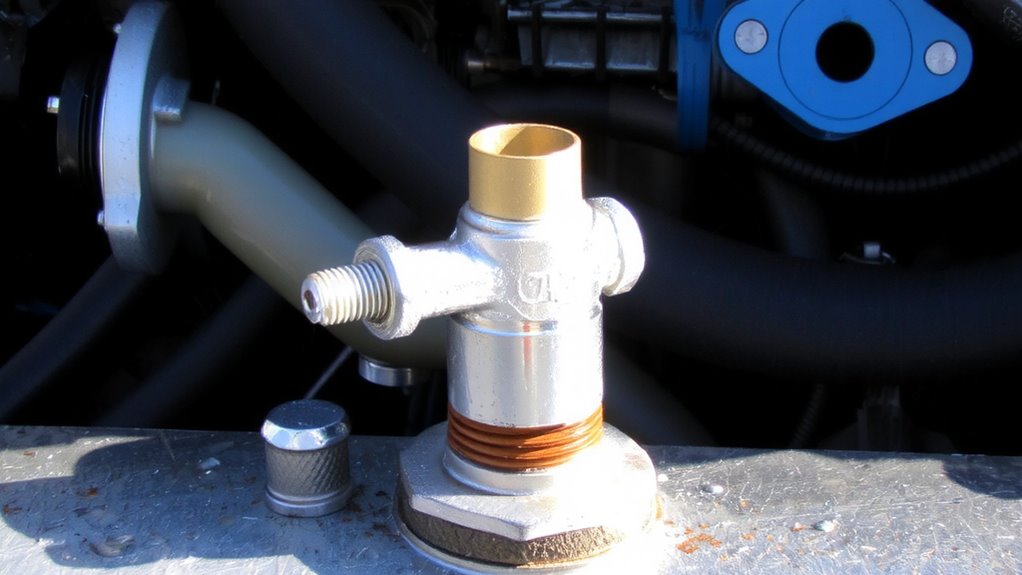
What happens when your engine suddenly decelerates and pressure builds up in the intake system? Without intervention, pressurized air rushes back toward the turbocharger, risking compressor stall. Recirculating BOVs prevent this by diverting reversed airflow. When the throttle closes, pressure drops in the intake manifold, triggering the valve. It opens to redirect airflow back into the intake upstream of the turbo, maintaining forward motion through the compressor. This eliminates flow oscillation-dangerous back-and-forth surges that precede surge. By sustaining positive airflow, recirculating BOVs stabilize compressor operation. They operate silently and efficiently, typically responding within 20–50 milliseconds. Spring preload and diaphragm sensitivity are calibrated to match OEM boost pressures, usually 10–22 psi. This precise control prevents reverse flow without venting to atmosphere. Preventing airflow reversal avoids sudden pressure spikes that lead to mechanical stress and premature turbo wear.
Anti-Surge vs. Atmospheric BOVs: Key Differences
A recirculating anti-surge valve and an atmospheric blow-off valve (BOV) serve similar purposes but operate in fundamentally different ways. You’ll notice the key difference lies in flow dynamics and system response. An atmospheric BOV vents compressed air directly to the atmosphere upon throttle closure, creating that familiar “psssh” sound. This sudden release can cause pressure spikes in the intake tract, potentially disrupting mass airflow (MAF) sensor readings. In contrast, a recirc游戏副本ularing anti-surge valve redirects excess air back into the intake downstream of the turbo, maintaining stable flow dynamics. This prevents pressure spikes, guarantees accurate sensor data, and keeps the turbo spinning efficiently. While atmospheric BOVs appeal for their sound, anti-surge valves offer superior operational consistency, especially in OEM applications where emissions and sensor accuracy are critical.
How Car Makers Integrate Anti-Surge Valves
Car manufacturers integrate anti-surge valves directly into the turbocharger system to maintain boost control and protect engine components. You’ll find valve placement between the compressor outlet and the throttle body, guaranteeing rapid response during throttle lift. This location minimizes pressure spikes that cause compressor surge. The valve opens at precise moments, redirecting airflow back to the inlet, maintaining stable turbo rotation. System calibration is critical-engineers program the ECU to monitor boost pressure, throttle position, and RPM, triggering the valve within milliseconds. Calibration thresholds typically activate the valve at 0.8 to 1.2 bar of boost when throttle closure occurs. OEMs use durable, vacuum-actuated or solenoid-driven valves rated for over 100,000 cycles. Correct integration guarantees seamless operation without disrupting air-fuel balance or turbo efficiency.
Why Recirculating Air Extends Turbo Life
Recirculating air through the compressor inlet during throttle closure keeps the turbo spinning smoothly and reduces mechanical stress. This process supports critical pressure stabilization, preventing compressor stall and harmful backflow. Recirculation also aids in air cooling by maintaining airflow across the turbo’s hot sections, minimizing thermal soak. You benefit from extended bearing and seal life due to reduced thermal and mechanical fatigue. The following table summarizes key mechanisms:
| Mechanism | Technical Benefit | Impact on Turbo Life |
|---|---|---|
| Air recirculation | Prevents compressor surge | Reduces blade stress |
| Pressure stabilization | Maintains flow continuity | Avoids pressure spikes |
| Continuous rotation | Stabilizes shaft speed | Lowers wear on bearings |
| Thermal management | Enhances air cooling | Limits heat buildup |
| Flow smoothing | Supports efficient inlet dynamics | Decreases turbulence fatigue |
These effects collectively prolong turbo service intervals and improve reliability under cyclic load conditions. You guarantee consistent performance by maintaining stable internal conditions.
Symptoms of a Failing Anti-Surge Valve
When your turbocharged engine starts showing erratic behavior under throttle lift-off, a failing anti-surge valve could be the culprit. You might notice audible flutter or a flutter(newValue sensation in the pedal, indicating airflow instability. Hesitation or surge during rapid decelerMediaPlayer points to improper pressure relief. Over time, this stresses the turbo’s compressor wheel and shaft, risking premature wear. Common diagnosis techniques include pressure testing the valve actuator and inspecting the recirculation hose for cracks or leaks. A vacuum test reveals response lag or seal failure. Some systems use OEM scan tools to monitor solenoid operation. Replacement procedures vary by model but typically involve disconnecting the recirculation duct, removing mounting bolts, and swapping the valve. guarantee the diaphragm moves freely and the new unit matches factory spring tension-usually 5–7 psi crack pressure. Use OEM-specified torque settings on reassembly to prevent warping.
On a final note
You rely on anti-surge valves to protect your turbocharger. They prevent compressor surge by recirculating excess intake air. This maintains positive pressure and avoids airflow reversal. Recirculating BOVs redirect air from the turbo compressor outlet back to its inlet. The system operates at pressures up to 25 psi, depending on boost settings. OEM-integrated designs guarantee rapid valve response-typically under 25 milliseconds. This precision protects turbo bearings and extends component life.