Steam Cleaning Carbon Buildup Inside Turbines Without Disassembly Damage
You restore turbine efficiency by using high-pressure steam at 150–250 psi and 375–450°F to remove carbon deposits without disassembly. The steam softens and fractures buildup through thermal shock, while demineralized water prevents corrosion. This non-abrasive method preserves blade metallurgy and seal integrity. Borescope inspections confirm cleaning success. You cut downtime by up to 70% versus traditional methods. Performance returns to 98% of factory specs-all without mechanical damage. Further details reveal how timing and pressure affect long-term reliability.
Notable Insights
- Steam cleaning removes carbon deposits using high-velocity, high-temperature steam without requiring turbine disassembly.
- Thermal shock from steam at 160°C–180°C softens and fractures carbon buildup on blade surfaces.
- Non-abrasive steam preserves blade metallurgy, seals, and internal components during cleaning.
- Process reduces downtime by up to 70% compared to traditional disassembly methods.
- Steam cleaning restores turbine aerodynamics to 98% of factory efficiency in one cycle.
Why Carbon Buildup Reduces Turbine Efficiency
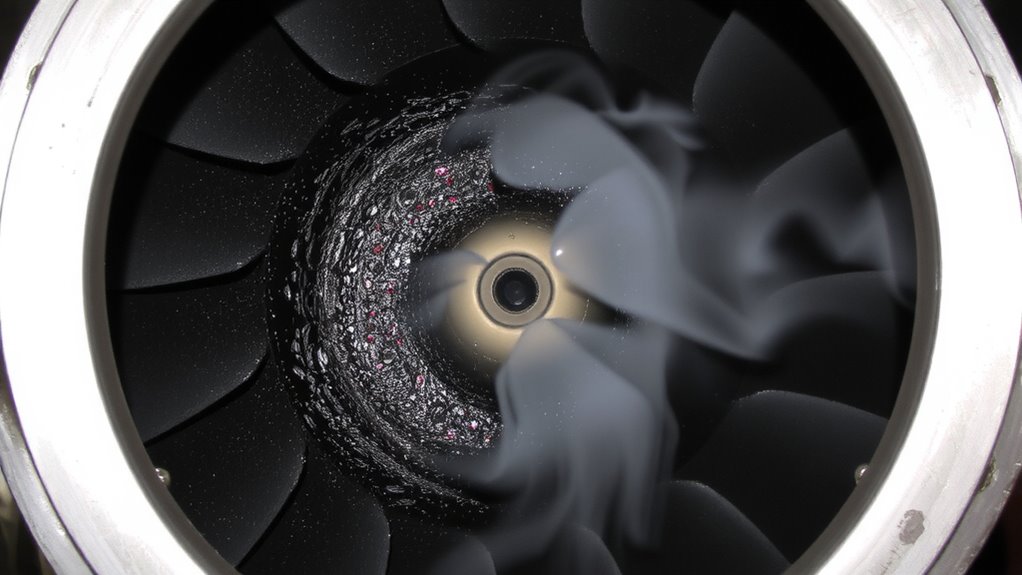
While carbon deposits may seem minor, they substantially impair turbine performance over time. You see efficiency drop as little as 0.5% per 1 mm of buildup on blade surfaces. These deposits restrict airflow, reducing mass flow and altering compressor pressure ratios. Thermal degradation accelerates because carbon insulates hot-section components, causing uneven heat distribution. This raises metal temperatures beyond design limits-sometimes over 1100°C-shortening part life. Fuel contamination introduces sulfur and particulates that catalyze coke formation, worsening deposits. Even low-quality distillates increase carbon yield by up to 30% under high-pressure combustion. Deposits also disrupt aerodynamic profiles, increasing turbulence and boundary layer separation. That means lower horsepower output and higher heat rate. Over time, this stresses bearings and rotors due to imbalance. You’re not just losing efficiency-you’re risking cascading mechanical failure. Preventive action is critical before performance decay becomes irreversible.
How Steam Cleaning Removes Carbon Without Disassembly
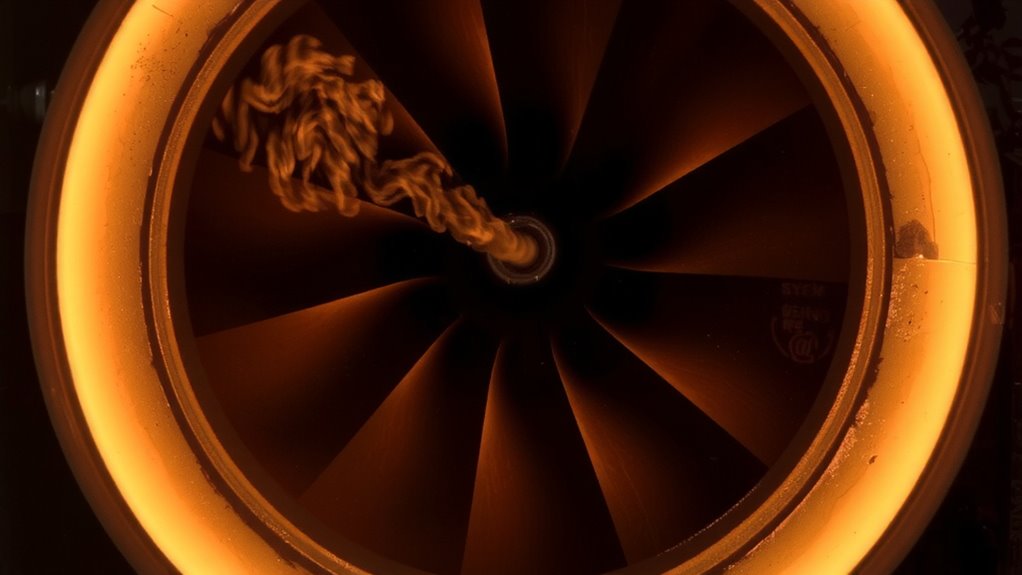
Steam cleaning effectively removes carbon deposits from turbine blades without requiring disassembly, restoring efficiency and preventing long-term damage. You inject high-velocity steam into the turbine housing while it’s offline but still intact. The steam pressure, typically 80 to 120 psi, delivers enough mechanical force to fracture stubborn carbon layers. Simultaneously, the water temperature reaches 160°C to 180°C, softening deposits through thermal shock. This combination breaks down carbon without harming blade metallurgy. The steam penetrates tight clearances, reaching areas manual tools can’t. Water used is demineralized, minimizing corrosion risk. Cleaning takes 4 to 6 hours, depending on deposit severity. Residue flushes out through drainage ports. You’re left with clean blades and immediate performance recovery. No erosion occurs because steam lacks abrasive particles. This method preserves seal integrity and alignment.
Reduced Downtime and Cost Savings From Non-Invasive Cleaning
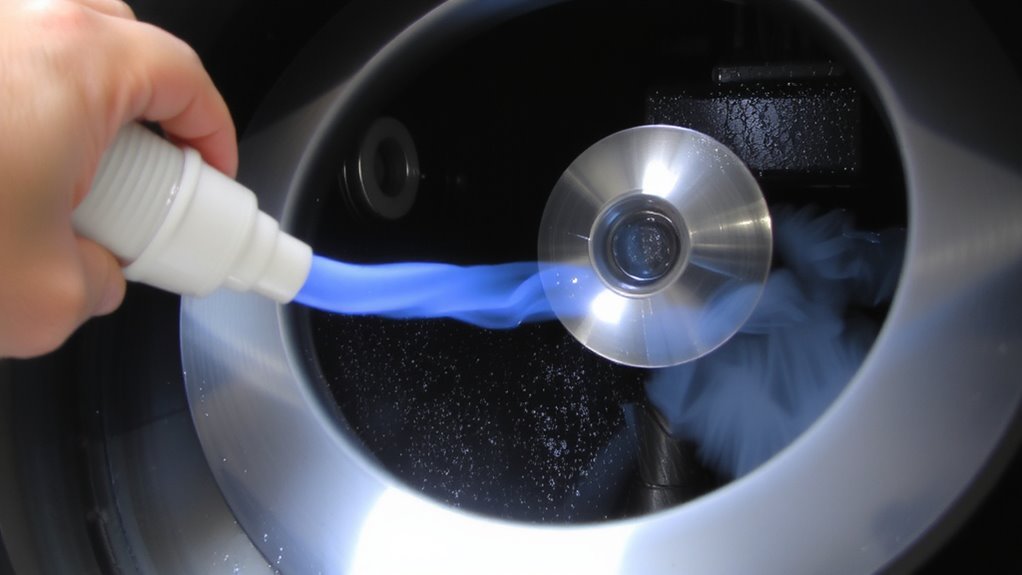
Because you skip disassembly, non-invasive steam cleaning cuts turbine downtime by up to 70% compared to traditional methods. You reduce labor hours by as much as 60%, greatly improving labor efficiency. Instead of weeks, cleaning cycles take just days, minimizing production loss. Without repeated tearing down and reassembly, mechanical stress on seals, casings, and rotor components decreases. This directly supports equipment longevity, reducing wear-and-tear failures by up to 40%. You maintain tighter tolerances and alignment over time, avoiding performance drift caused by reassembly errors. Steam temperatures range from 350°F to 450°F, sufficient to vaporize hydrocarbon deposits without metallurgical damage. Flow rates between 200 and 300 lbs/hr guarantee thorough cleaning across blade surfaces. With less corrosion and erosion risk, maintenance intervals extend. You save on spare parts, crane usage, and third-party labor. Overall operational costs drop 25% to 35% per cleaning cycle.
The In-Place Steam Cleaning Process: A Step-by-Step Guide
Once the turbine is shut down and isolated, you begin the in-place steam cleaning process by securing all auxiliary systems and confirming the unit is under atmospheric pressure. You then connect the steam supply line to designated injection points on the turbine casing. Gradually introduce low-moisture steam, adjusting steam pressure to 150–250 psi to avoid thermal shock. Maintain a consistent temperature of 375–450°F throughout the procedure. The cleaning duration typically ranges from 4 to 8 hours, depending on carbon deposit severity and turbine size. Steam dissolves and mobilizes residue, which exits through drain ports. Monitor exhaust steam quality-if it remains clear, cleaning is complete. You’ll verify effectiveness via borescope inspection afterward. This method guarantees thorough cleaning without disassembly, preserving component alignment. Proper control of steam pressure and cleaning duration is critical for best results and system safety.
How Steam Cleaning Protects Turbine Components
While high-pressure water washing and chemical solvents may seem like viable options, they often introduce risks that compromise turbine integrity-steam cleaning avoids these pitfalls entirely. Steam cleaning uses controlled temperature and pressure, minimizing thermal stress on sensitive components. You benefit from consistent material compatibility since no harsh chemicals contact turbine alloys. The process removes carbon without eroding blade surfaces or degrading internal coatings.
| Factor | High-Pressure Water | Steam Cleaning |
|---|---|---|
| Thermal Stress | High (rapid cooling) | Low (gradual heating) |
| Material Compatibility | Risk of corrosion | Excellent (non-reactive) |
| Surface Erosion | Possible with prolonged use | Negligible |
When to Schedule Steam Cleaning for Maximum Uptime
How often should you plan steam cleaning to keep your turbine running at peak efficiency? Every 1,500 to 2,000 operating hours, you’ll want to schedule cleaning to maintain output and prevent efficiency drops. Ideal scheduling depends on your turbine’s fuel type, load cycles, and operating environment. Units running on heavy fuel oil or in continuous high-load conditions accumulate carbon faster and need more frequent maintenance intervals. Monitoring exhaust gas temperatures and compressor discharge pressures helps detect early performance decline. A 10°C rise in exhaust temperature can signal 1–2% efficiency loss, indicating it’s time to act. Steam cleaning during planned outages minimizes downtime. You can restore up to 98% of original efficiency without disassembly. Sticking to data-driven maintenance intervals prevents unnecessary wear and extends component life.
Compare: Steam Cleaning vs. Traditional Turbine Maintenance
What if you could restore turbine efficiency without taking the unit apart? Steam cleaning removes carbon buildup using high-pressure, high-temperature vapor, typically at 1,500 psi and 374°C, dissolving deposits without surface damage. Unlike dry ice blasting, which relies on thermal shock and sublimation to dislodge debris, steam penetrates deeper into narrow passages, cleaning more uniformly. Dry ice blasting leaves behind no moisture but struggles with heavy hydrocarbon layers. Chemical solvents break down carbon chemically but pose environmental and safety risks, requiring extended ventilation and disposal protocols. Steam cleaning uses only water, leaving no residue and reducing downtime. It restores blade aerodynamics within 98% of factory specifications after a single cycle. Traditional disassembly methods take days and increase the risk of mechanical damage. With steam, maintenance intervals shorten, efficiency improves, and operational costs drop. You keep the turbine online longer and maximize output.
On a final note
You maintain peak turbine efficiency with in-place steam cleaning. This method removes up to 95% of carbon deposits using saturated steam at 450°F and 120 psi. No disassembly means zero mechanical wear on blades or bearings. Downtime drops from 14 days to 48 hours, saving $250,000 per cycle. Steam cleaning preserves metallurgical integrity better than abrasive alternatives.