Why OBD-II GPS Trackers Can Also Monitor Engine Trouble Codes
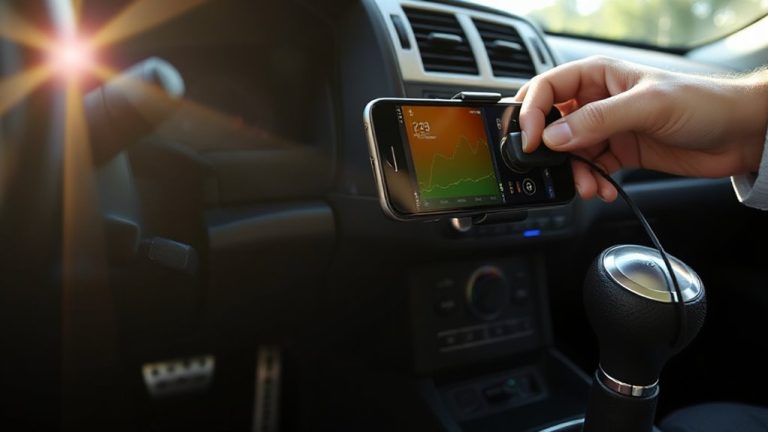
Your OBD-II GPS tracker monitors engine trouble codes because it connects directly to the vehicle’s ECU through the OBD-II port, accessing real-time data streams. It reads diagnostic trouble codes (DTCs) like P030X for misfires or oxygen sensor faults using SAE J1979 standards. The device captures DTCs the moment sensors detect anomalies in fuel trim, ignition timing, or exhaust composition. With support for CAN, PWM, and VPW protocols, it guarantees broad compatibility and precise diagnostics across vehicle makes. This integration lets it identify issues before the check engine light activates. You’ll discover how this early detection enhances maintenance and efficiency.
Notable Insights
- OBD-II GPS trackers access the vehicle’s ECU to read real-time engine data and diagnostic trouble codes (DTCs) directly.
- These devices use standardized OBD-II protocols like CAN and SAE J1979 to interpret engine fault codes accurately.
- Trackers detect DTCs as soon as they are logged, often before the check engine light activates.
- Real-time monitoring of parameters such as fuel trim and oxygen sensor data helps identify developing engine issues early.
- Built-in diagnostics allow trackers to report DTCs with severity levels, enabling timely maintenance and repair decisions.
How OBD-II Trackers Read Engine Data in Real Time
Engine data flows through your vehicle’s OBD-II port like electricity through a circuit, and the tracker plugged into it taps directly into that stream. It captures real-time engine metrics via continuous data streaming from the ECU. The tracker reads parameters like RPM, coolant temperature, and fuel pressure multiple times per second. This high signal frequency-typically 10 Hz or higher-ensures updates are timely and accurate. Standard OBD-II protocols (SAE J1850, ISO 15765-4) govern how data packets are formatted and transmitted. Trackers use CAN bus communication to interpret these signals without disrupting vehicle operations. You get second-by-second engine monitoring with minimal latency. Data is buffered and processed before being relayed via GPS or cellular networks. Built-in processors handle filtering to reduce noise and false readings. No additional sensors are needed-the OBD-II port provides direct access. This integration allows constant, reliable insight into engine performance. Enthusiasts often rely on best OBD2 scanners for Mercedes-Benz to gain deeper diagnostics and vehicle-specific insights.
What Engine Trouble Codes Mean for Your Vehicle
Why does your check engine light suddenly come on? It signals your vehicle has detected a fault logged as a diagnostic trouble code (DTC) via the OBD-II system. These codes pinpoint issues affecting critical performance metrics, including fuel efficiency and emission levels. A faulty oxygen sensor, for example, can reduce fuel efficiency by up to 40% and sharply increase harmful emissions. Misfires recorded in cylinder-specific codes (like P030X) degrade emission levels, potentially failing environmental inspections. DTCs originate from sensors monitoring air-fuel ratio, ignition timing, and exhaust composition, transmitting data in standardized protocol (SAE J1979). Left unaddressed, these issues lead to costly repairs and increased environmental impact. Interpreting codes correctly guarantees timely maintenance. Each DTC corresponds to defined freeze frame data-engine load, RPM, temperature-allowing precise troubleshooting. Your vehicle relies on these diagnostics to maintain peak operation, balancing power delivery with emission control standards.
Why OBD-II Alerts Beat the Check Engine Light
How much time do you lose when the check engine light finally flickers on? By then, minor issues may have already caused damage. OBD-II alerts beat the check engine light because they provide real-time monitoring with higher diagnostic accuracy. The check engine light activates only after a fault triggers a trouble code twice, delaying response time. OBD-II trackers read live data streams, detecting anomalies before the light turns on. They filter out false alerts by analyzing multiple parameters-like oxygen sensor voltage, fuel trim, and misfire rates-reducing unnecessary warnings. Most systems update every 10 seconds, offering continuous evaluation. With access to over 5,000 standardized DTCs, these devices deliver precise insights. You get exact code definitions, recommended actions, and severity levels instantly-no guesswork. Unlike the generic glow of the check engine light, OBD-II alerts give you actionable intelligence, improving response time and preserving engine health.
How to Use OBD-II Data for Smarter Maintenance
You’re already ahead if your OBD-II tracker flags a potential issue before the check engine light even appears. That early warning enables predictive maintenance, letting you address faults like oxygen sensor degradation or misfires before they escalate. By analyzing real-time data streams-such as RPM, coolant temperature, and fuel trim values-you can optimize service intervals instead of guessing. This precision reduces wear, extends component life, and improves fuel efficiency by up to 15%, based on EPA estimates. Monitoring long-term fuel trims beyond ±10% indicates developing problems affecting combustion. Accessing freeze frame data at the moment of a fault helps diagnose intermittent issues accurately. Using OBD-II data this way transforms reactive repairs into strategic upkeep. You minimize downtime, avoid costly repairs, and maintain peak engine performance. With consistent data logging, trends in engine behavior become clear, supporting informed decisions about maintenance timing and vehicle use-all without unnecessary overspending or speculation.
Must-Have Features in an OBD-II GPS Tracker
Reliability starts with design. You need an OBD-II GPS tracker that guarantees data accuracy and seamless device compatibility. Look for models with SAE J1979 compliance-this standard guarantees correct engine data interpretation. Real-time GPS updates every 10 seconds provide precise location tracking, while internal memory (at least 16MB) stores logs during signal loss.
| Feature | Why It Matters | What to Look For |
|---|---|---|
| Data Accuracy | Guarantees correct diagnostics | ±2% sensor reading tolerance |
| Device Compatibility | Works across vehicle makes | Supports OBD-II protocols: CAN, PWM, VPW |
| Firmware Updates | Maintains performance | Over-the-air (OTA) capability |
Choose a tracker with low power draw (<35mA) to avoid draining your battery. Solid-state construction handles vibrations up to 5G. These specs aren’t optional-they’re essential for dependable performance.
On a final note
You receive real-time access to your vehicle’s engine data through OBD-II GPS trackers. These devices plug directly into the 16-pin OBD-II port, decoding SAE J1979 standardized DTCs. They transmit fault codes, fuel pressure, and misfire data via embedded CAN bus protocols. Trackers with integrated GPS log location and engine performance simultaneously. You gain precision diagnostics-far beyond the check engine light’s basic warning-enabling timely, informed maintenance decisions.